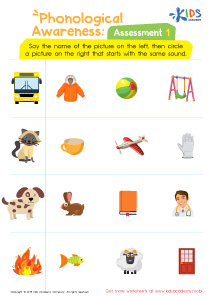
Normal Vowels and Consonants Worksheets for Ages 3-8 - Page 2
26 filtered results
-
From - To
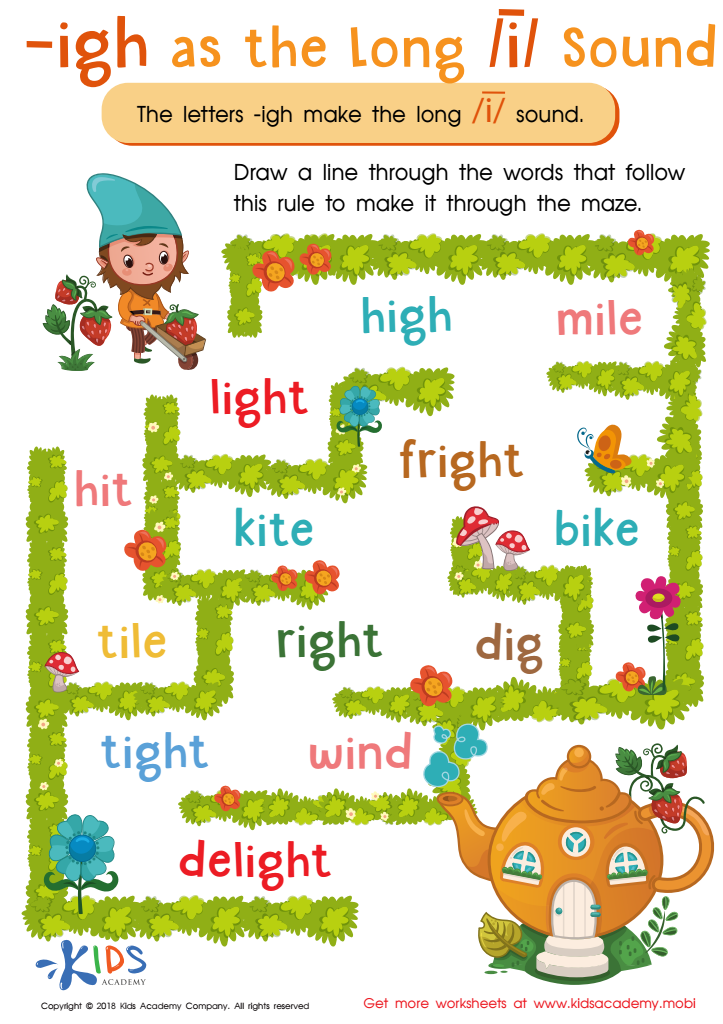
Reading: IGH as Long I Worksheet
 Assign to My Students
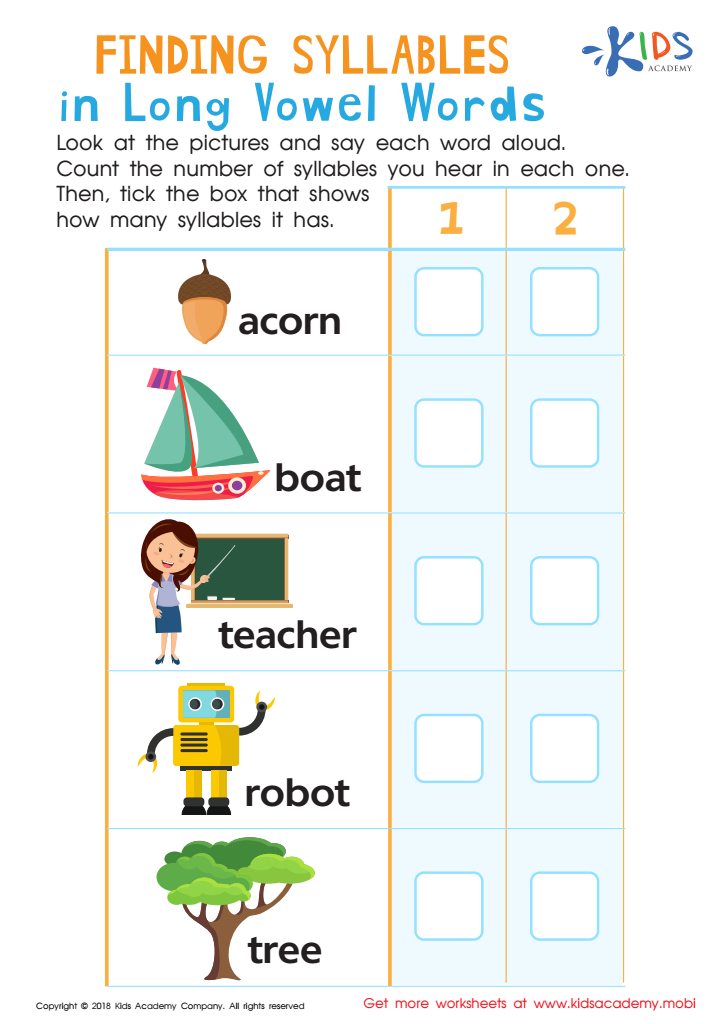
Finding Syllables in Long Vowel Words Worksheet



Understanding normal vowels and consonants is crucial for parents and teachers of children aged 3-8. At this developmental stage, kids are honing their speech and language skills, laying the foundation for reading and writing. Vowels and consonants form the building blocks of words; recognizing them enhances phonemic awareness, which is essential for successful literacy development.
When children grasp the role of vowels and consonants, they become more confident in their ability to decode and encode words. This leads to improved reading comprehension and spelling skills. Furthermore, parents and teachers can guide children to explore language playfully, enriching their vocabulary and enhancing communication skills.
By focusing on phonics through games, songs, and engaging activities, educators and parents can foster a positive attitude towards learning. This foundational knowledge not only aids in early reading proficiency but promotes critical thinking and problem-solving abilities as children progress.
Investing time and effort in teaching vowels and consonants ensures that children are well-prepared for more advanced literacy tasks, equipping them for future academic success. Ultimately, understanding these fundamental components of language is vital for creating a strong educational foundation that promotes lifelong learning.