Normal Letter U Worksheets for Ages 4-5
1 filtered results
-
From - To
Dive into the enchanting world of letters with our Normal Letter U worksheets, meticulously crafted for Ages 4-5. These engaging worksheets are the perfect tool to introduce your child to the letter U, combining fun with educational value. Each sheet is designed to captivate young learners, enhancing their letter recognition, handwriting skills, and phonetic understanding, all while ensuring they have a great time. Ideal for preschoolers and kindergarteners, our Normal Letter U collection promises a delightful learning journey, preparing your child for a successful start in reading and writing. Unlock the joy of learning with our worksheets, where every letter counts!
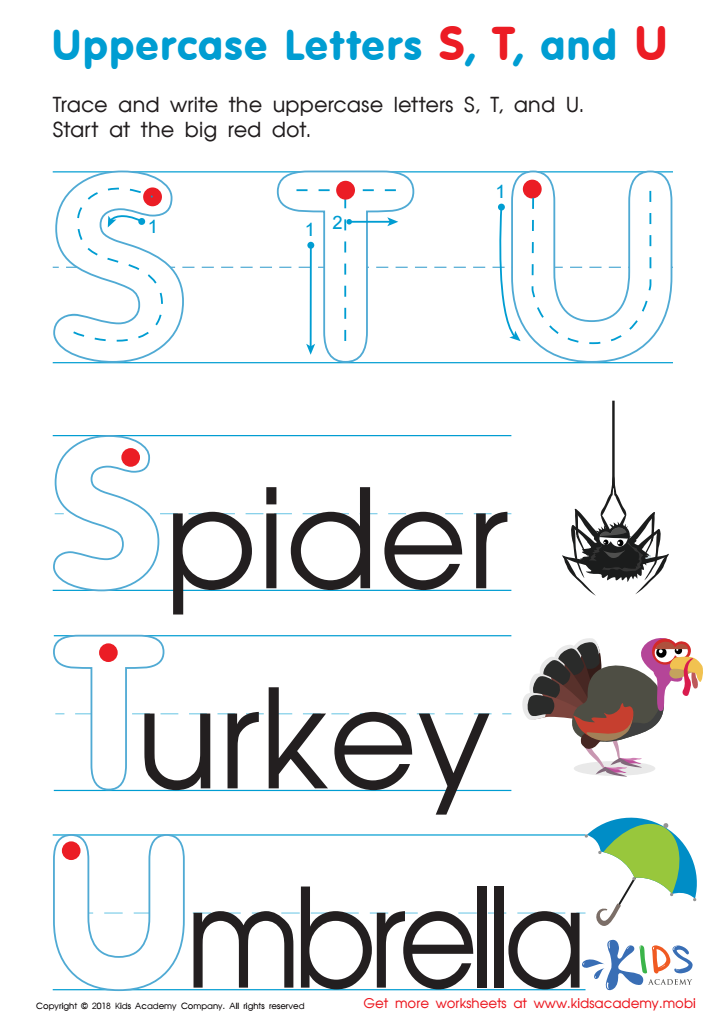
Uppercase Letters S, T, and U Worksheet
 Assign to My Students





Normal Letter U worksheets for Ages 4-5 are an essential educational tool that significantly aids in the early literacy development of young learners. At this critical stage of growth, children are just beginning to familiarize themselves with the alphabet, and the letter U can be particularly challenging due to its unique sounds and forms. These specialized worksheets are designed to target these challenges, making the learning process both effective and enjoyable.
Firstly, the Normal Letter U worksheets introduce children aged 4 to 5 to the uppercase and lowercase versions of the letter, ensuring they can recognize and differentiate it within different contexts. This foundational knowledge is crucial for reading and writing fluency in future academic endeavors. The worksheets incorporate a variety of engaging activities such as tracing, matching, and coloring exercises that not only reinforce the letter's shape and sound but also enhance fine motor skills and hand-eye coordination.
Moreover, these worksheets lay the groundwork for vocabulary development. By associating the letter U with words, children expand their language skills, improving their ability to communicate and comprehend more complex ideas as they progress in their educational journey.
In conclusion, Normal Letter U worksheets for Ages 4-5 are invaluable for providing a structured, interactive, and fun approach to learning. They play a pivotal role in setting a strong literacy foundation, making them an indispensable resource for early childhood education.