
Normal Missing Letters Worksheets for Ages 4-6
4 filtered results
Difficulty Level
Grade
Age
-
From - To
Subject
Activity
Standards
Introducing our Normal Missing Letters Worksheets, specifically designed for young learners aged 4-6! These engaging and educational sheets are crafted to help children grasp the basics of the alphabet by identifying and filling in missing letters. Perfect for both classroom and home use, our worksheets encourage early literacy skills, attention to detail, and cognitive development. With a variety of exercises tailored to keep your child intrigued, our Normal Missing Letters collection for Ages 4-6 is the ideal resource to bolster your child's journey into the world of letters and words. Dive into learning fun and watch their skills flourish!
Favorites
With answer key
Interactive
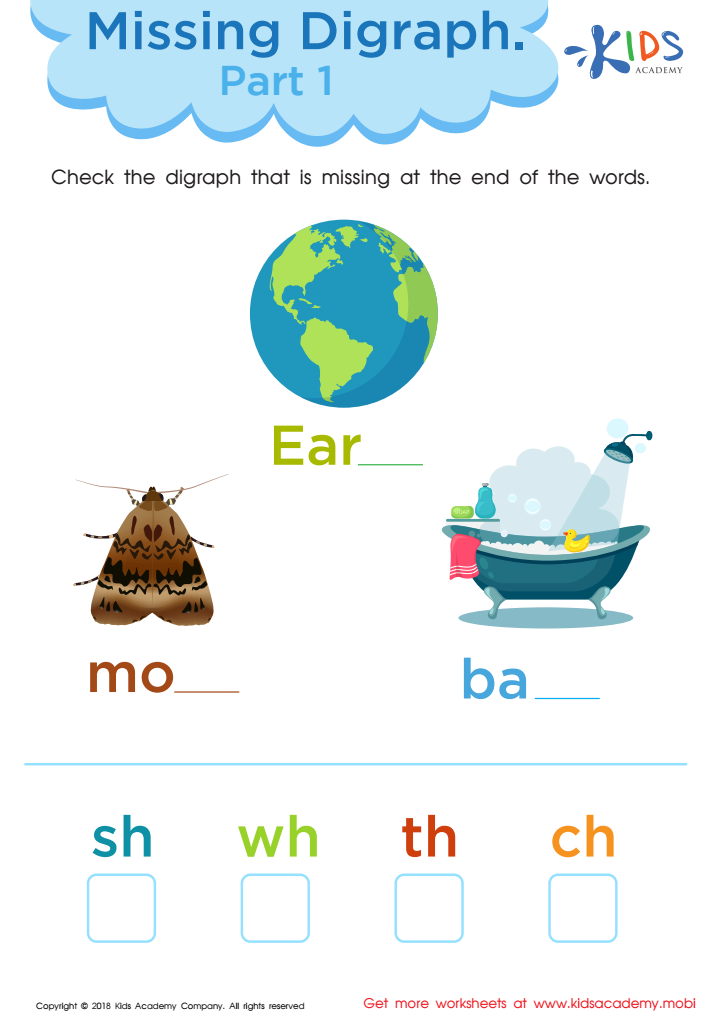
Missing Digraph: Part 1 Worksheet
Practice the 'th' digraph with this worksheet! Ask kids to say the words shown and sound out the letters below each image. Check the box with the correct digraph to complete. Examples include 'earth', 'bath' and 'moth', all ending with the same two letters. Phonics teaches that digraphs are two letters that make one sound.
 Assign to My Students
Missing Digraph: Part 1 Worksheet
Worksheet
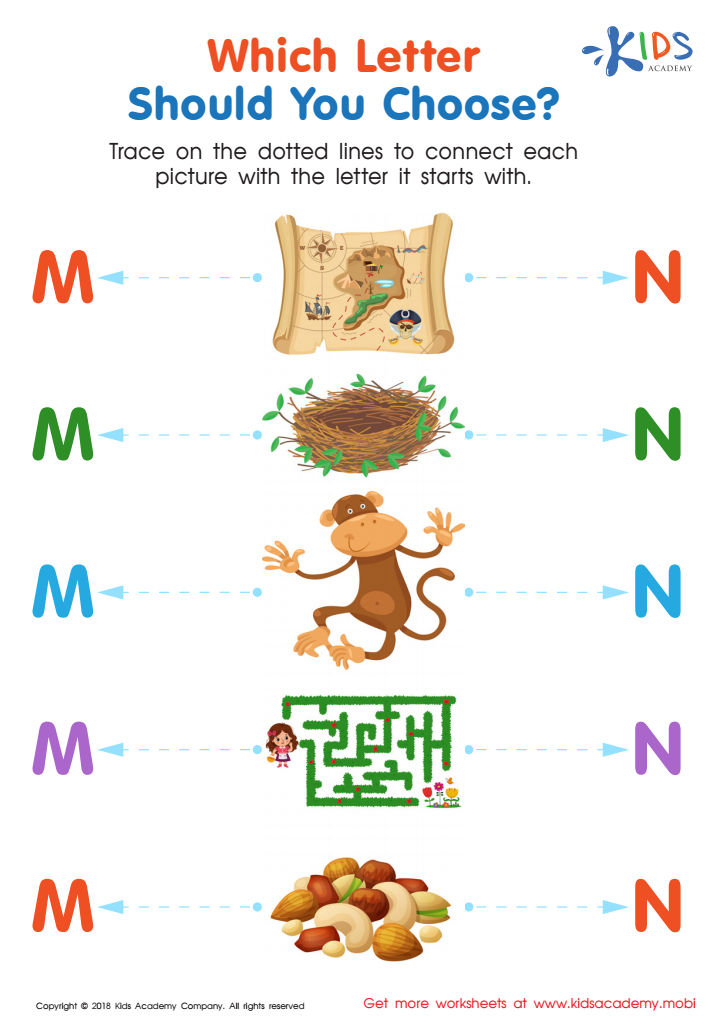
Which Letter Should you Choose? Worksheet
Trace the dotted lines to connect images with their first letter: "n" or "m." Challenge your child to name each picture, then identify the first letter and trace to the right letter! Five images in total.
Which Letter Should you Choose? Worksheet
Worksheet
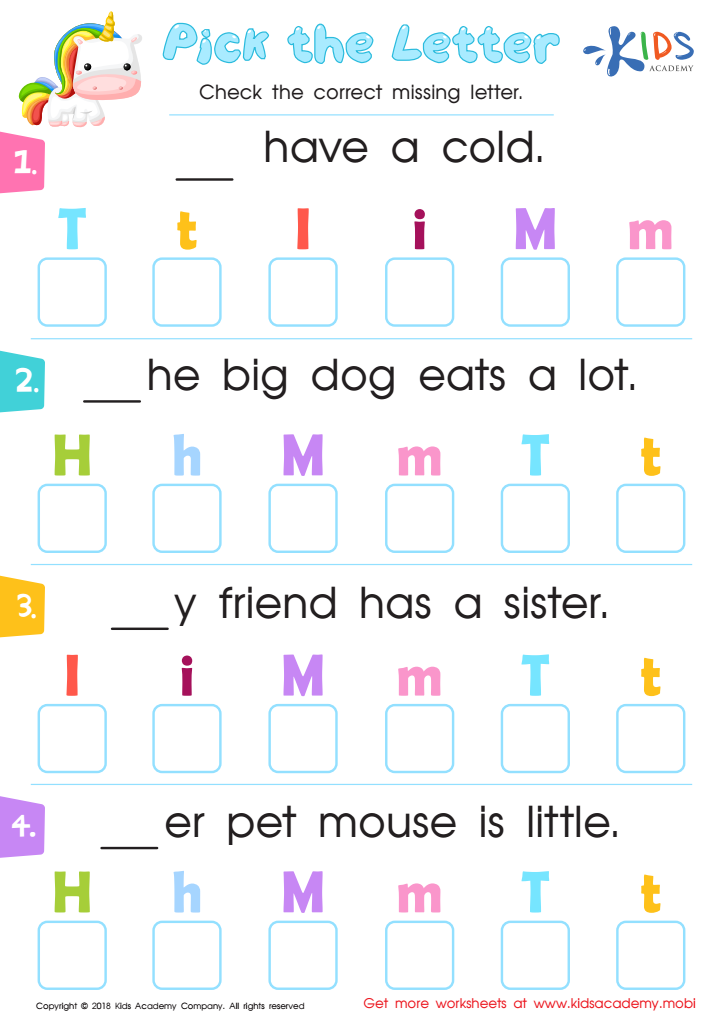
Pick the Letter Worksheet
Put your child's capitalization and reading skills to the test with this missing letter worksheet! Have them look at each sentence, note the blank and review the letters below. Find the uppercase letter that should start each sentence and check the boxes to complete. Fun and colorful, this worksheet is sure to keep your child engaged!
Pick the Letter Worksheet
Worksheet
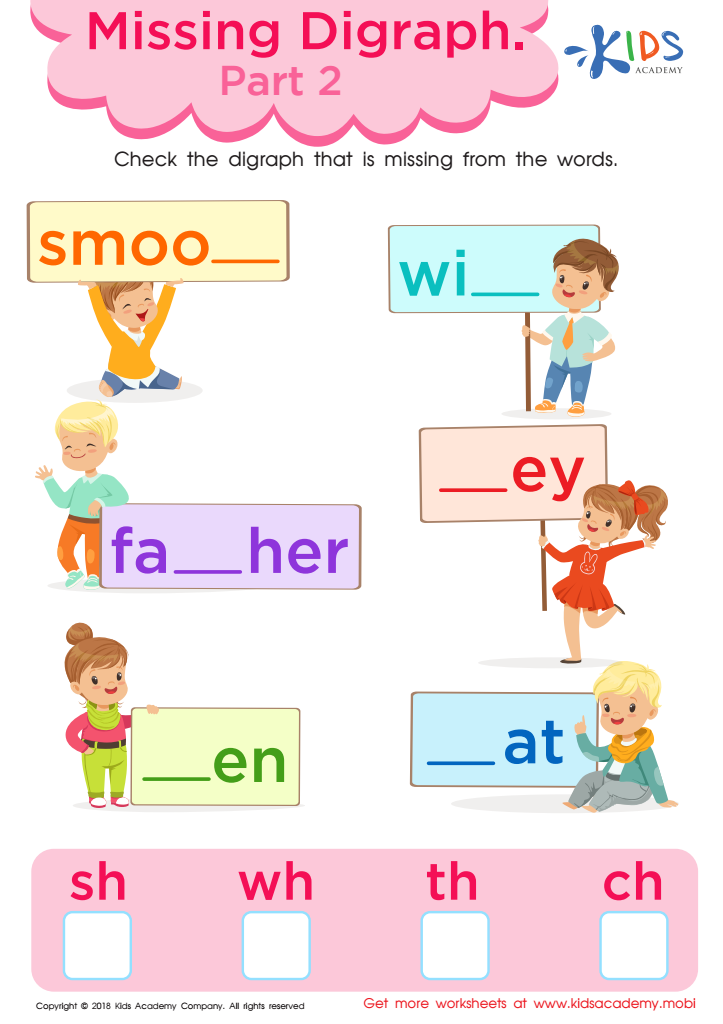
Missing Digraph: Part 2 Worksheet
Practice the "th" digraph with this fun worksheet from Kids Academy! See how it appears at the beginning, middle, or end of words and help learners fill in the blanks. Check if they got it right by finding the th digraph at the bottom!
Missing Digraph: Part 2 Worksheet
Worksheet
Join Kids Academy for Free
Who is primarily going to use this learning content?



Normal Missing Letters worksheets are an invaluable educational tool designed specifically for young learners aged 4-6. These worksheets focus on a critical developmental stage in children's literacy journey, providing them with the opportunity to enhance their letter recognition and alphabetical order skills. By engaging with Normal Missing Letters for Ages 4-6, children are encouraged to identify and fill in the missing letters, thereby reinforcing their understanding of the alphabet in a fun and interactive manner.
This form of practice is crucial for building a strong foundation in reading and spelling. It helps in sharpening a child's cognitive abilities, improving their memory, and boosting their confidence in language skills. The worksheets are thoughtfully created to cater to the learning pace of young children, making sure that the challenges are neither too hard nor too easy, but just right to stimulate their minds.
Moreover, Normal Missing Letters worksheets foster an environment of independent learning. Children can navigate through the exercises at their own pace, allowing for a personalized learning experience. This autonomy in learning instills a sense of accomplishment and encourages a positive attitude towards education.
In summary, Normal Missing Letters worksheets for Ages 4-6 are not just about learning the alphabet; they're about building the foundational blocks of literacy in a manner that is engaging, rewarding, and tailored to the developmental needs of young learners.







