Normal Vowel Diphthongs Worksheets for Ages 4-9 - Page 2
25 filtered results
-
From - To
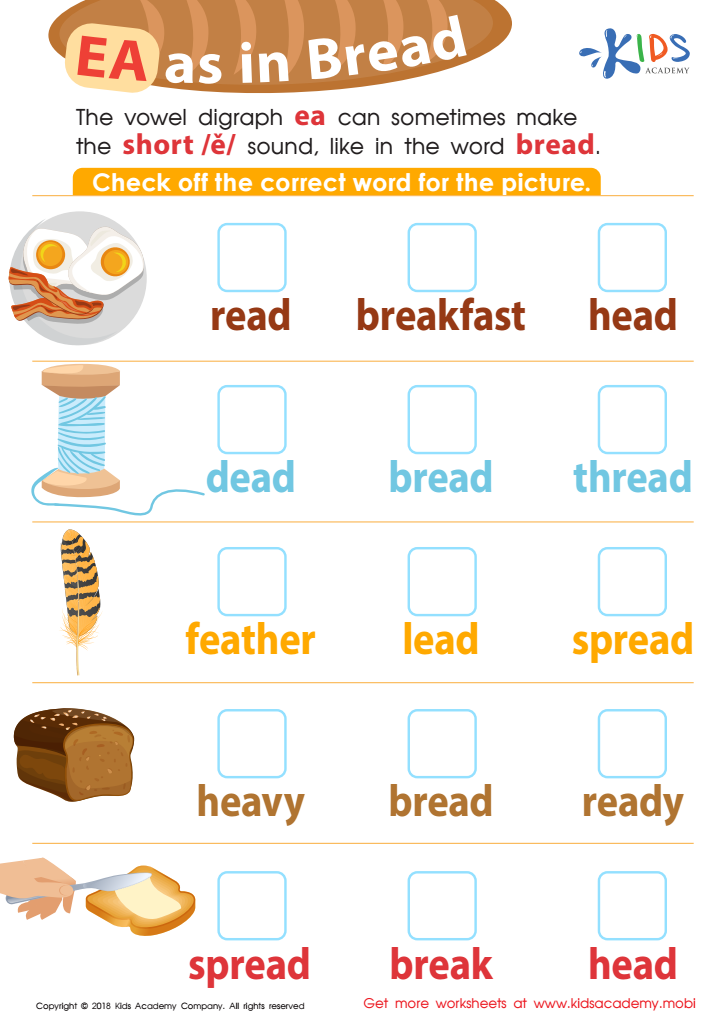
Reading: EA as in Bread Worksheet
 Assign to My Students


Normal vowel diphthongs are essential for children aged 4-9 as they significantly contribute to literacy development and speech clarity. Understanding diphthongs—combinations of two vowel sounds that glide into one another—enhances phonemic awareness, which is crucial for reading and spelling. When children recognize and produce diphthongs correctly, their overall language skills improve, enabling them to decode more complex words.
For parents and teachers, fostering awareness of diphthongs can prevent future reading difficulties, as many high-frequency words contain these sounds. Activities that encourage practice with diphthongs—through rhymes, songs, and games—make learning fun and engaging, which is particularly beneficial for young learners who often thrive in interactive environments.
Additionally, highlighting diphthong usage helps children better articulate their speech, enhancing communication skills essential for social interactions in their formative years. Encouraging exploration of phonics in this sound context prepares students for academic success and builds a foundation for more advanced language concepts in the future.
In summary, nurturing recognition of normal vowel diphthongs empowers children with vital phonetic skills, supports literacy development, and strengthens articulation, making it a key focus for both parents and educators.