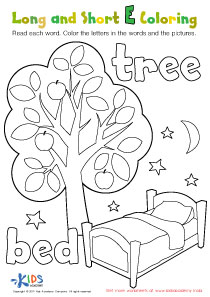
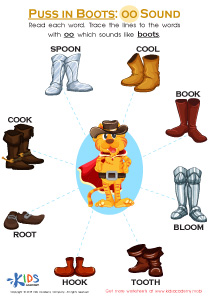
Normal Middle Vowel Worksheets for Ages 5-8
4 filtered results
-
From - To
Discover engaging and educational Normal Middle Vowel Worksheets designed for children ages 5-8. Created by Kids Academy, these expertly crafted worksheets help young learners master vowel sounds within words, bolstering essential reading skills. Each activity facilitates phonics development through fun, interactive exercises that simplify complex concepts, making learning enjoyable and effective. Ideal for use at home or in the classroom, these worksheets support your child's literacy journey, enhancing vocabulary, pronunciation, and reading fluency. Equip your young reader with the tools they need to succeed in phonics with Kids Academy’s trusted and high-quality resources.
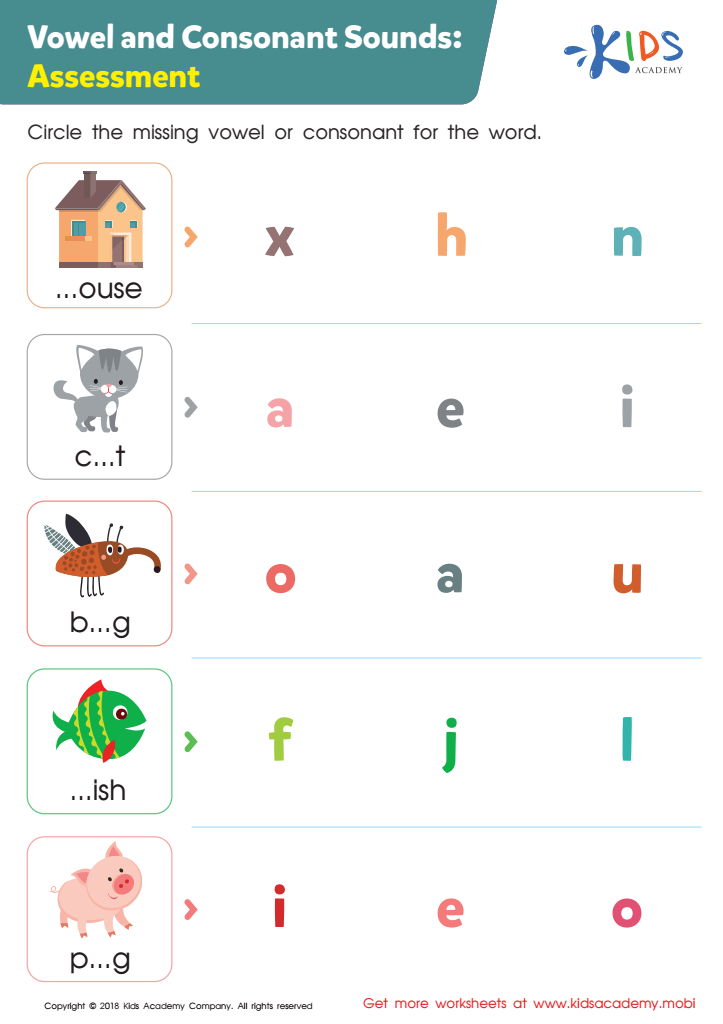
Vowel and Consonant Sounds: Assessment Worksheet
 Assign to My Students
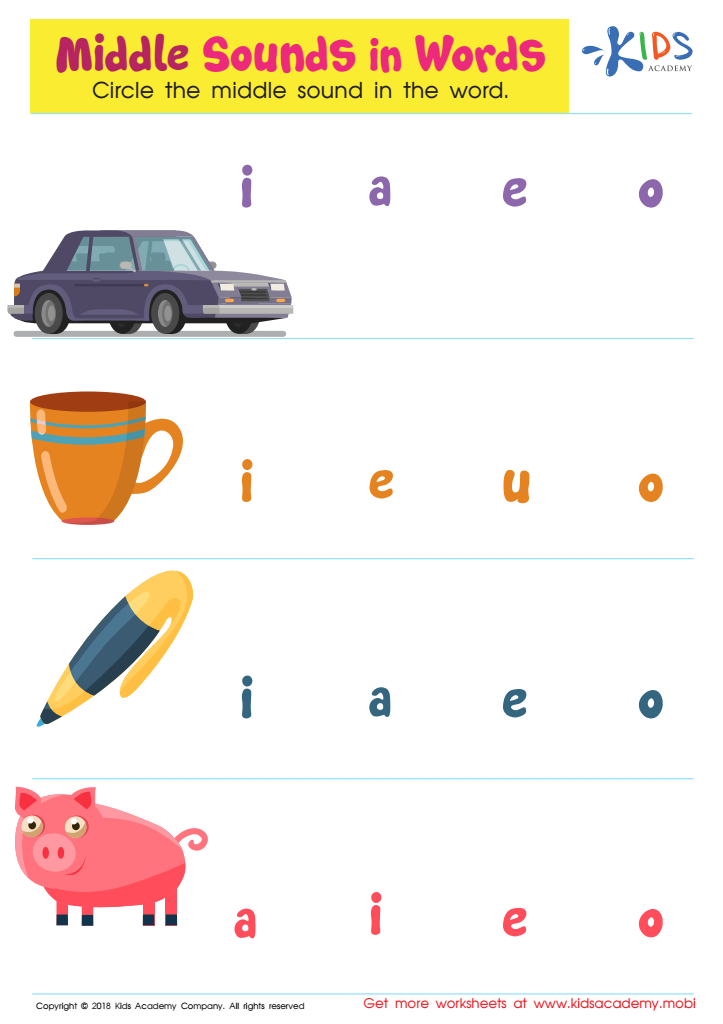
Middle Sounds in Words Worksheet
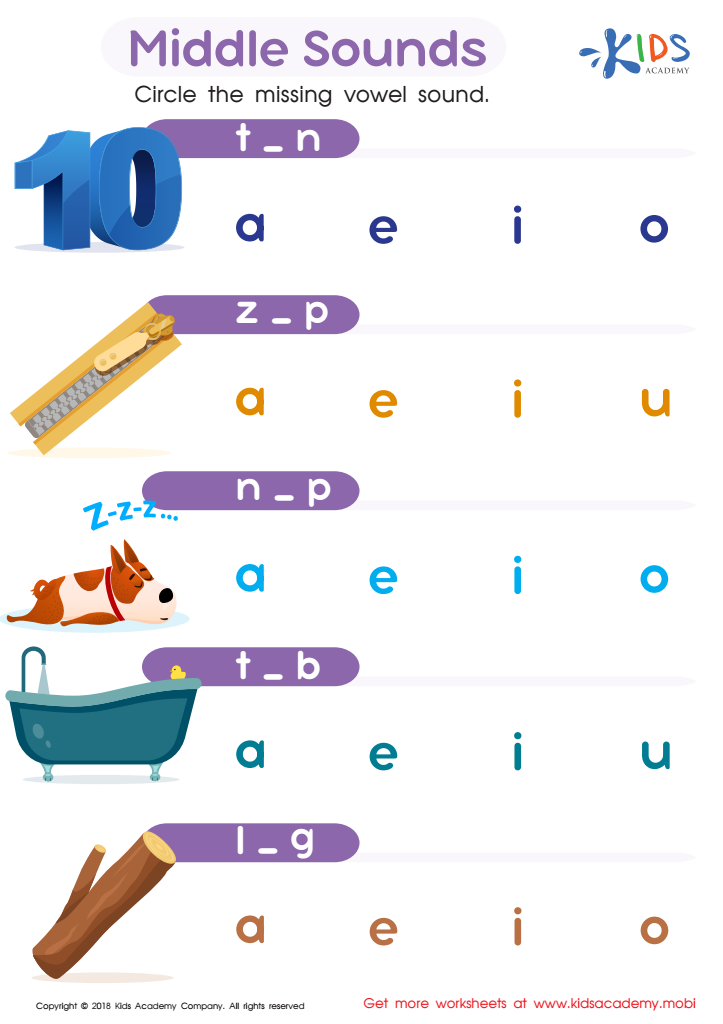
Middle Sounds Worksheet
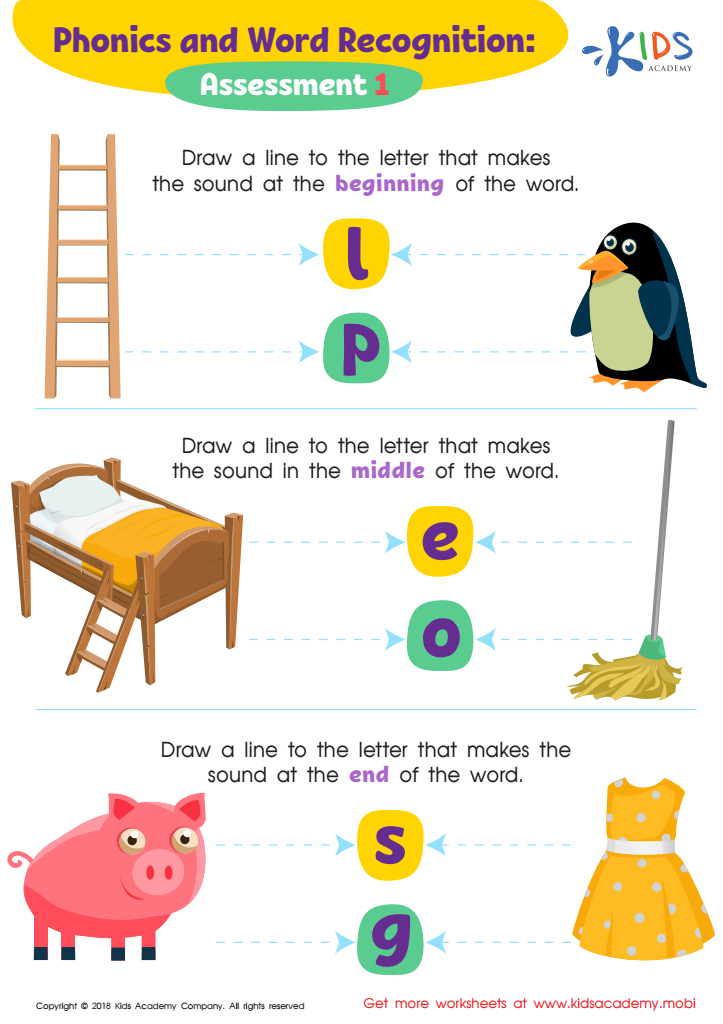
Phonics and Word Recognition: Assessment 1 ELA Worksheet



Understanding normal middle vowel sounds is vital for children aged 5-8, as this is a crucial period in their language and literacy development. These vowel sounds include short and long vowels like "a" in "cat" or "a" in "cake". When children recognize these, they build important phonemic awareness, helping them to effectively decode and sound out words.
Parents and teachers should care about this development because it forms the foundation for reading and spelling skills. Phonemic awareness—the ability to hear, identify, and manipulate individual sounds in spoken words—is a strong predictor of early reading success. By effectively identifying and using middle vowel sounds, children can confidently approach new words, enhancing their reading fluency and comprehension.
Moreover, mastering these sounds contributes to better spelling. Knowing whether a word contains a short vowel or long vowel sound helps children make informed choices about letter patterns when writing. For instance, it’s clear why "cap" becomes "cape" when an 'e' is added.
Children who struggle with these sounds may find reading laborious, negatively impacting their motivation and academic confidence. Therefore, engaging in activities that promote phonemic awareness and provide targeted practice on middle vowel sounds is essential. Parents and teachers play a key role in fostering this critical skill during these formative years.