Normal Vowel Diphthongs Worksheets for Ages 5-8 - Page 2
25 filtered results
-
From - To
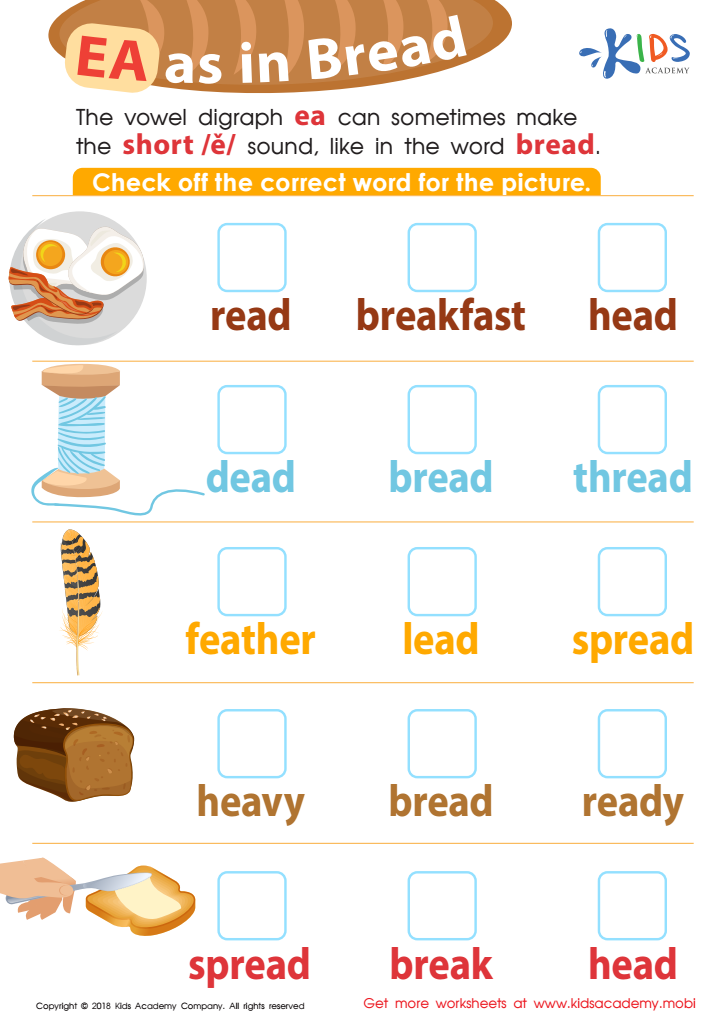
Reading: EA as in Bread Worksheet
 Assign to My Students


Understanding normal vowel diphthongs is crucial for young learners, especially between the ages of 5-8. Diphthongs are complex vowel sounds where two vowel sounds are combined within the same syllable, smoothly gliding from one sound to another. Examples include "oi" as in "boil" and "ow" as in "cow." Mastery of diphthongs equips children with the ability to decode, read, and pronounce words accurately, laying a strong foundation for reading fluency.
At this formative stage, phonics and phonological awareness are fundamental components of literacy development. Recognizing and correctly pronouncing diphthongs aids in expanding a child’s vocabulary, spelling proficiency, and word recognition skills. This directly influences their ability to comprehend texts, express themselves through effective communication, and logically approach unfamiliar words.
Teachers and parents who emphasize diphthong education foster a supportive environment conducive to confident reading. This support reduces frustration and builds a love for reading. Moreover, diphthong competency can impact future learning; as children encounter more complex texts, an early understanding of these sound combinations makes the transition smoother.
In summary, prioritizing normal vowel diphthongs for young learners enhances basic literacy skills, provides a critical phonetic foundation, and ensures continuous progress in reading and writing, which together contribute to overall academic success.