Normal Vowels and Consonants Worksheets for Ages 5-8 - Page 2
26 filtered results
-
From - To
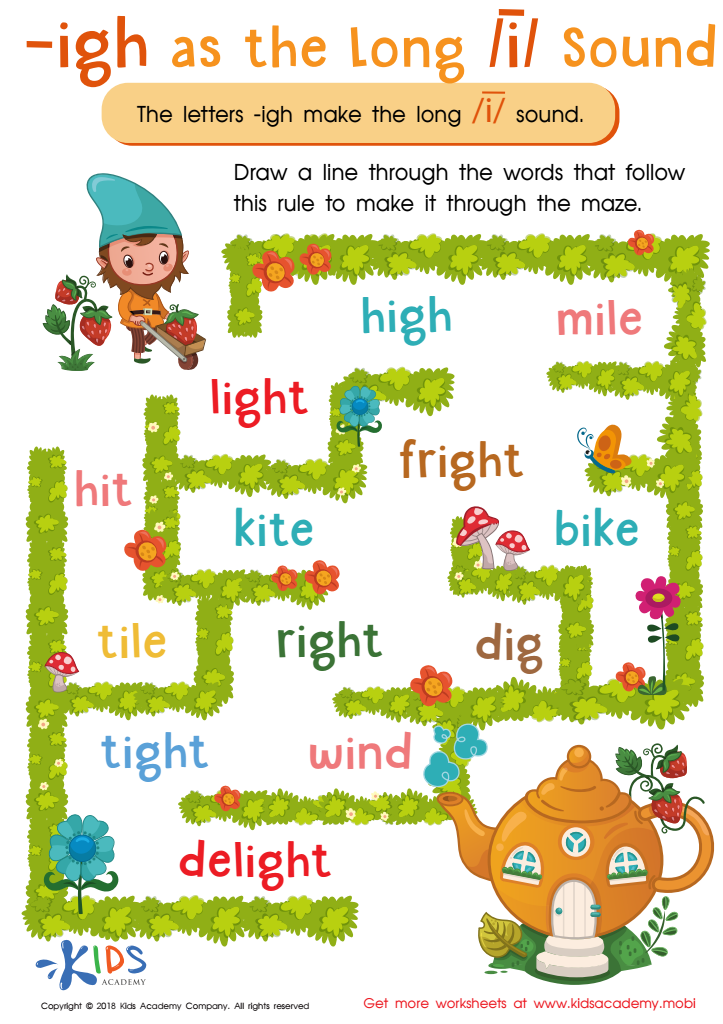
Reading: IGH as Long I Worksheet
 Assign to My Students
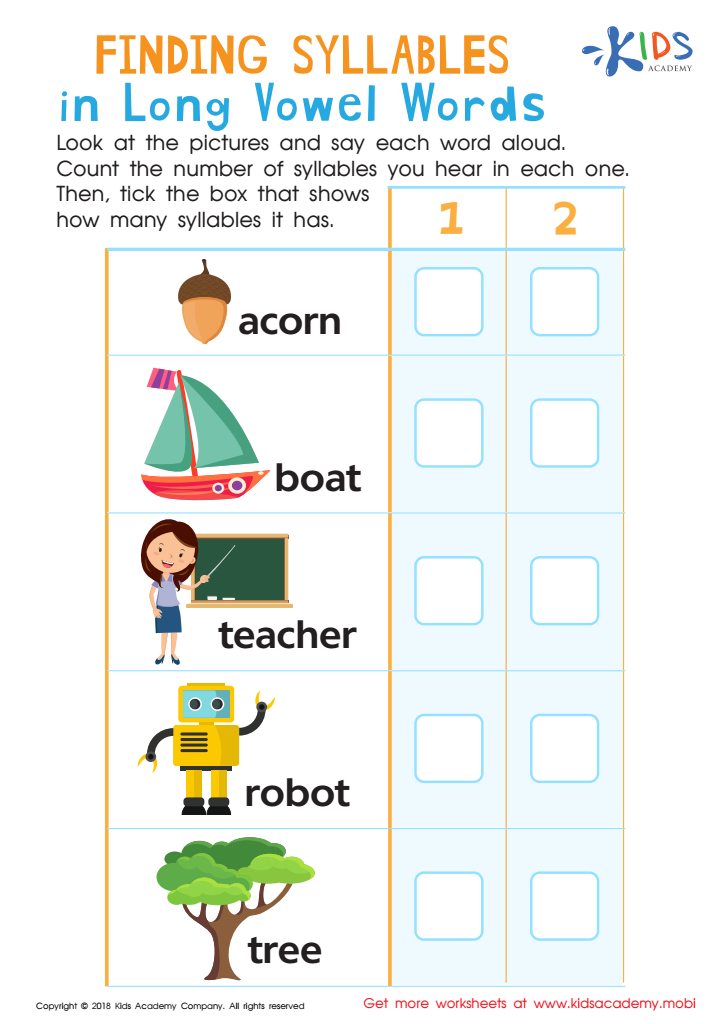
Finding Syllables in Long Vowel Words Worksheet



Parents and teachers should care about normal vowels and consonants for children aged 5-8 because these are foundational elements of language learning and literacy. At this stage, children are in the crucial period of acquiring basic reading and writing skills, and a solid understanding of vowels and consonants is essential for this development.
Vowels and consonants form the building blocks of words, and knowing them helps children decode and pronounce new words accurately. Mastery of these sounds enables children to blend phonemes to form syllables and words, a skill critical for reading fluency. Moreover, recognizing different vowel and consonant sounds enhances phonemic awareness, enabling children to understand how sounds correspond to written letters within the English language's structure.
Additionally, familiarity with normal vowels and consonants aids in correct spelling and empowers children to write independently, enhancing their overall communication skills. Early difficulties in grasping these concepts can lead to frustration and reading challenges, so early intervention and consistent practice are vital.
Teachers and parents who emphasize the importance of vowels and consonants contribute positively toward their children's academic success and cultivate a foundation for lifelong literacy and learning. Therefore, investing time and resources into teaching these phonetic building blocks is essential for establishing effective language skills in young learners.






