Filters

11 filtered results

Clear all filters
Favorites
With answer key
Interactive

11 filtered results

Difficulty Level

Grade


Subject

    Discover our engaging "Normal Elementary Phonics Worksheets" designed specifically for children ages 6 to 9. These interactive resources help young learners master essential phonics skills, laying the foundation for reading success. Each worksheet features fun activities, including letter recognition, sound blending, and word building, tailored to enhance learning in an enjoyable way. Perfect for both classroom settings and at-home education, these worksheets encourage early literacy, boost vocabulary, and build confidence in young readers. Explore our collection to find diverse exercises that cater to different learning styles, making phonics practice a delightful experience for every child. Start their phonics journey today!

    Check out this FREE Trial Lesson on Elementary Phonics for age 6-9!

    Sight Word Review

    Favorites
    With answer key
    Interactive
    • 6-9
    • With answer key
    • Elementary Phonics
    • Normal
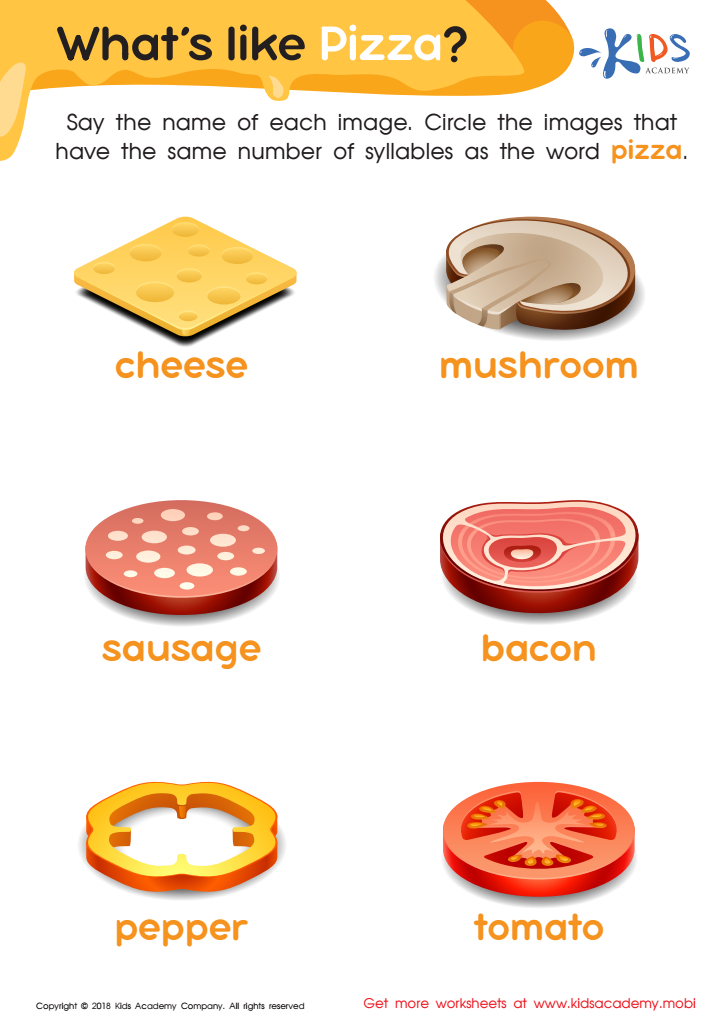
    What's Like Pizza? Worksheet
    What's Like Pizza? Worksheet

    What's Like Pizza? Worksheet

    Encourage your kids to exercise their minds with this pizza worksheet! Ask them to name the ingredients they like on their favourite pizzas. Then, help them circle the images that have the same number of syllables as 'pizza'. They'll have fun while learning too!
    What's Like Pizza? Worksheet
    Worksheet
    Sight Word Archery Worksheet
    Sight Word Archery Worksheet

    Sight Word Archery Worksheet

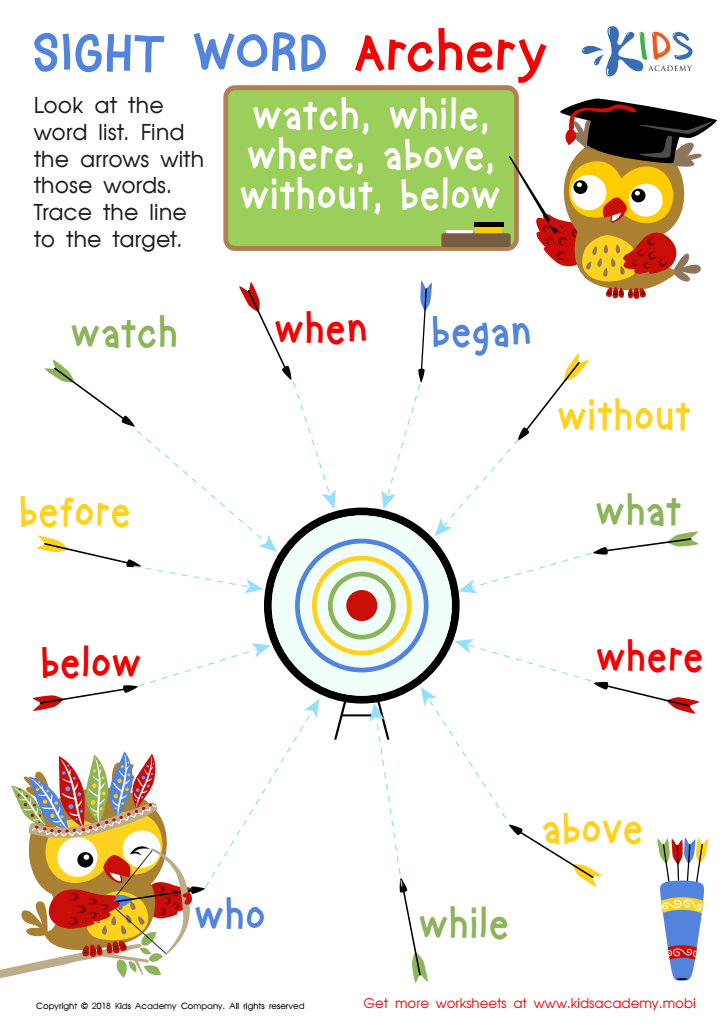
    Read the words list with your kids, pointing at each one. Ask them to do the same. Help them find the arrows with those words and trace the line to the target in the centre.
    Sight Word Archery Worksheet
    Worksheet
    Open Syllables Worksheet
    Open Syllables Worksheet

    Open Syllables Worksheet

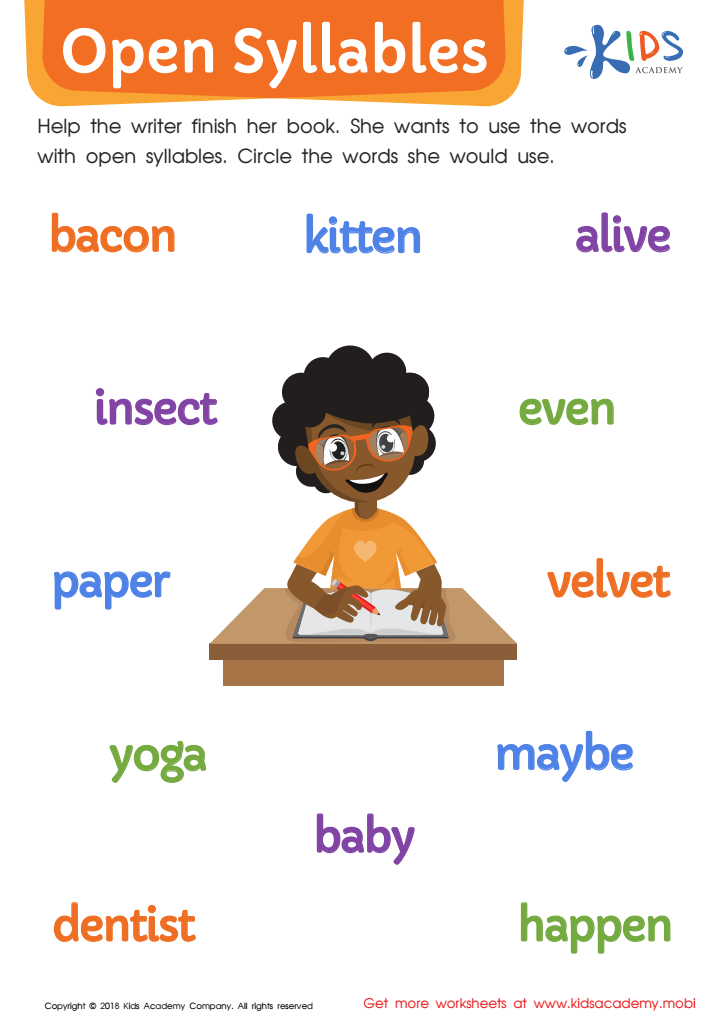
    Before beginning this worksheet, make sure your child knows what open syllables are. If not, take time to teach them with examples. Then, help the writer finish her book by circling words with open syllables. She needs your child's help!
    Open Syllables Worksheet
    Worksheet
    Reading: Break Them Apart Worksheet
    Reading: Break Them Apart Worksheet

    Reading: Break Them Apart Worksheet

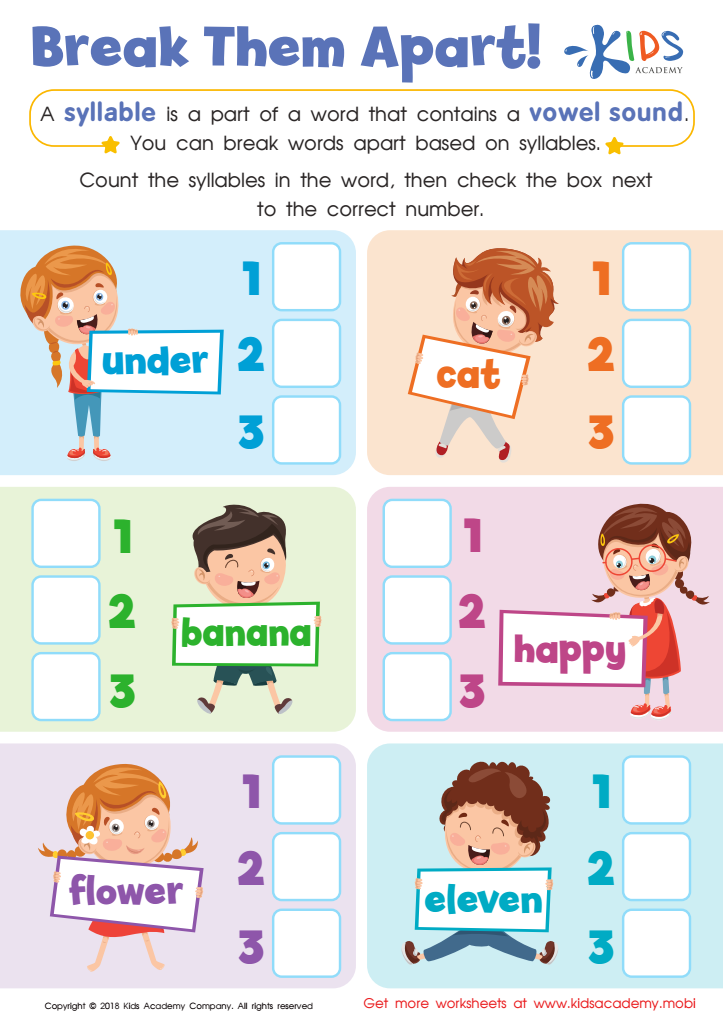
    See if students understand syllables with this fun worksheet. It teaches them that a syllable is a word part with a vowel sound. Kids read each word and choose how many parts it has. Doing this often helps them decode new words and gain confidence.
    Reading: Break Them Apart Worksheet
    Worksheet
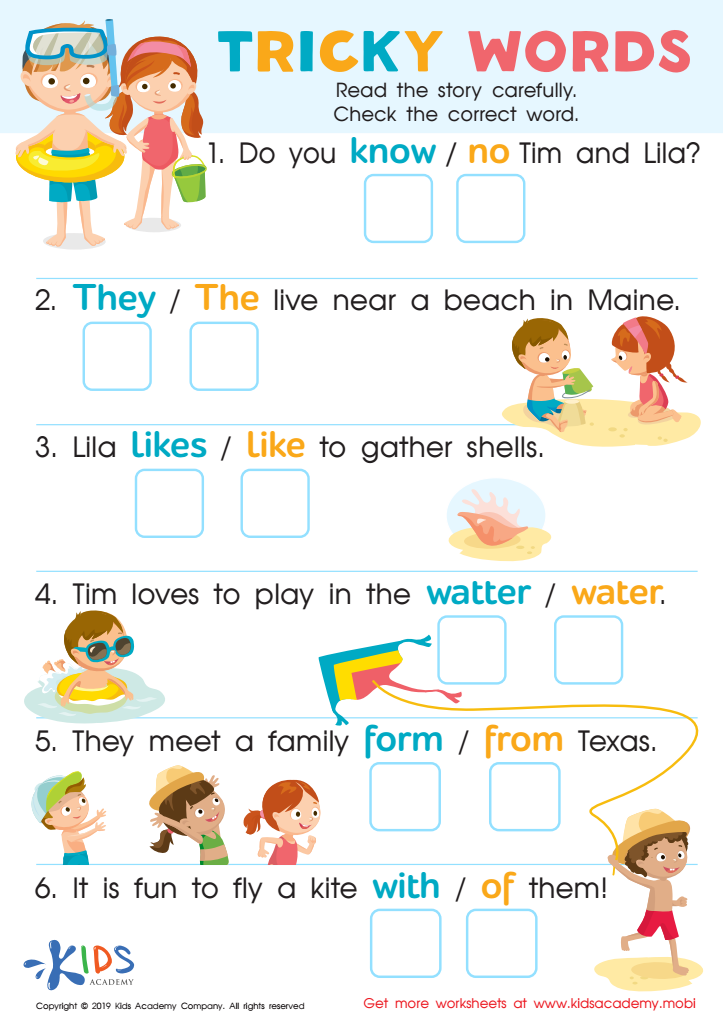
    Tricky Words Worksheet
    Tricky Words Worksheet

    Tricky Words Worksheet

    Reading can be tricky to start with, but this worksheet helps kids learn the basics of editing and strengthens their attention to detail. They'll select the right word from tricky choices, improving their reading and grammar skills.
    Tricky Words Worksheet
    Worksheet
    Phonics and Word Recognition: Assessment 1 Worksheet
    Phonics and Word Recognition: Assessment 1 Worksheet

    Phonics and Word Recognition: Assessment 1 Worksheet

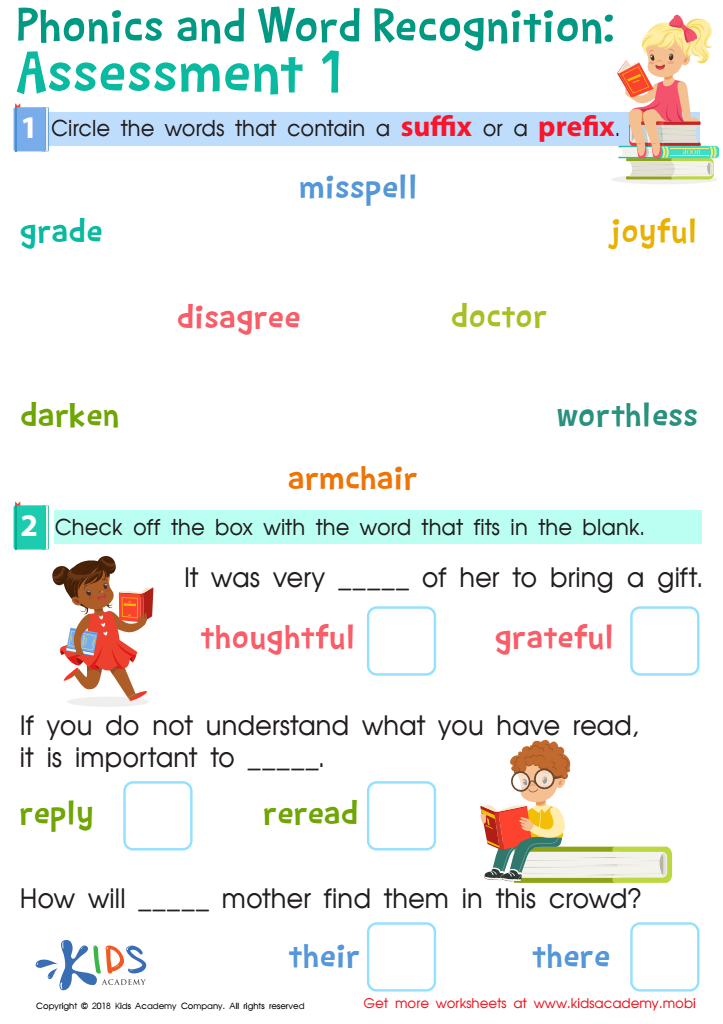
    Explain prefixes (words added to start of another word to give it a new meaning) and suffixes (added to end of word to change its meaning) to your kids with examples like 'unhappy' (prefix) and 'forgetful' (suffix). Now, help your child complete this worksheet, including circling words and checking boxes.
    Phonics and Word Recognition: Assessment 1 Worksheet
    Worksheet
    How Many Syllables? Worksheet
    How Many Syllables? Worksheet

    How Many Syllables? Worksheet

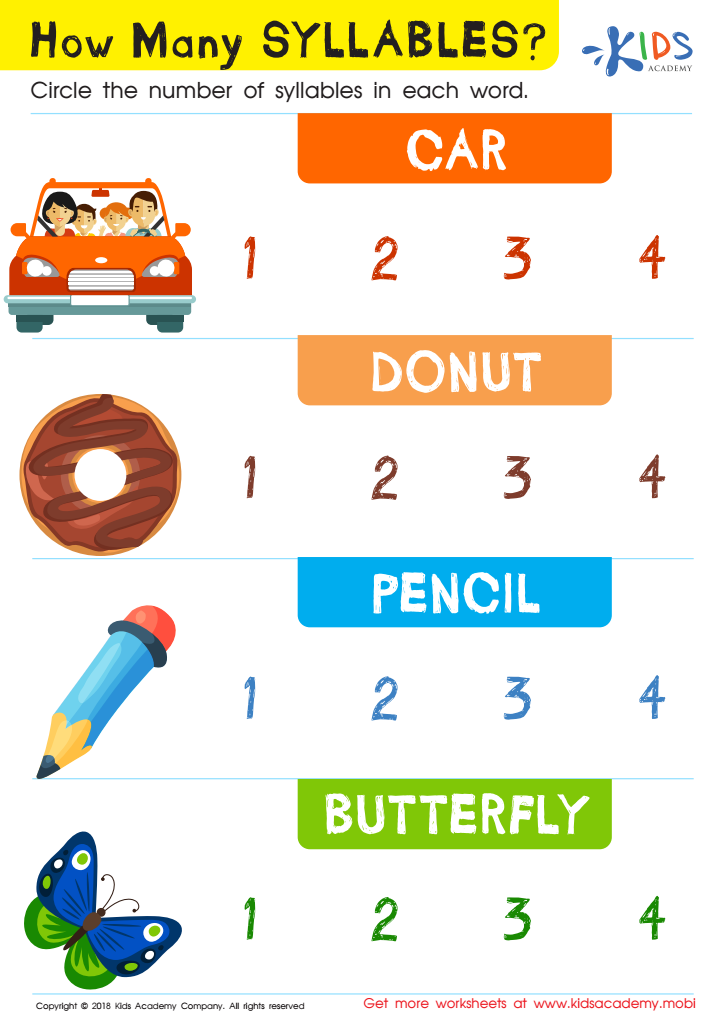
    Syllabication or 'chunking' helps students decode words more quickly and increase fluency. This traceable worksheet is great for emerging readers, combining fun and fine motor practice with chunking words and counting syllables.
    How Many Syllables? Worksheet
    Worksheet
    Homophones: Crayons Worksheet
    Homophones: Crayons Worksheet

    Homophones: Crayons Worksheet

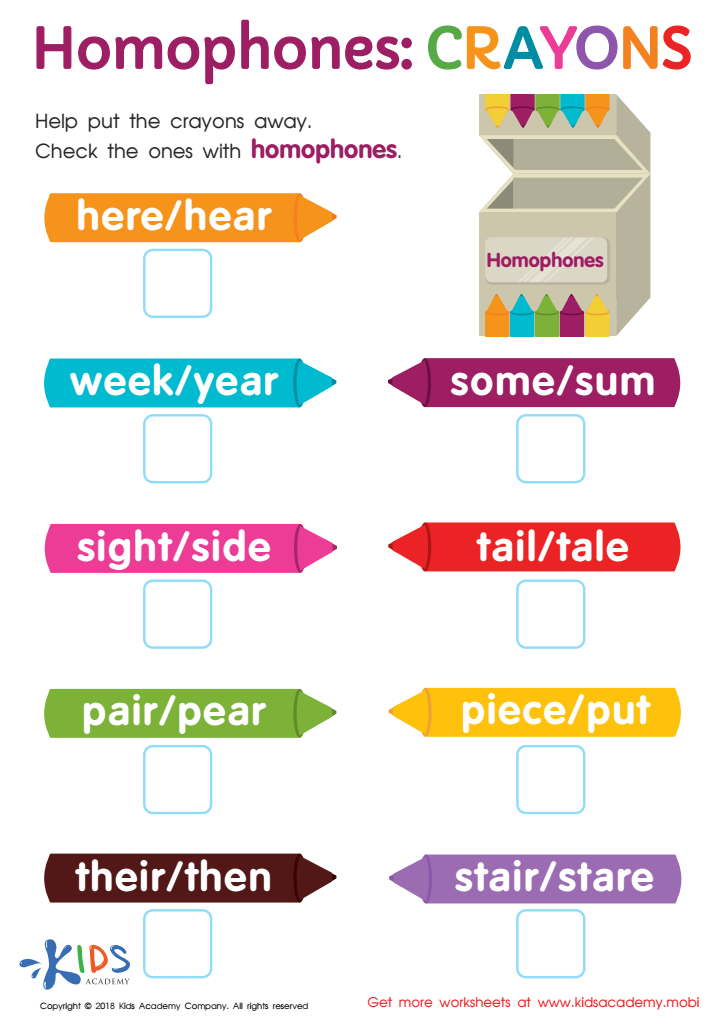
    Ask your kids: "What are homophones?" Explain that homophones are words that sound alike but have different meanings, like 'dare' and 'deer'. Ask them to identify homophones by putting the crayons in this printout away according to the words.
    Homophones: Crayons Worksheet
    Worksheet
    Tennis Ball Syllables Worksheet
    Tennis Ball Syllables Worksheet

    Tennis Ball Syllables Worksheet

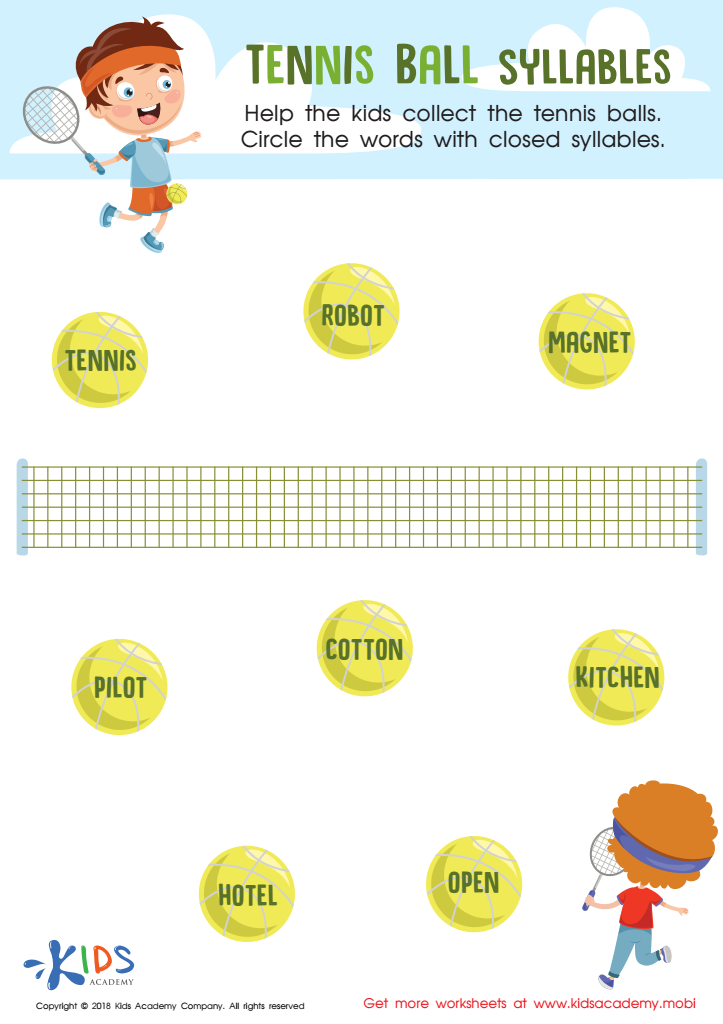
    To help your kids become fluent speakers, they need to learn syllables. A word can have one to seven syllables, with longer words having more. For this level, they will be working with one or two syllables. Assist them as they circle the words with closed syllables in this worksheet.
    Tennis Ball Syllables Worksheet
    Worksheet
    The Order of Syllables Worksheet
    The Order of Syllables Worksheet

    The Order of Syllables Worksheet

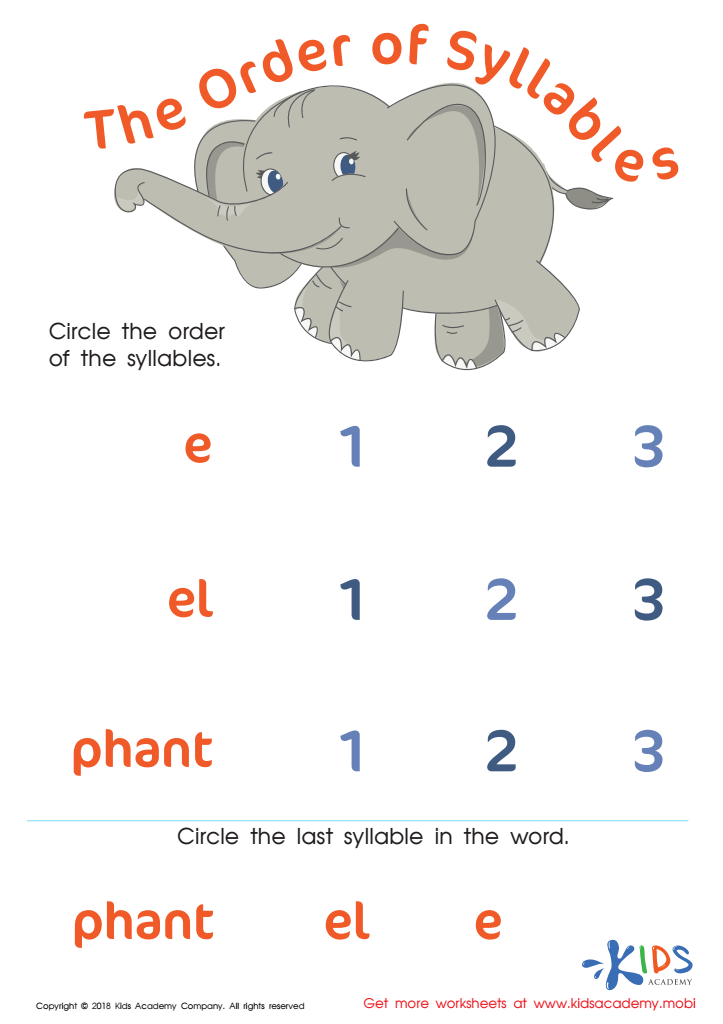
    Syllabication is vital for prereading and decoding words. Download this fun, free worksheet to help your reader practice breaking words into syllables and arranging them for reading. It also strengthens fine motor skills as they trace the numbers for each syllable, guided by a cheerful elephant!
    The Order of Syllables Worksheet
    Worksheet
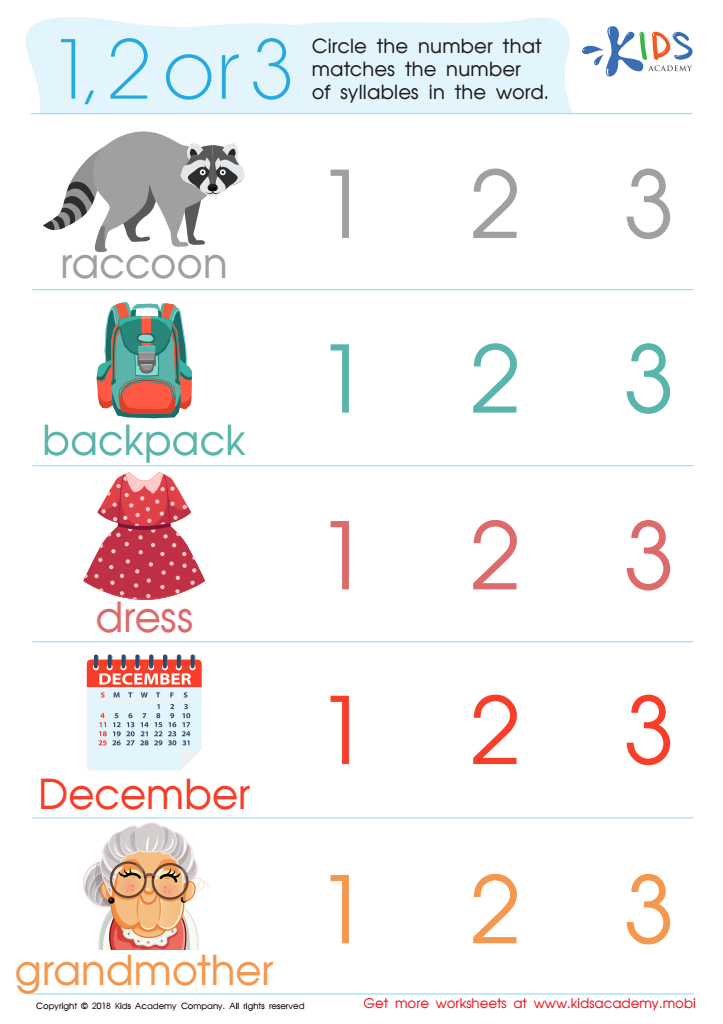
    1, 2 or 3? Worksheet
    1, 2 or 3? Worksheet

    1, 2 or 3? Worksheet

    Do your kids know about syllables? Test their understanding with this worksheet. Read the words aloud and ask them to say them with you. Help them circle the number that matches the number of syllables in each word. Perfect for expanding knowledge or testing how much they've already learned.
    1, 2 or 3? Worksheet
    Worksheet


    Normal Elementary Phonics for Ages 6-9 is essential for both parents and teachers to understand because it lays the foundation for literacy development in young learners. During these formative years, children develop crucial reading skills that shape their educational journey and overall confidence. Phonics instruction helps children learn the relationship between letters and sounds, enabling them to decode words effectively. This skill not only fosters fluency in reading but also enhances comprehension, which is vital for academic success across subjects.

    Parents play a critical role in supporting their child's literacy at home. By understanding phonics, they can reinforce the skills taught in school through engaging activities, creating a stronger home-school connection. Teachers, on the other hand, can use effective phonics strategies to differentiate instruction and meet the diverse learning needs of their students, ensuring that every child has the opportunity to succeed.

    Moreover, early investment in phonics sets children on a positive trajectory, reducing the likelihood of reading difficulties later on. Ultimately, caring about Normal Elementary Phonics empowers both parents and teachers to nurture confident, capable readers who can navigate the world with greater ease and comprehension, paving the way for lifelong learning.