Normal Chess Worksheets for Ages 6-9 - Page 2
47 filtered results
-
From - To
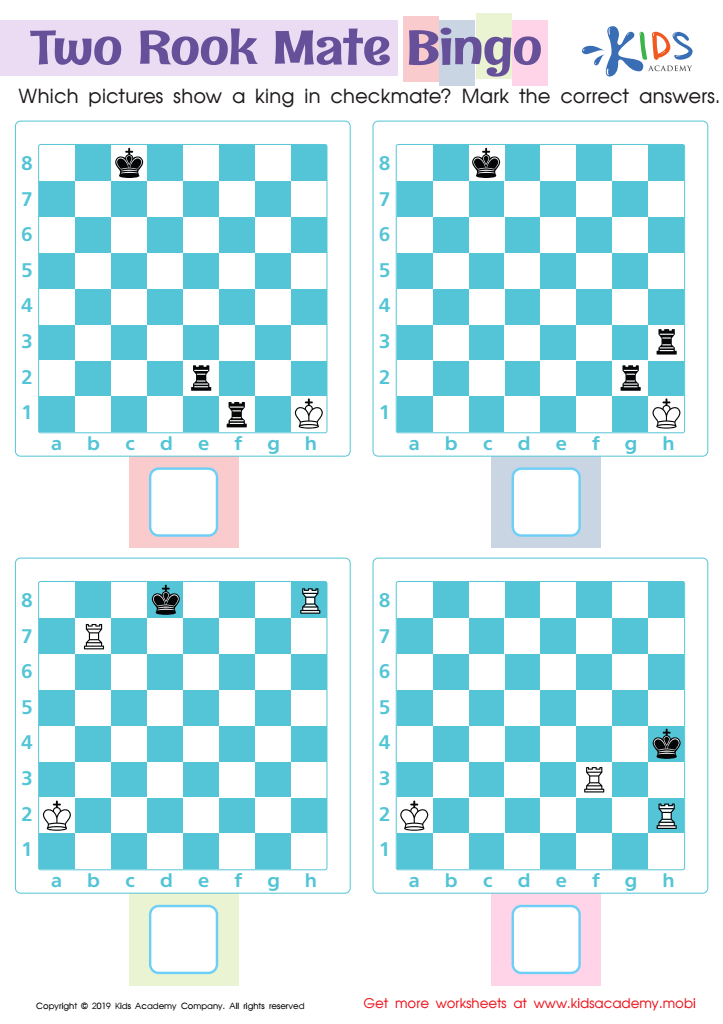
Two Rook Bingo Worksheet
 Assign to My Students
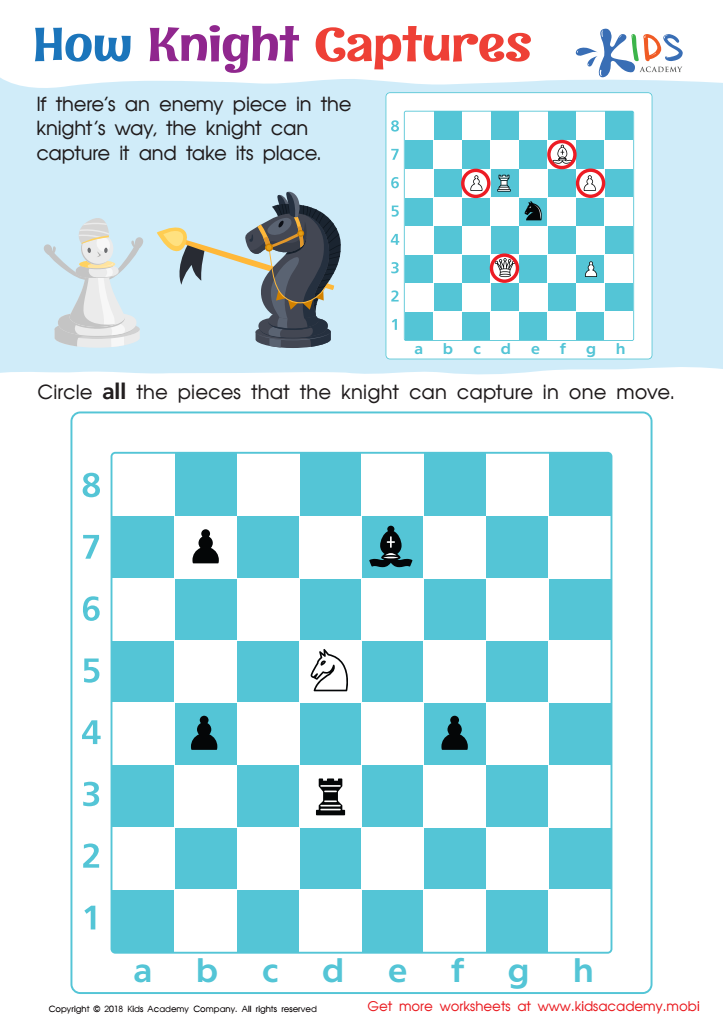
How Knight Captures Worksheet
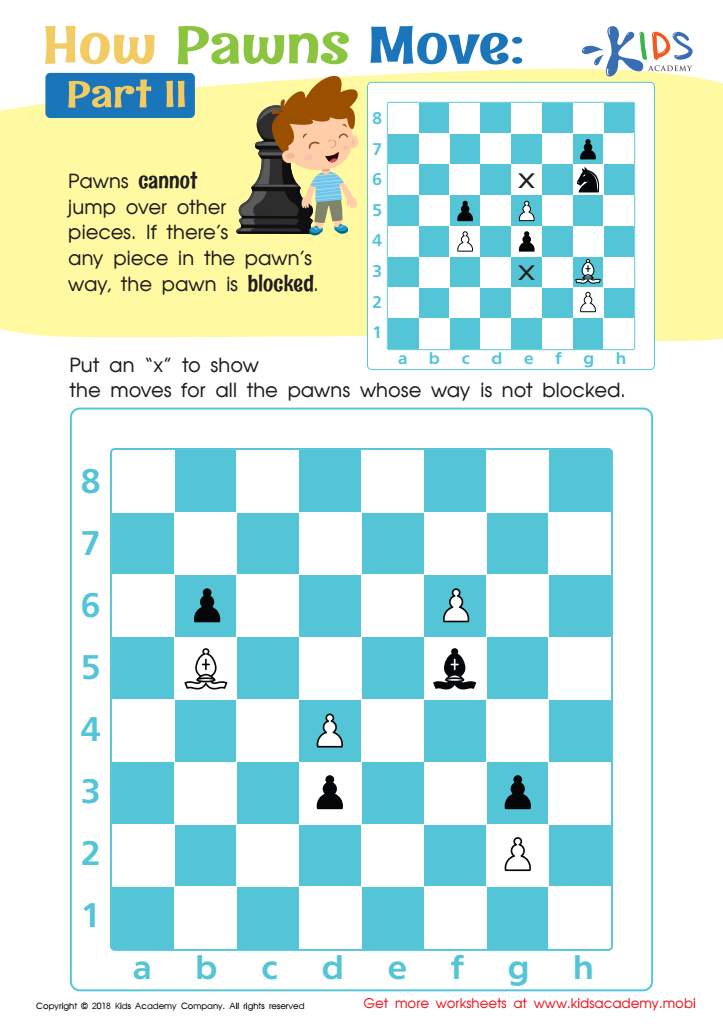
How Pawns Move: Part II Worksheet
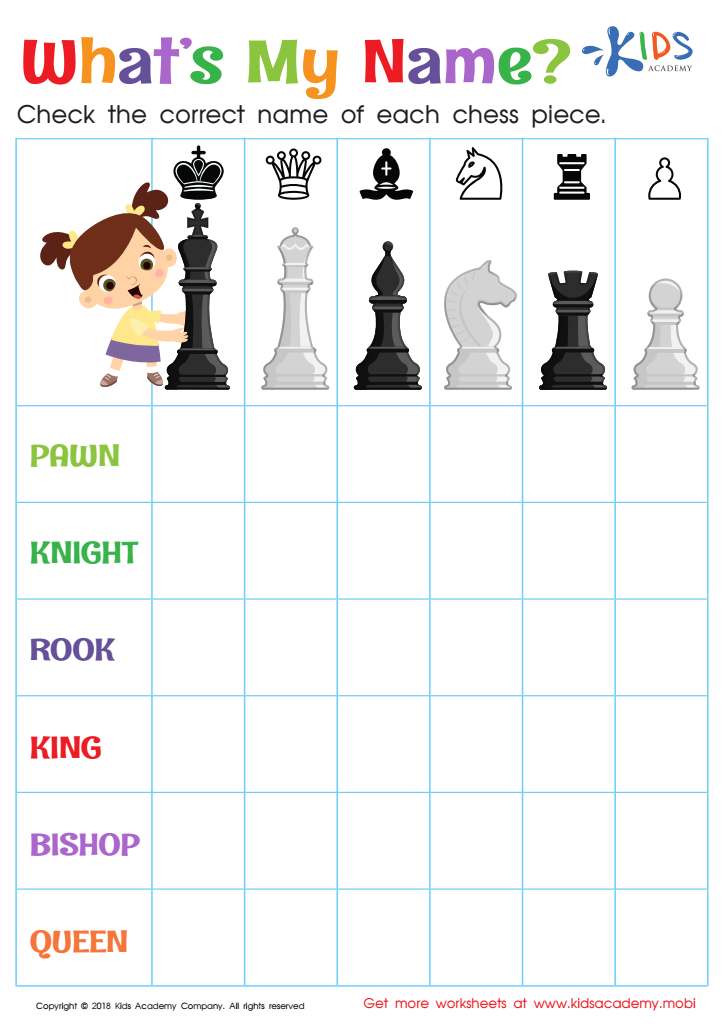
What's My Name? Worksheet
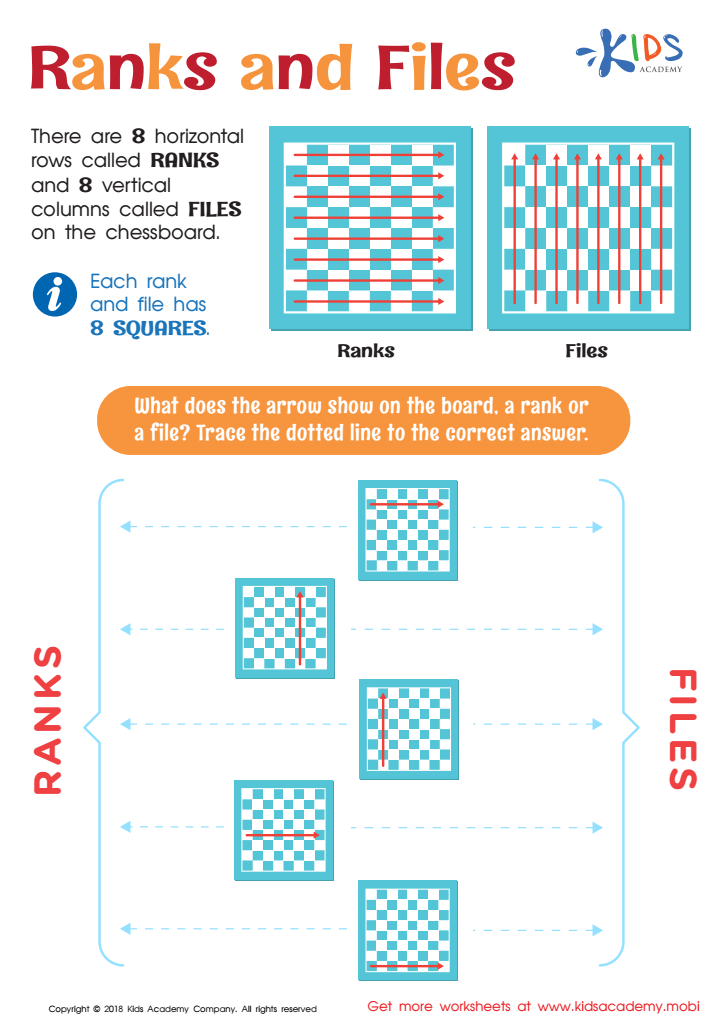
Ranks and Files Worksheet
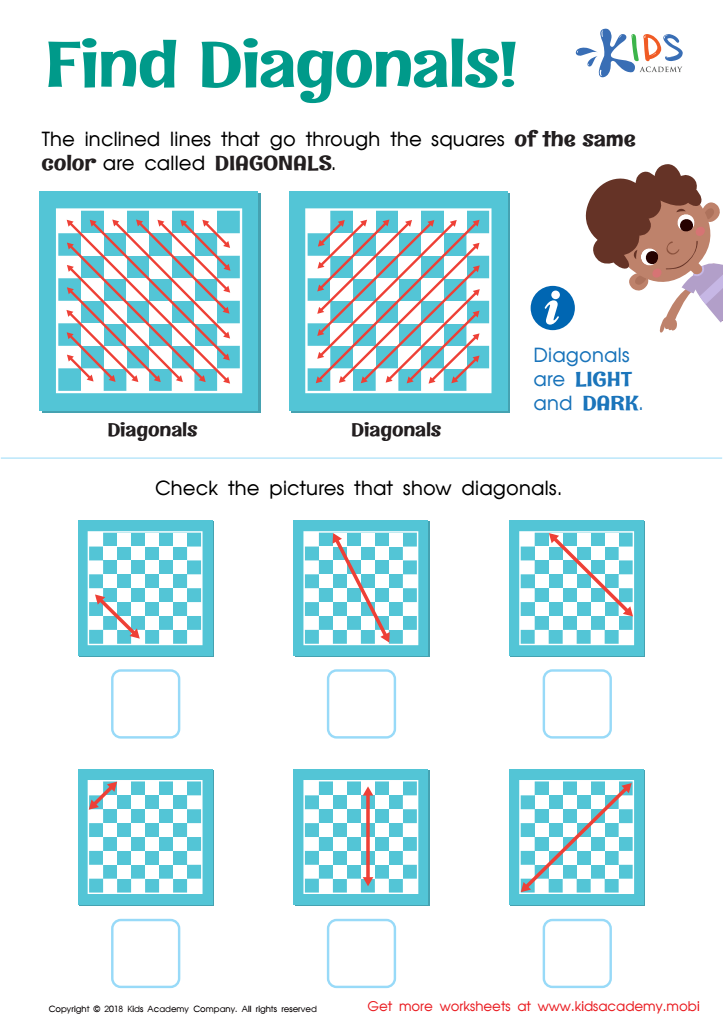
Find Diagonals Worksheet
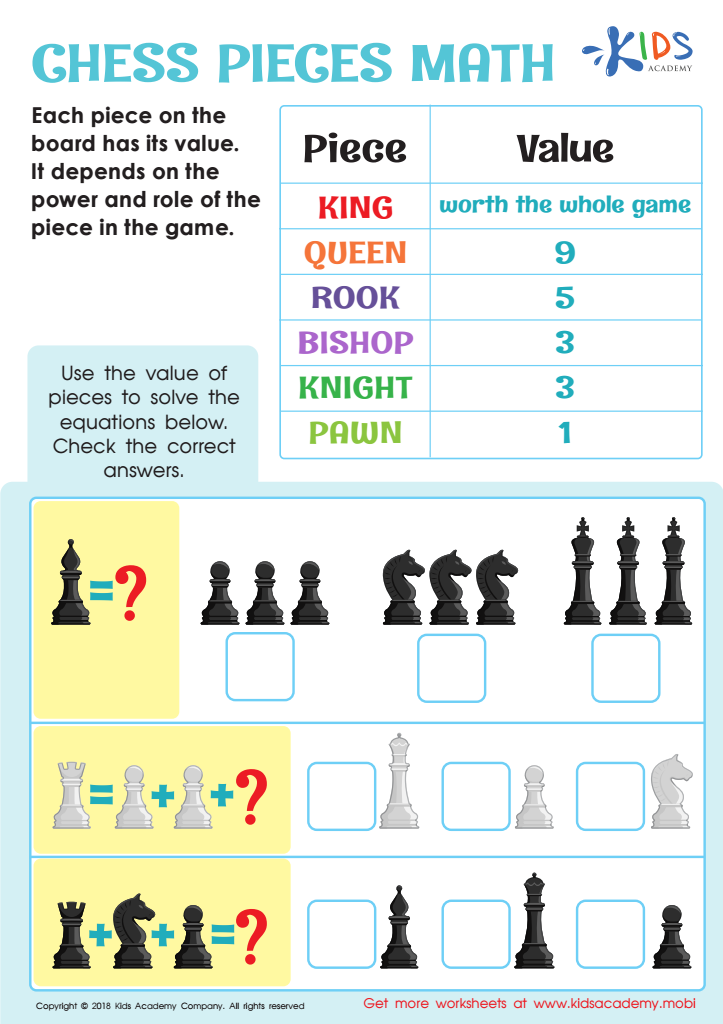
Chess Pieces Math Worksheet
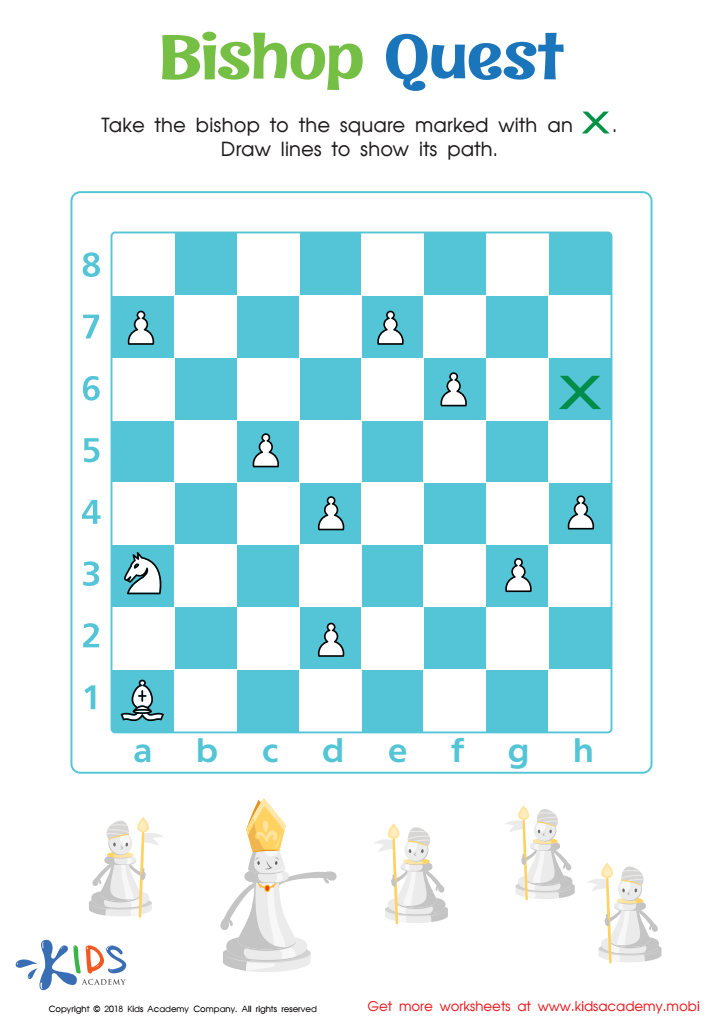
Bishop Quest Worksheet
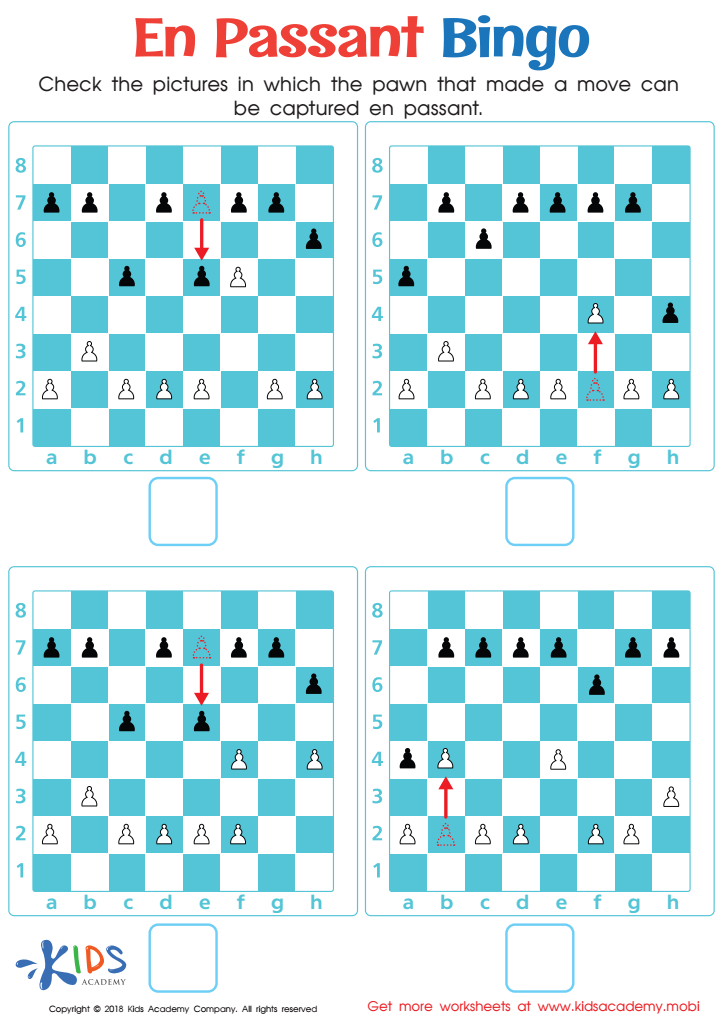
En Passant Bingo Worksheet
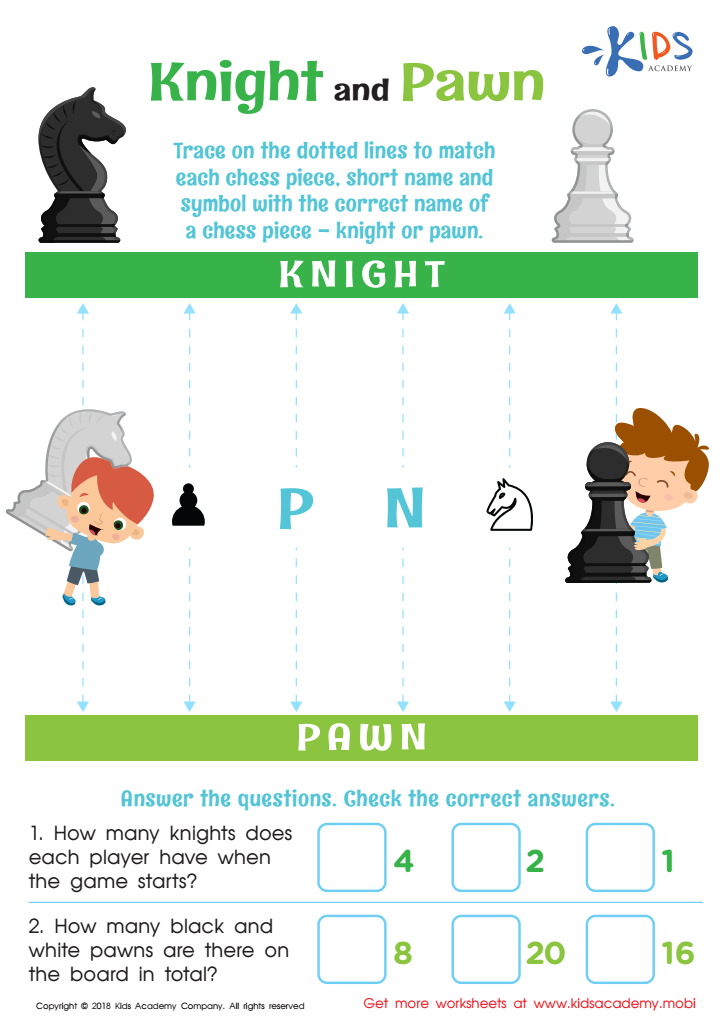
Knight and Pawn Worksheet
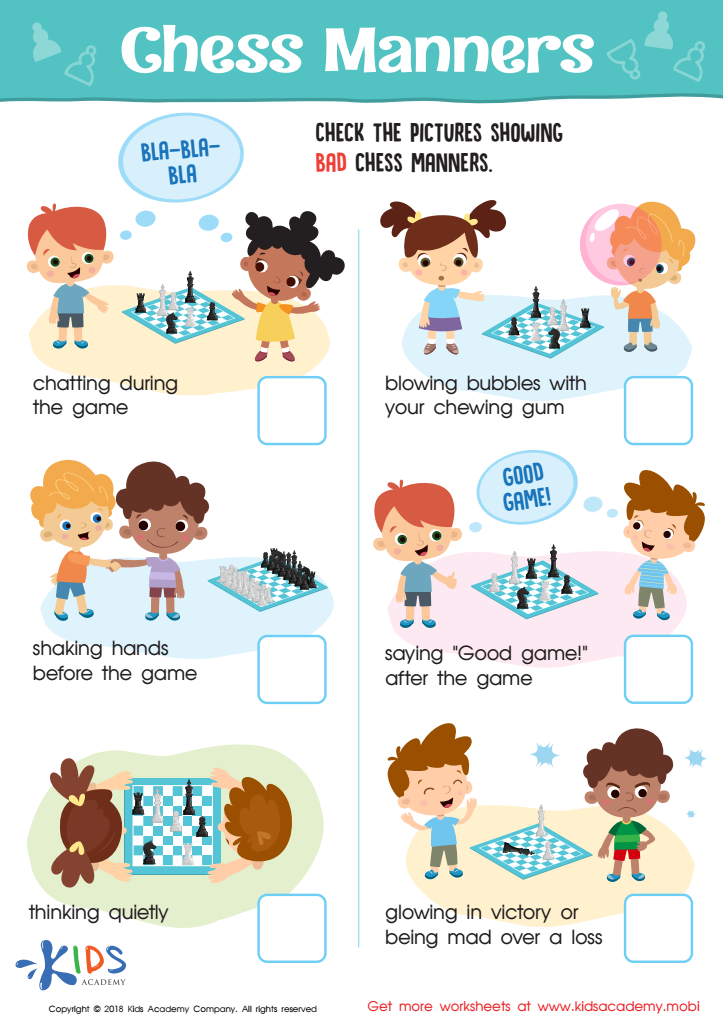
Chess Manners Worksheet
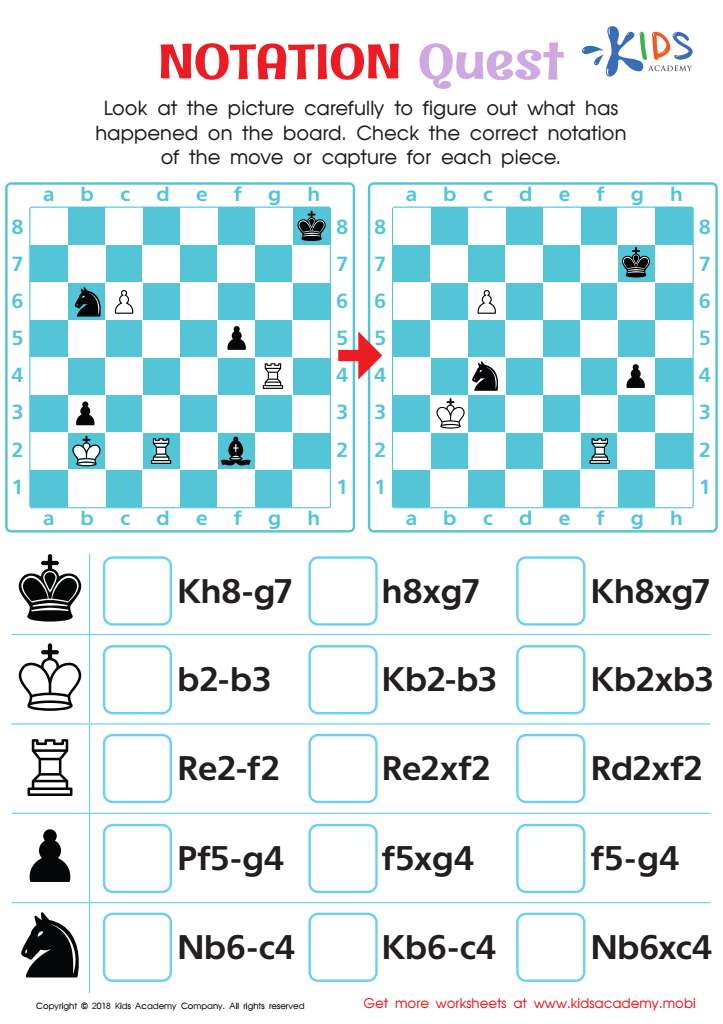
Notation Quest Worksheet
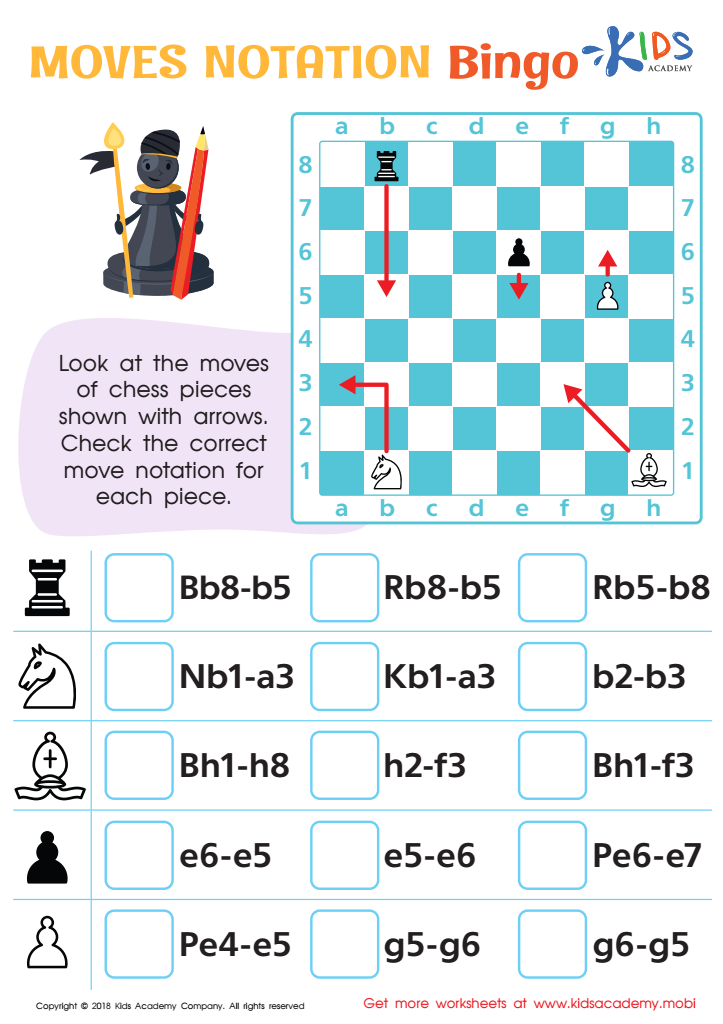
Moves Notation Bingo Worksheet
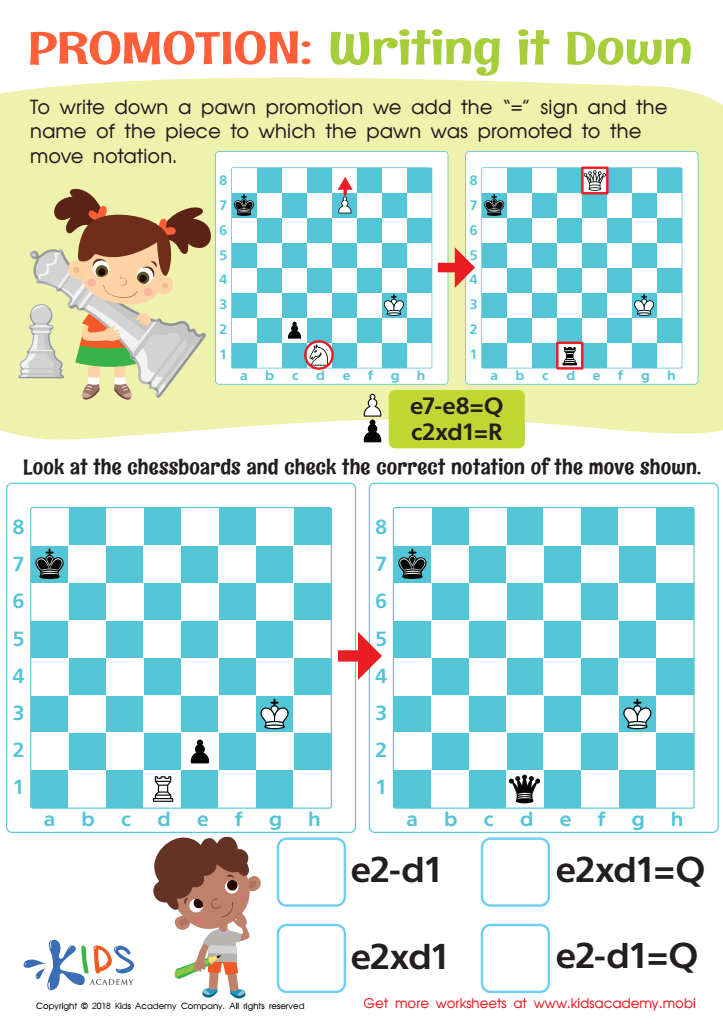
Writing it Down Worksheet
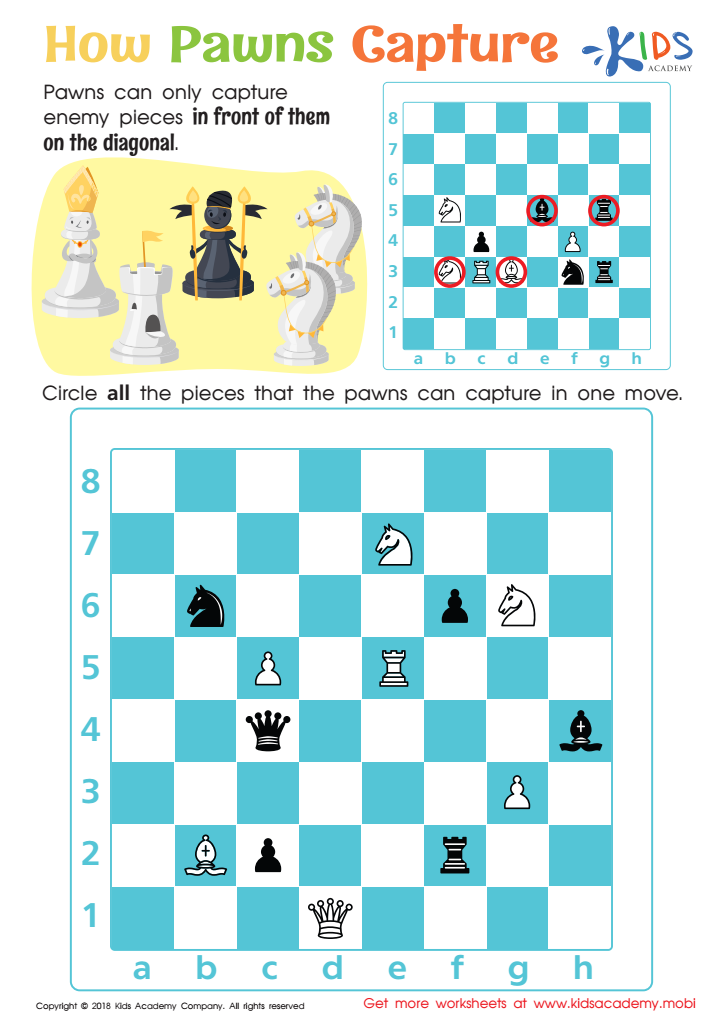
How Pawns Capture Worksheet
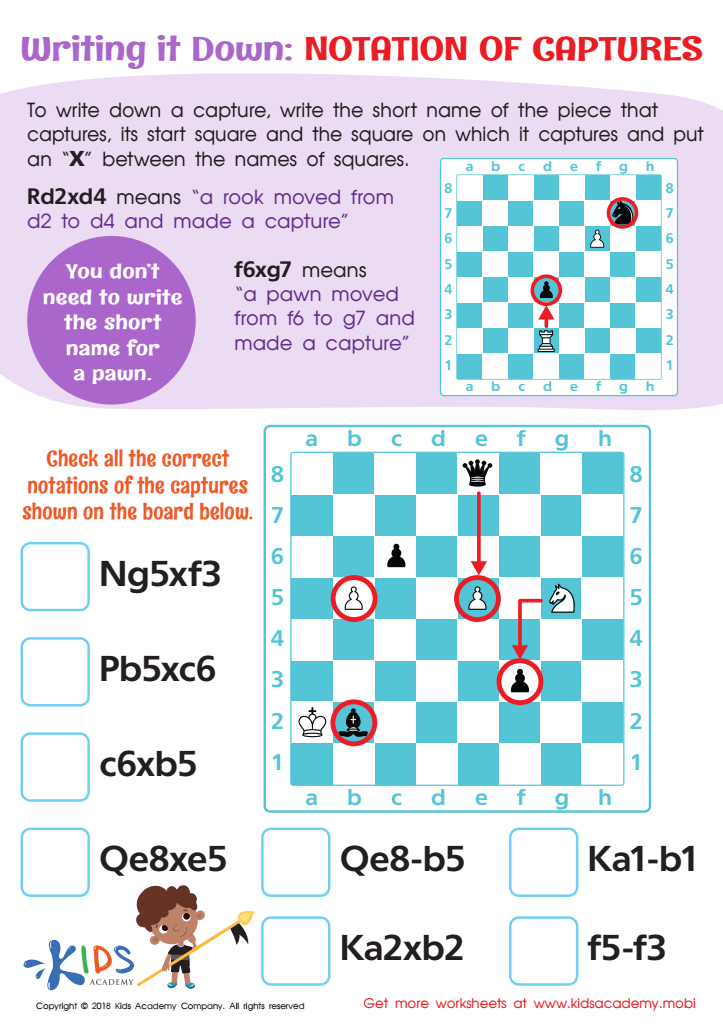
Notation of Captures Writing it Down Worksheet
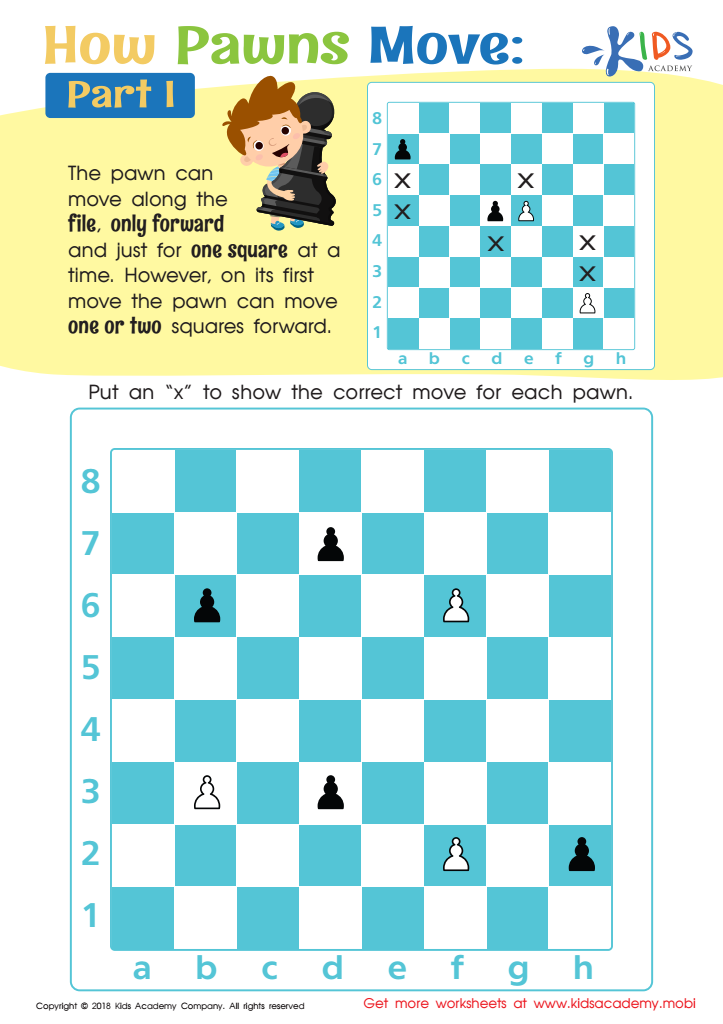
How Pawns Move: Part I Worksheet
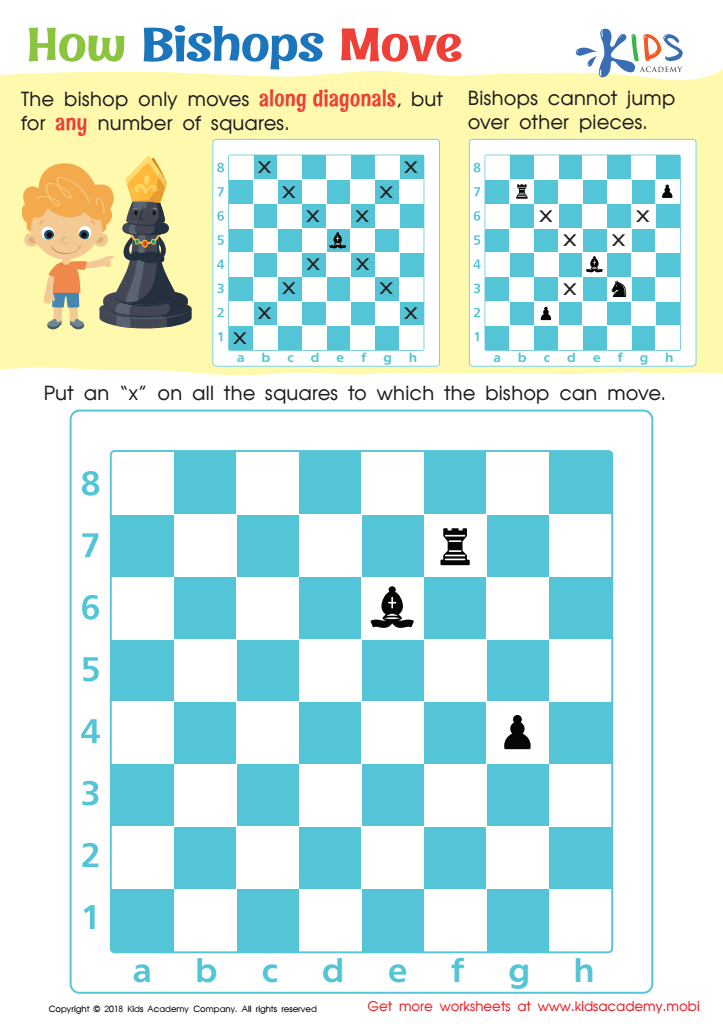
How Bishops Move Worksheet
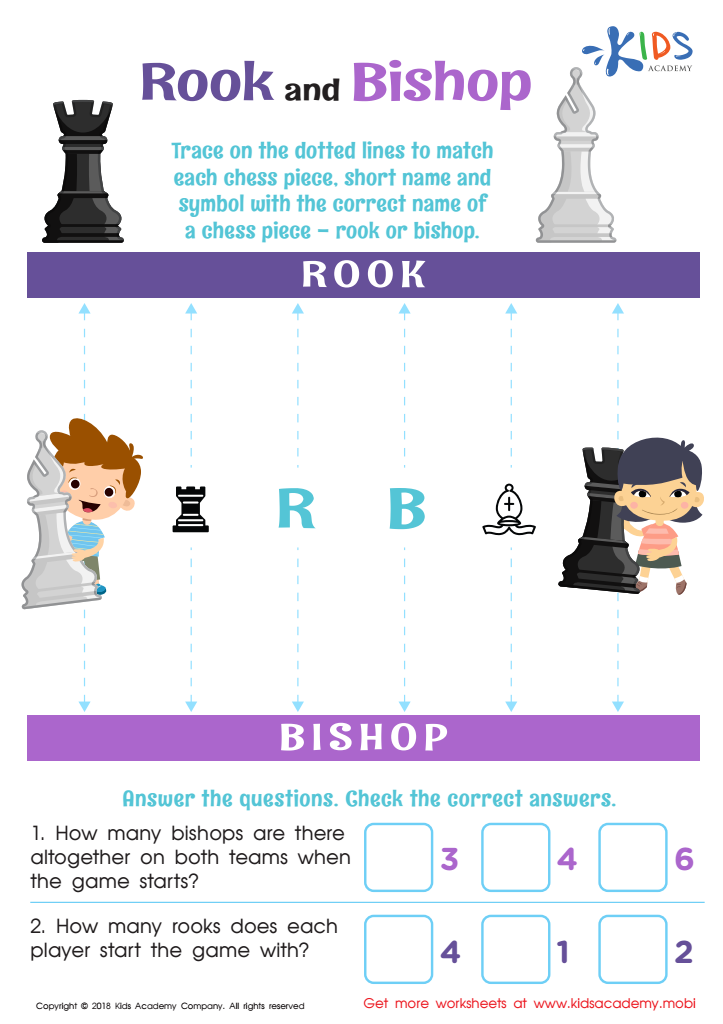
Rook and Bishop Worksheet
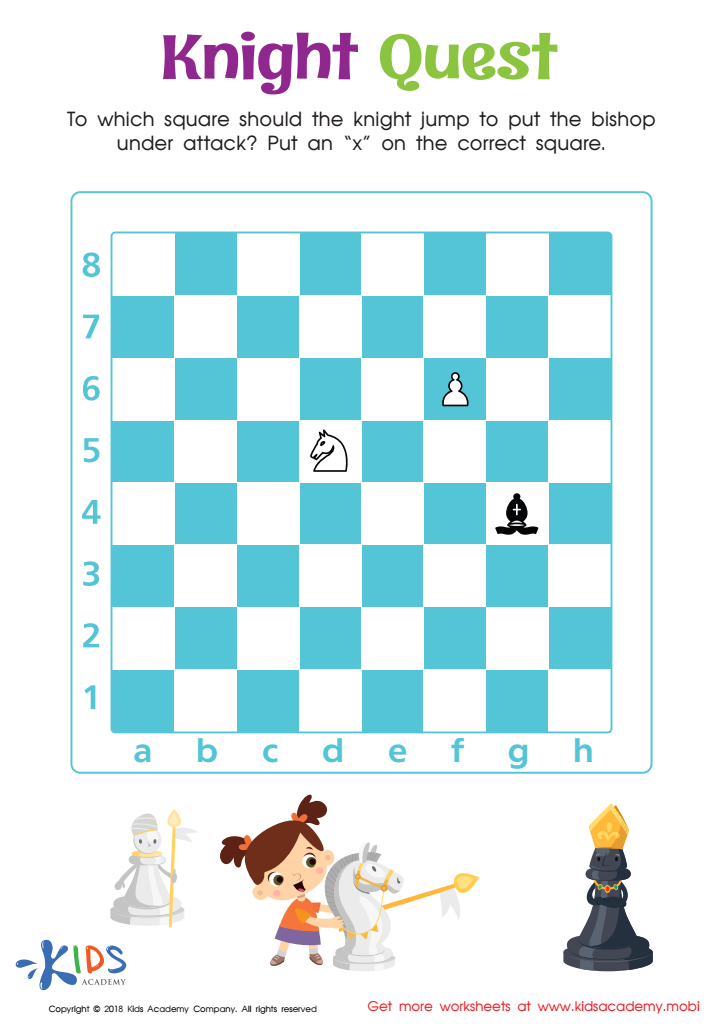
Knight Quest Worksheet
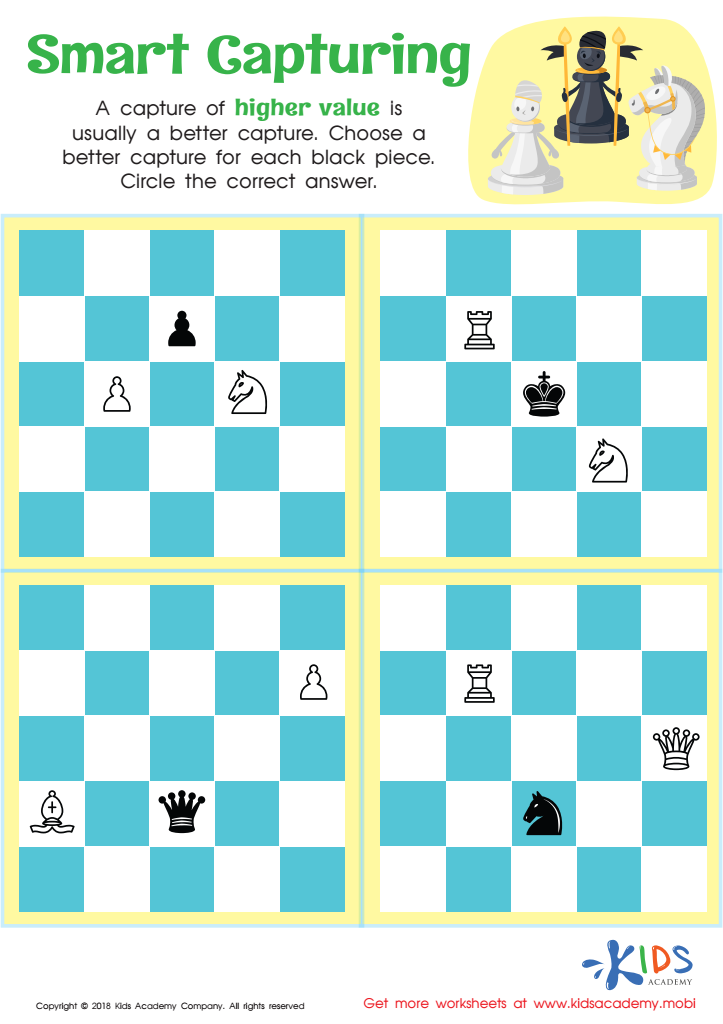
Smart Capturing Worksheet
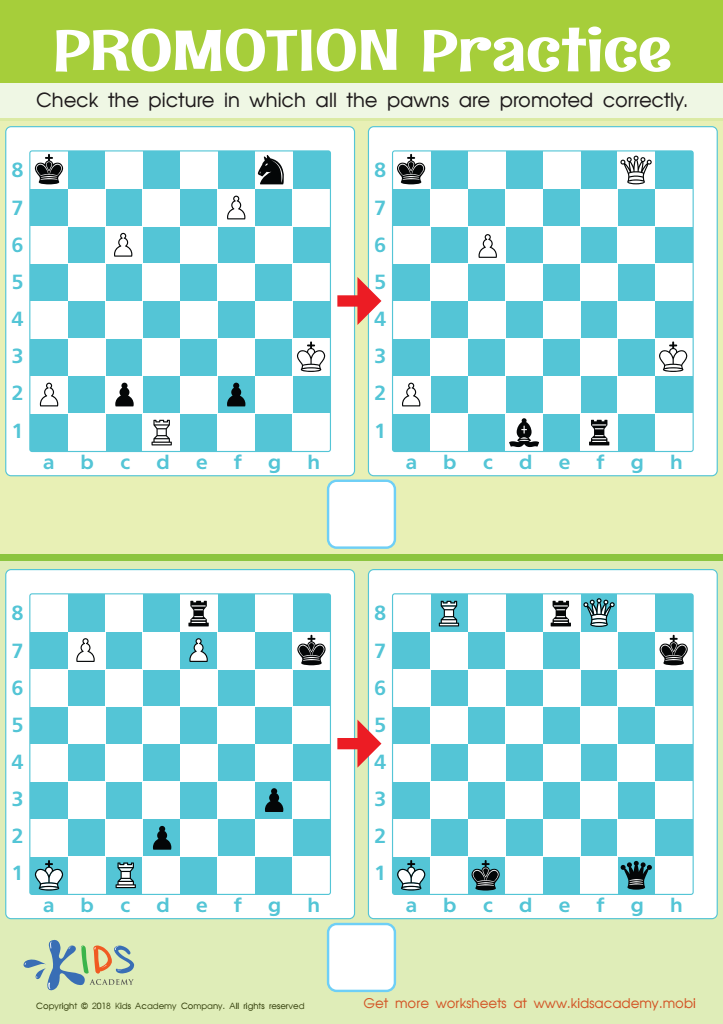
Promotion Practice Worksheet
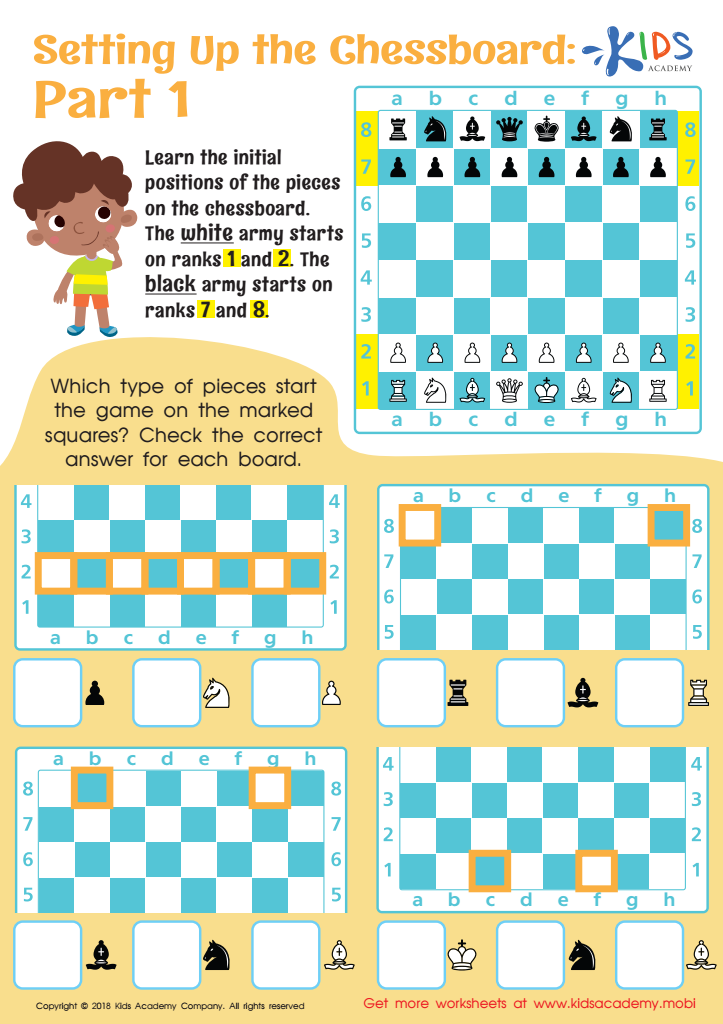
Setting up the Chessboard: Part 1 Worksheet





Parents and teachers should care about introducing Normal Chess to children aged 6-9 because it offers a multitude of cognitive, social, and emotional benefits during a critical stage of development. Chess enhances cognitive abilities by stimulating critical thinking, problem-solving, and decision-making skills. It encourages strategic planning and foresight, helping young minds develop concentration and patience. Regular play has been shown to improve memory and academic performance, particularly in subjects like mathematics and reading.
From a social perspective, chess fosters a sense of sportsmanship and discipline. Children learn to follow rules, respect their opponents, and handle both wins and losses gracefully. These social skills are transferable to various areas of life, including classroom interactions and teamwork.
Emotionally, chess can build self-esteem as children master the complexities of the game and see tangible progress in their abilities. This can be especially beneficial in nurturing a positive self-concept and resilience.
Furthermore, chess is an inclusive and low-cost activity that can be played anywhere, making it accessible to a broad range of socio-economic backgrounds. By supporting brain development, social interaction, and emotional growth, normal chess offers a well-rounded educational tool that prepares young children for future challenges.