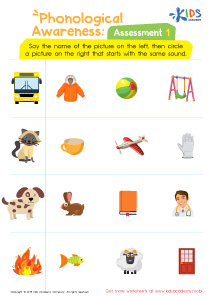
Normal Ending Sounds Worksheets for Ages 7-9
3 filtered results
-
From - To
Discover our engaging Normal Ending Sounds Worksheets designed specifically for children aged 7-9! These worksheets effectively enhance phonemic awareness by focusing on the critical skill of recognizing and producing ending sounds in words. Perfect for home or classroom use, they feature vibrant illustrations and varied activities that captivate young learners and make phonics fun. Designed to support reading proficiency, these worksheets not only improve spelling but also boost vocabulary and reading comprehension. Explore our interactive resources to help your child master normal ending sounds with ease and confidence, laying a solid foundation for their literacy journey. Start learning today!
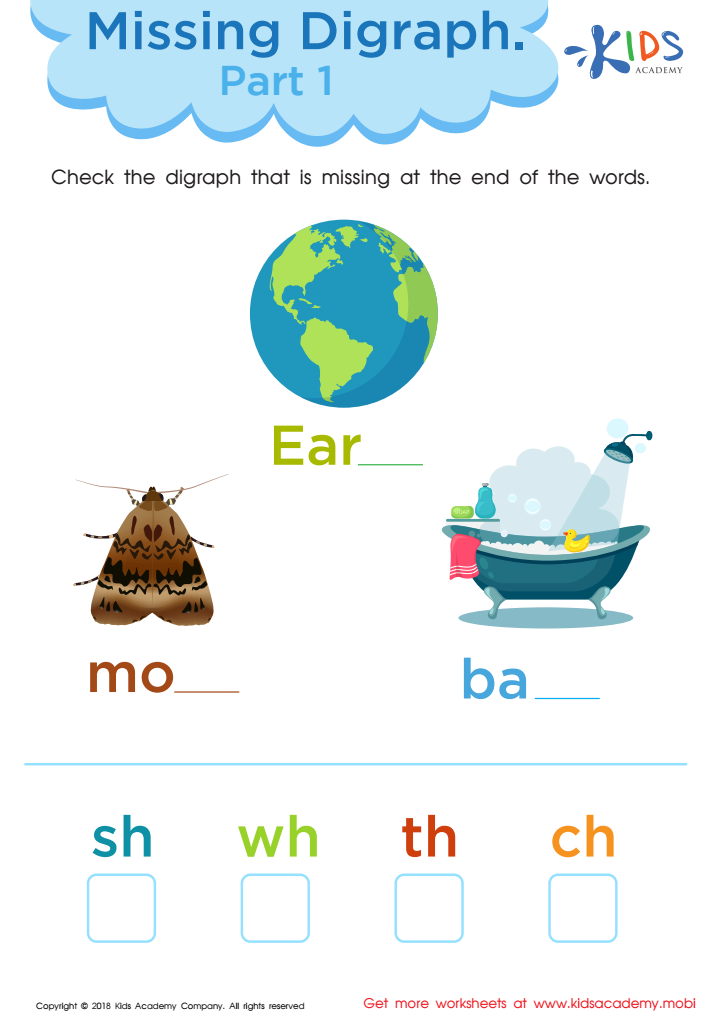
Missing Digraph: Part 1 Worksheet
 Assign to My Students
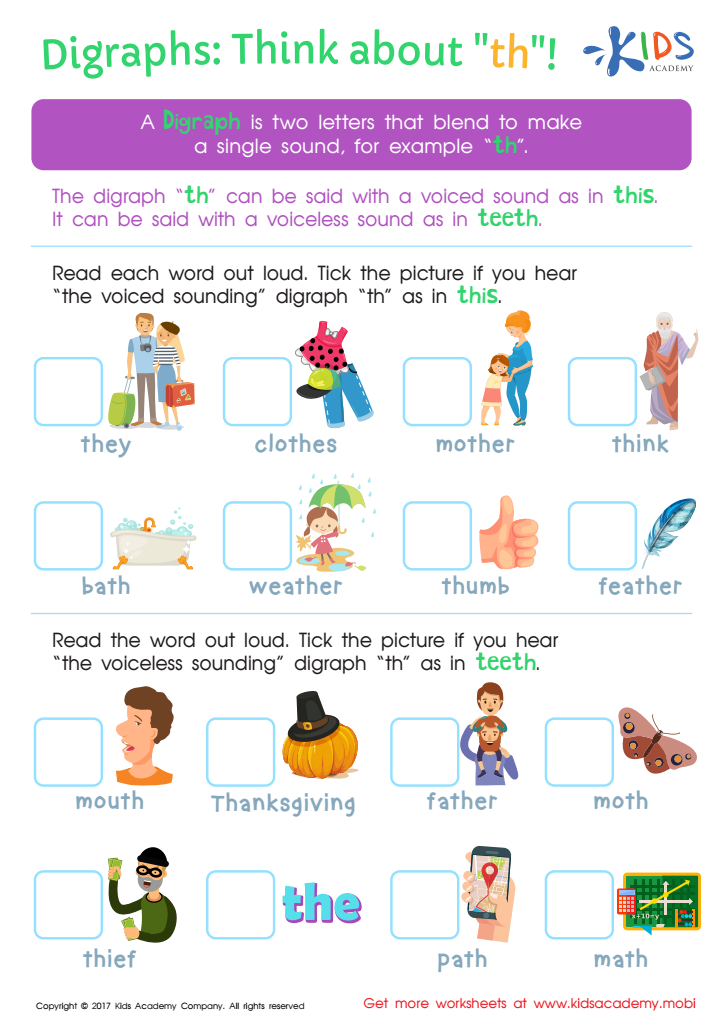
Digraphs: Think About "th" Worksheet
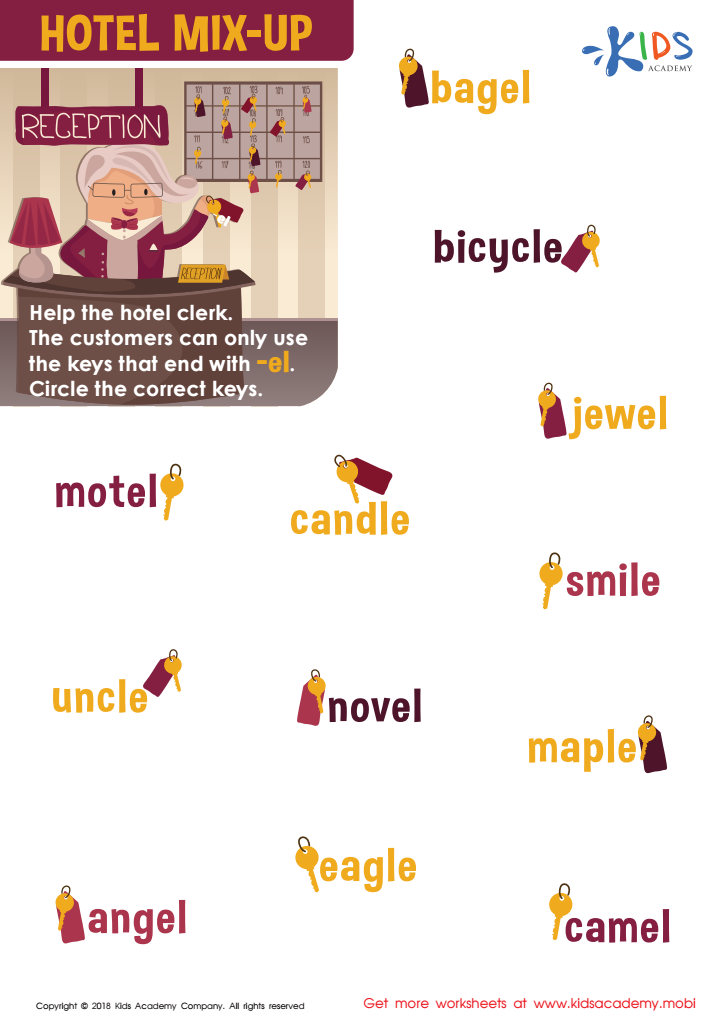
Hotel Mix-up Worksheet






Normal ending sounds, also known as phonemes, are crucial for children aged 7-9 as they form the foundation of reading, writing, and language comprehension. At this developmental stage, children are increasingly exposed to complex texts and vocabulary. Understanding normal ending sounds helps them recognize word patterns, which enhances their decoding skills—essential for reading fluency.
When children identify the sounds at the end of words, they can make better guesses about the meaning of unfamiliar words, aiding in vocabulary development. This understanding also influences spelling, as many spelling rules are related to sounds, particularly in differentiating similar-sounding but different-ending words (e.g., "been" vs. "bean").
Moreover, mastering these sounds enables children to express themselves more clearly in writing. By incorporating various ending sounds in their language, students can create more dynamic and engaging narratives.
For parents and teachers, fostering this skill is important because it directly correlates to academic success and self-confidence in literacy. Engaging children through fun activities centered around sounds can enhance their interest in language, making learning effective and enjoyable. Ultimately, recognizing the significance of normal ending sounds helps support children’s overall language development and academic achievement.