Normal Phonics Worksheets for Ages 7-9 - Page 6
123 filtered results
-
From - To
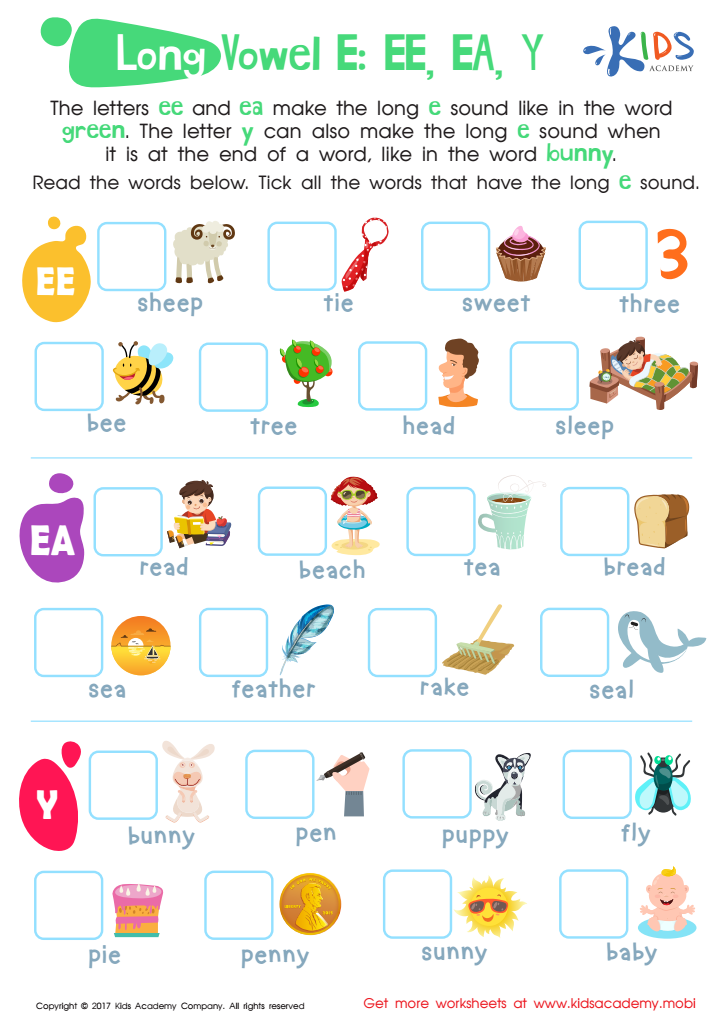
Long Vowel E Printable
 Assign to My Students
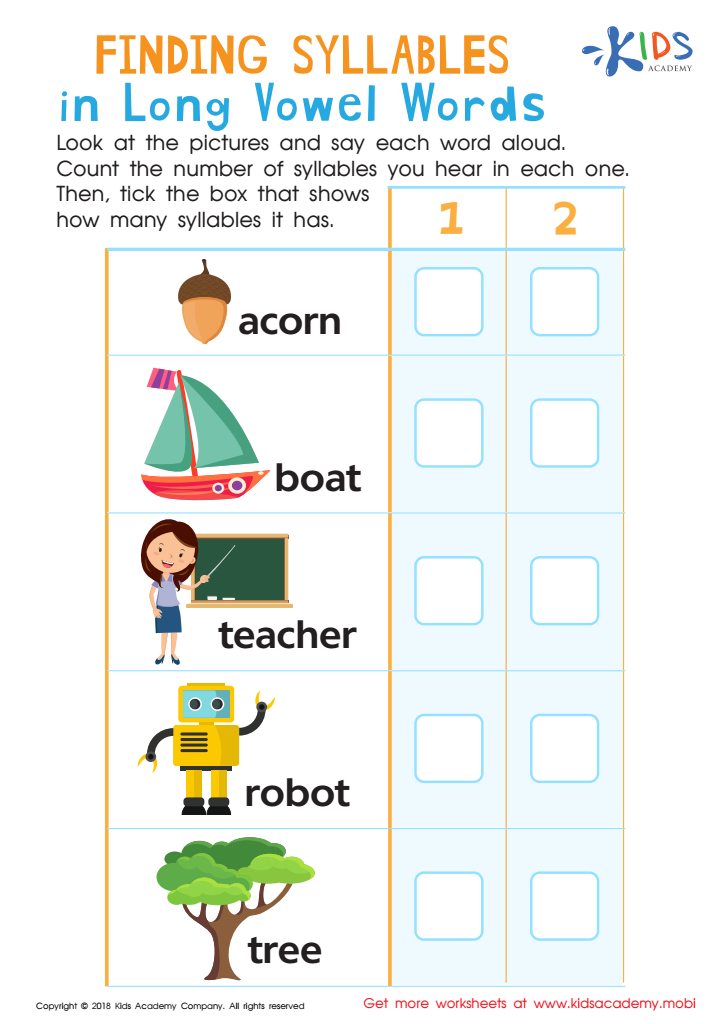
Finding Syllables in Long Vowel Words Worksheet
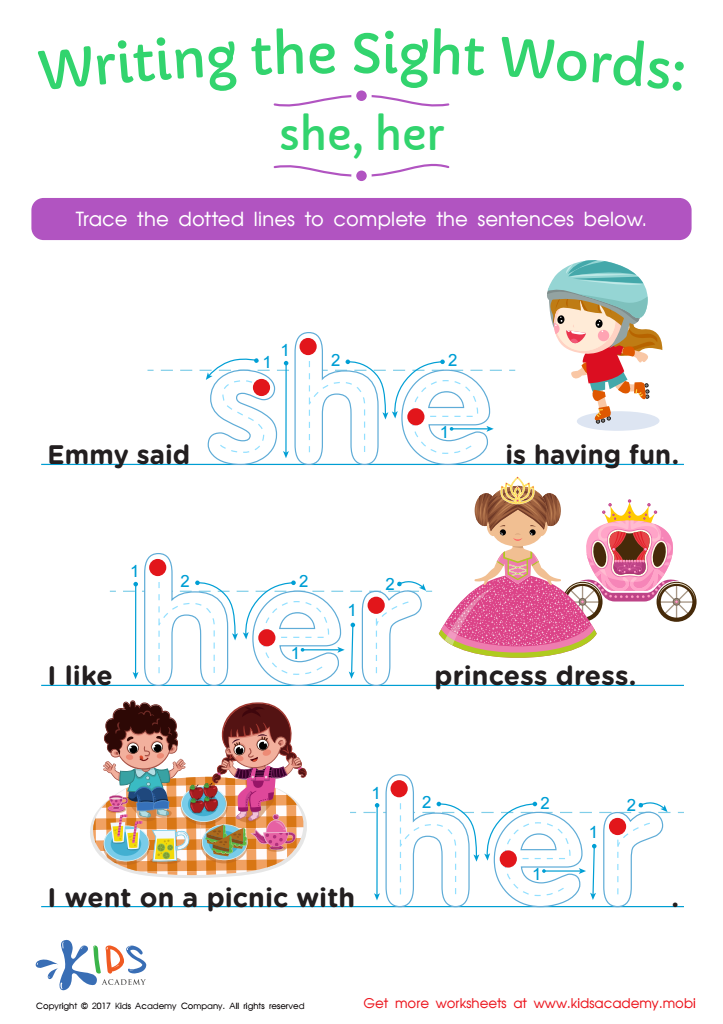
She, Her Printable Sight Words Worksheet








Parents or teachers should prioritize Normal Phonics for children aged 7-9 because mastering phonics is a cornerstone of literacy development. At this critical stage, children transition from learning to read to reading to learn. Phonics equips them with the necessary skills to decode words, enabling them to read fluently and comprehend what they read. By understanding the relationship between letters and sounds, children can tackle new and unfamiliar words with greater ease, boosting their confidence and fostering a love for reading.
Proficiency in phonics also supports spelling and vocabulary building, as children begin to recognize patterns and make connections between words. This foundational knowledge not only enhances their reading accuracy and speed but also contributes to better writing skills. Reading fluently and comprehending text are essential for academic success across all subjects, including science, social studies, and math, as these often require the ability to read and understand complex instructions and texts.
Moreover, strong phonics skills contribute to lifelong learning and cognitive development. Children who experience early success in literacy tend to perform better in school and have higher self-esteem. Therefore, investing time and effort in teaching Normal Phonics during these formative years sets the stage for ongoing educational achievement and personal growth.







