Normal Governance and Civics Worksheets for Ages 7-9 - Page 2
38 filtered results
-
From - To
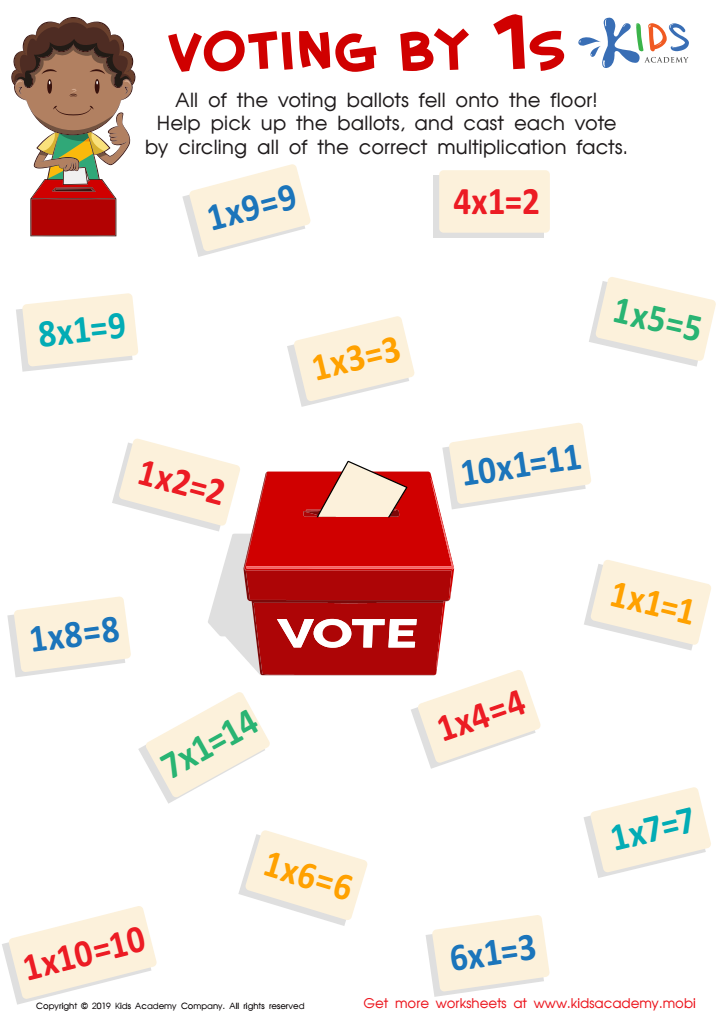
Voting by 1s Worksheet
 Assign to My Students
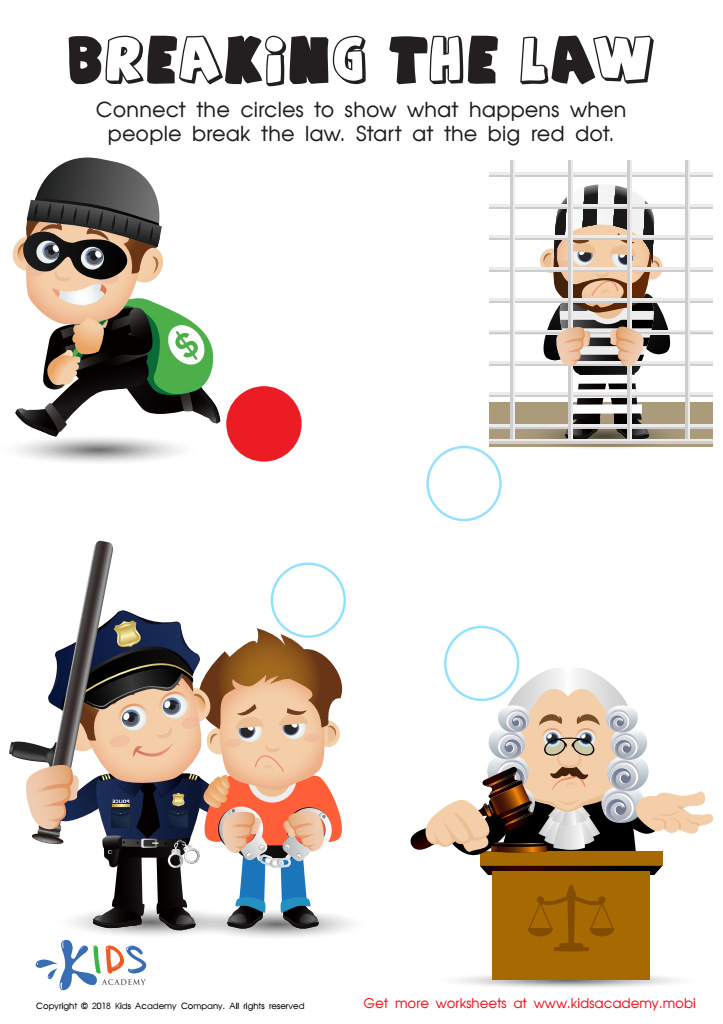
Breaking the Law Worksheet
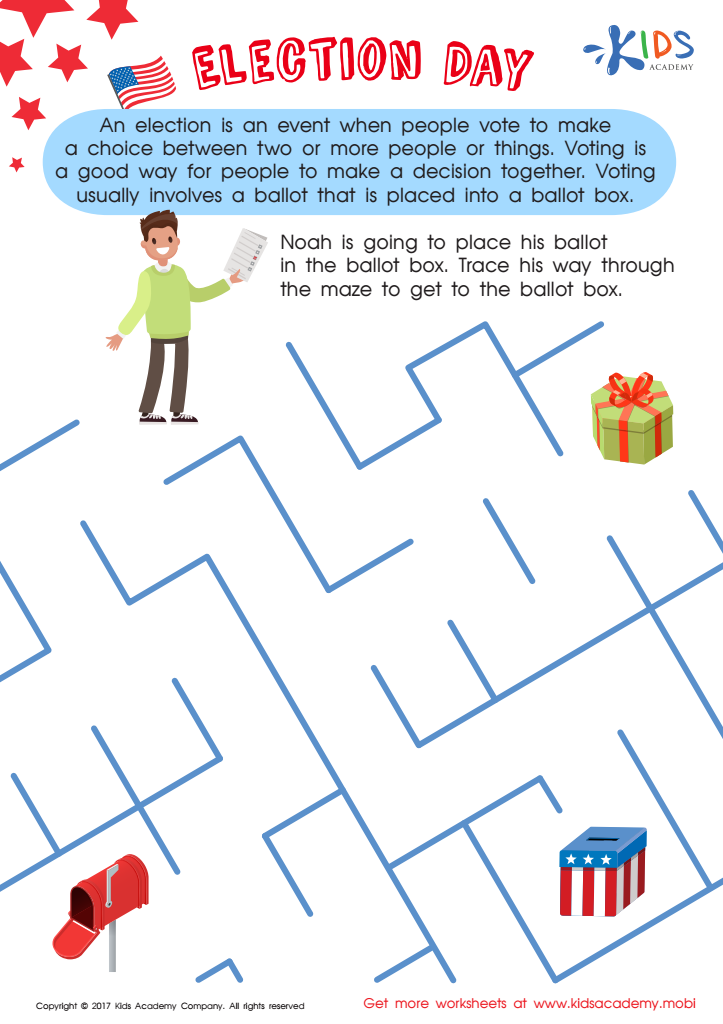
Election Day Worksheet
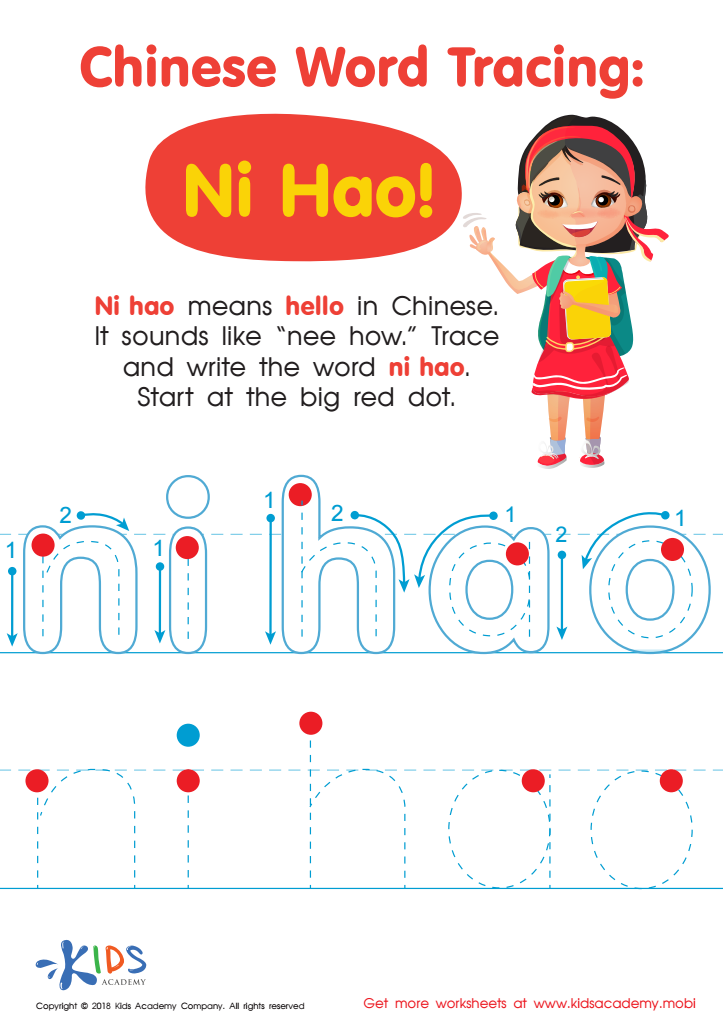
Chinese Word Tracing: Ni Hao Worksheet
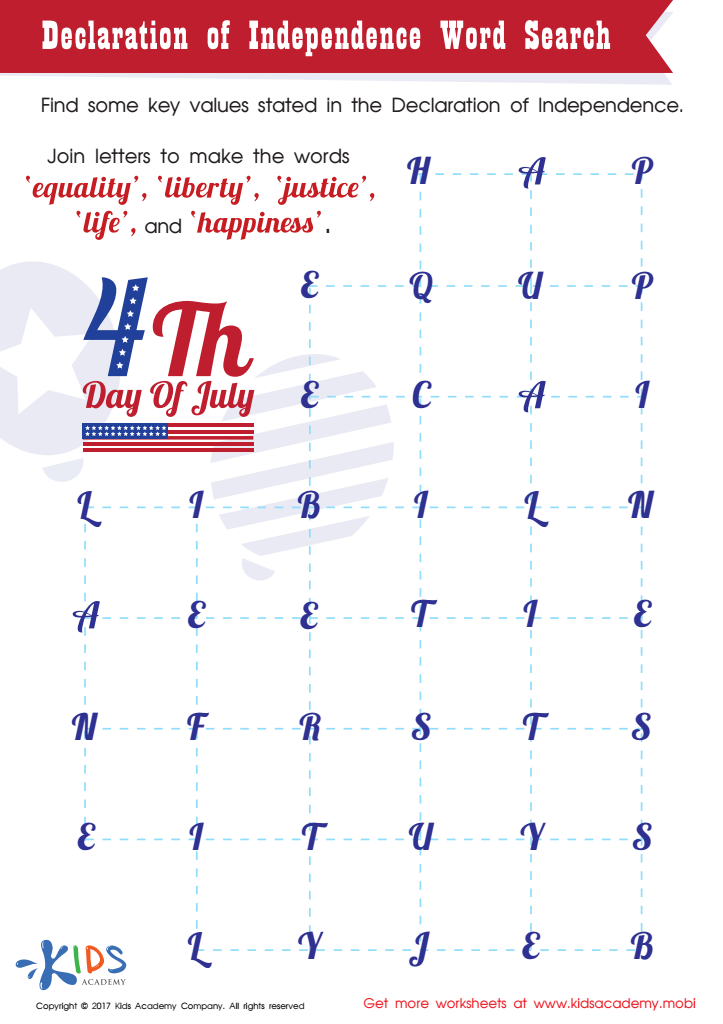
Declaration of Independence Word Search Printable
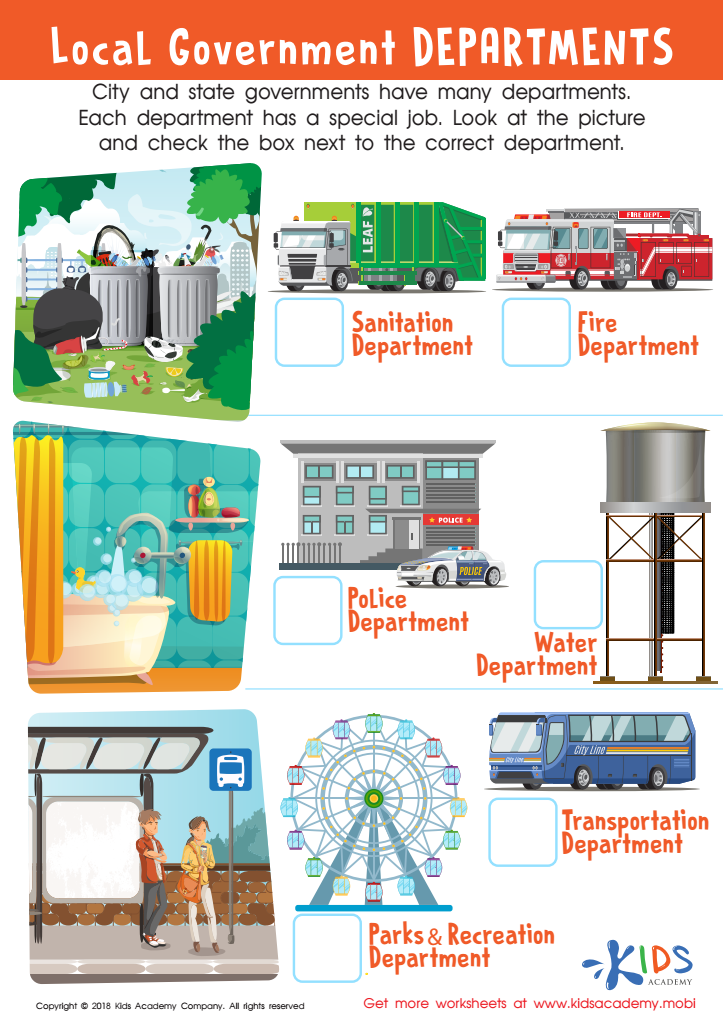
Local Government Departments Worksheet
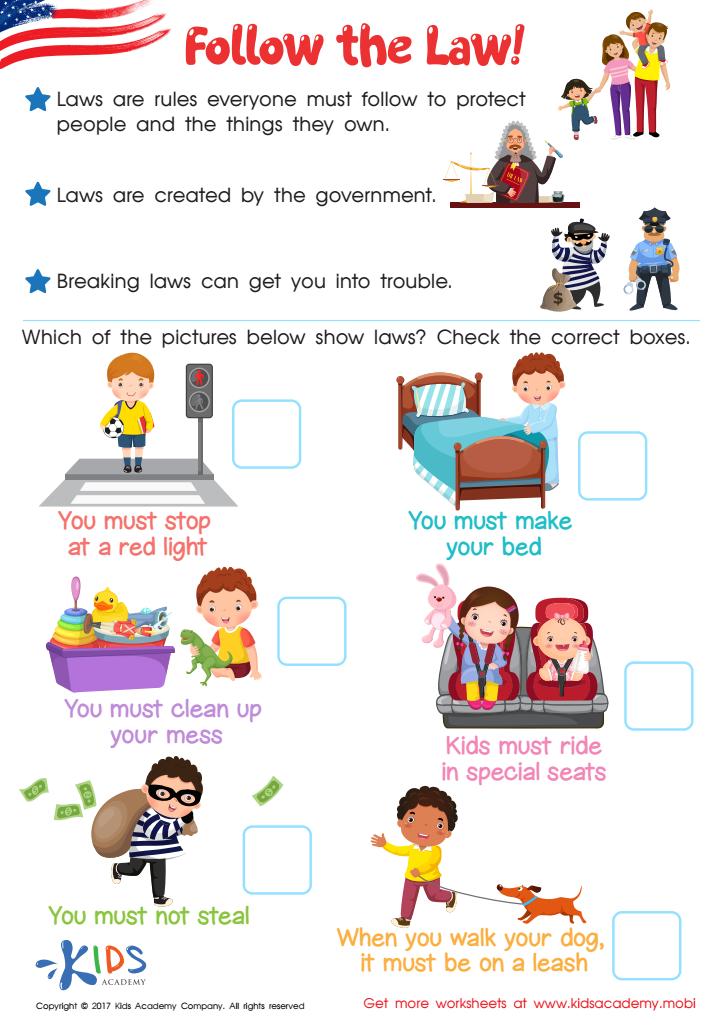
Follow the Law Worksheet
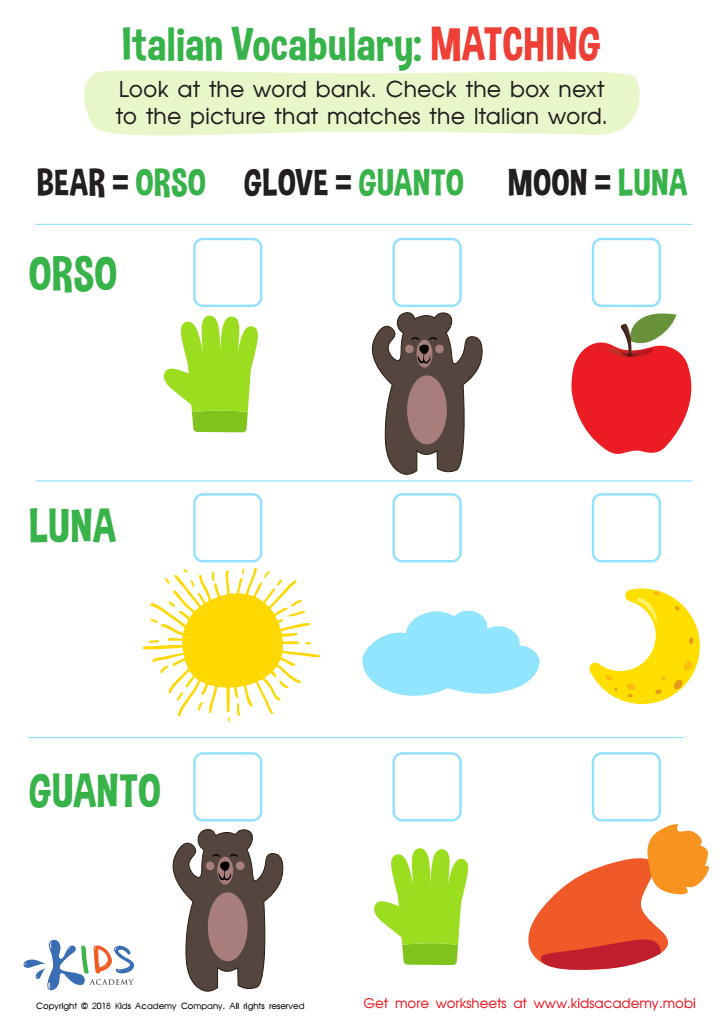
Italian Vocabulary Matching Worksheet
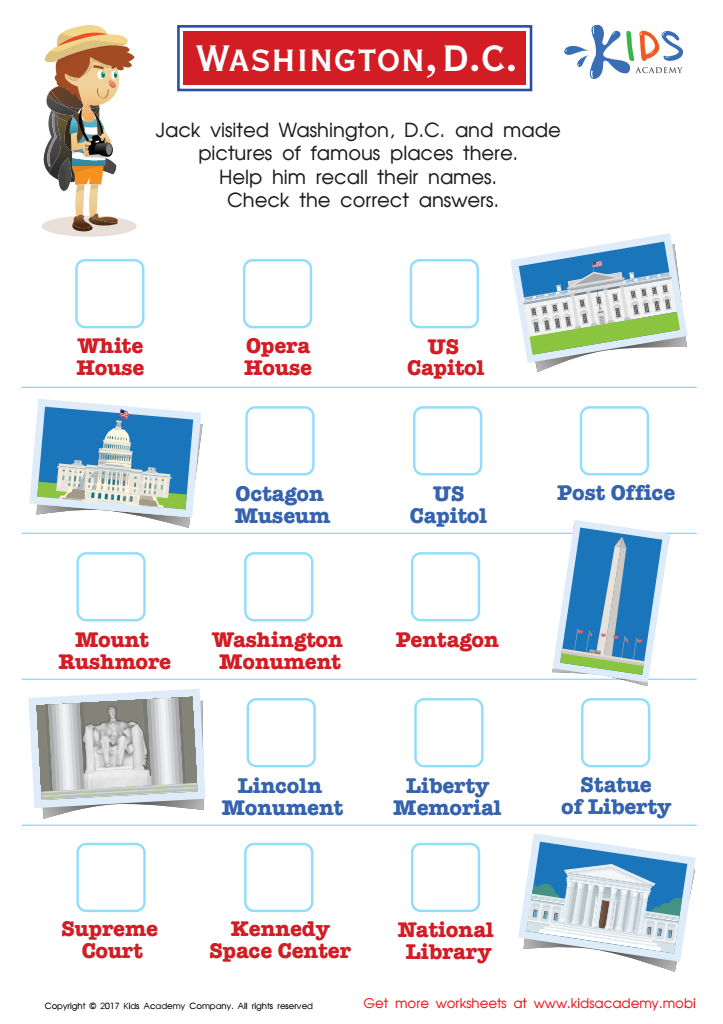
Washington D.C. Printable Worksheet
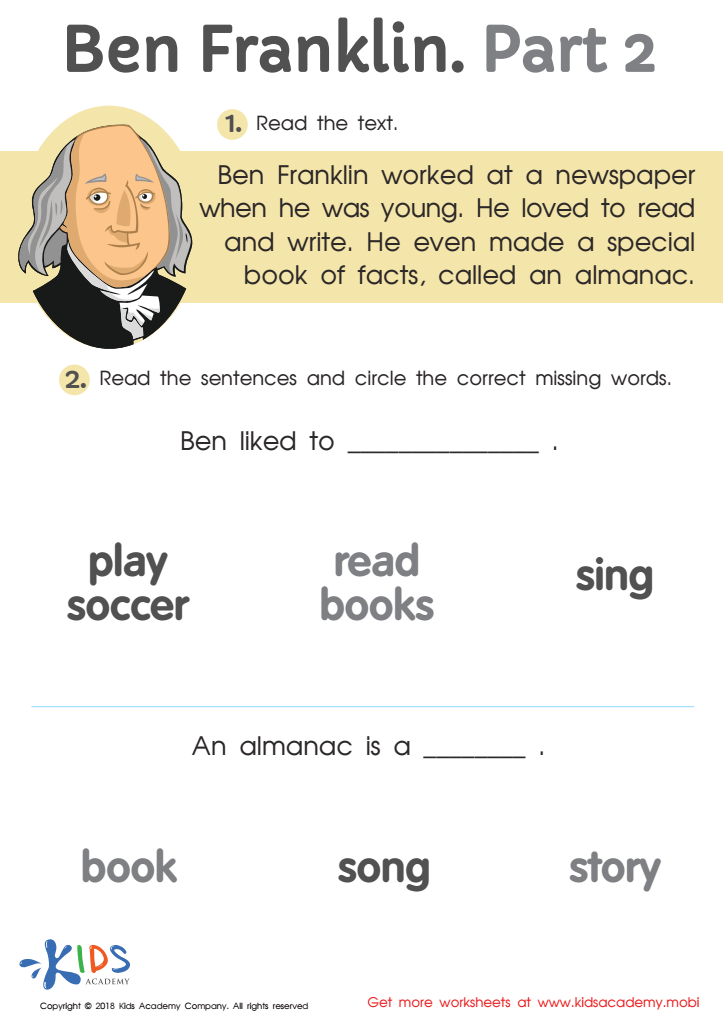
Ben Franklin Part 2 Worksheet
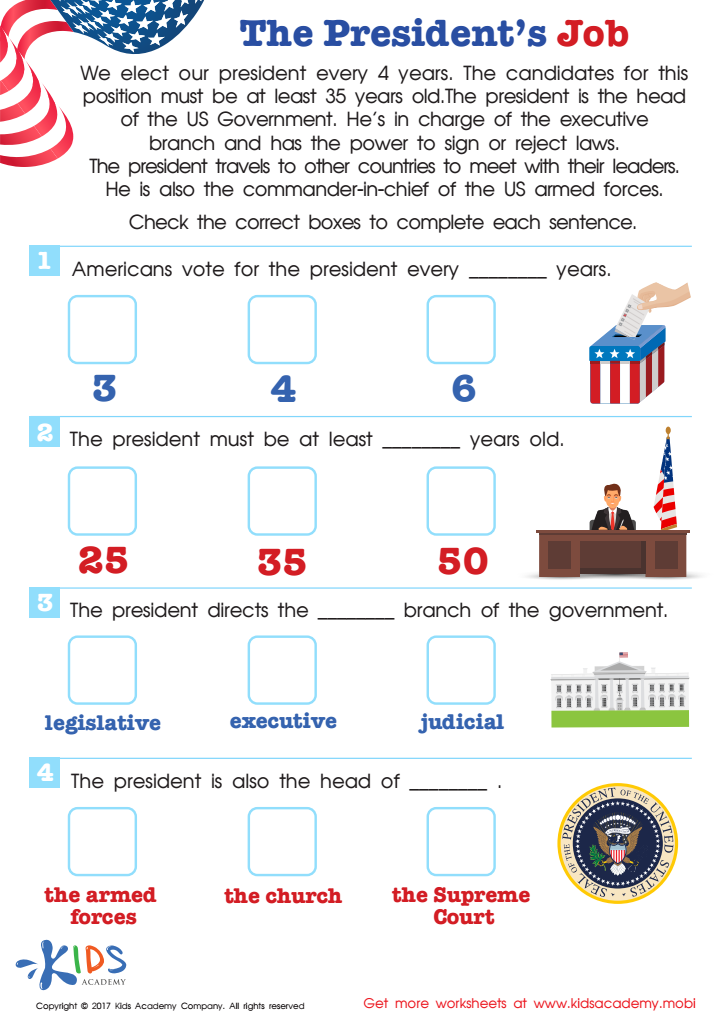
President of the USA Job Description Worksheet
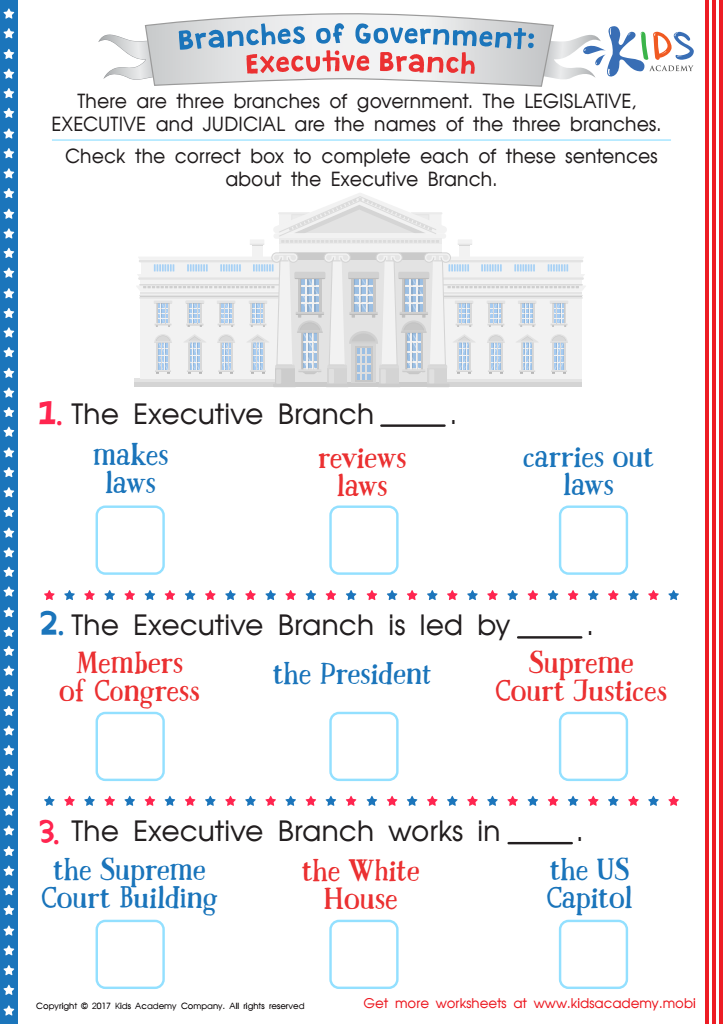
Branches of the Government: Executive Branch Printable
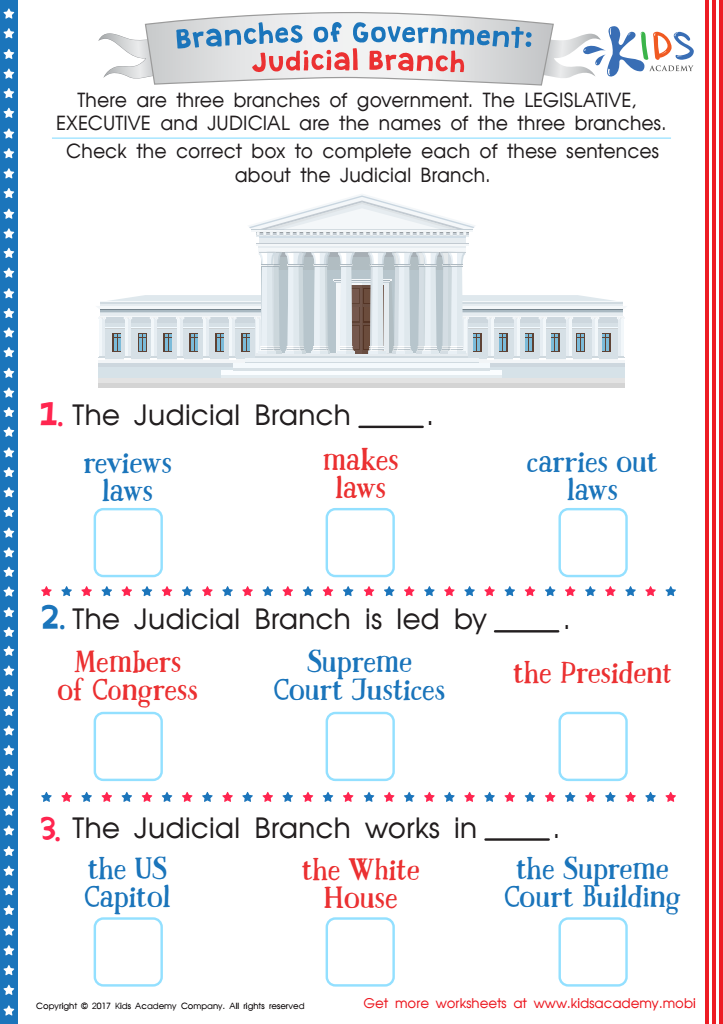
Braches of the Government: Judicial Branch Worksheet
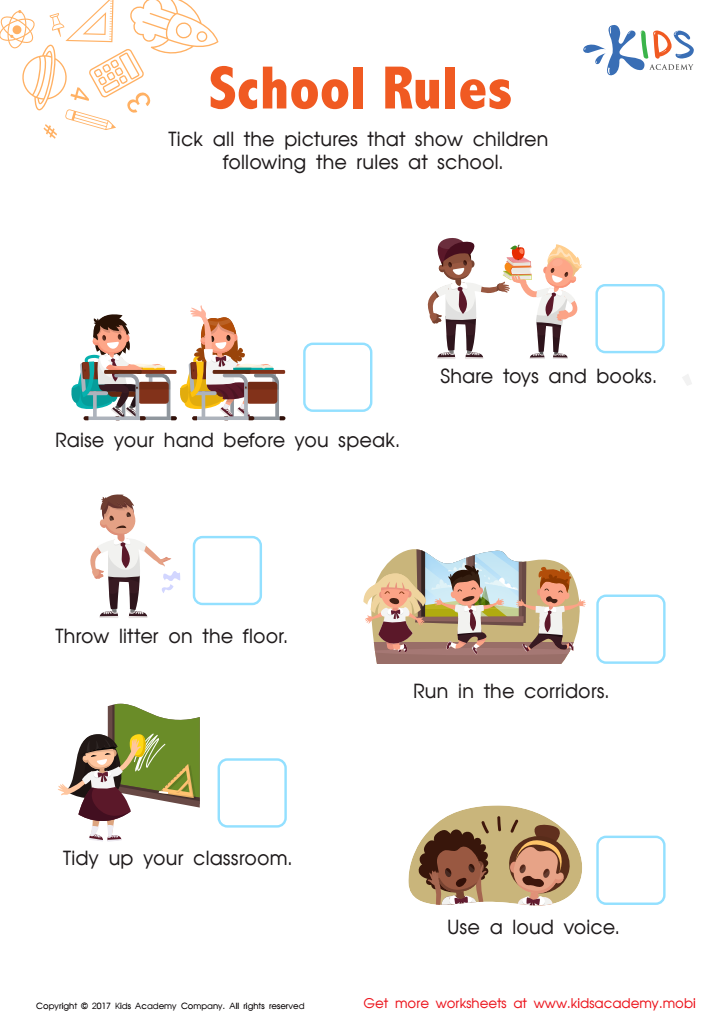
School Rules Worksheet


Normal Governance and Civics education for children aged 7-9 lays the foundation for responsible citizenship and community engagement. This age group is particularly impressionable and receptive to understanding the importance of rules, responsibilities, and rights within a community. Teaching civics at this stage enhances critical thinking skills, encouraging children to question societal norms, appreciate diversity, and understand the impact of their actions on others.
By focusing on governance concepts, such as fairness, justice, and cooperation, parents and teachers empower children with the tools to navigate social interactions effectively. They learn about decision-making processes, making them more aware of how leaders govern and how they can actively participate in their communities, whether through voting in mock elections or engaging in local initiatives.
Moreover, introducing these concepts at a young age promotes respect for authority and the legal system, fostering an understanding of civic duties such as voting, volunteering, and community involvement. As these children grow, they will be more likely to take active roles in their communities, shaping a more informed and engaged citizenry. Therefore, parents and teachers play a crucial role in building a strong foundation for future generations by prioritizing Normal Governance and Civics education.








