Normal Tracing Words Worksheets for Ages 7-9 - Page 2
27 filtered results
-
From - To
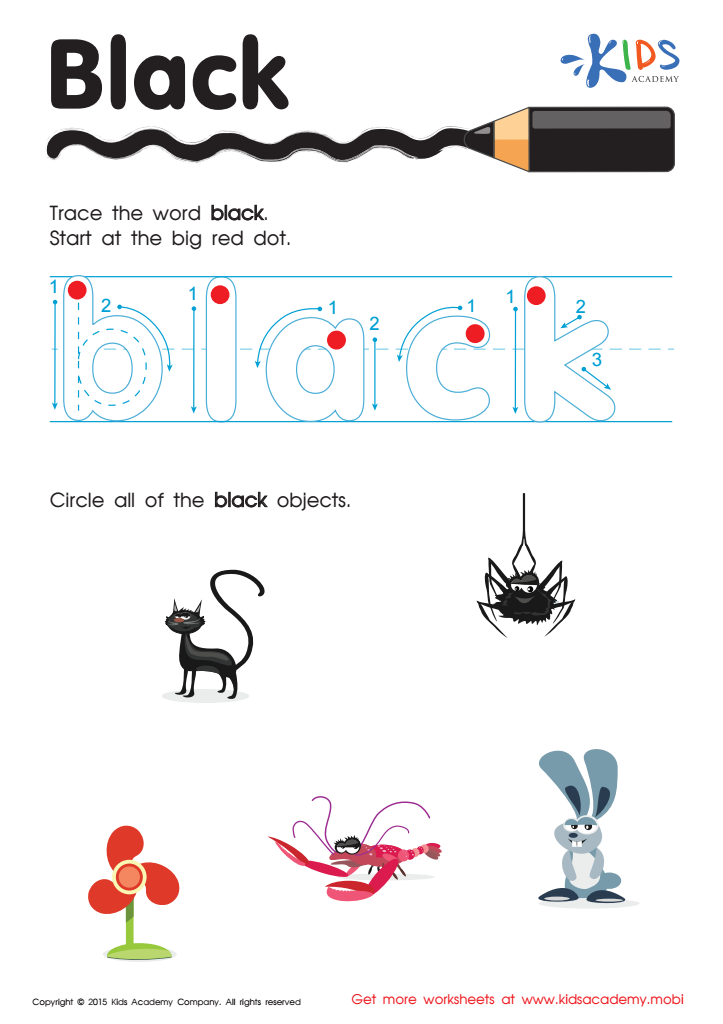
Black Tracing Color Words Printable
 Assign to My Students
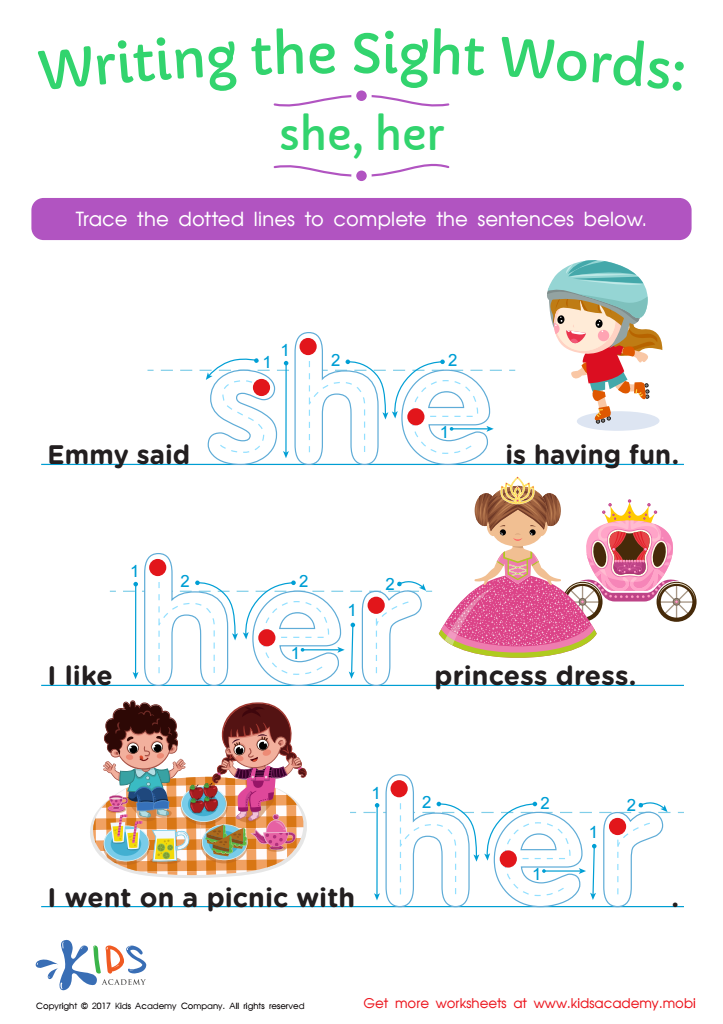
She, Her Printable Sight Words Worksheet
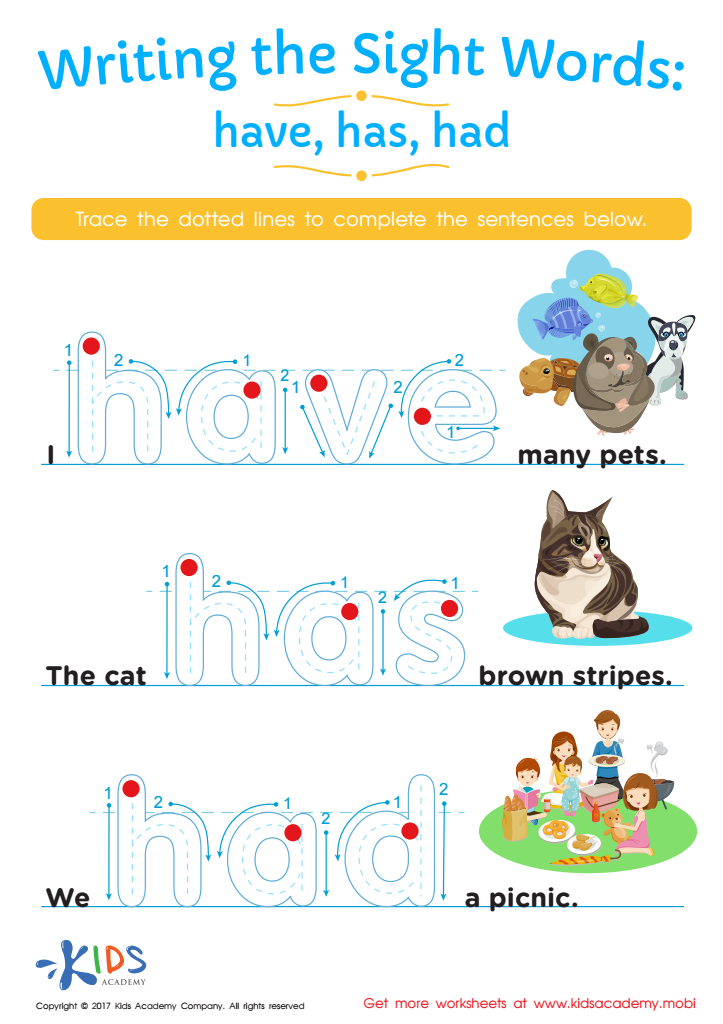
Have, Has, Had Worksheet Sight Words Worksheet








Parents and teachers should pay close attention to normal tracing words for children aged 7-9 because this activity plays a crucial role in their literacy development. At this age, children are refining their handwriting skills and beginning to grasp the importance of spelling and proper word formation. Tracing words helps improve fine motor skills, which are essential for writing legibly and confidently.
Furthermore, tracing reinforces foundational literacy concepts by providing visual and tactile experiences. Children not only practice writing letters, but they also learn to recognize sight words and understand how words are formed, deepening their comprehension of language. This is particularly critical since reading proficiency impacts overall academic success.
Additionally, using tracing as a learning tool can enhance cognitive skills, such as memory and attention span. As children trace words, they engage with phonetics, enabling them to relate sounds to letters. This multisensory approach caters to various learning styles, making it inclusive and effective.
Lastly, incorporating tracing activities into daily lessons can promote a positive attitude toward writing, fostering a love for language that extends beyond the classroom. By nurturing these skills early on, parents and teachers help set the foundation for a child's future academic and creative success.