Online and Learning Normal Difficulty Alphabet Worksheets With Answers - Page 6
252 filtered results
Difficulty Level
Grade
Age
-
From - To
Subject
Activity
Standards
Favorites
With answer key
Interactive
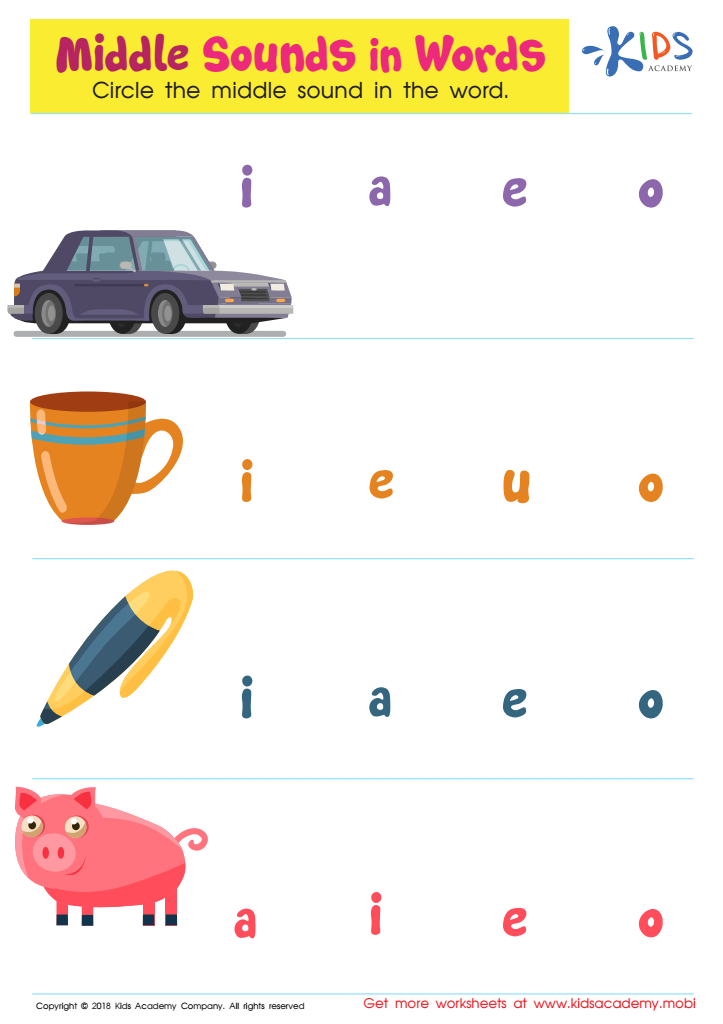
Middle Sounds in Words Worksheet
This worksheet helps emerging readers use picture clues to identify familiar words and practice tracing and fine-motor abilities. It also reinforces spelling by helping them distinguish middle sounds in words. A great way to build listening and literacy skills!
 Assign to My Students
Middle Sounds in Words Worksheet
Worksheet
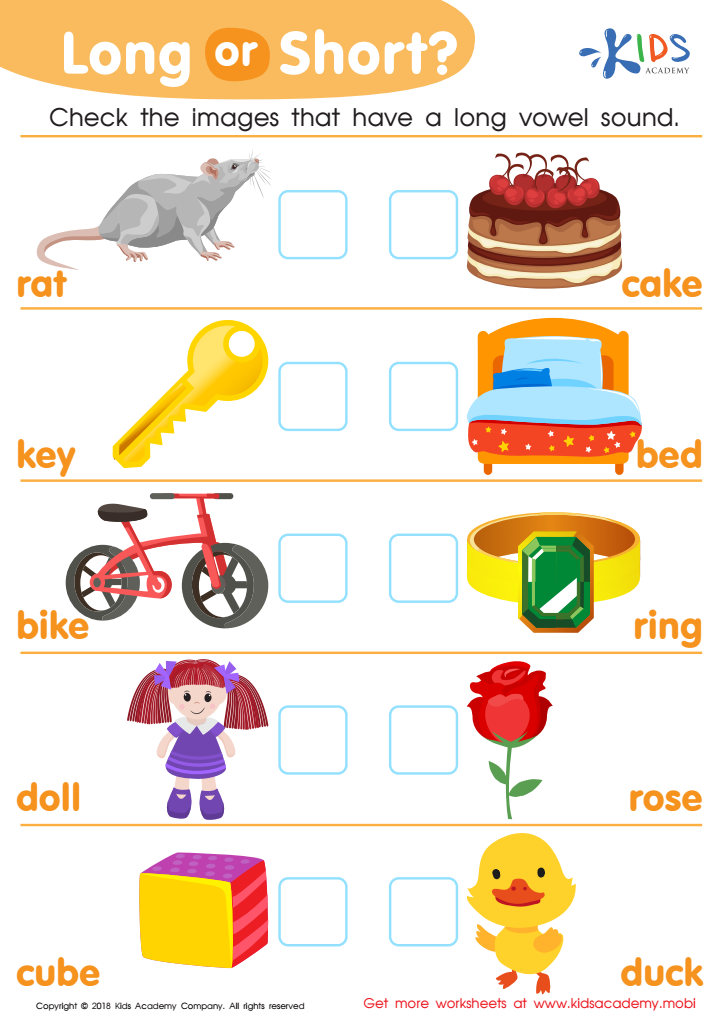
Long or Short Reading Worksheet
Every new reader needs to learn to recognize long and short vowel sounds. This phonics worksheet uses pictures of high-frequency words to help. Kids read the words and then check off images with long vowel sounds. It helps them learn to decode words and improves fine motor skills.
Long or Short Reading Worksheet
Worksheet
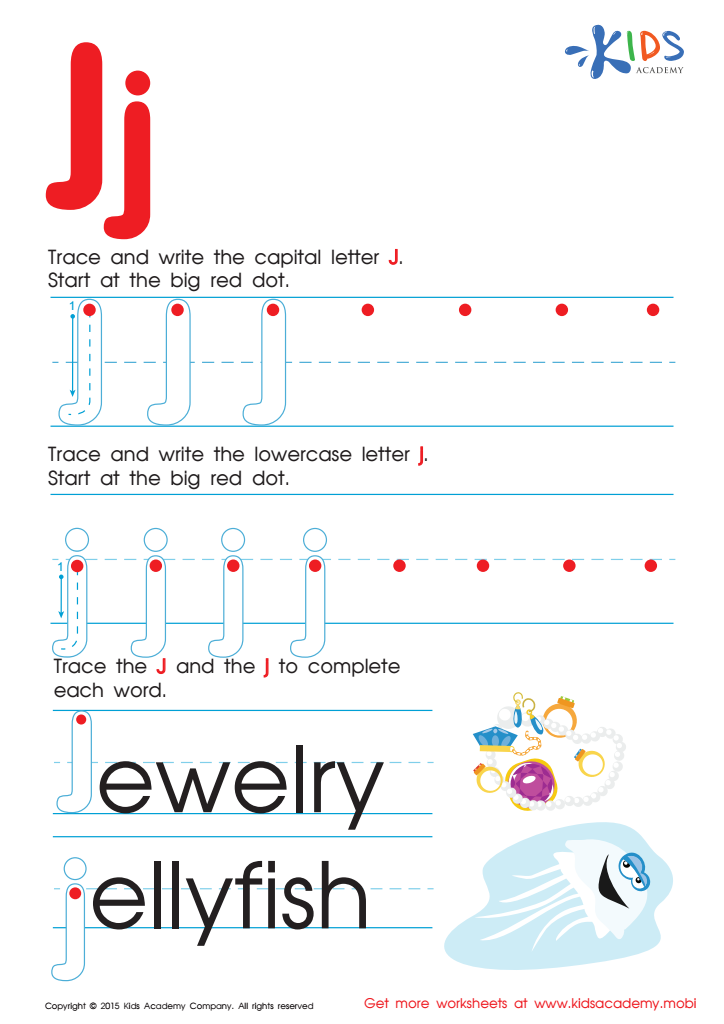
Letter J Tracing Page
Trace and write the letter "J" with our ABC worksheet - start at the big red dot! Have fun completing words like jewelry, jellyfish and more. Check out our kindergarten activities for more alphabet practice.
Letter J Tracing Page
Worksheet
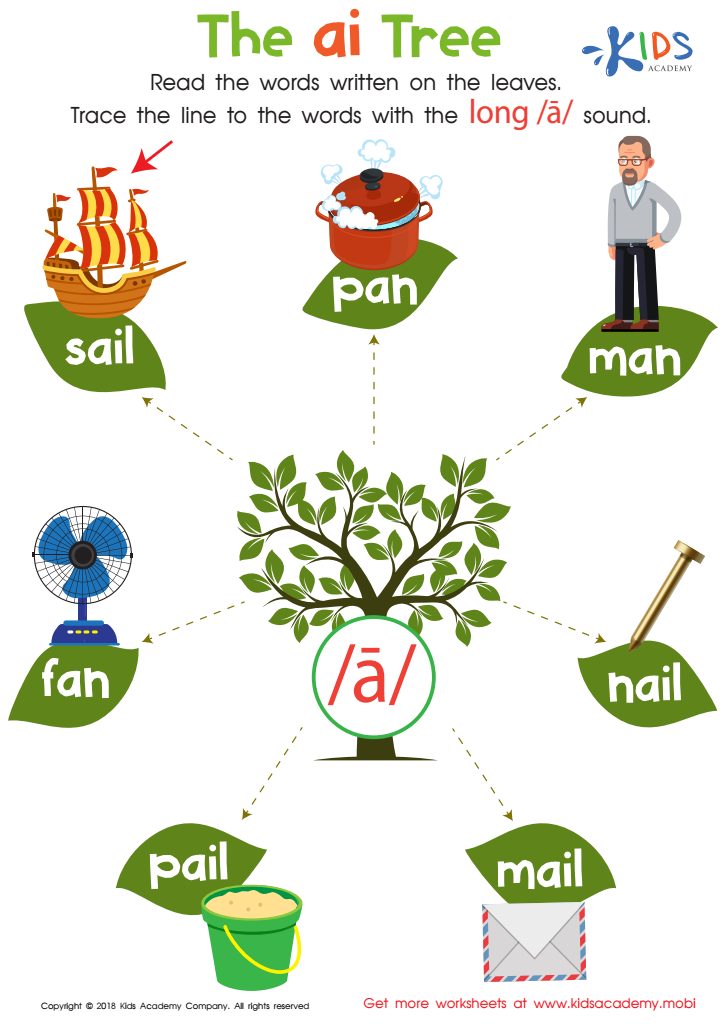
The AI Tree Worksheet
Help your kids learn to read better with this worksheet! Introduce the vowel pair 'ai' and give them familiar examples. Ask them to give you some in return. Then, have them read the words on the leaves and help them trace the ones with the long /a/ sound.
The AI Tree Worksheet
Worksheet
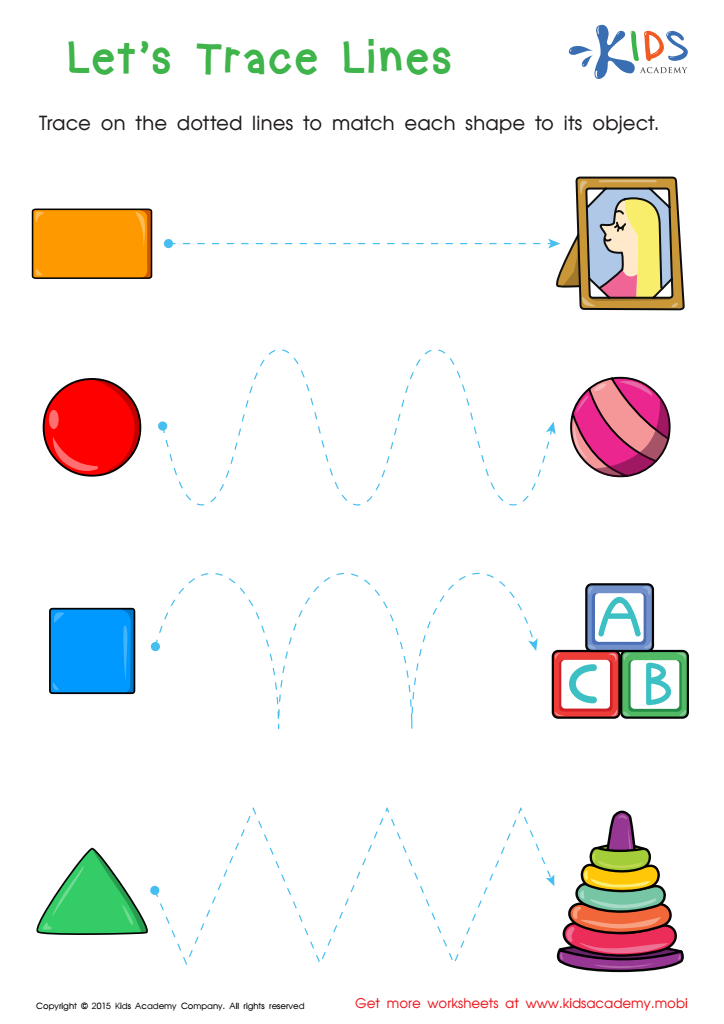
First Words: Let's Trace Lines Worksheet
Printable tracing lines for toddlers will provide your little one with the skills needed for future handwriting success. Proper grip, fine motor skills, and hand-to-eye coordination are key. Let's get their writing journey off to a great start!
First Words: Let's Trace Lines Worksheet
Worksheet
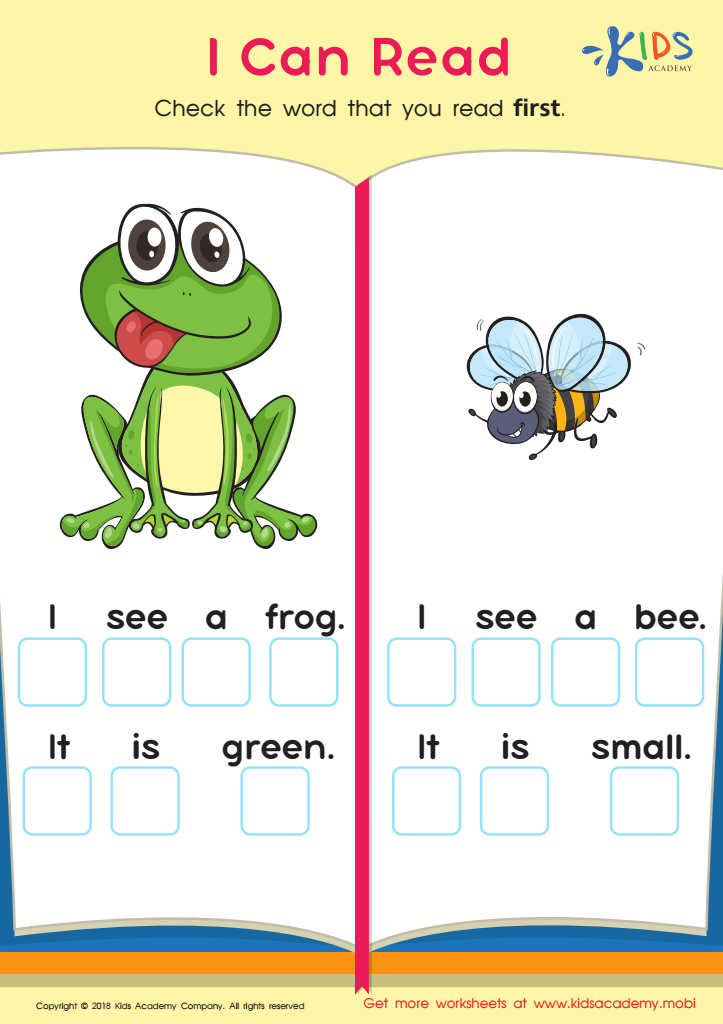
I Can Read Worksheet
Test your child's reading skills with this fun worksheet. See how well they know one-letter, two-letter, and five-letter words. Ask your little one to read the sentences and tick the word they identify first. It's a great way to track their progress and help them become more confident readers.
I Can Read Worksheet
Worksheet
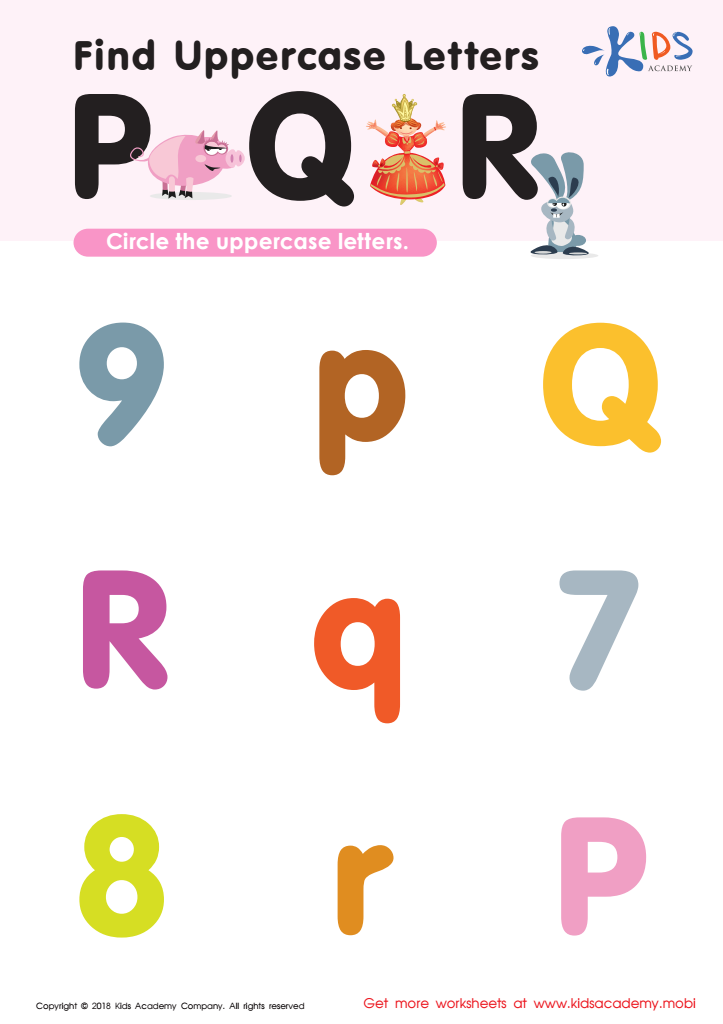
Find Uppercase Letters P, Q, and R Worksheet
Kids learn best when they can make connections. This free printable worksheet guides kids to solve the puzzle using the example letters P, Q, and R, supported by graphics and colors. Point out the page is pink, like the pig (which starts with P!) and solve by finding and circling the uppercase letters – be careful of the numbers!
Find Uppercase Letters P, Q, and R Worksheet
Worksheet
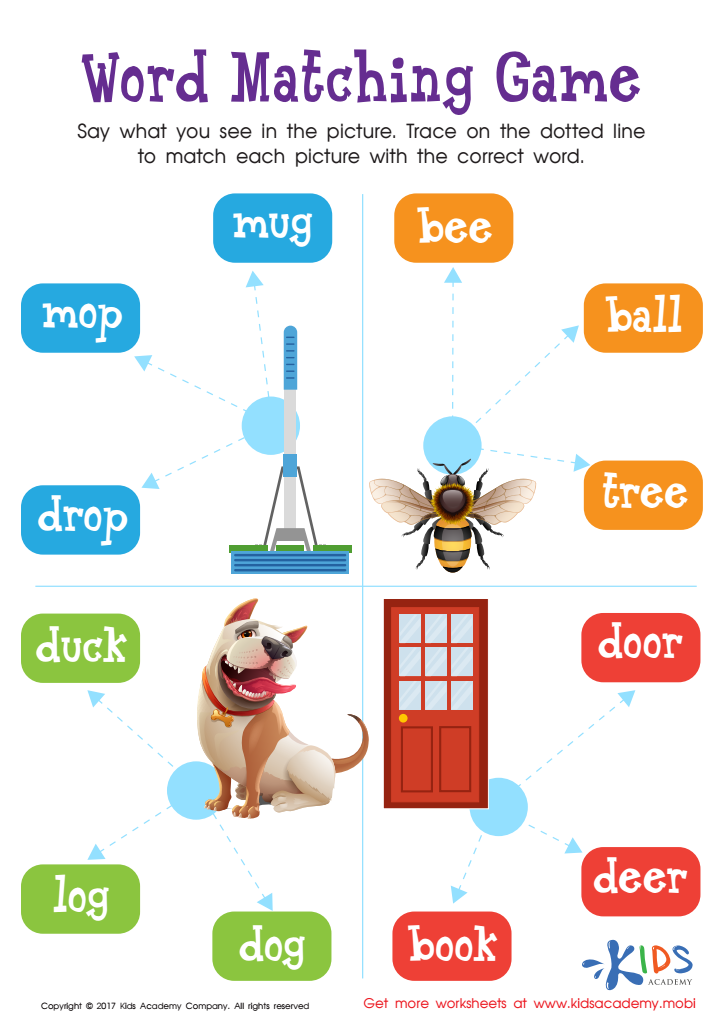
Word Matching Game Worksheet
Help your early reader develop prereading skills with this fun matching worksheet! Visual cues help them learn sight words, decode words in word families, and identify phonetic patterns. They'll practice discerning sounds past initial consonants while saying the name of the picture and finding the matching word - and reading at the same time!
Word Matching Game Worksheet
Worksheet
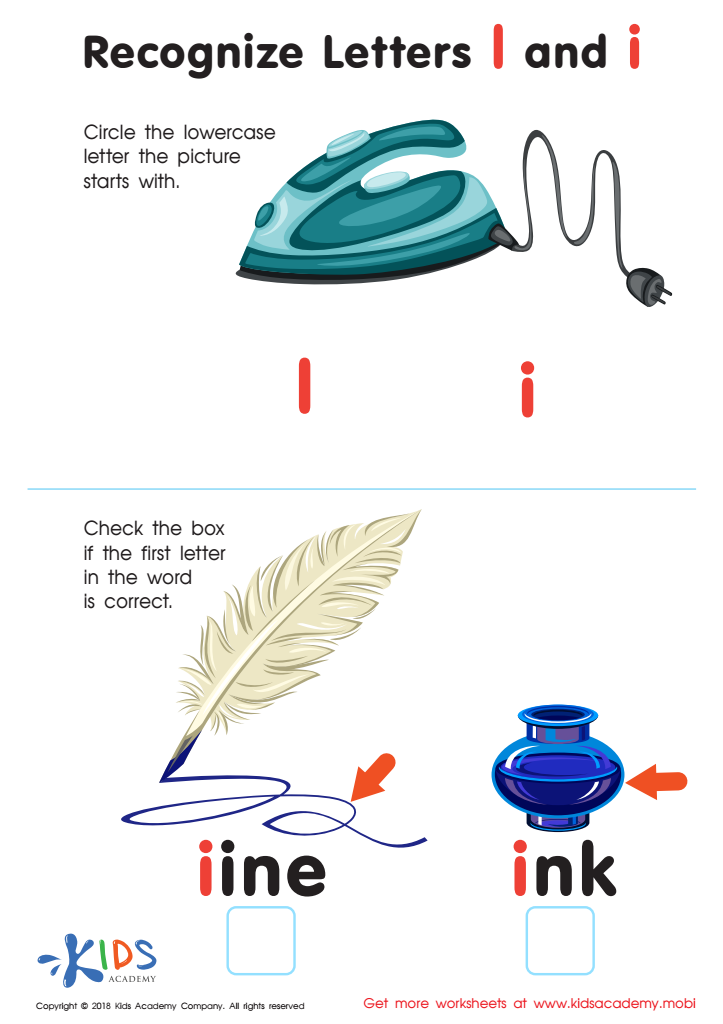
Recognize Letters l and i Worksheet
Help your child become familiar with uppercase and lowercase letters. Have them look at the pictures in the worksheet and circle the lowercase letter the picture starts with. For example: which one is the lowercase "i", the capital "I" or the small "i"?
Recognize Letters l and i Worksheet
Worksheet
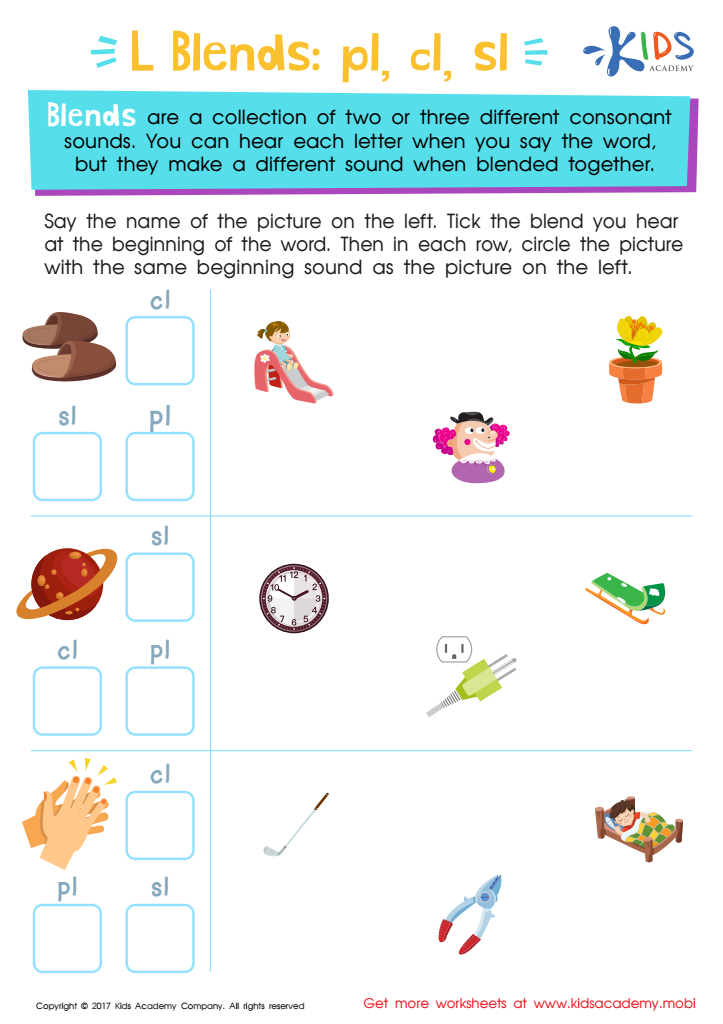
L Blends: "Pl", "Cl" and "Sl" Printable
This printable worksheet will help your child recognize and identify the Pl, Cl, and Sl consonant blends, sound them out, and identify them in print. Improve your child's reading and writing skills with fun and colorful phonics practice!
L Blends: "Pl", "Cl" and "Sl" Printable
Worksheet
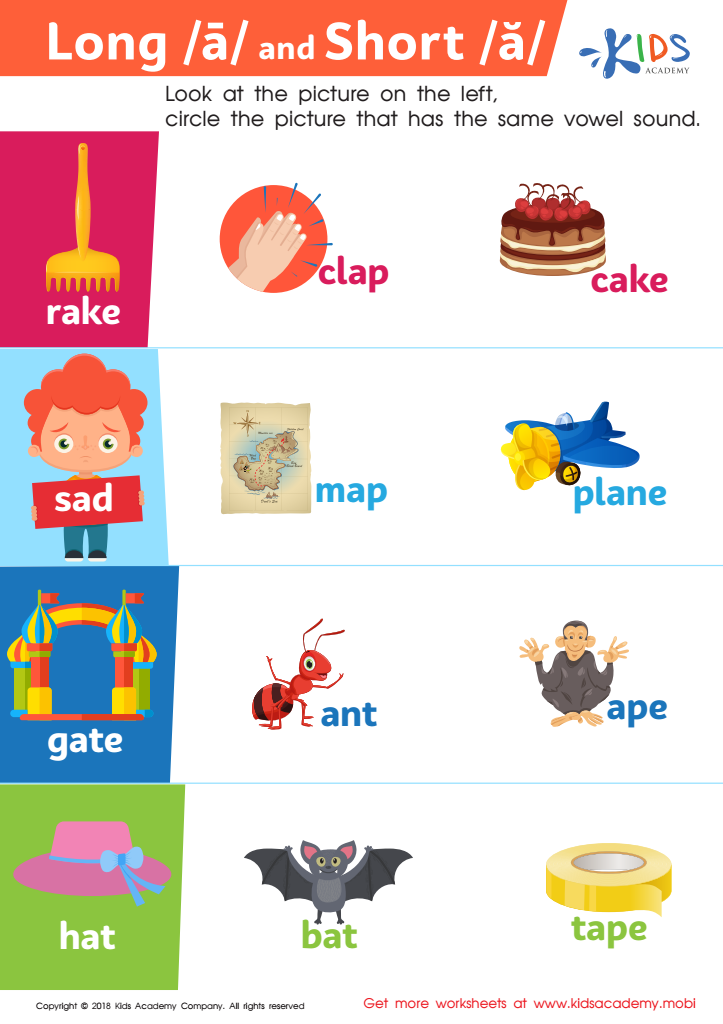
Reading: Long a and Short a Worksheet
This printable helps students practice distinguishing the long and short A sound. Pictures provide clues to read each word and students identify if it has a short or long sound. By completing this worksheet, children gain mastery of the phonics skill.
Reading: Long a and Short a Worksheet
Worksheet
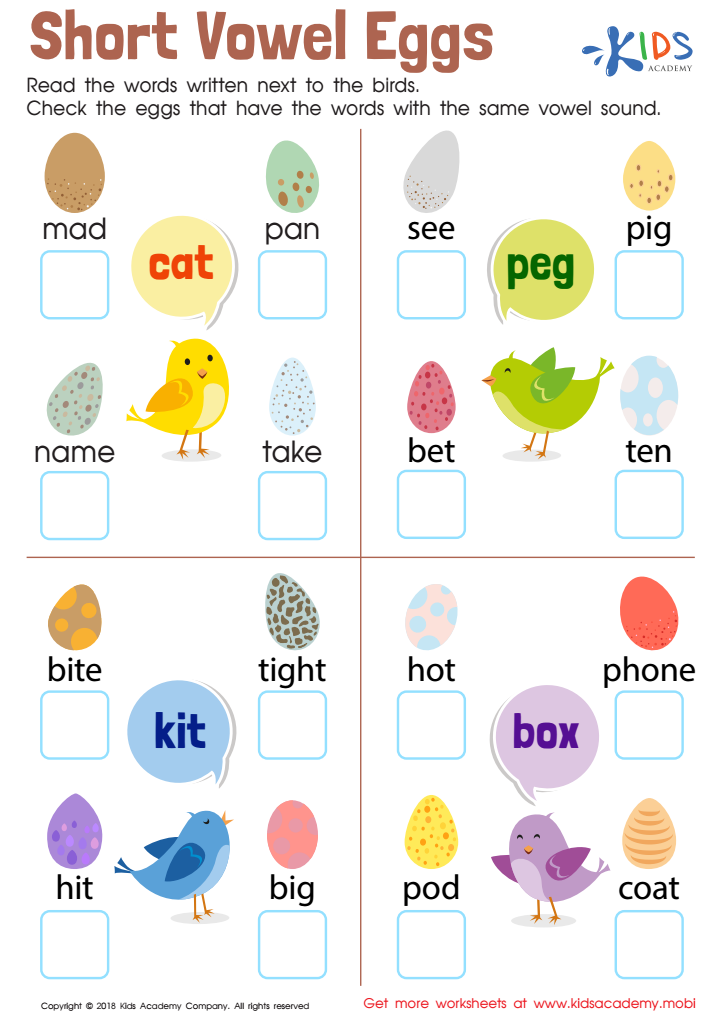
Short Vowel Eggs Worksheet
Your students will love helping these birdies pick the short vowel eggs! Have them read the words in the thought bubbles, then check off the boxes with the same short vowel sounds. The bright colors of this free Worksheet will draw them in and get them practicing their vowels!
Short Vowel Eggs Worksheet
Worksheet
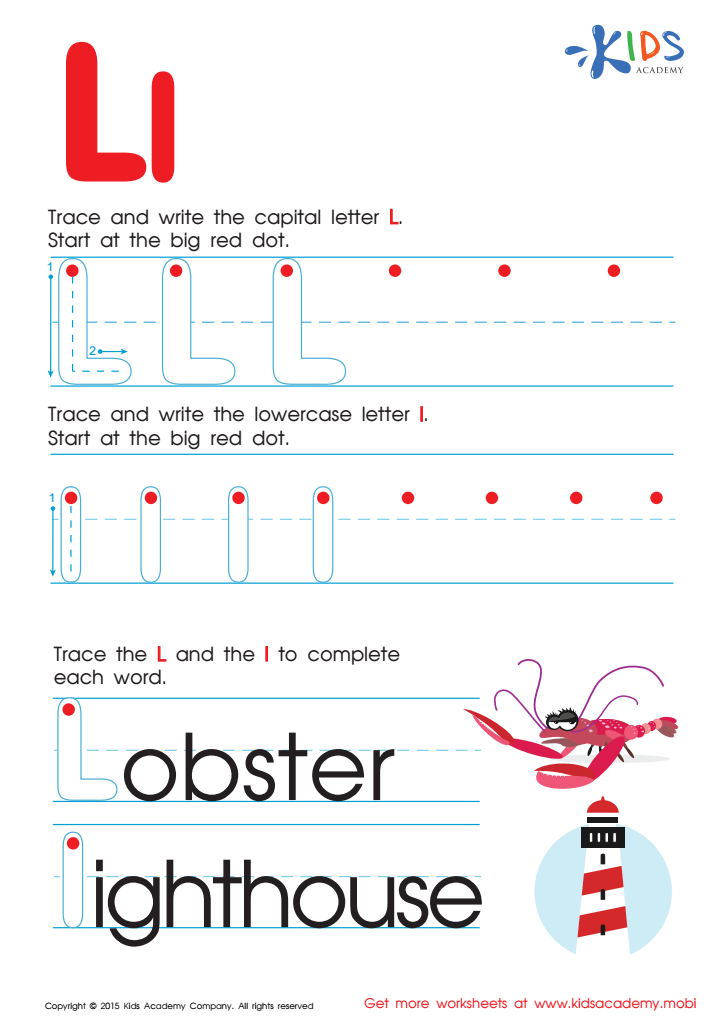
Letter L Tracing Page
Trace uppercase and lowercase letters to practice writing. Pay attention to the lowercase letters, like the "L", that are not as tall as an uppercase "I" or as short as a lowercase "i". Words like "lobster" and "lighthouse" are waiting to be completed. Enjoy!
Letter L Tracing Page
Worksheet

Find Uppercase Letters A, B, and C Worksheet
Check out this PDF worksheet and spot all the capital letters! Arranged as a puzzle, this exercise will test little learners to read and recognize uppercase letters and tell the difference between letters and numbers. To help them, use the pictures on top of the page to practice the sounds A, B and C make! 80 words.
Find Uppercase Letters A, B, and C Worksheet
Worksheet
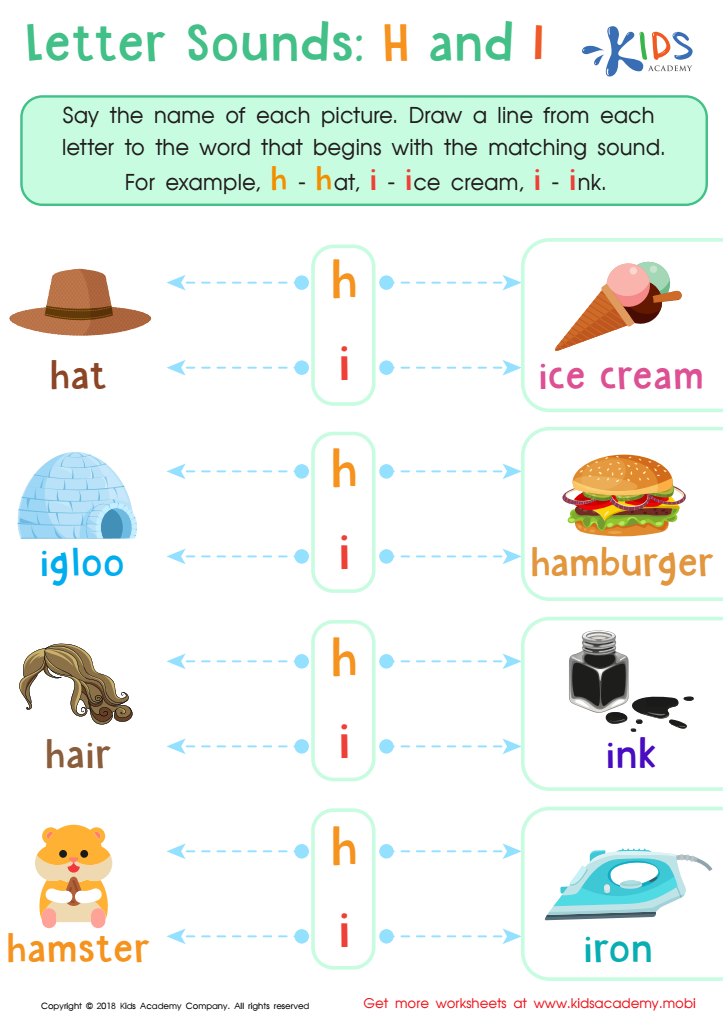
Letter H and I Sounds Worksheet
Preschoolers will have fun and develop reading and writing skills at the same time! They'll use pictures to recognize familiar words and differentiate between 'H' and 'I' sounds. Then they'll trace lines to connect each sound to the picture, improving their fine-motor skills. Bright and cheerful visuals make learning a breeze!
Letter H and I Sounds Worksheet
Worksheet
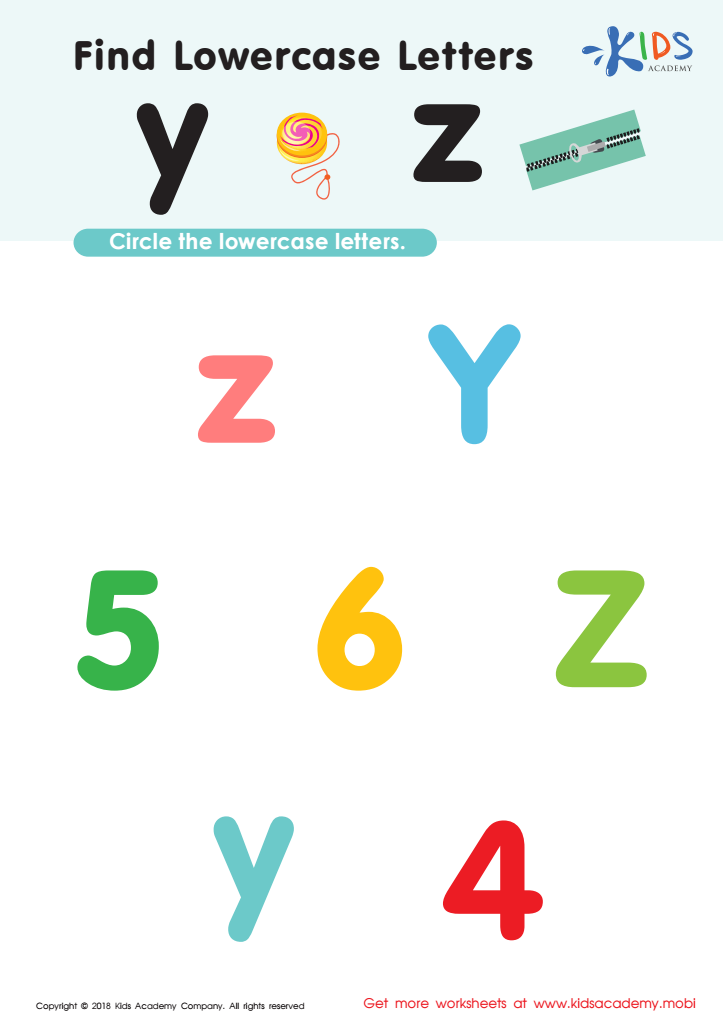
Find Lowercase Letters y z Worksheet
Help your kid learn the alphabet. Before they can move on to words and reading, they must first know the lower and uppercase letters. Show them how to find the letters y and z in this worksheet, which is filled with uppercase letters and numbers. Together, find and circle them.
Find Lowercase Letters y z Worksheet
Worksheet
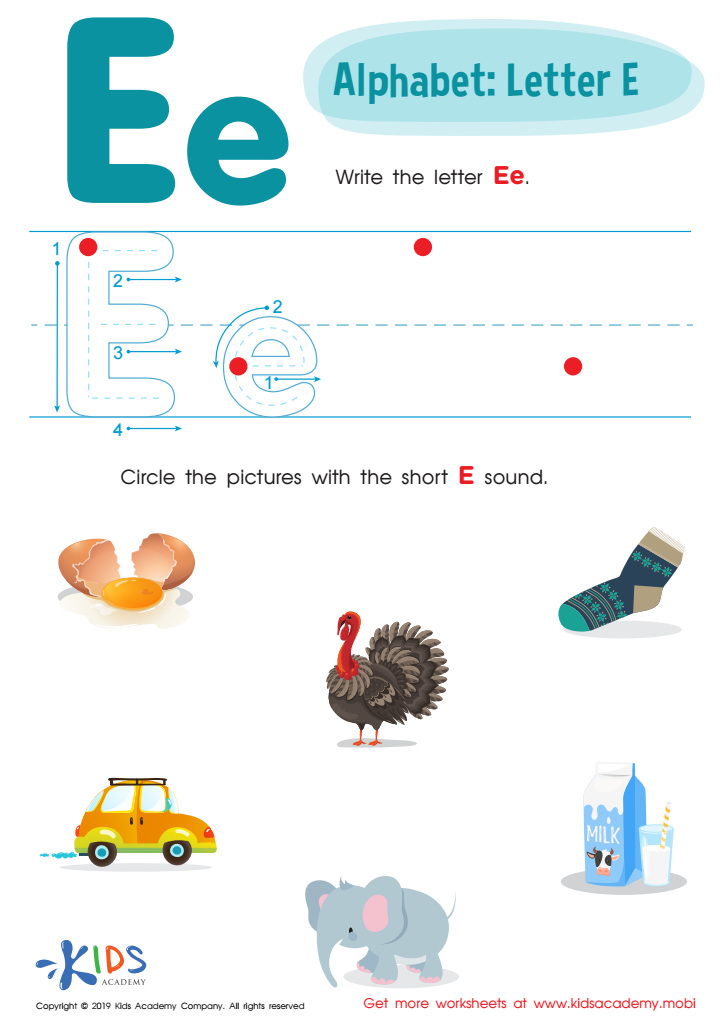
Letter E Tracing Worksheet
Students trace and write uppercase and lowercase letter E. They sound out "E" words, choosing those with short "E" sounds. Preschoolers identify the difference between the 'E' sounds in words like "egg" and "turkey." A tracing sheet helps them to understand.
Letter E Tracing Worksheet
Worksheet
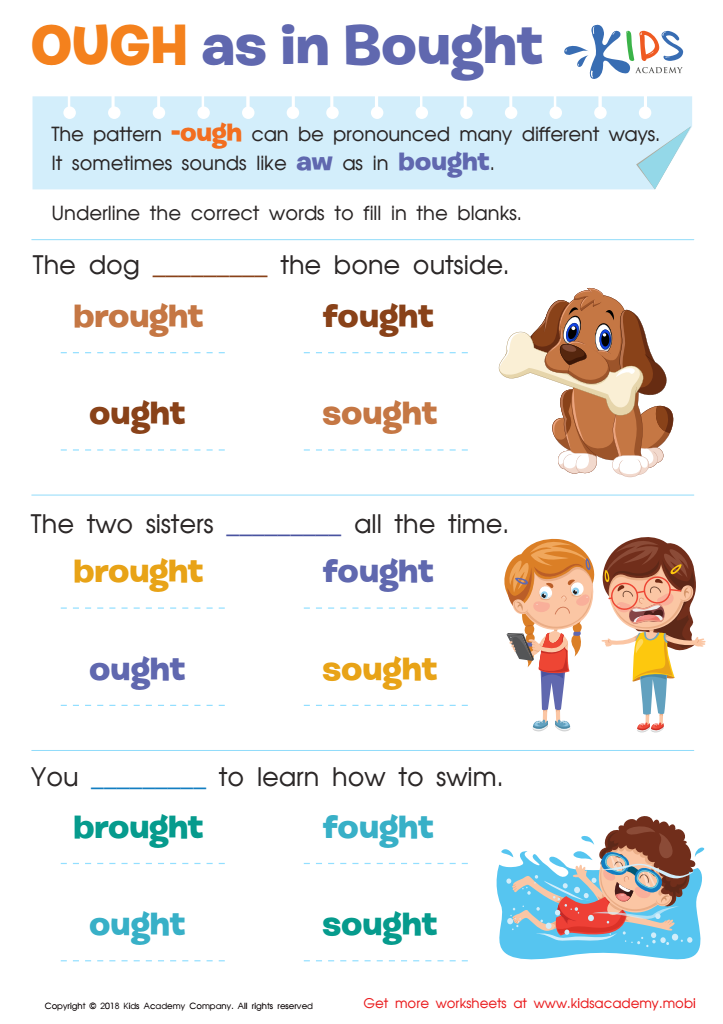
OUGH as in Bought Worksheet
Use this worksheet to teach your child the different pronunciations of -ough. For example, -ough can sound like ‘aw’ in ‘bought’. Ask your child to give more examples and help them underline the correct answers to fill in the blanks.
OUGH as in Bought Worksheet
Worksheet
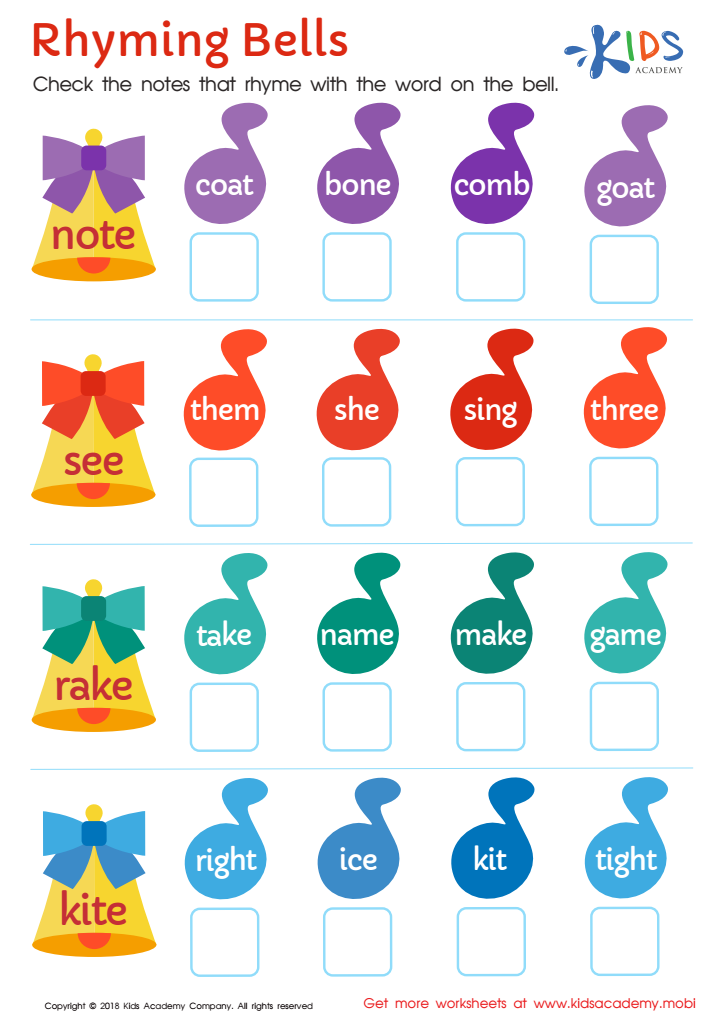
Rhyming Bells Worksheet
This printable worksheet helps students recognize rhyming words. Read a word, then pick the 4 words that rhyme. Look out for words with different spellings but same ending sound. It's a great exercise to improve understanding of rhyming words.
Rhyming Bells Worksheet
Worksheet
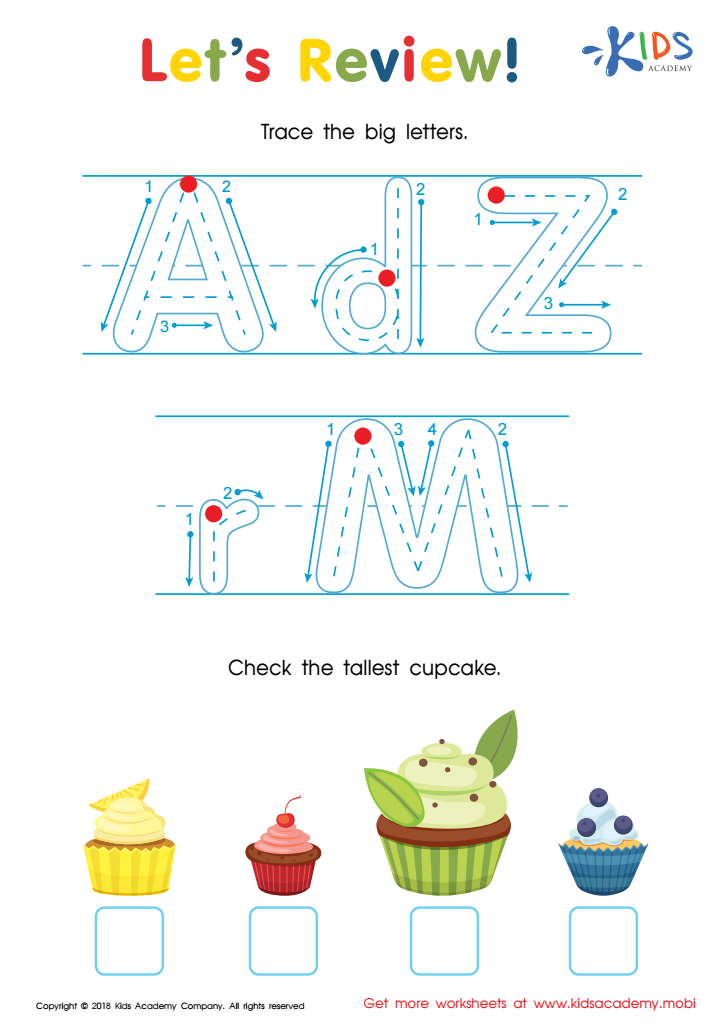
Let's Review! Big Letters Worksheet
Teach your child to read and write big and small letters with Kids Academy's tracing worksheet. Show them how to guide their pencil with each stroke. Reinforce their understanding with fun cupcake pictures and help them choose the tallest one. It's a great way to help them differentiate between uppercase and lowercase letters.
Let's Review! Big Letters Worksheet
Worksheet
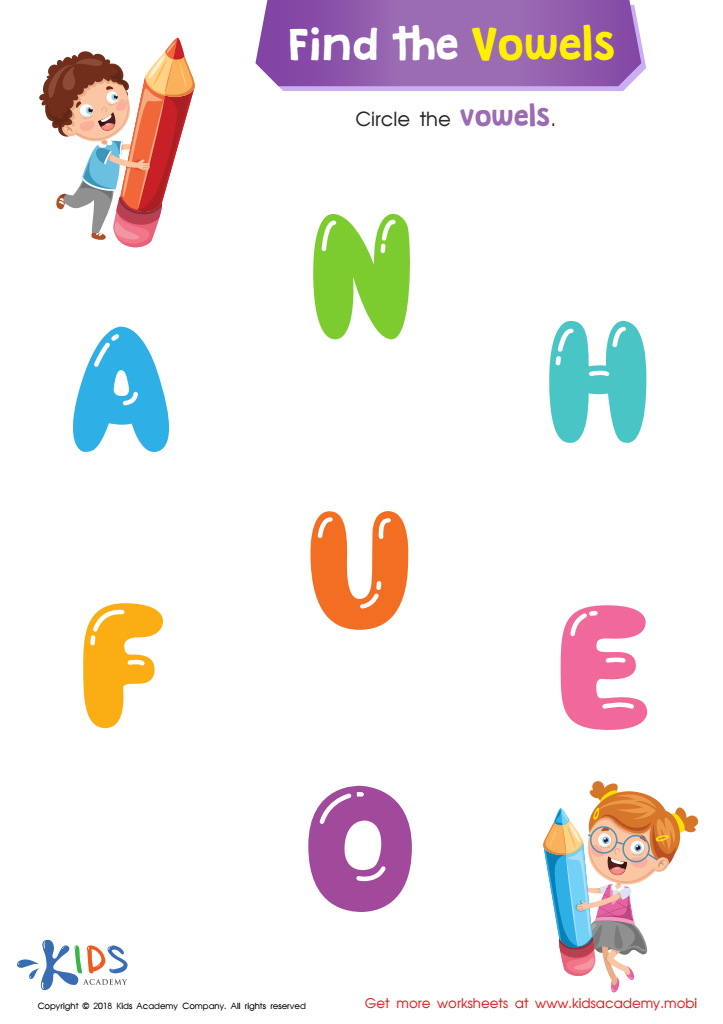
Find the Vowels Reading Worksheet
This worksheet helps kids identify vowels with bright colors and engaging activities to strengthen their visual discrimination and fine motor skills. Young learners will find it easy to succeed and be excited to keep reading!
Find the Vowels Reading Worksheet
Worksheet
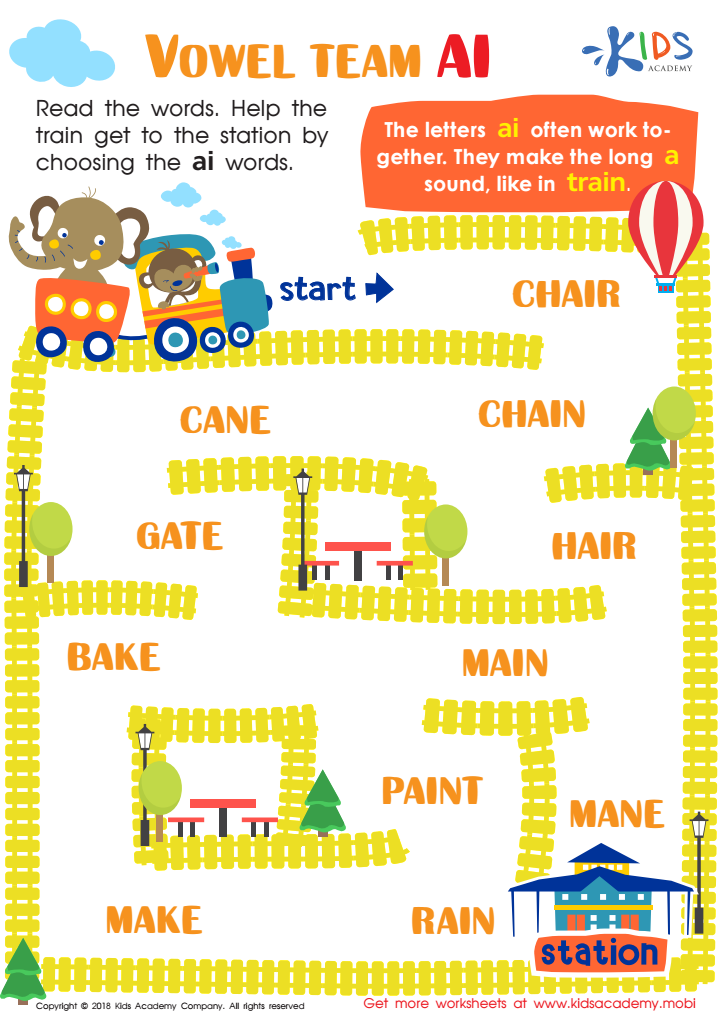
Vowel team ai Worksheet
Kids will have a blast learning about the -ai digraph with this fun worksheet. They'll read words with it and practice their motor skills as they help the animal duo get back to the train station. With success, they'll smile and enjoy the activity!
Vowel team ai Worksheet
Worksheet
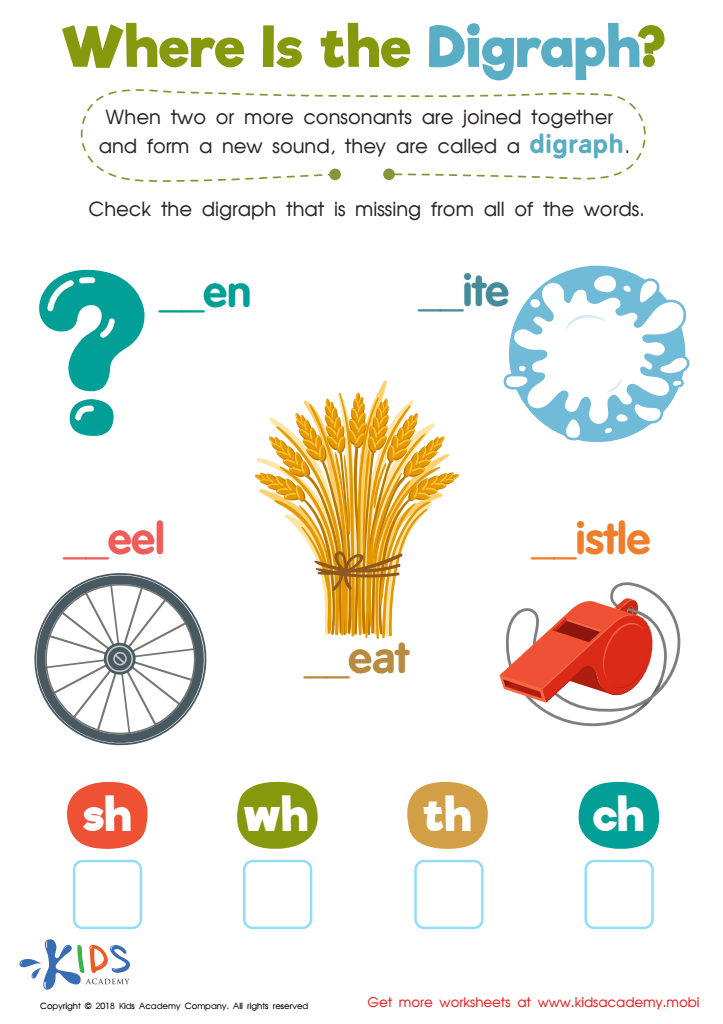
Where Is the Digraph? Worksheet
Teach your child about digraphs - two or more consonants that form one sound, like /wh/, /sh/, and /ch/. Show them words with these sounds and use this worksheet to help. Ask them which digraph is missing from the words and point out the pictures. 80 words.
Where Is the Digraph? Worksheet
Worksheet
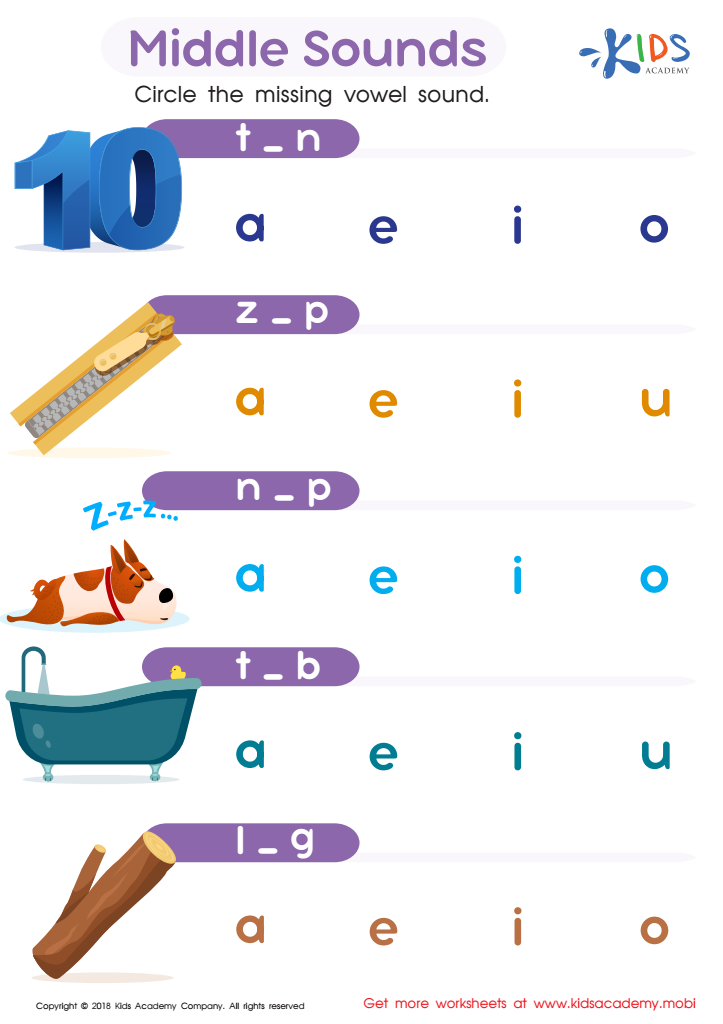
Middle Sounds Worksheet
Download this free worksheet and help your reader identify middle sounds in words. Pictures provide clues to the word, while tracing circles around the middle vowel sound strengthens fine motor and visual discrimination skills. It's a great way to teach sound discrimination between similar-sounding short vowels - a key component for proficient reading.
Middle Sounds Worksheet
Worksheet
Join Kids Academy for Free
Who is primarily going to use this learning content?















