Free download Normal Difficulty Reading Worksheets With Answers for Grade 3 - Page 2
91 filtered results
Difficulty Level
Grade
Age
-
From - To
Subject
Activity
Standards
Favorites
With answer key
Interactive
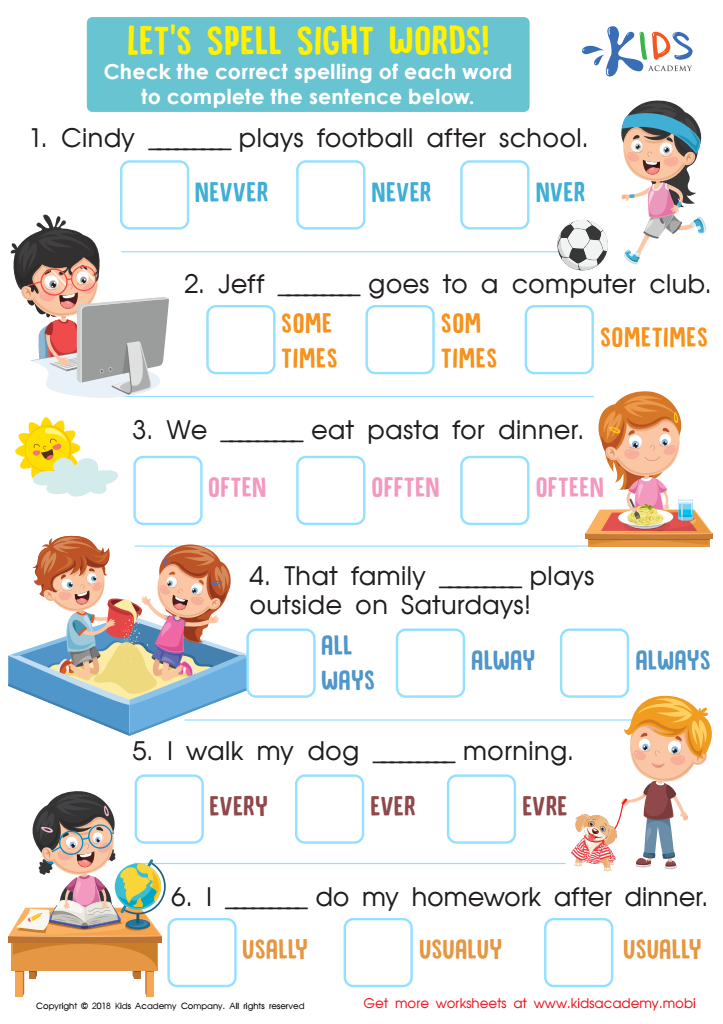
Let's Spell Sight Words Worksheet
Help your kids spell tricky sight words by asking them to spot differences in the sentences of activities they do regularly. This worksheet contains incomplete sentences, with the correct spelling of the word in the options for them to fill in. Get them to look out for words with the wrong spellings.
 Assign to My Students
Let's Spell Sight Words Worksheet
Worksheet
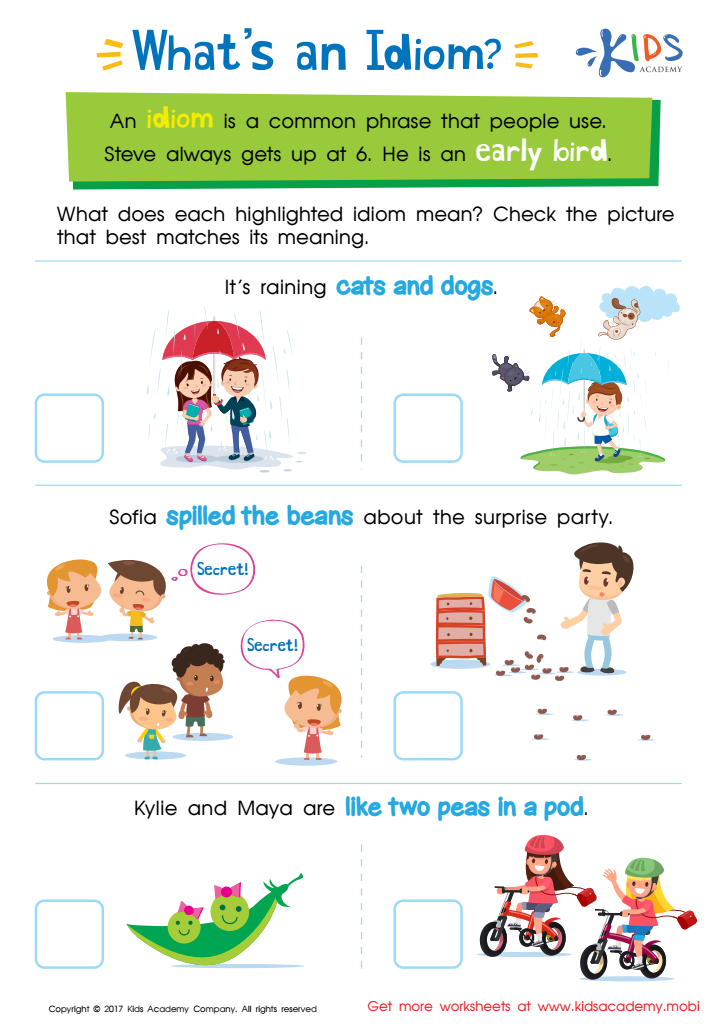
Idiom Worksheet
This idiom worksheet for 3rd grade is the answer.
Make learning idioms a breeze! Help your 3rd grader understand figurative language with a fun worksheet based on the common expressions they already know. Unlock the mystery behind these phrases and make learning fun!
Idiom Worksheet
Worksheet
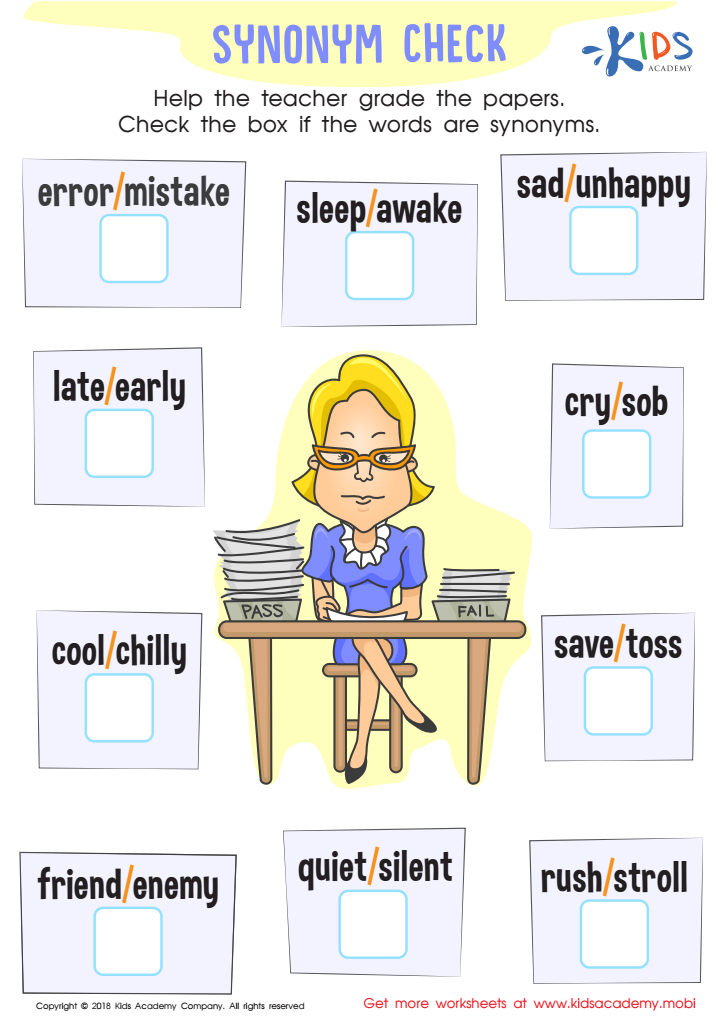
Synonym Check Worksheet
Ask your kids what a synonym is, and listen to their definitions. If needed, explain it's a word that has a similar meaning to another. Give examples, then ask them to do the same. For this worksheet, get them to help grade the papers. Have them check the boxes if the words are synonyms.
Synonym Check Worksheet
Worksheet
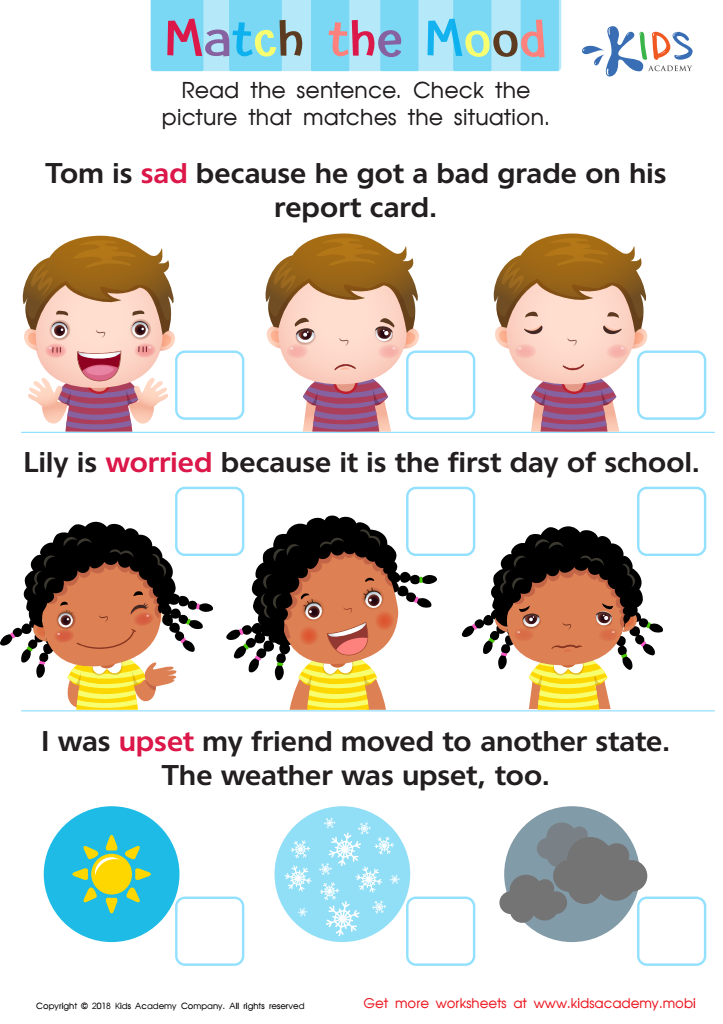
Match The Mood Worksheet
Ask your kid what kind of moods they usually experience; e.g. sad, happy, hurt or worried. Read aloud the sentences in the worksheet and help them match the situation to the picture. Max 80 words.
Match The Mood Worksheet
Worksheet
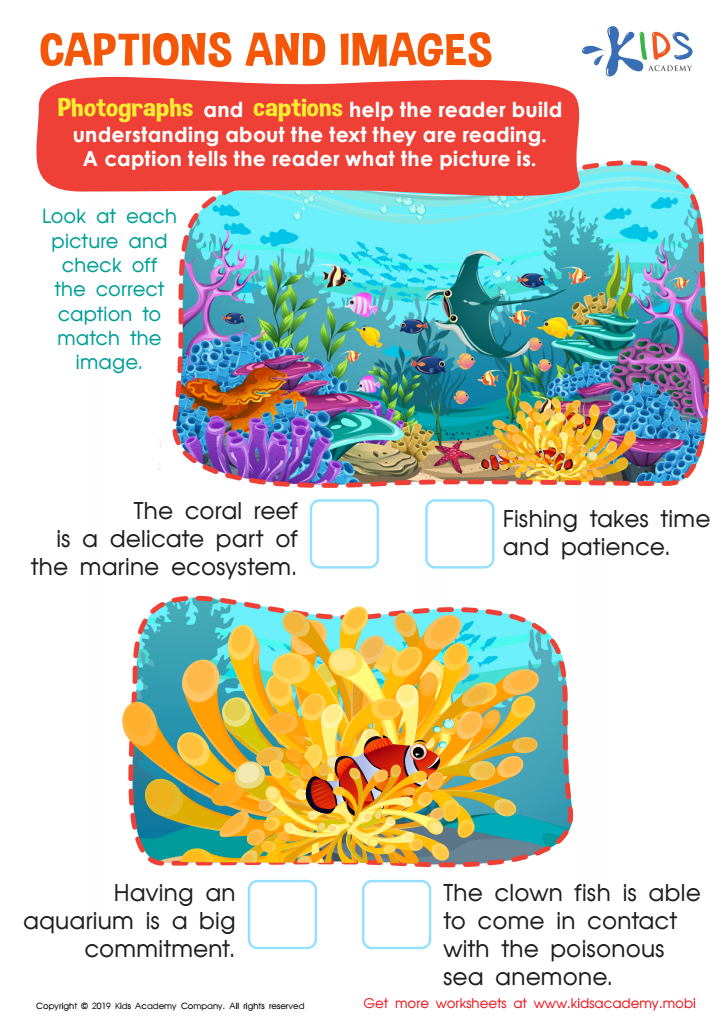
Captions and Images Worksheet
Pictures and captions can aid understanding. That's why many children's books have them. Have your kids look at the pictures in the worksheet, then help them match the right caption to each image. This will help them understand the story.
Captions and Images Worksheet
Worksheet
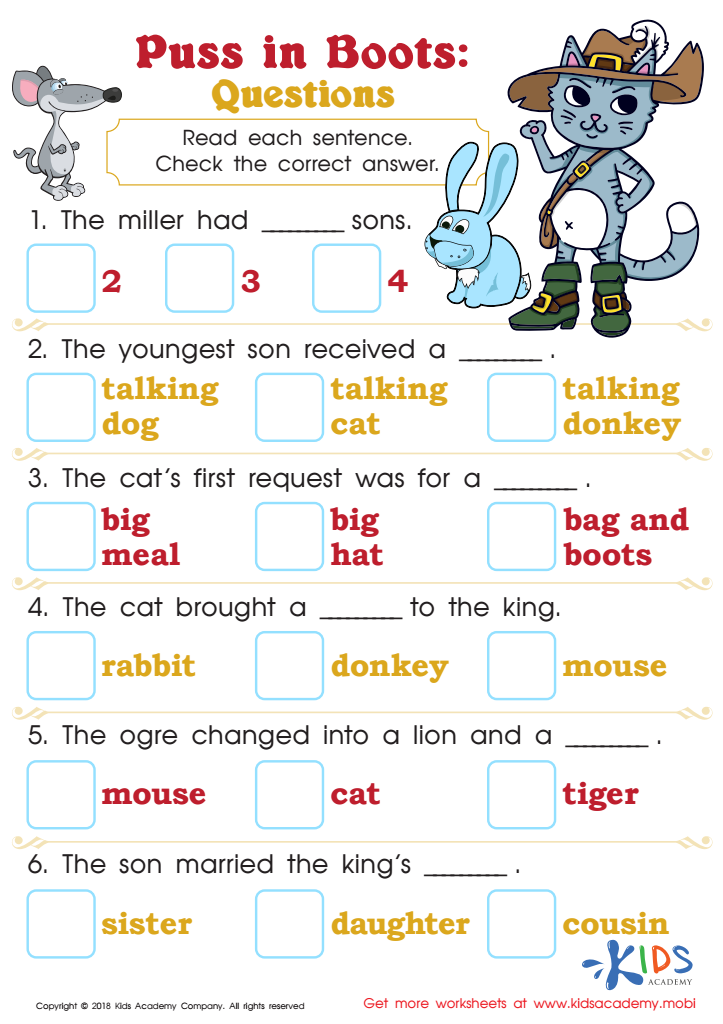
Puss in Boots: Questions Worksheet
This worksheet contains questions to be checked with boxes for the correct answers. It also has pictures of animals; ask kids to identify them, noting the objects with them. Read the questions and have kids provide the answers. Help them check the boxes for the right answer.
Puss in Boots: Questions Worksheet
Worksheet
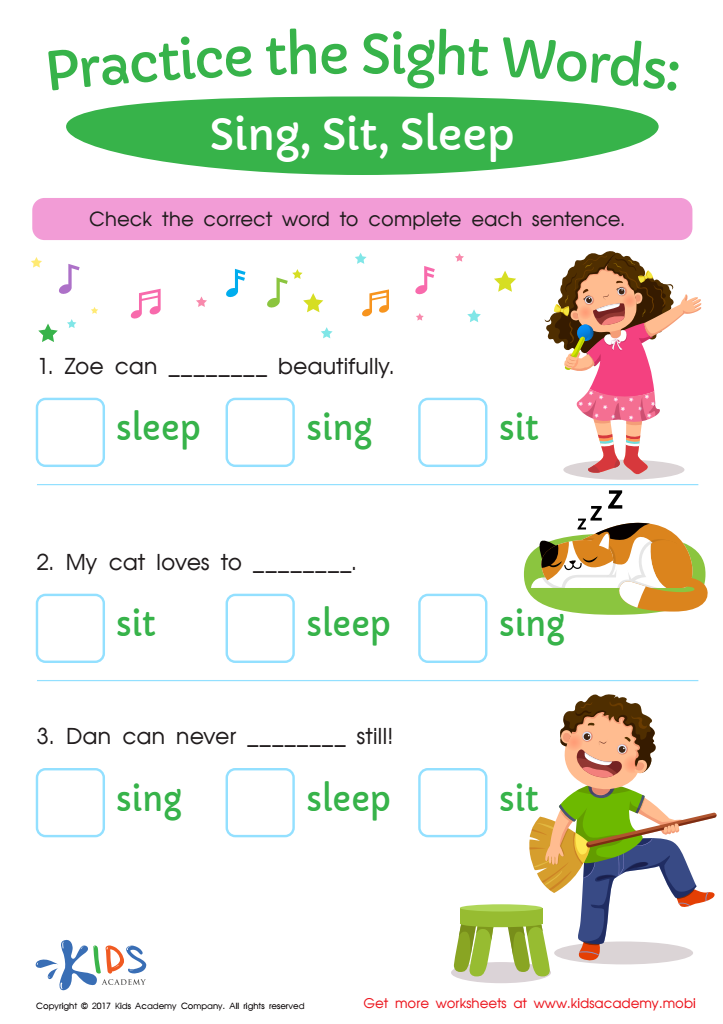
Sing, Sit, Sleep Sight Words Worksheet
Practice sight words with this printable worksheet featuring sing, sit, sleep! Confusing at first, these words can be mastered with the help of simple sentences and fun illustrations.
Sing, Sit, Sleep Sight Words Worksheet
Worksheet
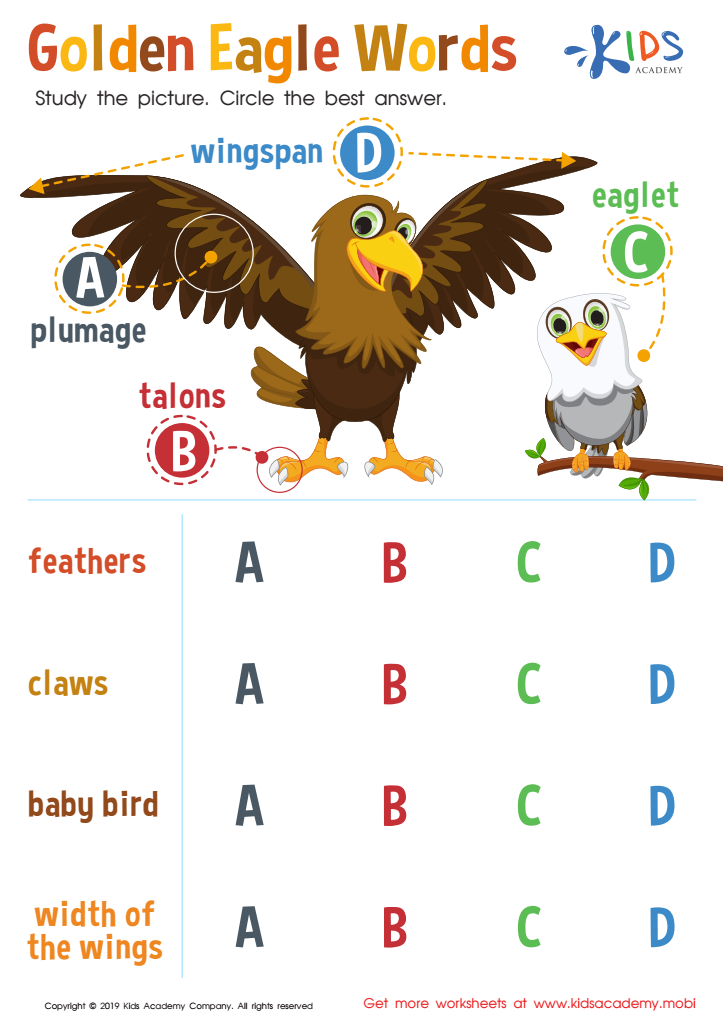
Golden Eagle Words Worksheet
Learning about animals is fun and this worksheet makes it more exciting! An adorable image of a golden eagle's wings is at the top, followed by new vocabulary words. Help your child match them by circling the correct answer. It's a great way to learn about the regal bird and its baby!
Golden Eagle Words Worksheet
Worksheet
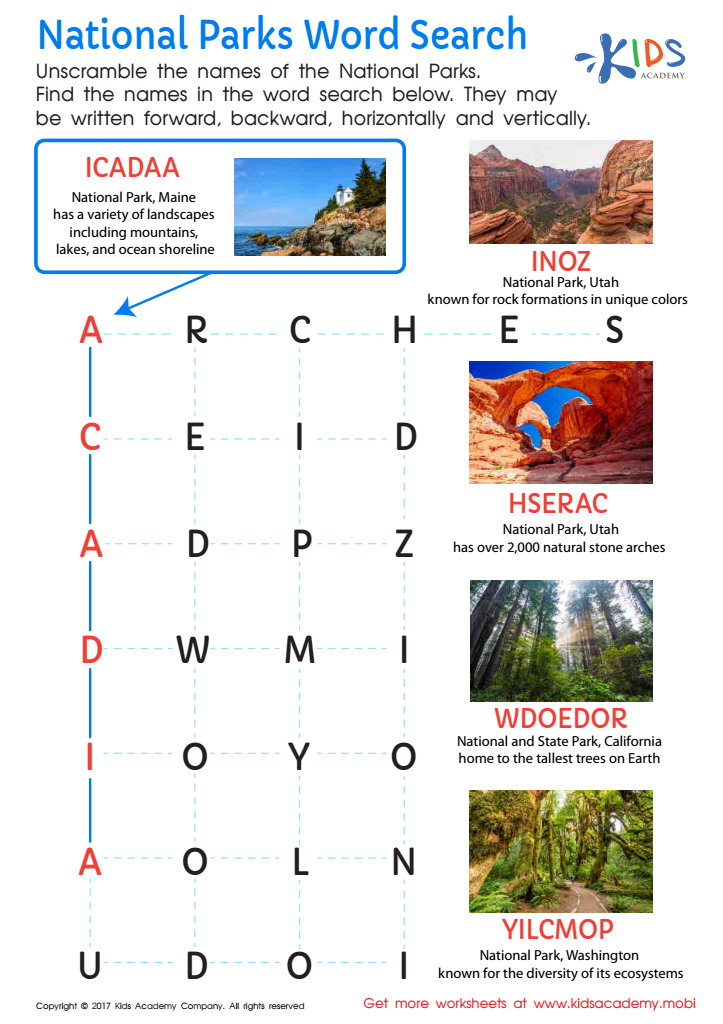
National Parks Word Search Worksheet
Explore the beauty of the USA’s national parks with this fun National Parks word search! Learn more about these majestic sites and boost your knowledge. Take a trip through the sights and sounds of our country with this motivating worksheet.
National Parks Word Search Worksheet
Worksheet
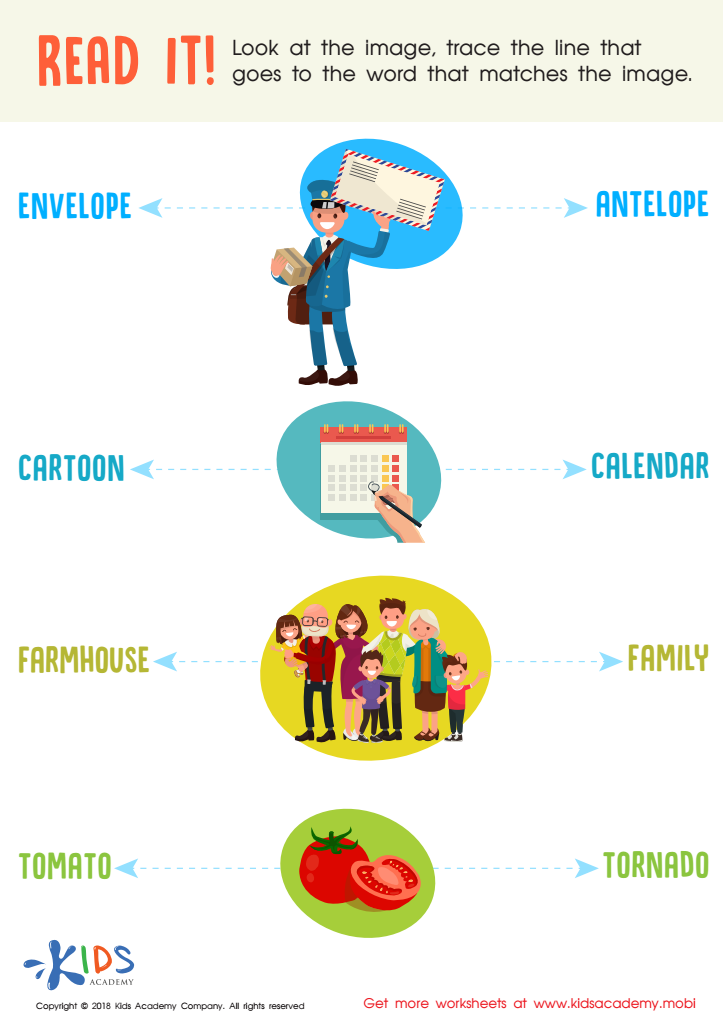
Read It! Worksheet
Point to each image on this worksheet, asking your child what it is. Read the 2 options then help your child trace the line to the correct word. It'll keep them engaged and provide visual stimulation.
Read It! Worksheet
Worksheet
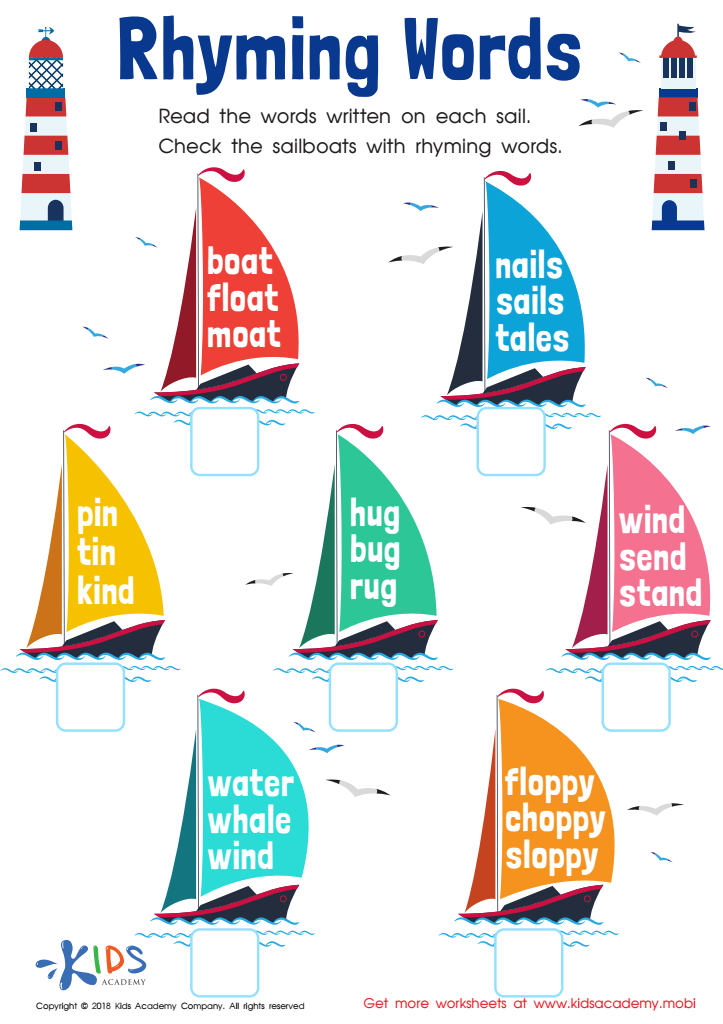
Rhyming Words Worksheet
Does your child know about rhyming words? Get them interested in poetry and explain that these words have similar sounds when pronounced. Read the words on each sailboat to your child and ask them to identify the rhyming pairs. Guide them to check the sailboats.
Rhyming Words Worksheet
Worksheet
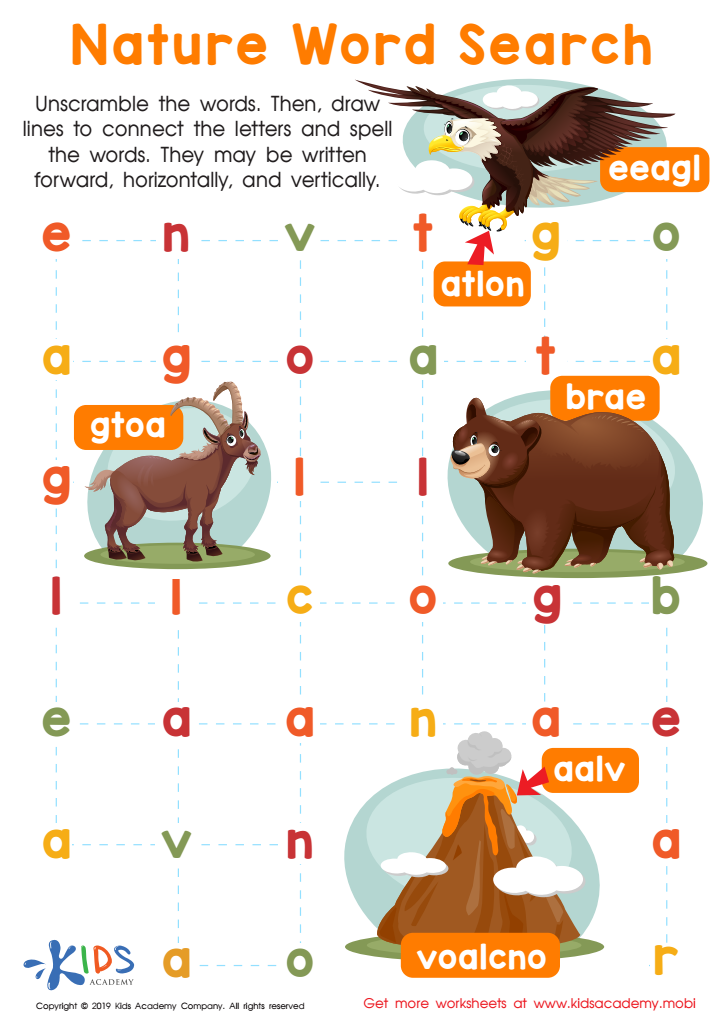
Nature Word Search Worksheet
Unscramble science vocabulary words and find them in this fun worksheet! Use the pictures as clues if you get stumped; you can also write down the words for reference. Solve the puzzle when you're done to finish!
Nature Word Search Worksheet
Worksheet
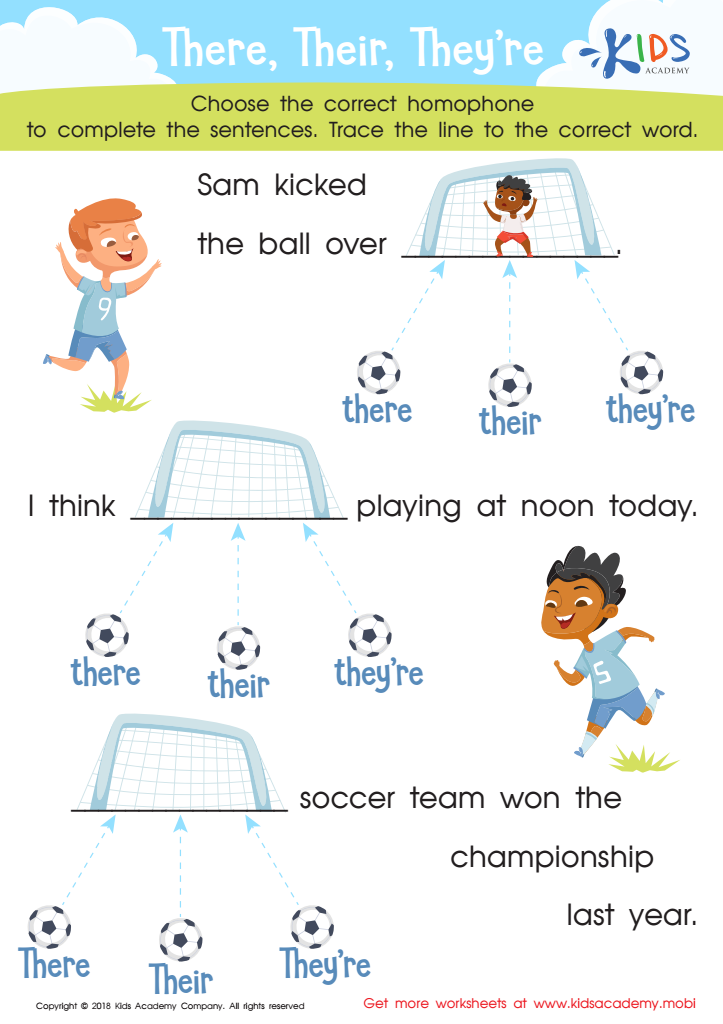
There, Their, They're Worksheet
Explain to your kids the difference between 'there', 'their' and 'they're'. These three words are homophones - spelt similarly but with different meanings. Help them choose the correct homophones when completing sentences, and trace the line to the right word.
There, Their, They're Worksheet
Worksheet
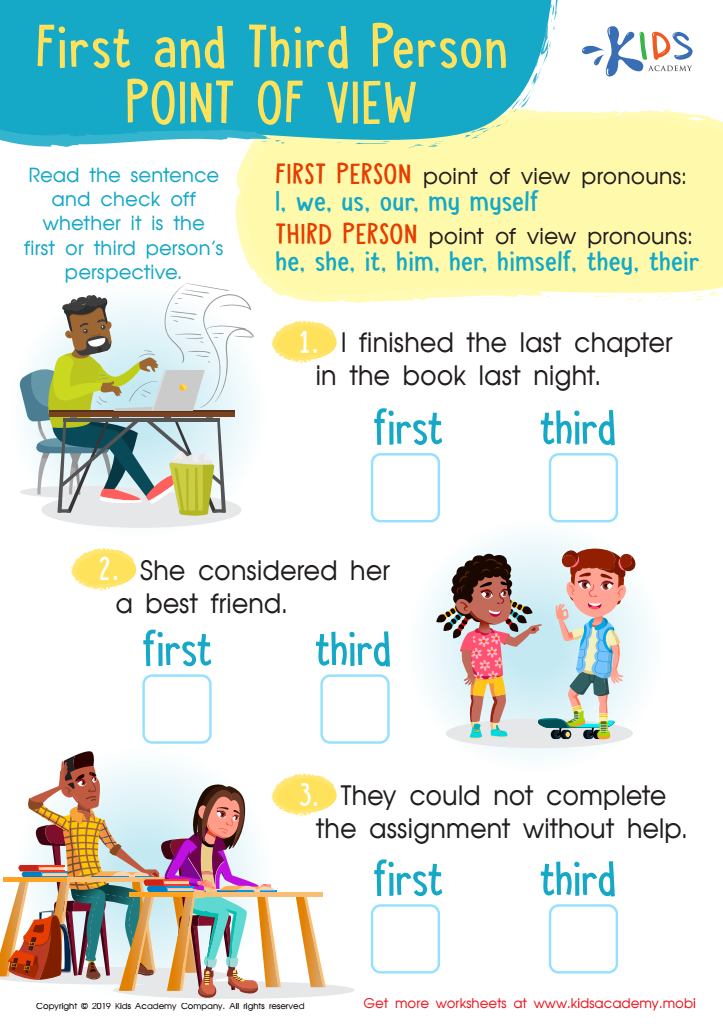
First and Third Person Point of View Worksheet
Remind kids what a point of view is in a story. First person is from the character's perspective; third person is from the narrator's. Ask students to check if sentences in the exercise are in first or third person point of view.
First and Third Person Point of View Worksheet
Worksheet
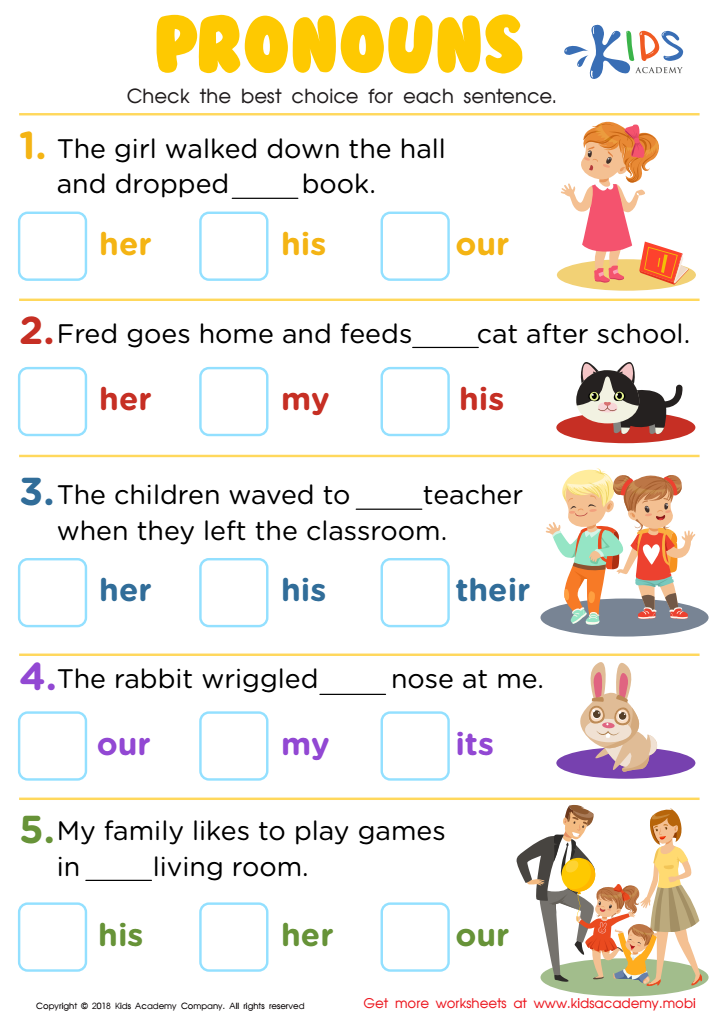
Pronouns Worksheet
Help your child explore pronouns with this worksheet: start by asking them which pronouns they know. Then, read the sentences and their options aloud together, and ask your child to choose the best pronoun for each sentence. This worksheet should be easy for them if they can already read short sentences.
Pronouns Worksheet
Worksheet
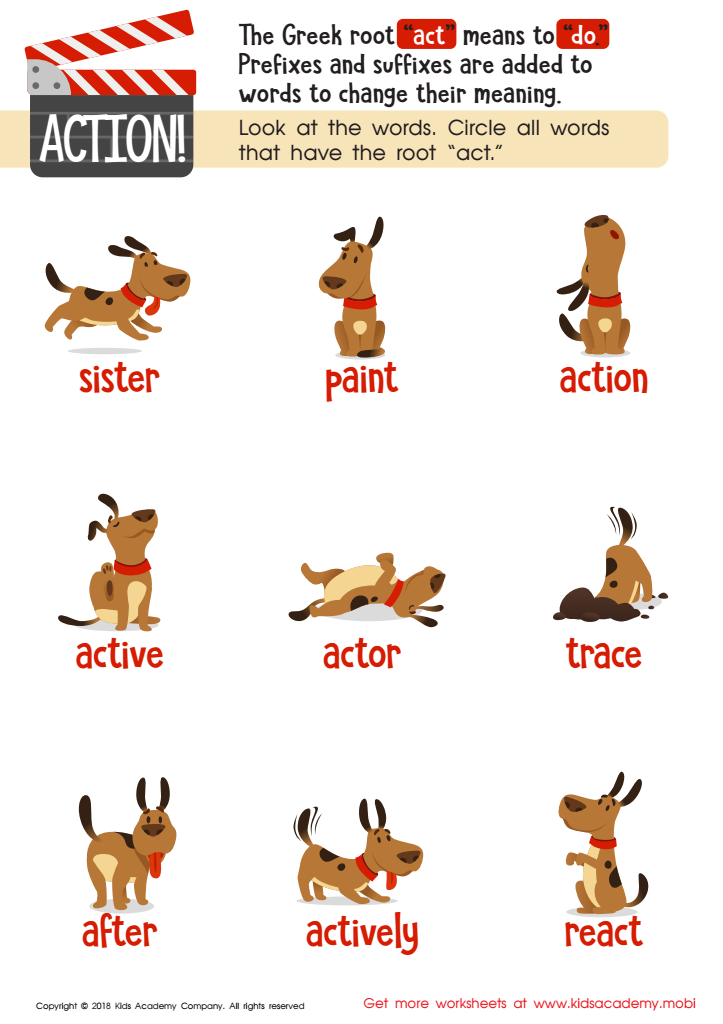
Action! Worksheet
Most English words are borrowed, and prefixes and suffixes are added to change the meaning. A popular prefix is 'act', from the Greek root meaning 'to do'. With your kids, look at the words in this worksheet and circle those with the root 'act'.
Action! Worksheet
Worksheet
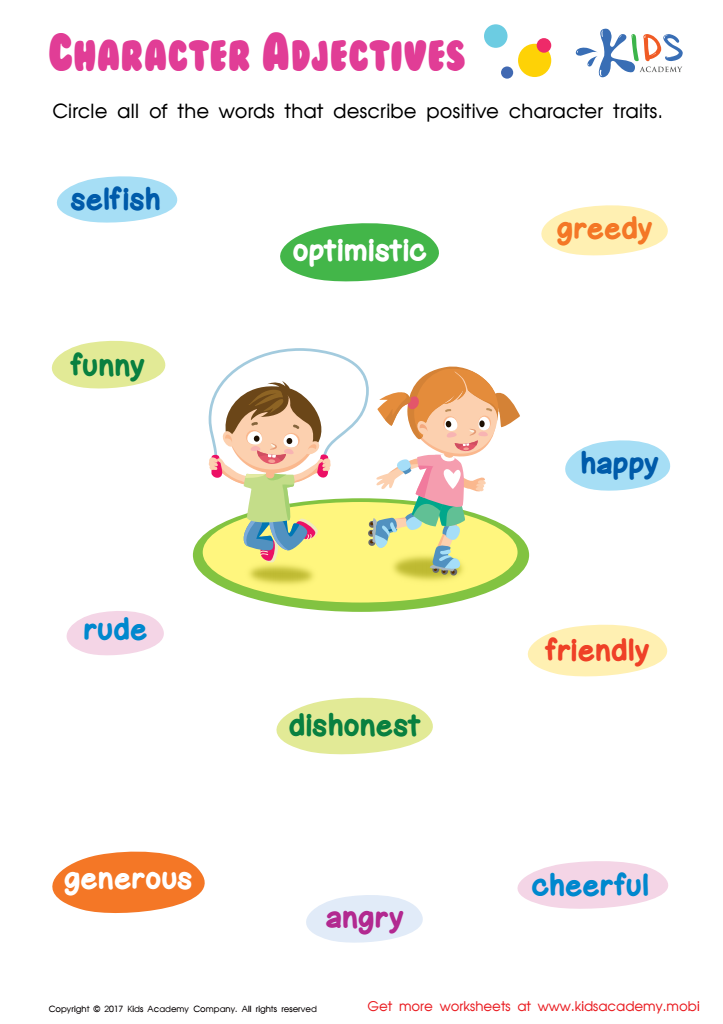
Character Adjectives Worksheet
Help your child express their feelings easily with this PDF worksheet! It focuses on character adjectives and increases their vocabulary, so they can confidently articulate positive emotions.
Character Adjectives Worksheet
Worksheet
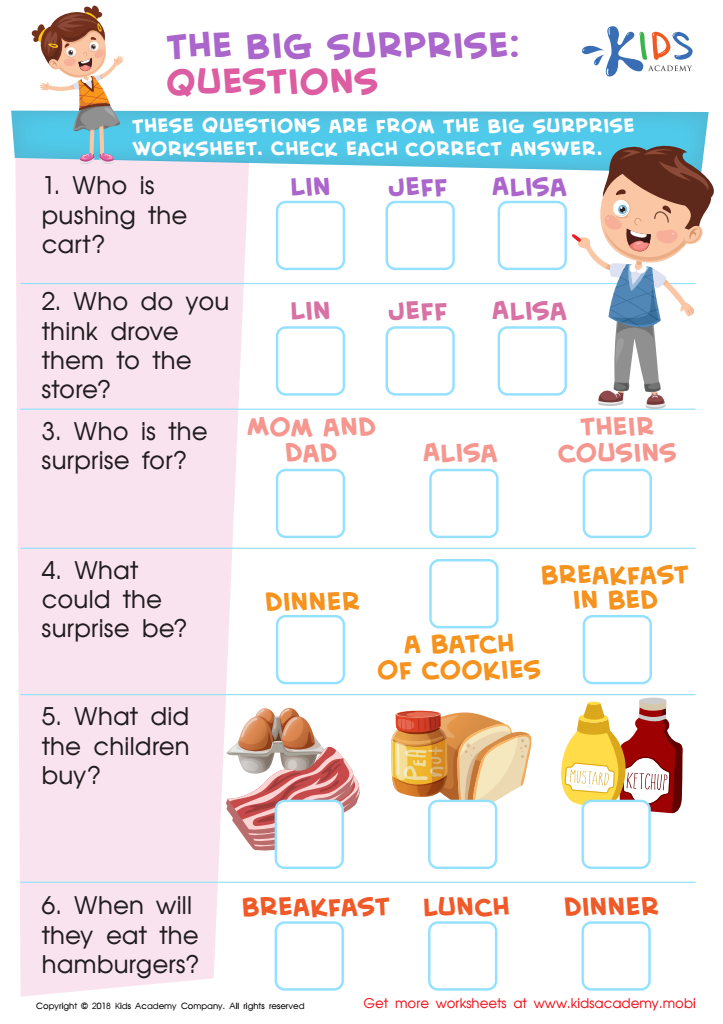
The Big Surprise: Questions Worksheet
Have your child read or listen to The Big Surprise. Ask them the questions in the printable, help check the answers and discuss the story. Keep it to 80 words.
Have your child read or listen to The Big Surprise, then ask them the questions in the printable. Discuss the story and help them check the answers.
The Big Surprise: Questions Worksheet
Worksheet
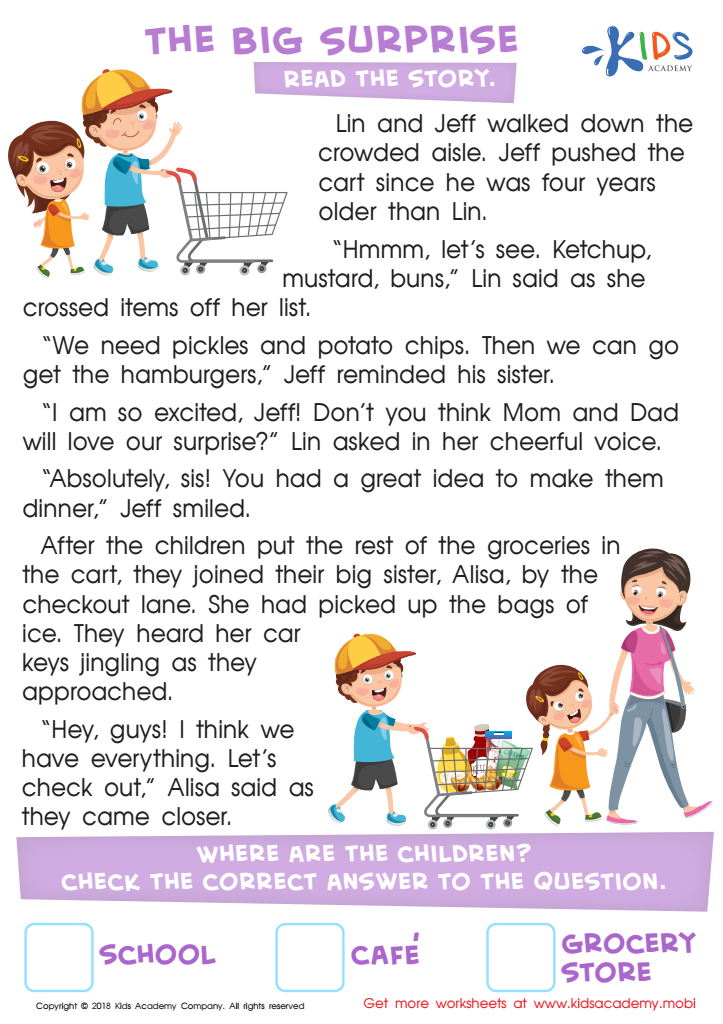
The Big Surprise Worksheet
Read this story to your kids: Lin and Jeff are in the supermarket with their big sister Alisa. They're excited to buy groceries. Listen closely to the details and ask the questions at the end to check your understanding. Read it twice to ensure full comprehension.
The Big Surprise Worksheet
Worksheet
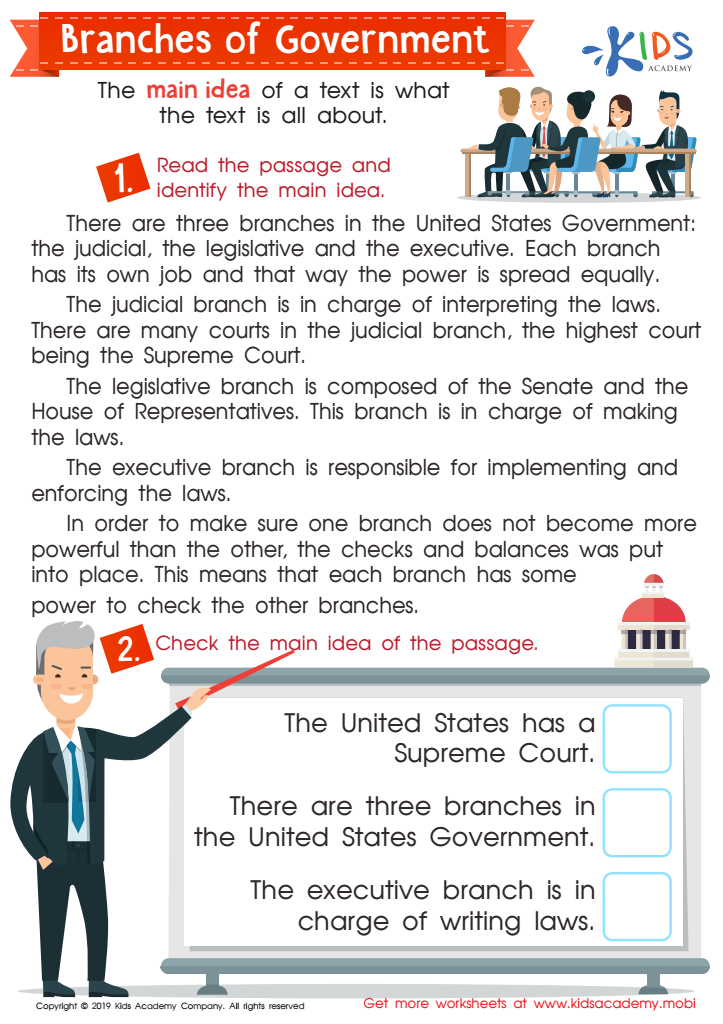
Branches of the Government Worksheet
The government is a group of people who lead countries or communities. It includes three branches: judicial, legislative, and executive. To help kids learn about these branches, read this passage to them and discuss the main idea.
Branches of the Government Worksheet
Worksheet
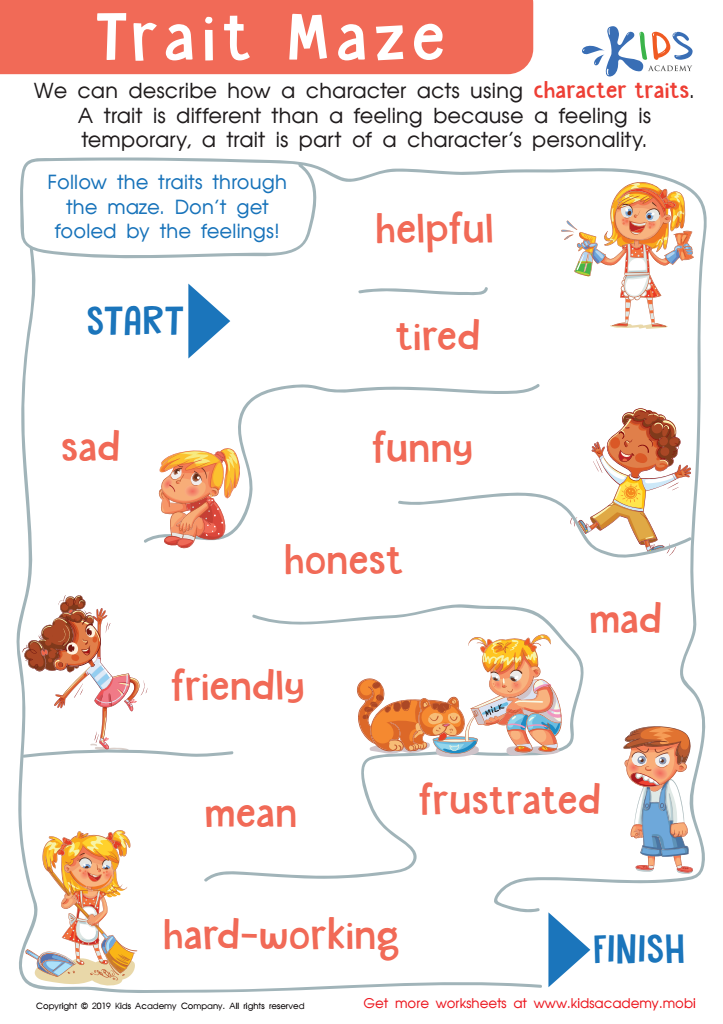
Trait Maze Worksheet
A trait is a character's personality and should not be confused with a feeling, which is temporary. In this worksheet, kids learn about traits by following them through a maze and ignoring the feelings on the path.
Trait Maze Worksheet
Worksheet
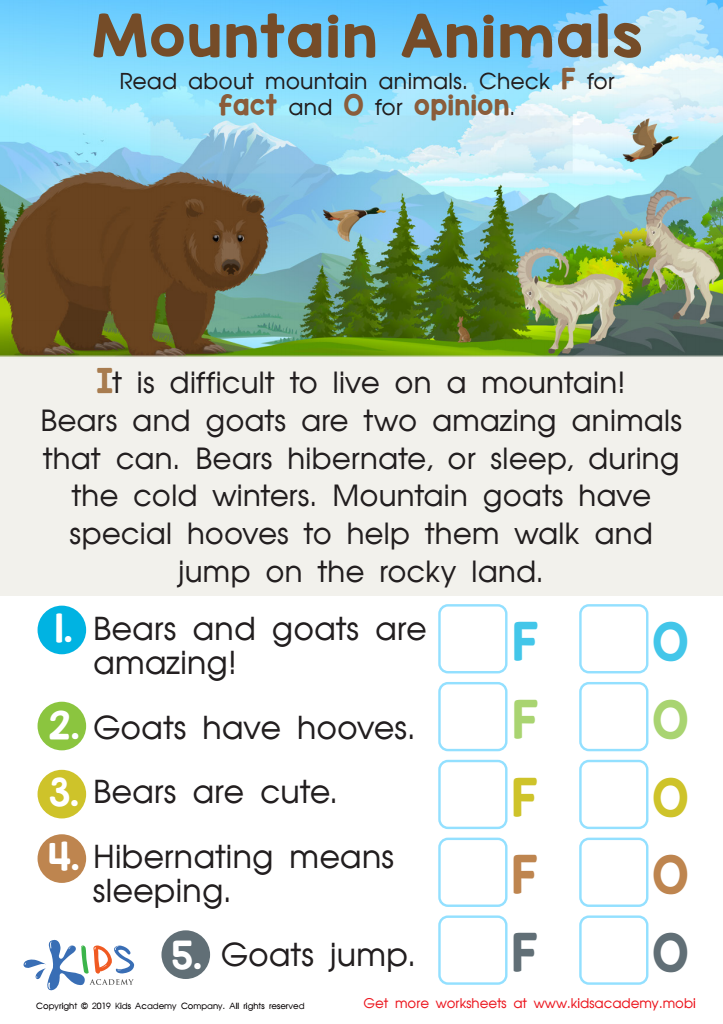
Mountain Animals Worksheet
Is mountain wildlife amazing? Fact or fiction? Help your child sharpen critical-thinking skills with this engaging worksheet. Featuring a fun nonfiction passage about animals like bears and goats, your child will read through the text and identify each statement as fact or fiction. Perfect for boosting reading comprehension and analytical abilities!
Mountain Animals Worksheet
Worksheet
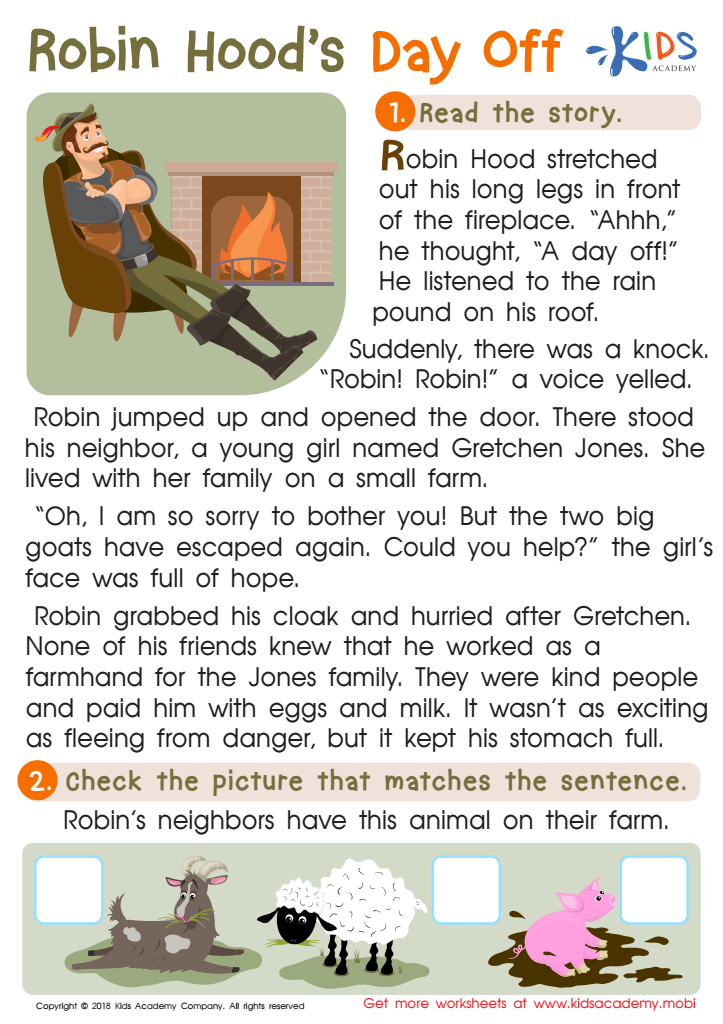
Robin Hood's Day Off Worksheet
Encourage your child to express their personality by writing stories. Show them this worksheet's short story about Robin Hood and read it slowly and carefully. Read it again if needed and ask the question below the story. This will help your child use their knowledge to answer it.
Robin Hood's Day Off Worksheet
Worksheet
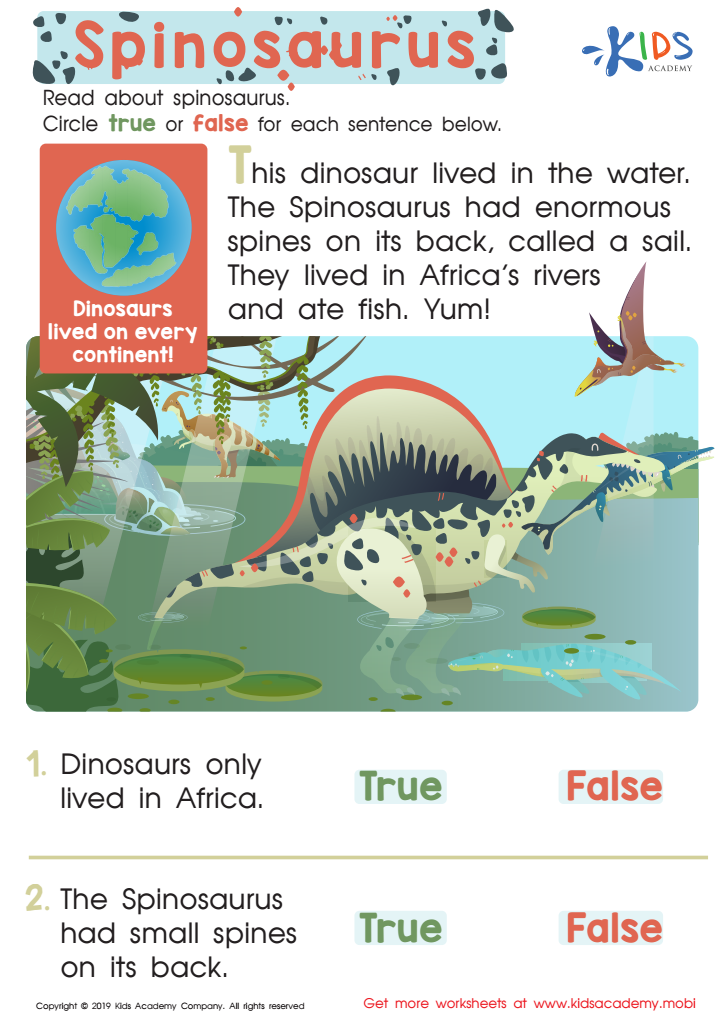
Spinosaurus Assessment Worksheet
Take your child on a journey to discover the Spinosaurus! This worksheet combines an engaging nonfiction passage about this incredible dinosaur with comprehension questions. Invite kids to read the text before deciding if the statements are true or false. Then, have them circle the right answers to complete the activity.
Spinosaurus Assessment Worksheet
Worksheet
Join Kids Academy for Free
Who is primarily going to use this learning content?