
Number Sequencing Easy Math Worksheets for Ages 3-6
3 filtered results
Difficulty Level
Grade
Age
-
From - To
Subject
Activity
Standards
Help your child master the basics of math with our "Number Sequencing Easy Math Worksheets for Ages 3-6". These engaging printables are designed to build foundational math skills through fun activities, ensuring young learners grasp the concept of number order with ease. Perfect for preschool to kindergarten, each worksheet features colorful illustrations and simple exercises tailored for early learners. Watch your child’s confidence soar as they practice arranging numbers, recognizing patterns, and enhancing their counting skills. Ideal for parents and educators, our worksheets provide a solid stepping stone toward math proficiency in a playful and educational manner.
Favorites
With answer key
Interactive
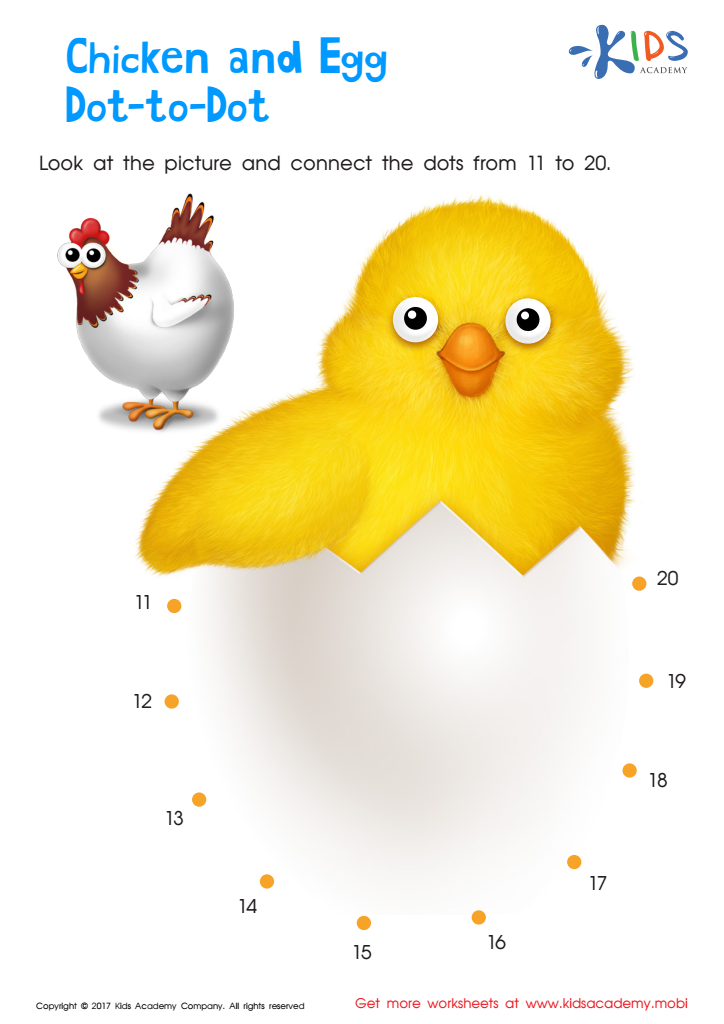
Ordering 11–20: Chicken & Egg Dot–to–dot Worksheet
Help your child hatch the chick and practice their counting skills with this dot to dot worksheet – the chicken came first! Connect the dots 11-20 to have fun and learn at the same time. Experience meaningful practice and gain confidence while drawing great pictures.
 Assign to My Students
Ordering 11–20: Chicken & Egg Dot–to–dot Worksheet
Worksheet
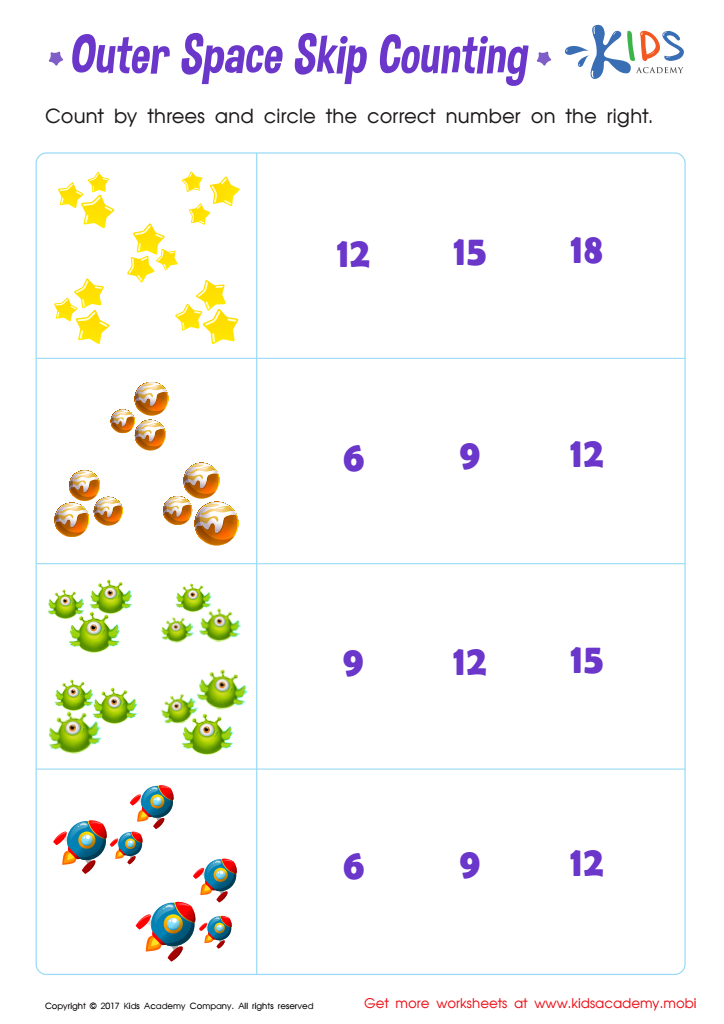
Skip Counting by 3s: Outer Space Skip Counting Printable
Want to set your child up for math success? Get them this printable worksheet that helps them practice counting in groups of 3’s, building a foundation for more advanced math skills. Skipping counting helps kids master logical reasoning and cognitive skills, making a connection between counting objects individually and in groups. The colorful images will keep them engaged and having fun - without realizing how hard they're working!
Skip Counting by 3s: Outer Space Skip Counting Printable
Worksheet
Join Kids Academy for Free
Who is primarily going to use this learning content?





Number sequencing is fundamental for children ages 3-6 because it lays the groundwork for essential math skills and cognitive development. Understanding number order helps children grasp the concept of quantity, develop logical thinking, and recognize patterns, all crucial for future learning.
For parents and teachers, fostering these skills early on is pivotal. When children learn to count forward and backward, they start seeing relationships between numbers, which aids in grasping more complex arithmetic later, like addition and subtraction. Sequencing also enhances their problem-solving skills and boosts memory, as remembering number order requires cognitive effort.
Beyond math, sequencing plays a significant role in daily life activities, such as understanding time, dates, and follow-step instructions. Early comprehension of these concepts translates to better organization and time management skills.
Engaging children with fun sequencing activities - like puzzles, counting songs, and number games - not only makes learning enjoyable but also strengthens their focus and attention span. Consequently, parents and teachers who invest time in teaching number sequences are contributing to multiple aspects of a child’s overall development, ensuring a solid academic foundation and fostering a positive attitude towards learning.








