Easy Matching Worksheets for Ages 3-6
4 filtered results
-
From - To
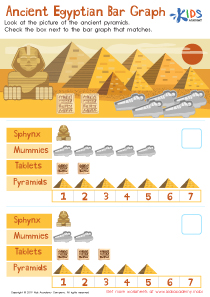
Discover a treasure trove of easy matching worksheets designed specifically for children ages 3 to 6! These fun and engaging worksheets provide a playful way to enhance your child's cognitive skills through matching activities. With colorful illustrations and simple themes, kids will enjoy connecting items, improving their attention to detail, and reinforcing their memory. Perfect for parents and educators, these worksheets foster early learning in a supportive environment, making education enjoyable. Download and print these interactive resources to help your little ones explore the world of matching while developing essential skills for their academic journey. Begin the learning adventure today!
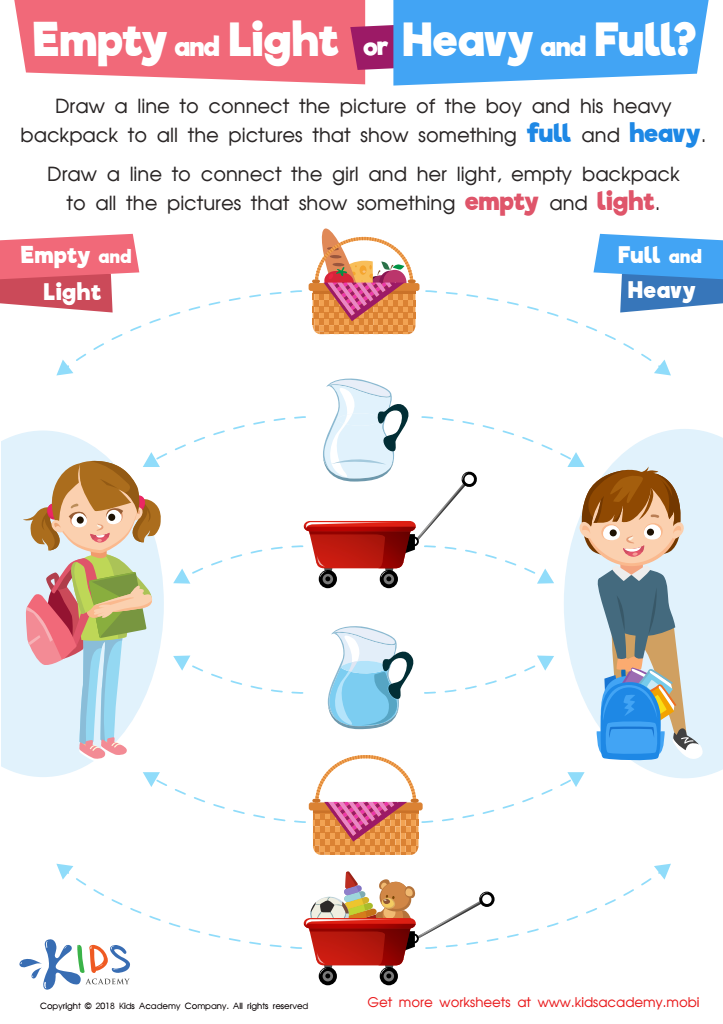
Empty and Light or Heavy and Full? Worksheet
 Assign to My Students
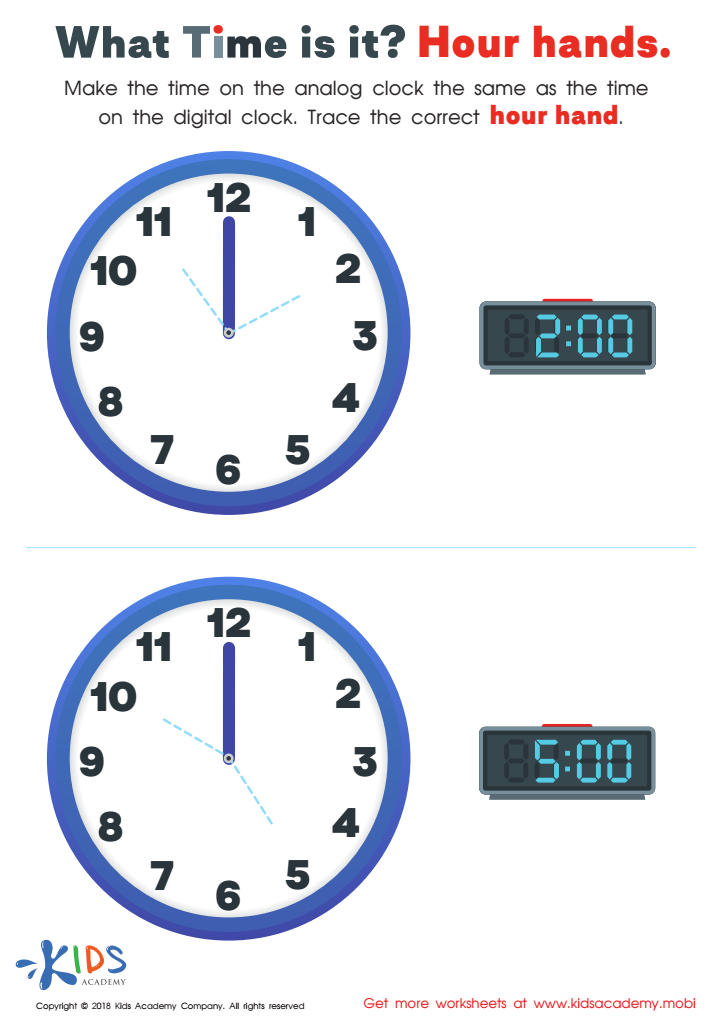
What Time Is it? Hour Hands Worksheet
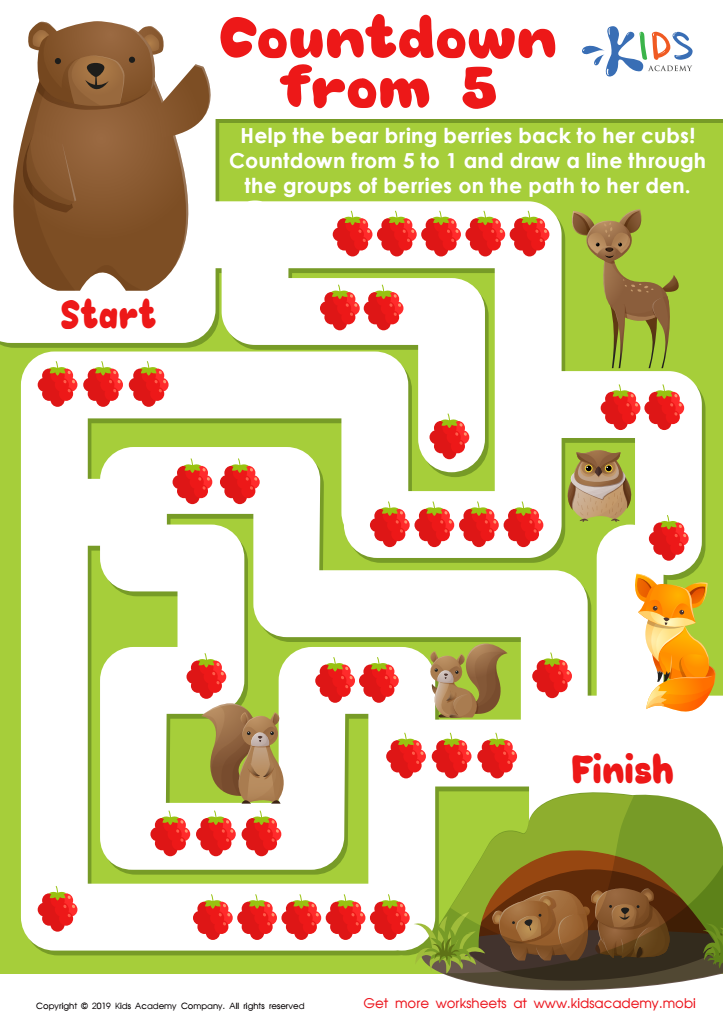
Countdown from 5 Worksheet
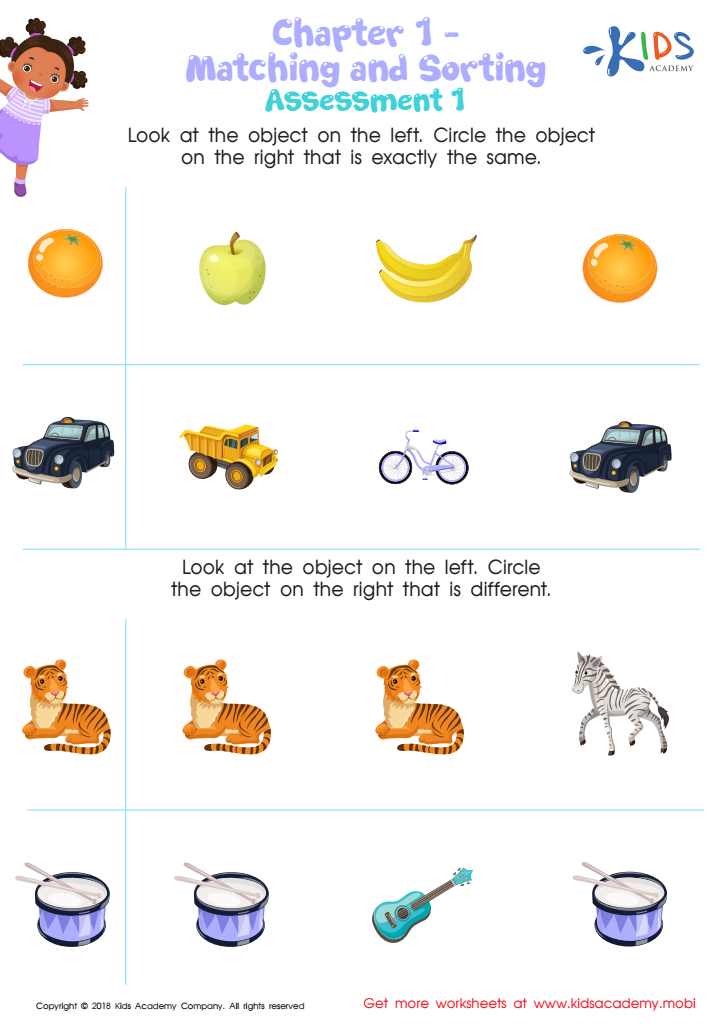
Matching and Sorting for Preschool: Assessment 1 Worksheet








Easy Matching activities for children aged 3-6 are essential for early developmental growth. These activities focus on cognitive skills, particularly memory, attention, and pattern recognition, which are foundational for successful learning trajectories. By engaging in matching games, young learners not only strengthen their memory and recall abilities but also enhance their critical thinking skills as they make connections between pairs.
Moreover, Easy Matching activities are effective in promoting language development. As children describe and discuss their matches, they expand their vocabulary and improve their communication skills. Parents and teachers should recognize that these activities can also support social skills, such as cooperation and sharing, when played in groups, fostering emotional intelligence and collaboration.
Additionally, Easy Matching contributes to fine motor skill development as children manipulate cards or other materials, reinforcing hand-eye coordination. This multi-faceted skill development prepares children for more complex tasks in later stages of learning.
Overall, Easy Matching is a simple, yet powerful tool to create a foundational framework for various areas of development in early childhood, paving the way for future academic and social success. Investing time in these activities can yield long-term benefits for children’s educational journeys.