Easy Reading Fiction Worksheets for Ages 3-6 - Page 2
27 filtered results
-
From - To
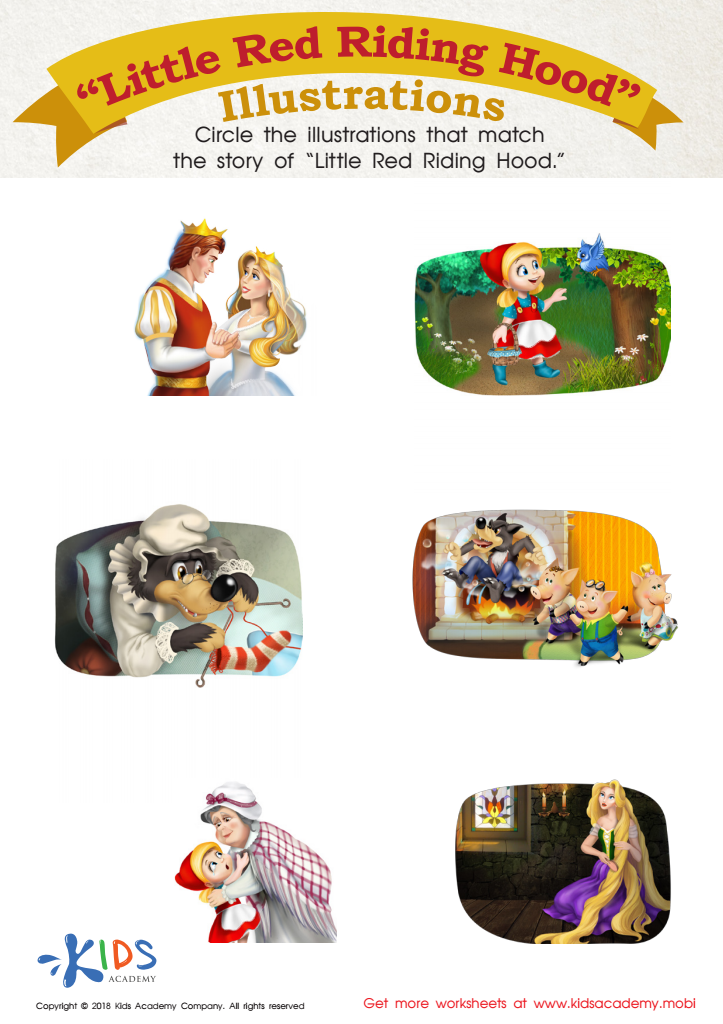
Little Red Riding Hood: Illustrations Worksheet
 Assign to My Students
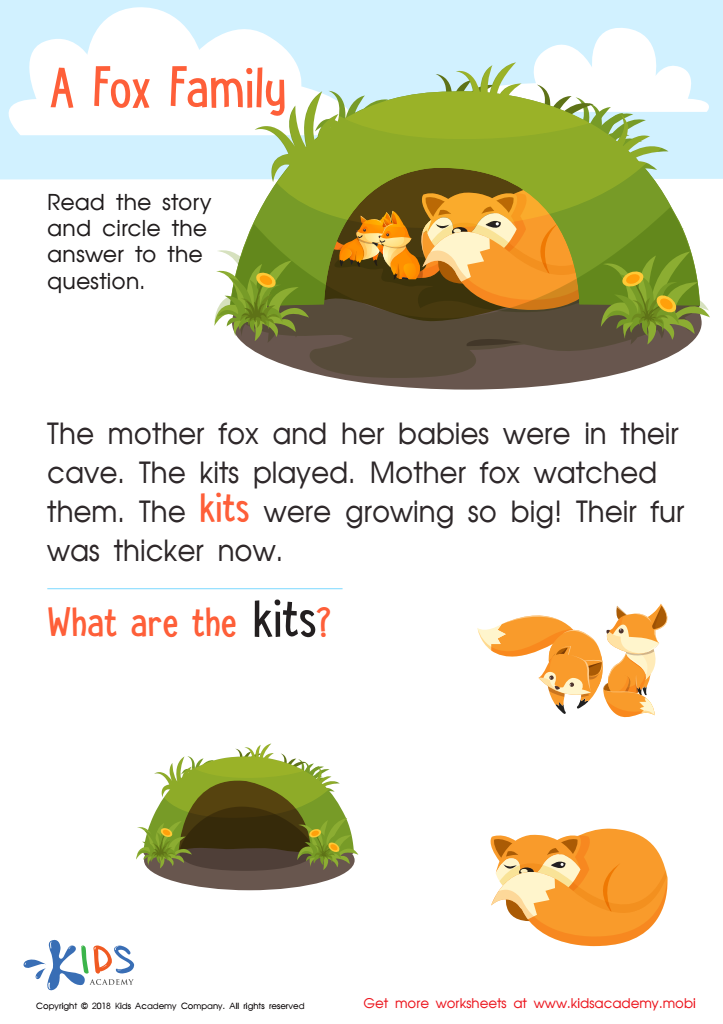
A Fox Family Worksheet
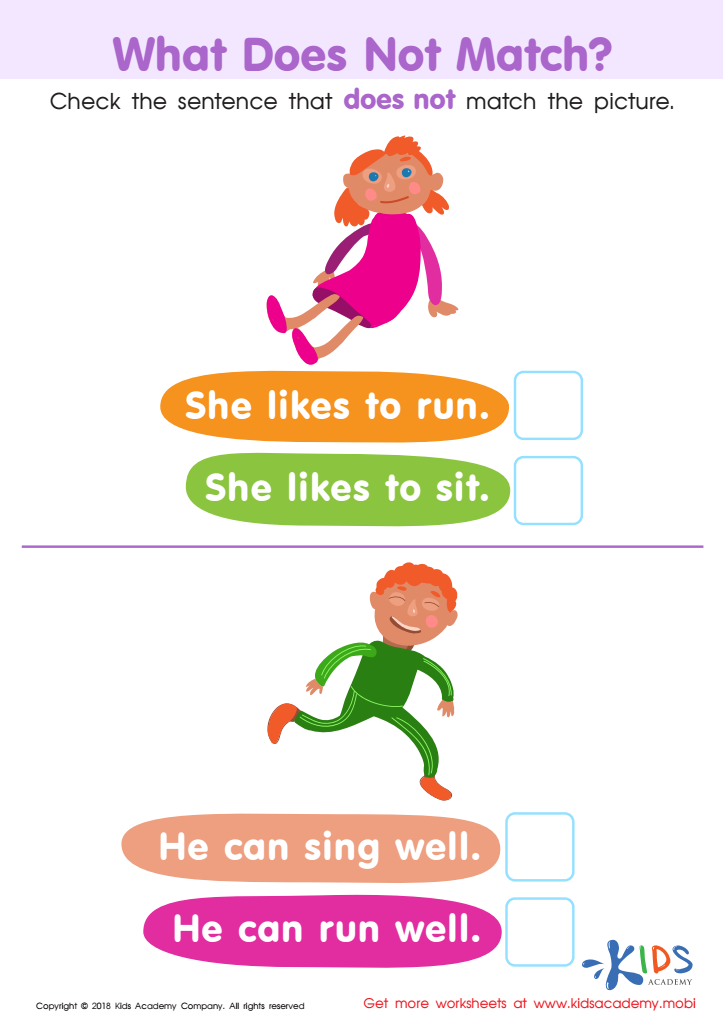
What Does Not Match? Worksheet





.jpg)

Parents and teachers should prioritize easy reading fiction for children aged 3-6 as it plays a crucial role in early literacy development. At this age, children are naturally learning to use language, and engaging with simple stories helps to build their vocabulary and comprehension skills. Easy reading fiction often features rhythmic language and repetition, which promotes phonemic awareness—the ability to hear and manipulate sounds in words.
Additionally, these stories introduce young learners to narrative structure, fostering an understanding of beginning, middle, and end, which is essential for developing critical thinking skills later on. The illustrations in easy reading books also aid in visual literacy, helping children make connections between text and images.
Moreover, easy reading fiction nurtures a love for reading from an early age, encouraging healthy reading habits that can persist throughout life. It also offers opportunities for parents and teachers to bond with children, enhancing their social-emotional development through shared reading experiences. Ultimately, prioritizing easy reading fiction establishes a strong foundation for lifelong language skills, creativity, and a passion for storytelling, making it essential for young learners.