Basic arithmetic skills Easy Math Worksheets for Ages 3-7
4 filtered results
-
From - To
Discover engaging Easy Math Worksheets designed for children ages 3-7 that help develop essential basic arithmetic skills! Our thoughtfully crafted worksheets introduce fundamental concepts, including addition, subtraction, counting, and number recognition, ensuring a solid mathematical foundation for young learners. With colorful illustrations and interactive exercises, children will enjoy practicing math in a fun and stimulating way. Ideal for preschoolers and early elementary students, these printable resources can be easily incorporated into daily learning activities or homeschooling routines. Watch your child's confidence grow as they master basic math skills with our easy-to-use, educational materials tailored to their developmental needs!
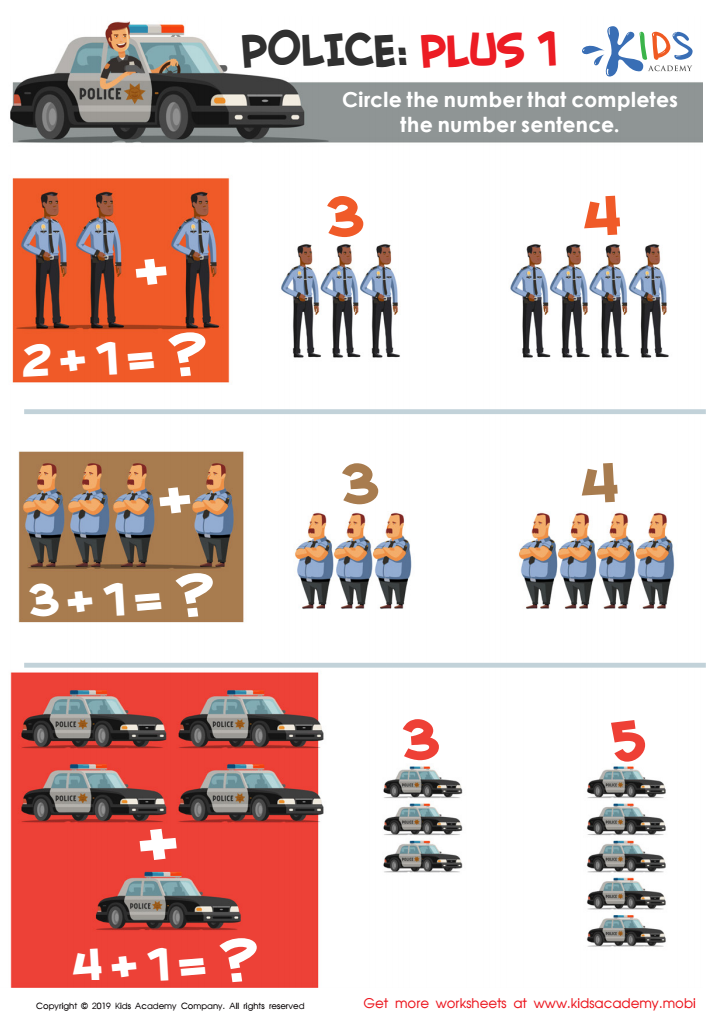
Police: Plus 1 Worksheet
 Assign to My Students
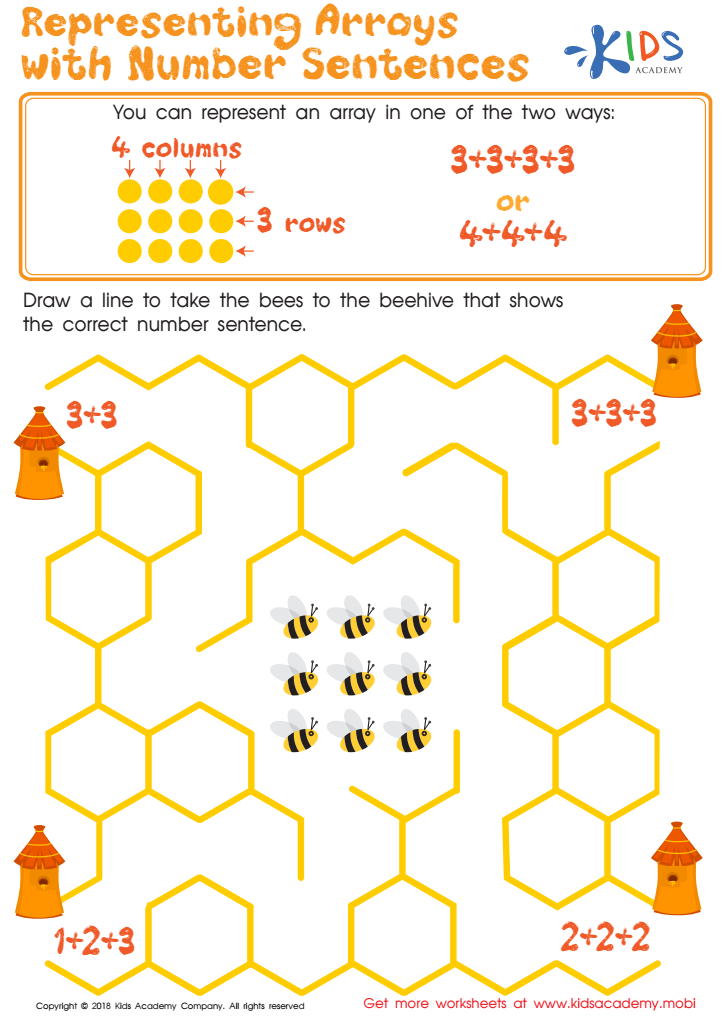
Representing Arrays with Number Sentences Worksheet
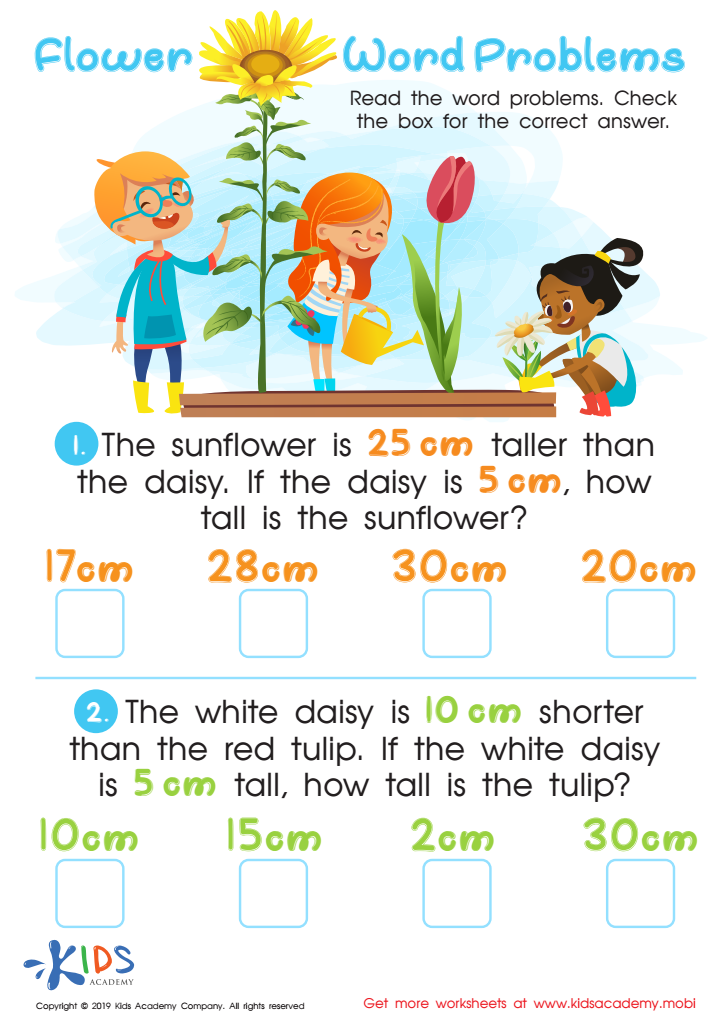
Flower Word Problems Worksheet
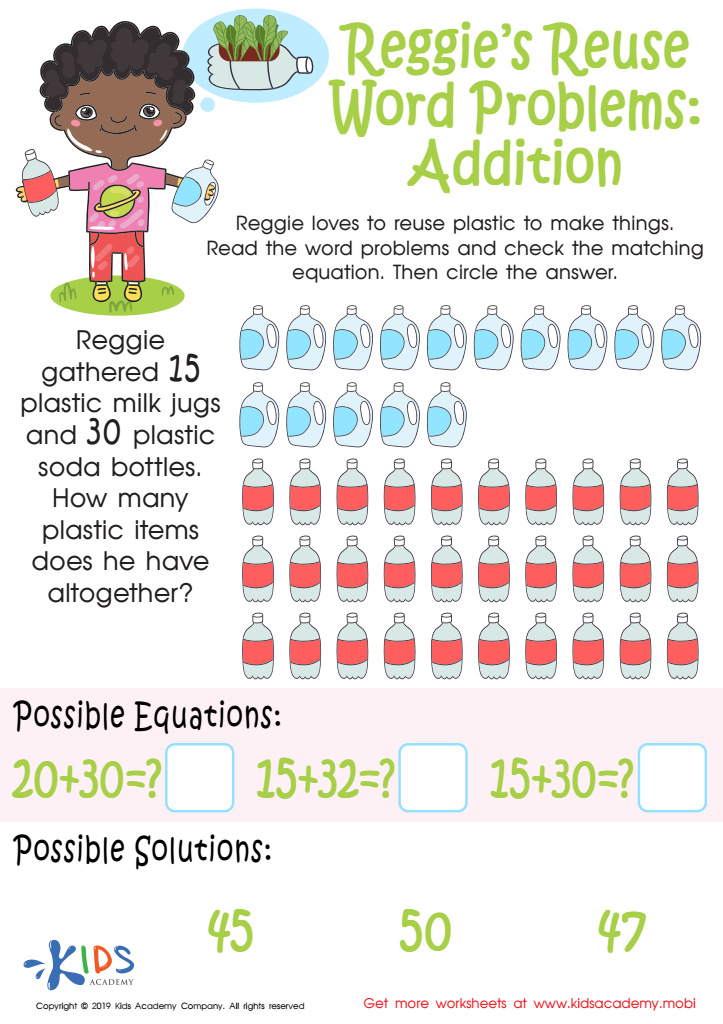
Reggie's Reuse Word Problems: Addition Worksheet







Basic arithmetic skills are foundational to a child's academic success and everyday functioning. For children aged 3-7, early experiences with math can significantly shape their understanding and confidence in the subject. Parents and teachers should prioritize these skills because they promote critical thinking, problem-solving abilities, and cognitive development.
Engaging young learners with easy math concepts like counting, addition, and subtraction helps instill a love for learning and makes math accessible and enjoyable. Early exposure to arithmetic not only builds essential skills for future academic success but also enhances children's self-esteem as they build their competence in numerical tasks.
Moreover, mastering basic math is crucial for daily life skills, such as grocery shopping, budgeting, and time management. Parents and teachers can create enriching environments through games, playful activities, and real-world applications that make math relevant.
In essence, nurturing arithmetic skills in early childhood lays a strong educational foundation, encouraging critical skills that children will use throughout their lives. Investing in early math education empowers children to navigate an increasingly numerical world with confidence and creativity. This, in turn, fosters positive attitudes toward learning, equipping children for future academic and personal success.








