Easy Color Words Worksheets for Ages 3-8
5 filtered results
-
From - To
Introduce your little ones to the vibrant world of colors with our "Easy Color Words Worksheets for Ages 3-8." Perfect for early learners and ESL students, these worksheets feature fun and engaging activities designed to teach color recognition and vocabulary. With a mix of coloring, tracing, and matching exercises, kids will enhance their fine motor skills while expanding their understanding of basic color words. Ideal for home or classroom settings, our printable worksheets make learning enjoyable and accessible. Help your children discover the joy of colors today with our expertly crafted educational resources!
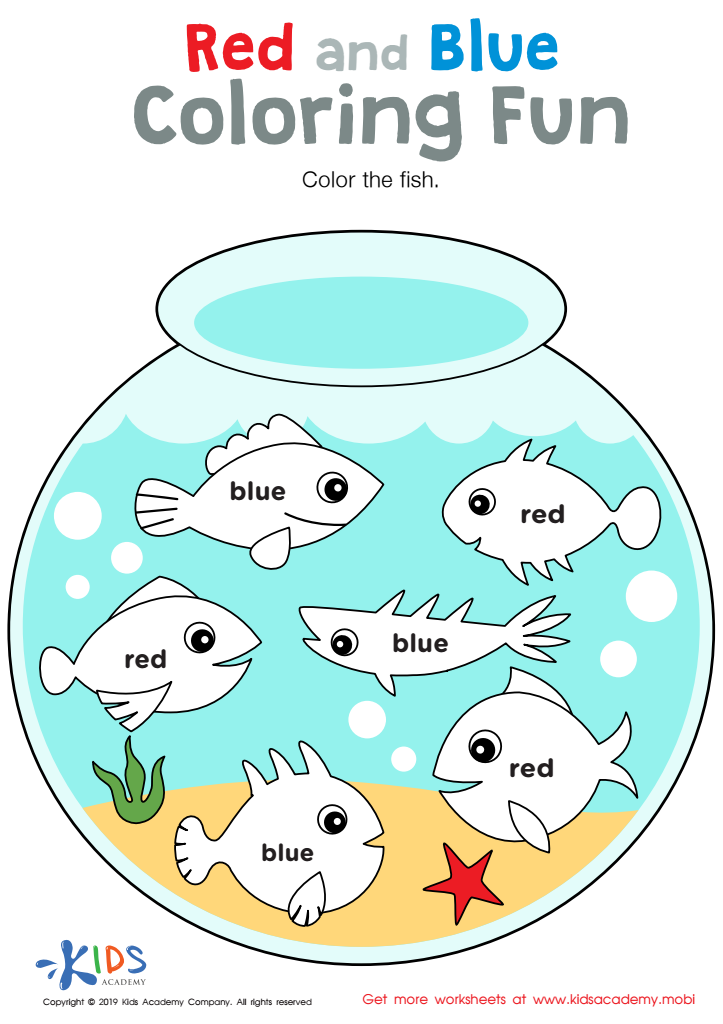
Red and Blue Coloring Fun Worksheet
 Assign to My Students
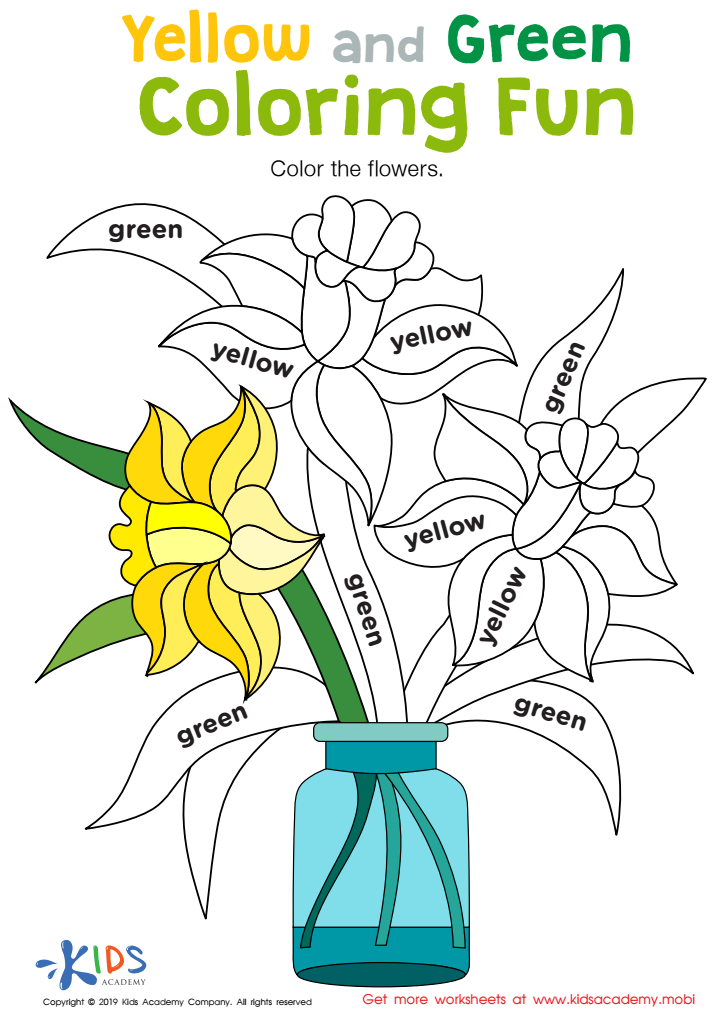
Yellow and Green Coloring Fun Worksheet
Assign to My Students
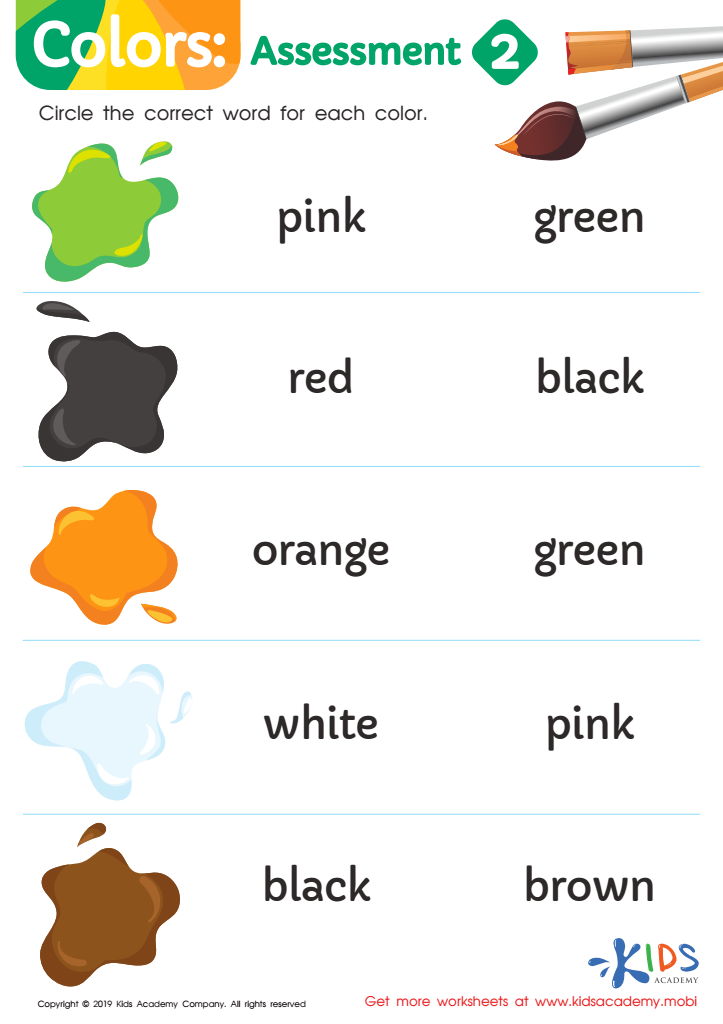
Colors: Assessment 2 Worksheet
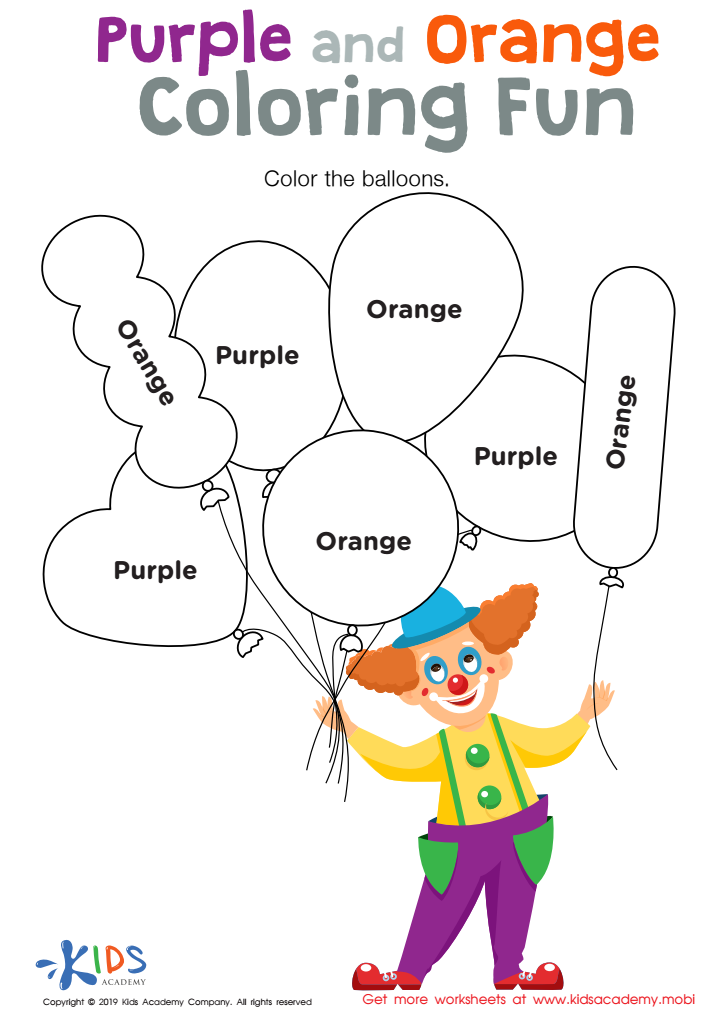
Purple and Orange Coloring Fun Worksheet
Assign to My Students
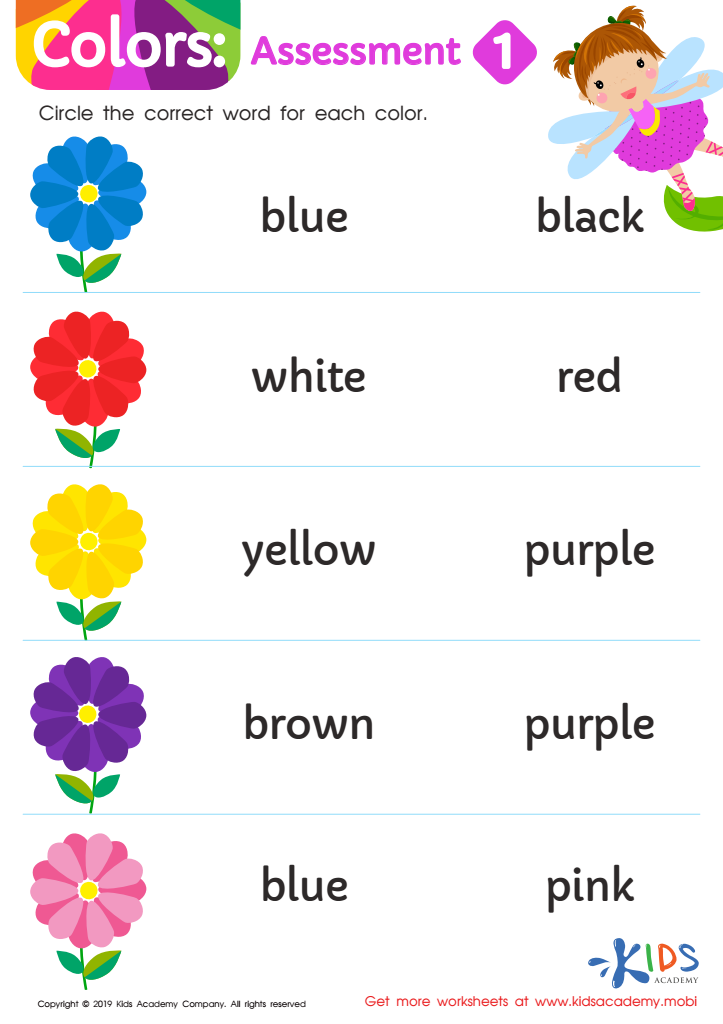
Colors: Assessment 1 Worksheet



Easy Color Words for ages 3-8 play a crucial role in early childhood development. At this tender stage, children's cognitive abilities are rapidly growing, and their brains are highly receptive to new information. Introducing color words not only aids in vocabulary expansion but also fosters other critical skills.
From a language development perspective, learning color words enhances a child's ability to describe the world around them, boosting both their expressiveness and comprehension. "Look at the red apple" versus "Look at the apple" offers a richer linguistic experience, facilitating early literacy skills.
A keen understanding of colors also strengthens cognitive skills like memory and concentration. Activities involving color sorting, matching, and identification stimulate young minds and provide essential practice in categorization and pattern recognition—skills foundational to math and science.
Moreover, emotional development is also supported. Different colors can evoke various emotions; thus, familiarity with these allows children to better articulate their feelings. Artistic activities involving color can further provide a creative outlet, conducive to emotional expression and well-being.
Socially, color-based activities often encourage teamwork and reinforce cooperative behaviors, essential for developing interpersonal skills. Easy Color Words are a multifaceted tool, nurturing a well-rounded early educational experience. Therefore, both parents and teachers should prioritize them to greatly benefit young learners' overall development.








