Contextual understanding Easy Worksheets for Ages 3-8
5 filtered results
-
From - To
Welcome to our "Contextual Understanding Easy Worksheets" designed for ages 3-8! These engaging and colorful worksheets are perfect for young learners to enhance their comprehension skills through context clues and situational reasoning. Our collection features age-appropriate activities that promote critical thinking, encouraging children to make connections between words and their meanings in relatable scenarios. From simple matching exercises to fun puzzles, each worksheet is tailored to create an interactive learning experience that builds foundational skills. Help your child thrive and boost their confidence as they explore language and context in a playful way. Start fostering their love for learning today!
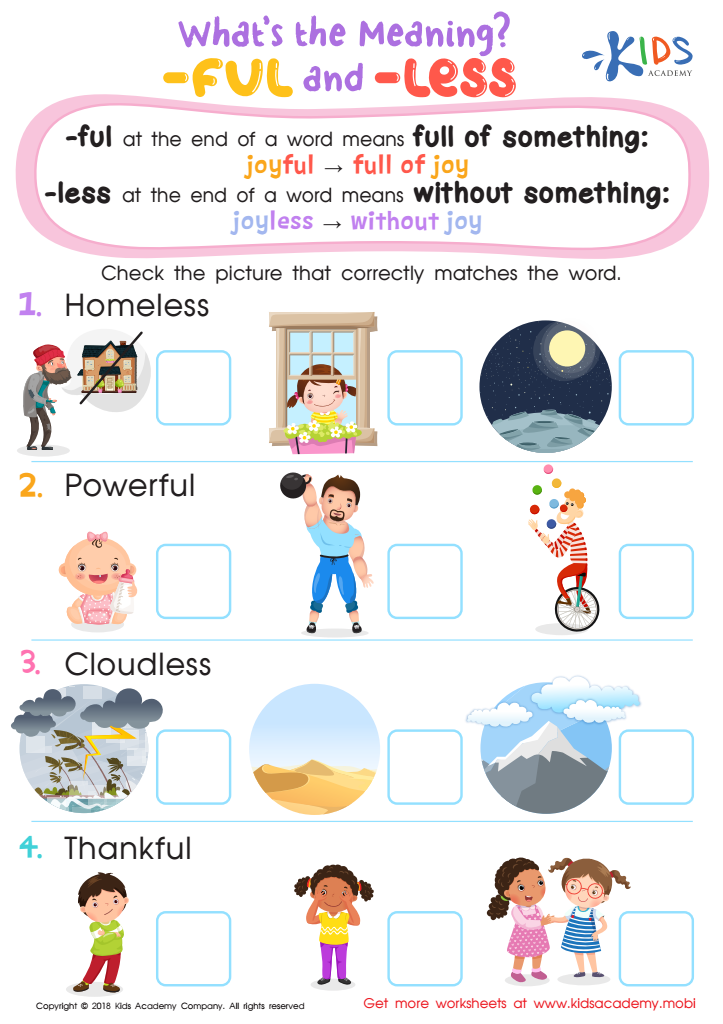
What's the Meaning? Worksheet
 Assign to My Students
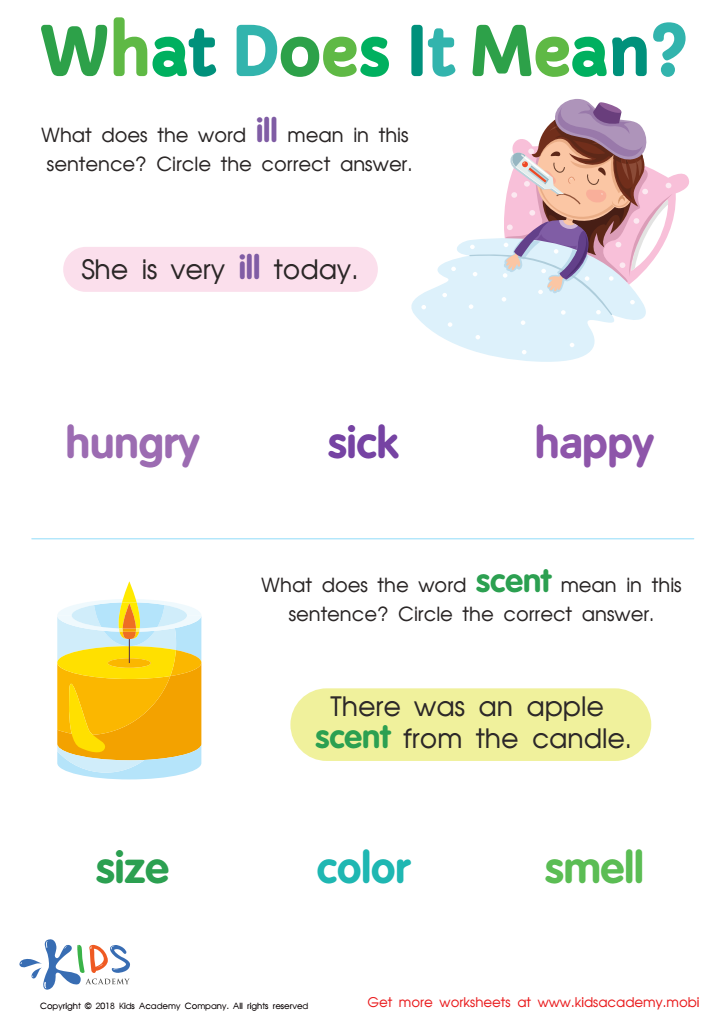
What Does It Mean? Worksheet
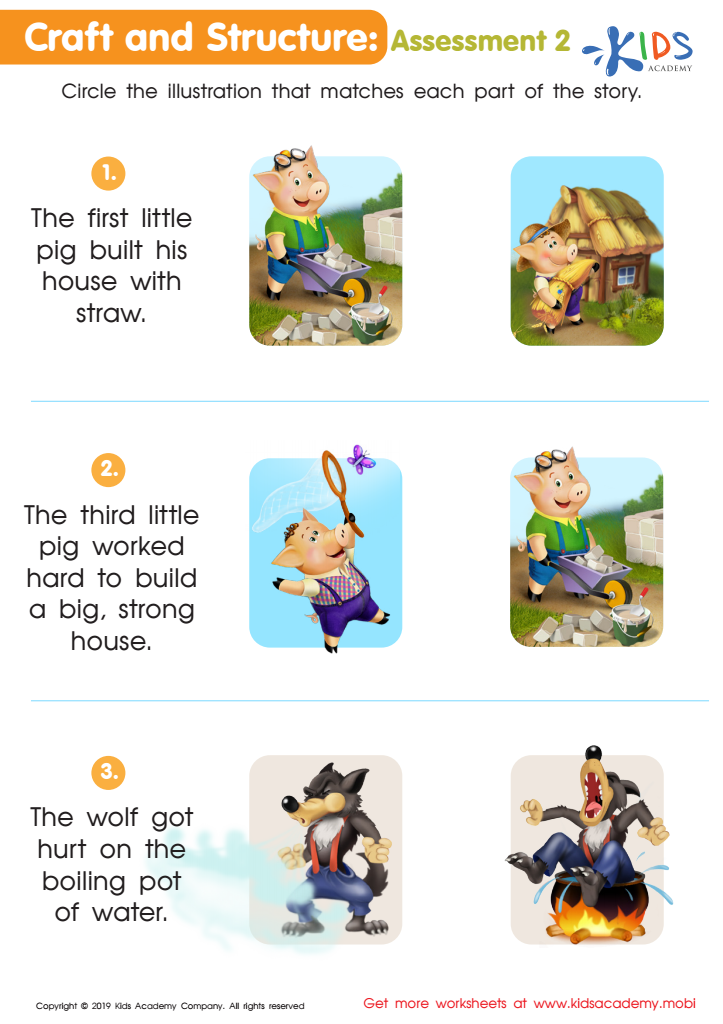
Craft and Structure: Assessment 2 Worksheet 2
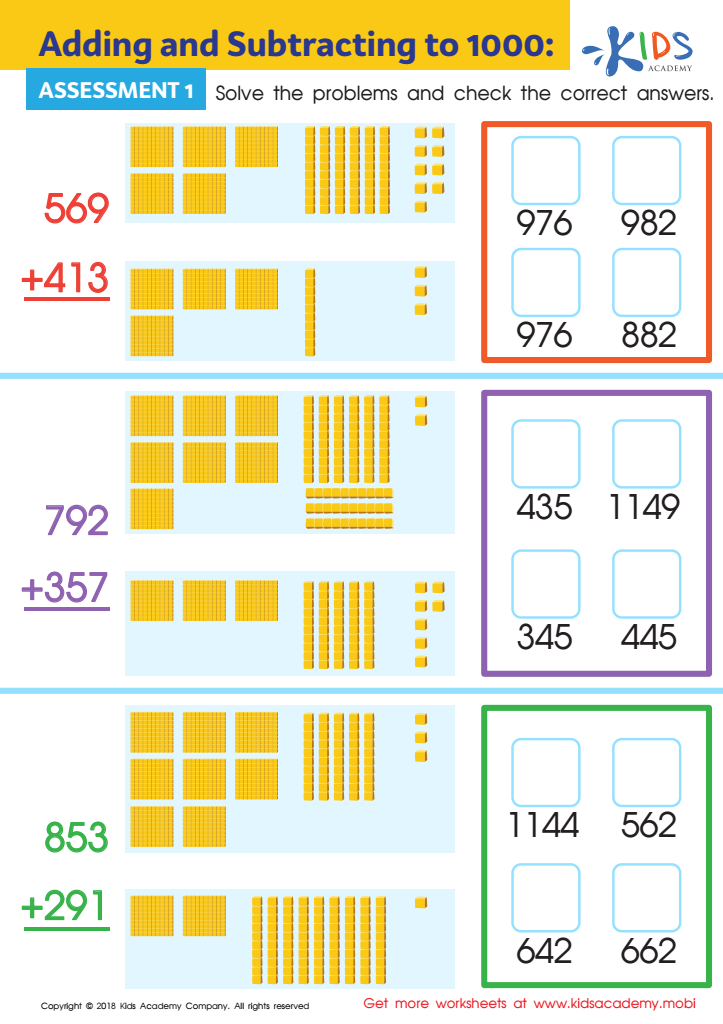
Adding and Subtracting to 1 Worksheet: Assessment 1
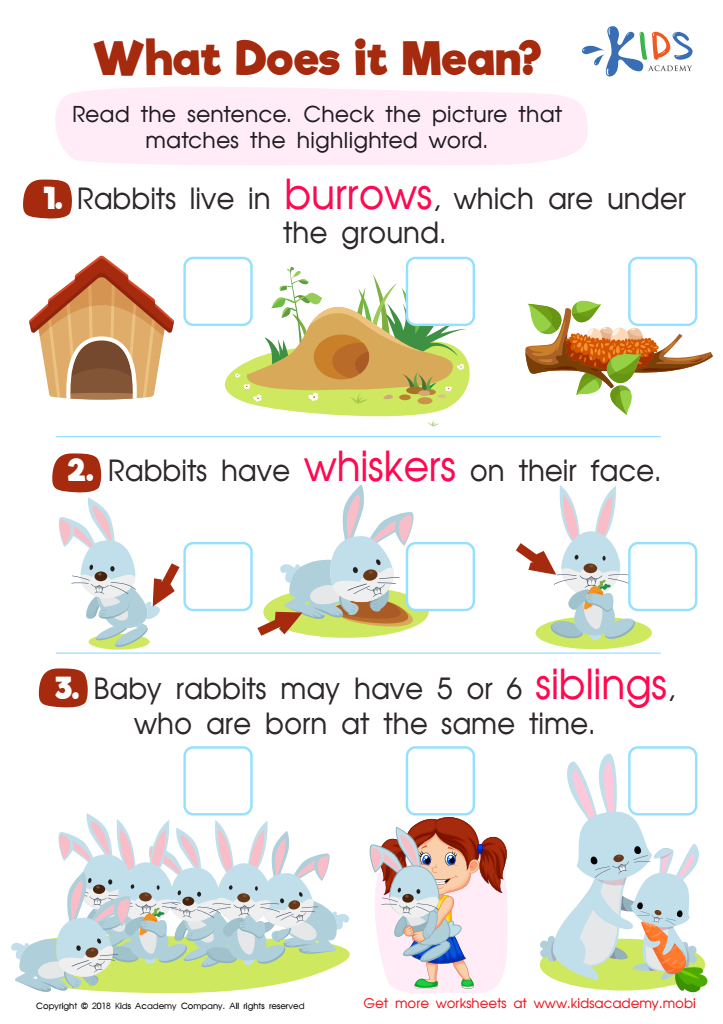
What Does It Mean? Worksheet








Contextual understanding is essential for young children because it helps them make sense of the world around them. When kids aged 3-8 learn in context, they connect new ideas and information to their own experiences. This link makes learning more meaningful and memorable.
For parents and teachers, fostering contextual understanding encourages children to be curious and ask questions. It helps them develop critical thinking skills, as they learn to navigate different situations and recognize how context shapes meaning. For example, a child who understands that a park is a place for play will know how to behave there, while one who doesn’t might find themselves confused about the situation.
Moreover, children with strong contextual understanding become better communicators. They learn to listen and respond appropriately, guiding them in social interactions with peers and adults. By nurturing this ability, adults not only shape happier and more confident kids but also prepare them for future learning challenges.
Ultimately, caring about contextual understanding allows parents and teachers to create rich learning environments, promoting social-emotional growth and a lifelong love for learning. It equips young children to thrive in various settings, ensuring they feel secure and comprehensively educated.








