Subtraction practice Easy Worksheets for Ages 3-8 - Page 2
30 filtered results
-
From - To
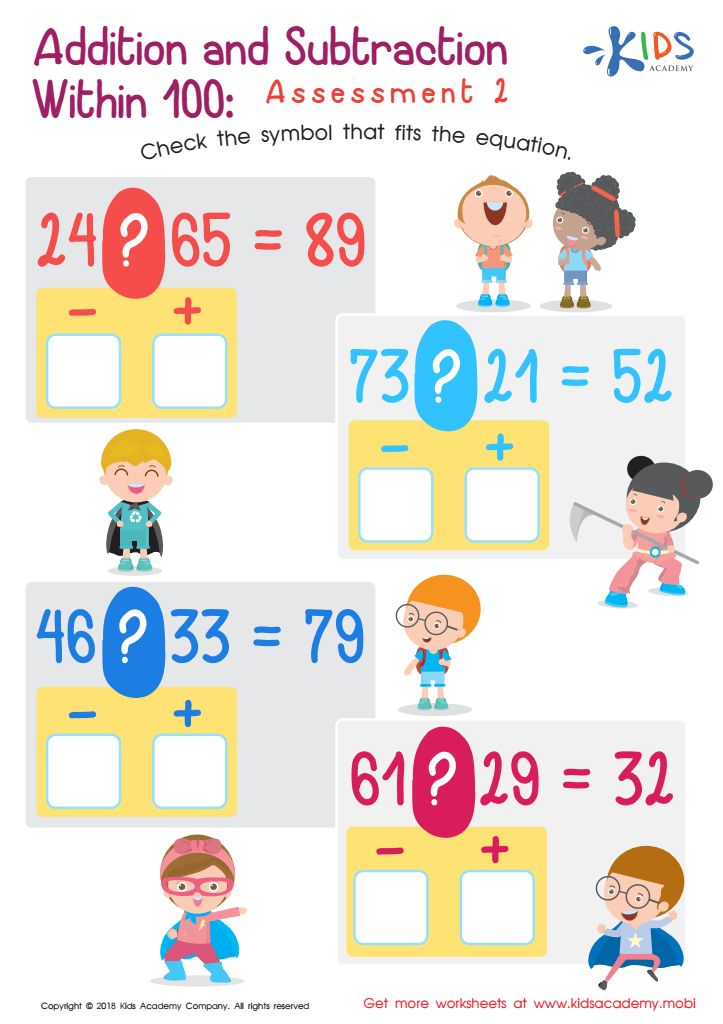
Addition and Subtraction Within 1: Assessment 2 Worksheet
 Assign to My Students
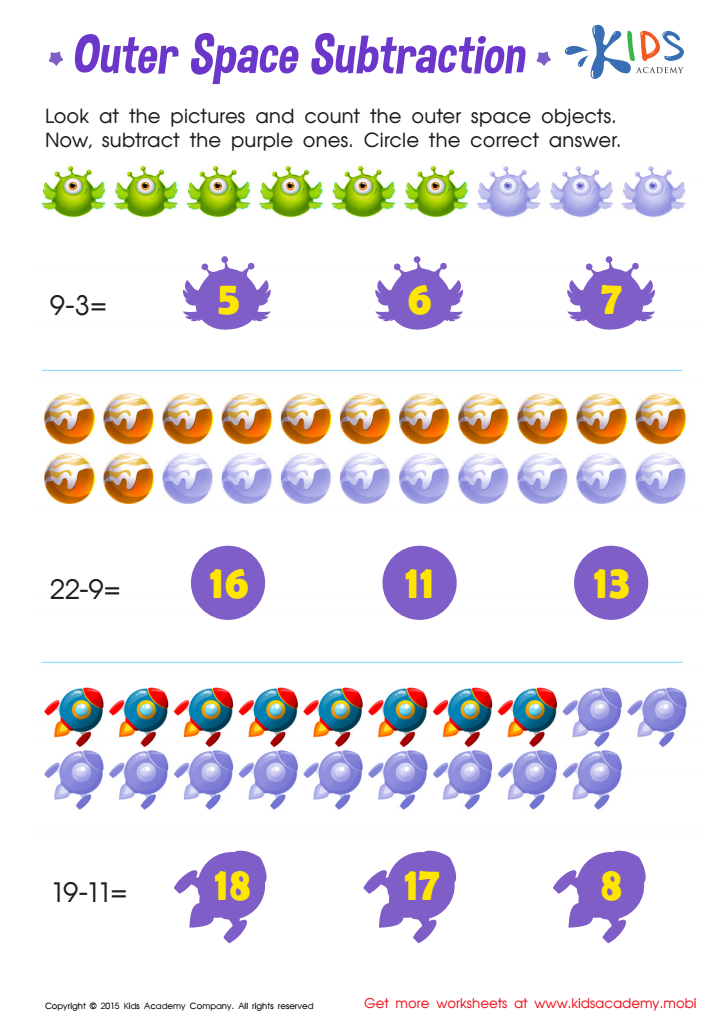
Outer Space Substraction Worksheet
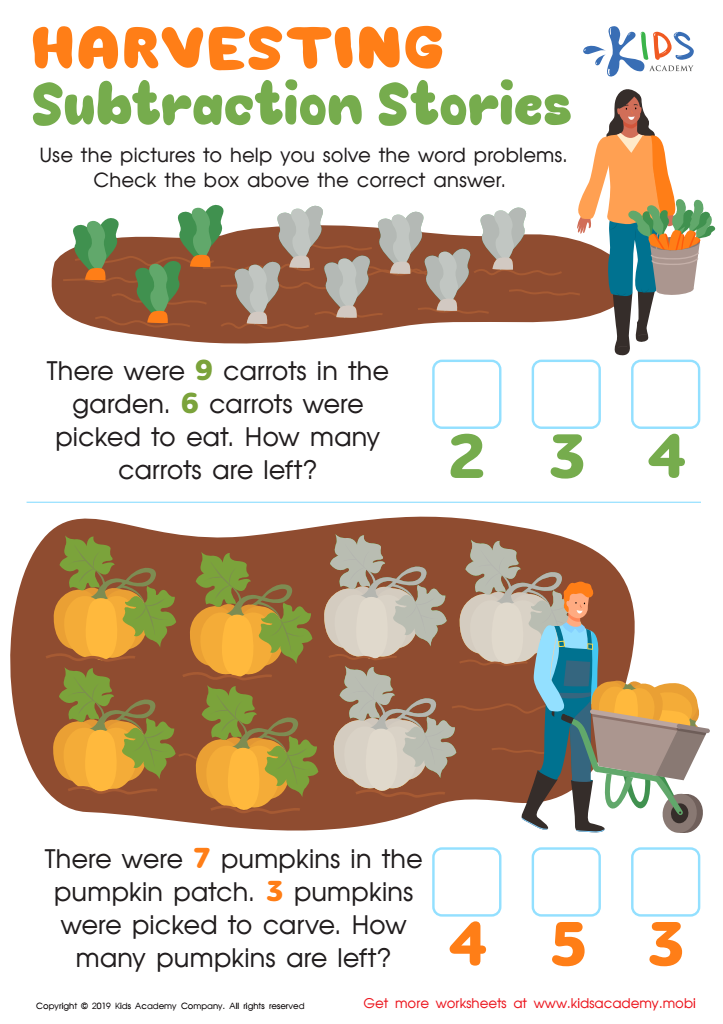
Harvesting Subtraction Stories Worksheet
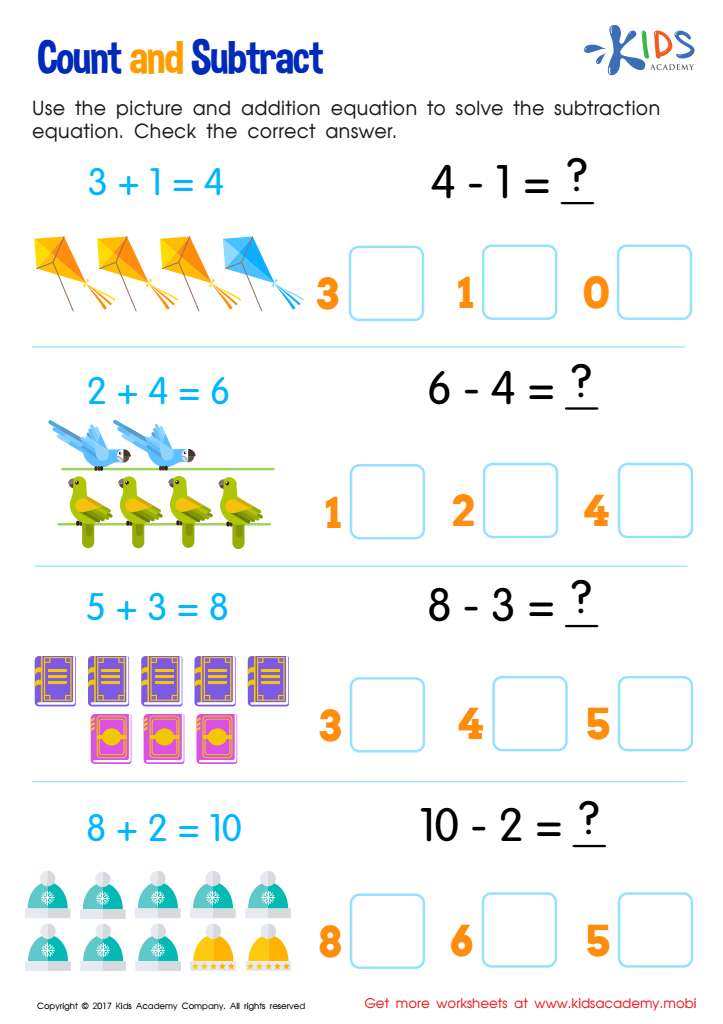
Count and Subtract Worksheet
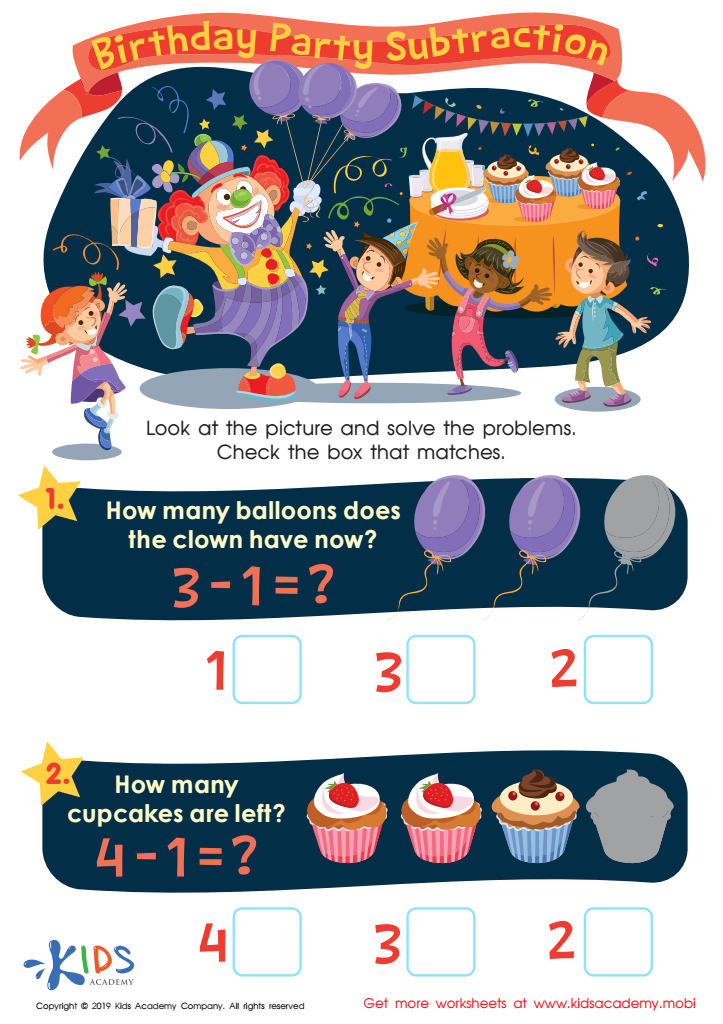
Birthday Party Subtraction Worksheet
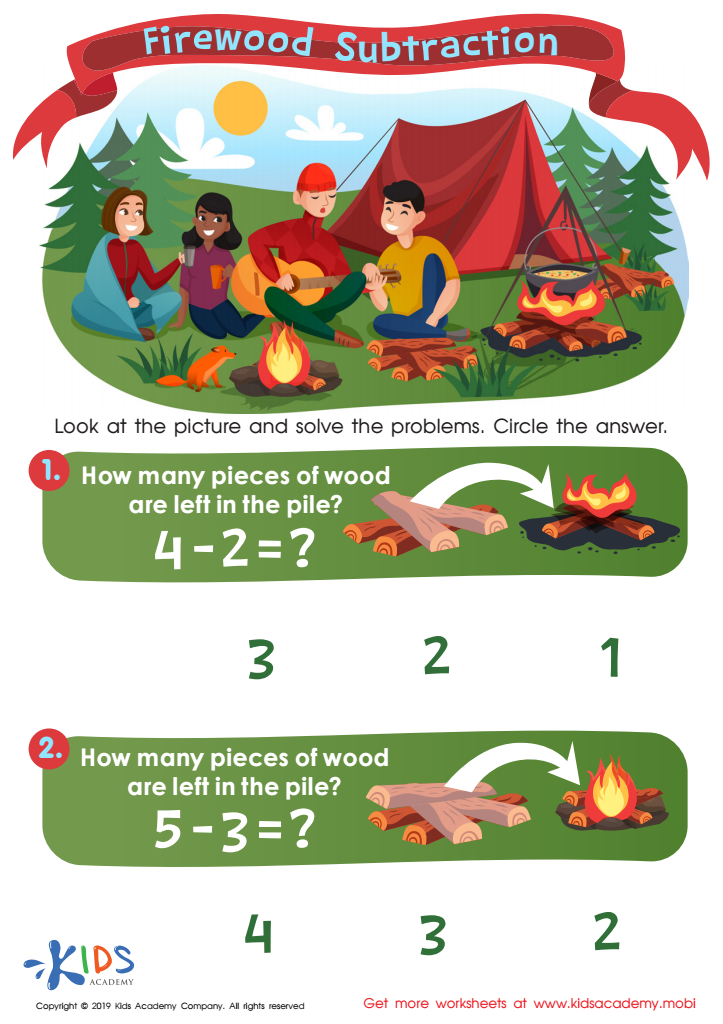
Firewood Subtraction Worksheet







Subtraction practice for young learners, ages 3-8, is crucial for several reasons. Firstly, it lays a solid foundation for mathematical understanding. At this age, children are naturally curious, and engaging them in simple subtraction helps develop their logical thinking and problem-solving skills. These foundational skills are vital as they progress to more advanced math concepts in the future.
Moreover, subtraction practice enhances cognitive development. Young children build number sense by visualizing quantities and learning how they decrease. This process helps them to understand relationships between numbers, fostering overall numerical literacy.
Additionally, confidence is built through mastery. When children practice subtraction and gradually improve their abilities, they gain a sense of achievement. This confidence encourages a positive attitude toward mathematics, reducing math anxiety later in life.
Above all, early subtraction practice integrates learning through play and interactive activities, making it enjoyable. Whether through games, songs, or everyday experiences, incorporating subtraction into daily routines can render learning more relatable and fun. Overall, the benefits go beyond just math skills, as they contribute to emotional, social, and intellectual growth, preparing children for future academic successes.








