Understanding fractions Easy Fractions of Shapes Worksheets for Ages 3-8
13 filtered results
-
From - To
Explore our "Understanding Fractions" worksheets designed specifically for children ages 3-8. These engaging and colorful resources help young learners grasp the concept of fractions through visual representation and hands-on activities. Perfect for teaching the basics of splitting shapes into equal parts, our easy-to-use worksheets encourage creativity while reinforcing essential math skills. From recognizing halves and quarters to understanding how fractions relate to everyday objects, our materials cater to various learning styles. Whether used at home or in the classroom, these worksheets make learning fractions fun and accessible, laying a strong foundation for future math success. Start your child’s journey into the world of fractions today!
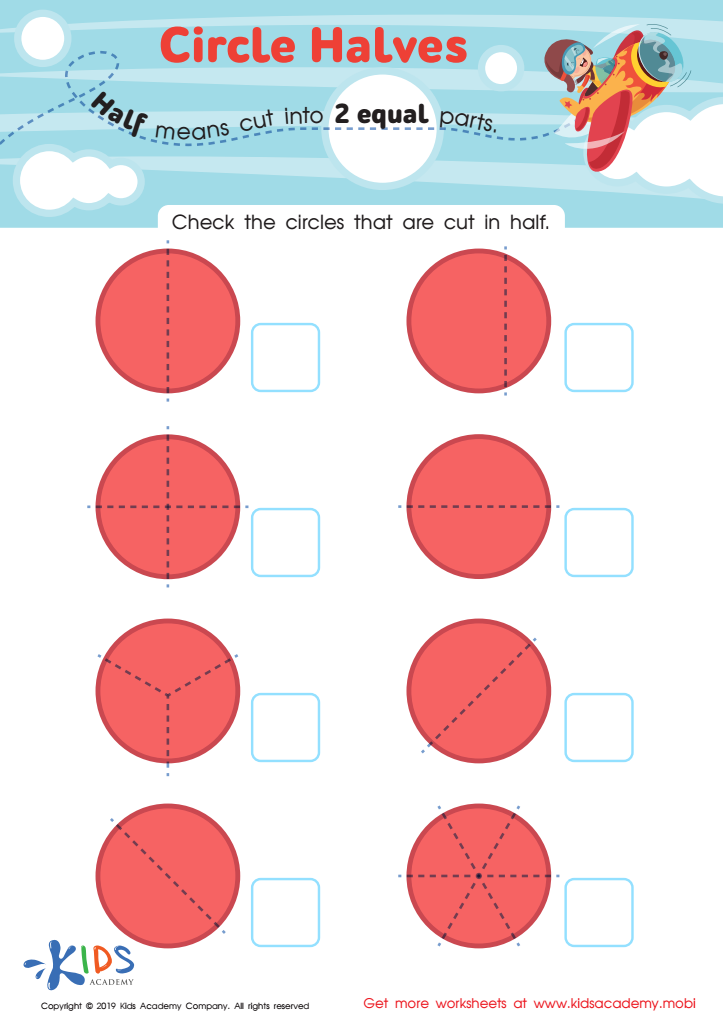
Circle Halves Worksheet
 Assign to My Students
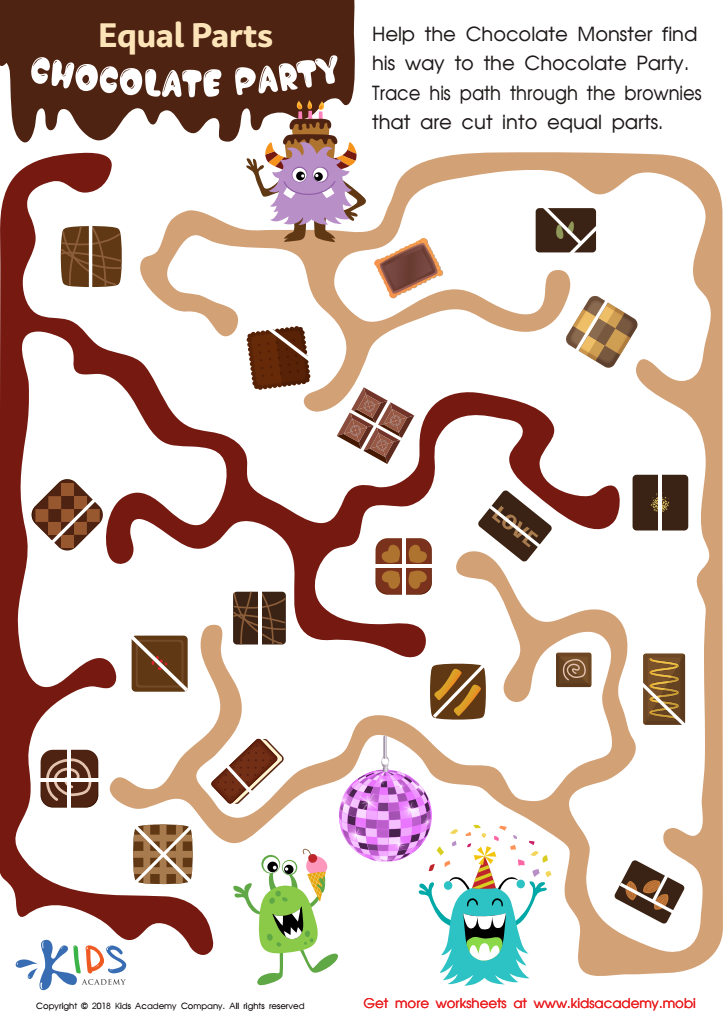
Equal Parts: Chocolate Party Worksheet
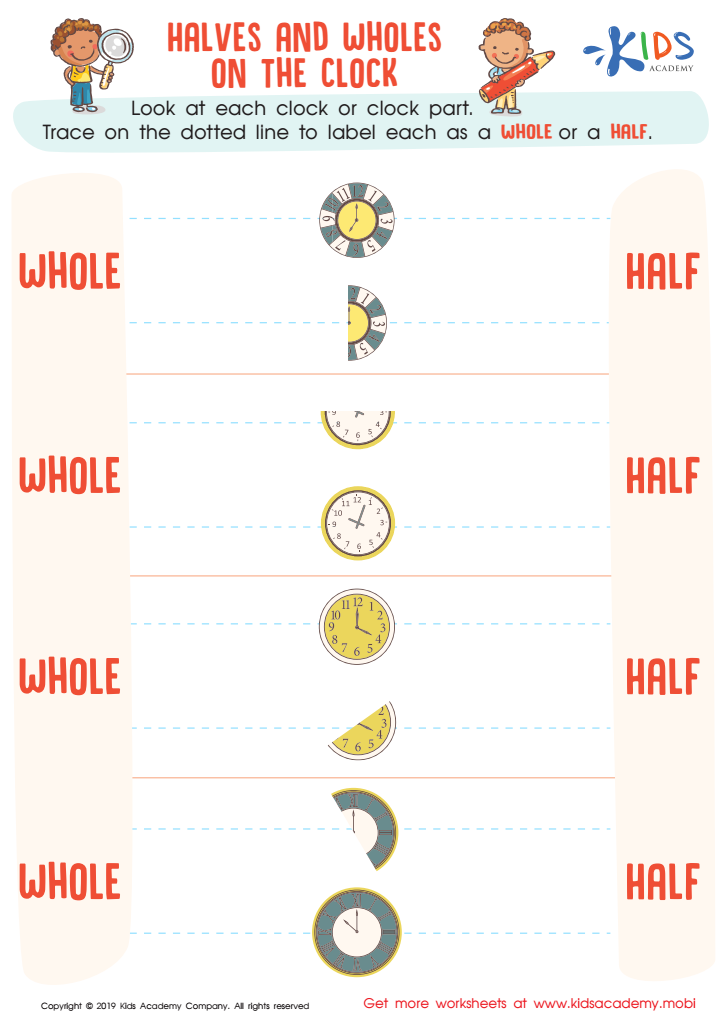
Halves and Wholes on the Clock Worksheet
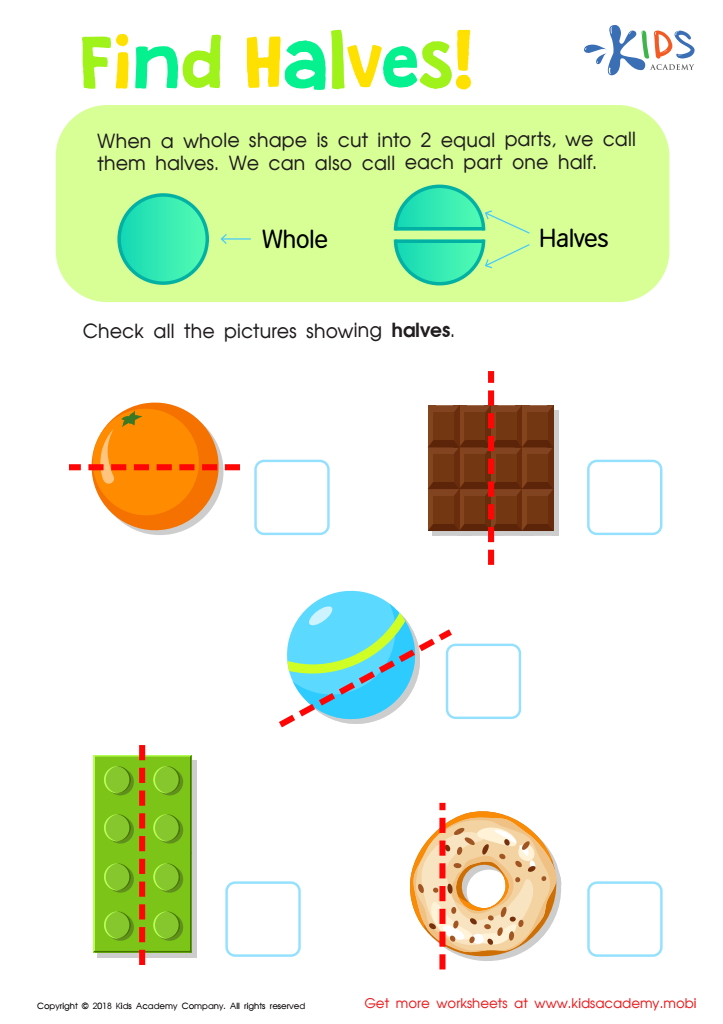
Find Halves Worksheet
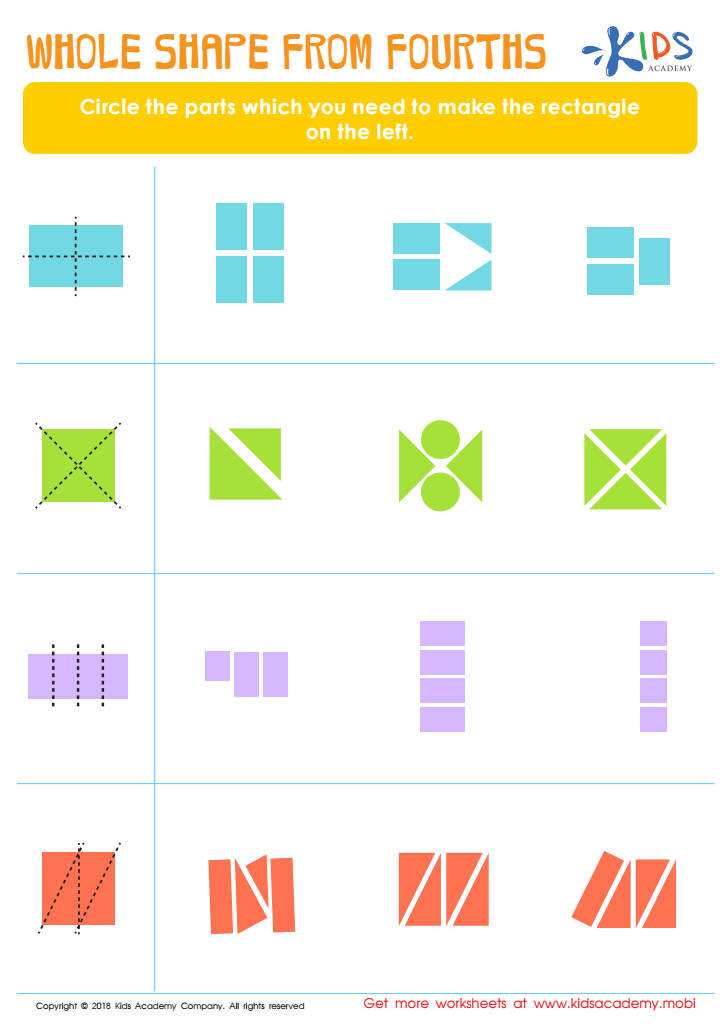
Whole Shape from Fourths Worksheet
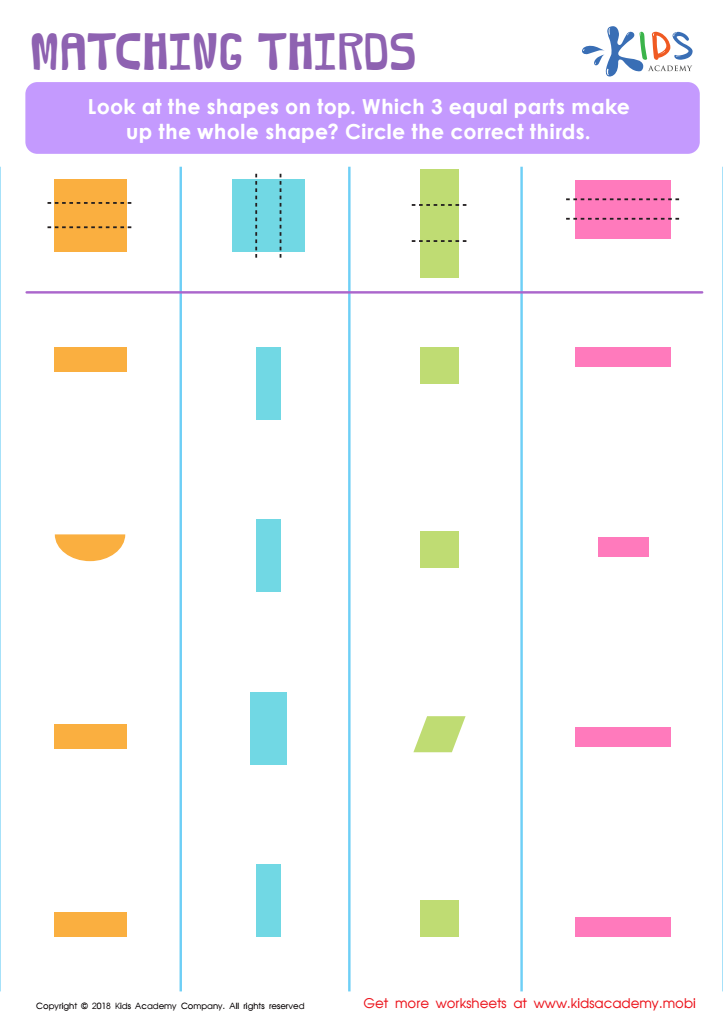
Matching Thirds Worksheet
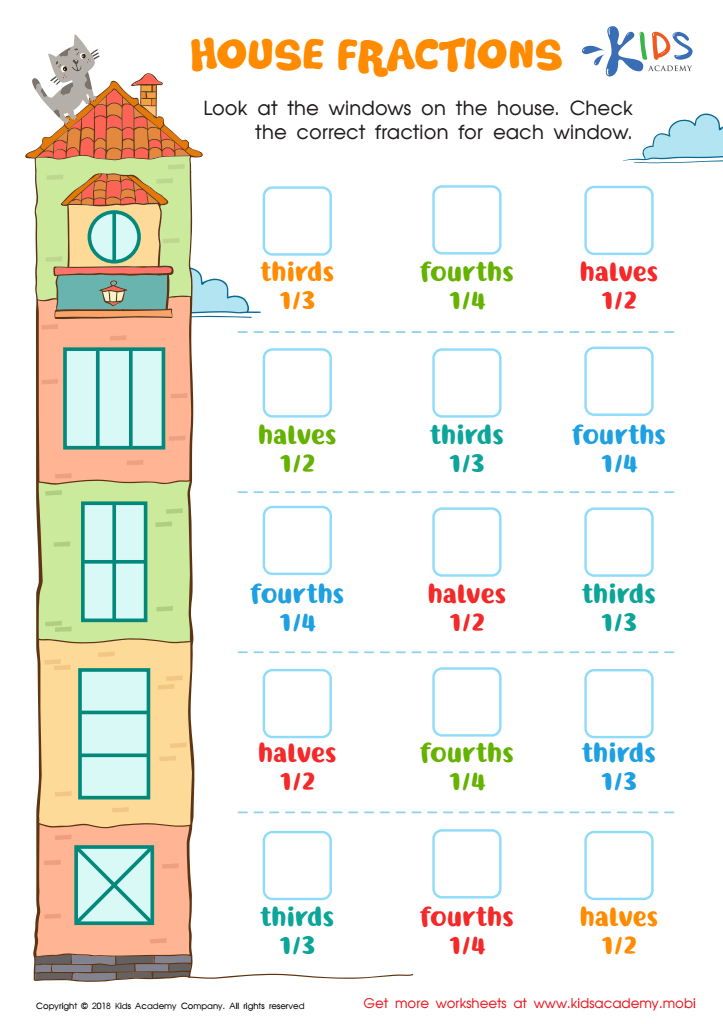
House Fractions Worksheet
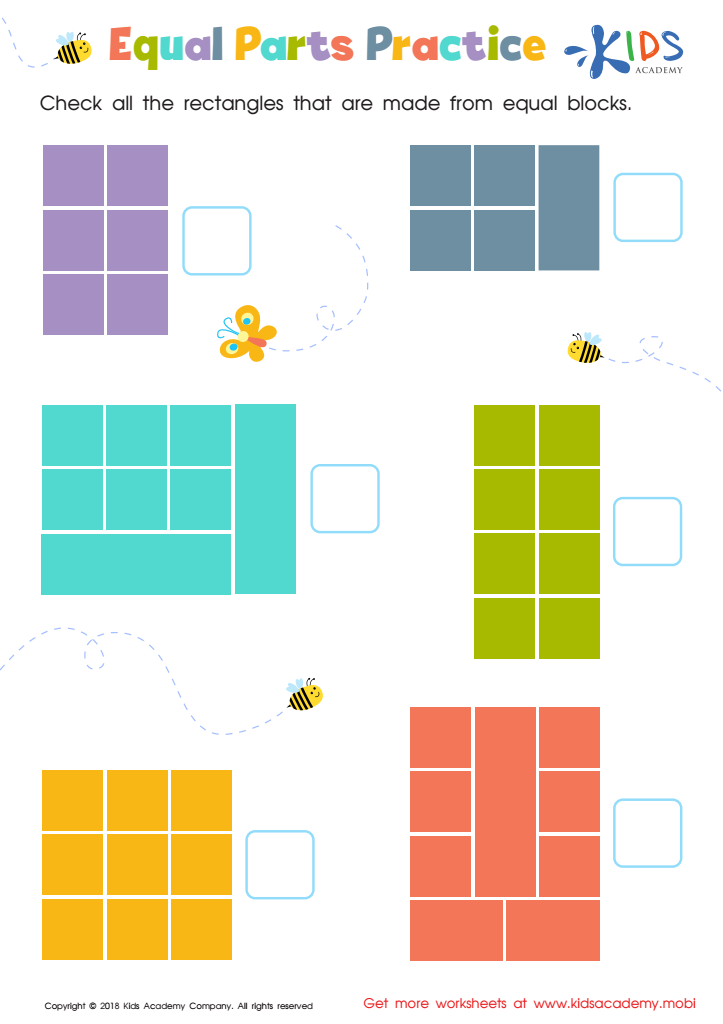
Equal Parts Practice Worksheet
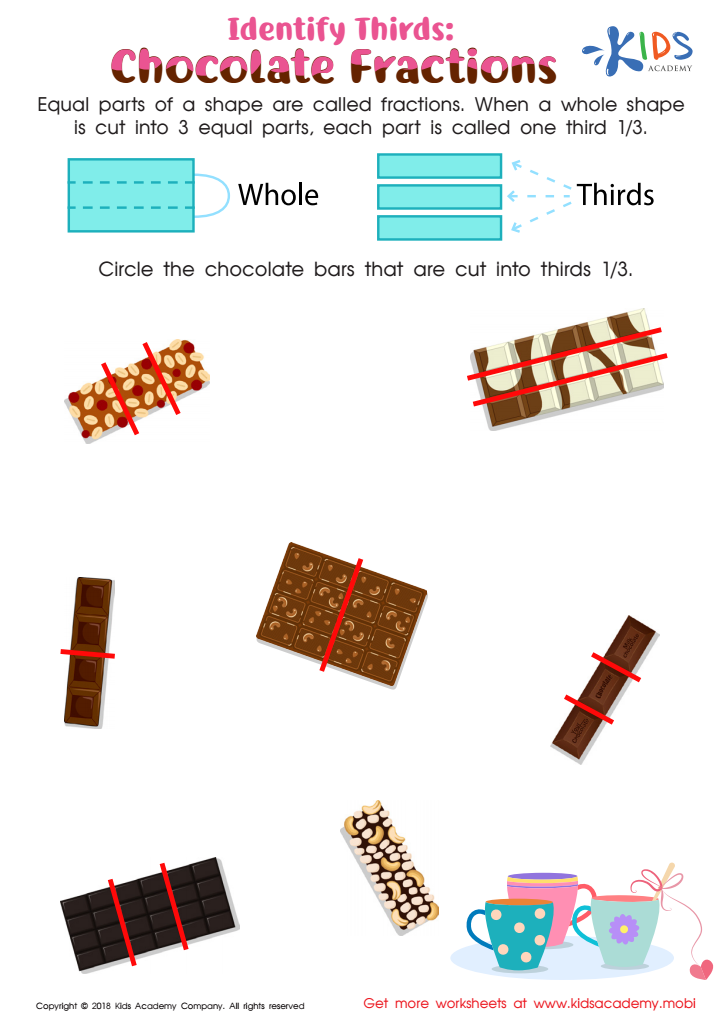
Identify Thirds: Chocolate Fractions Worksheet
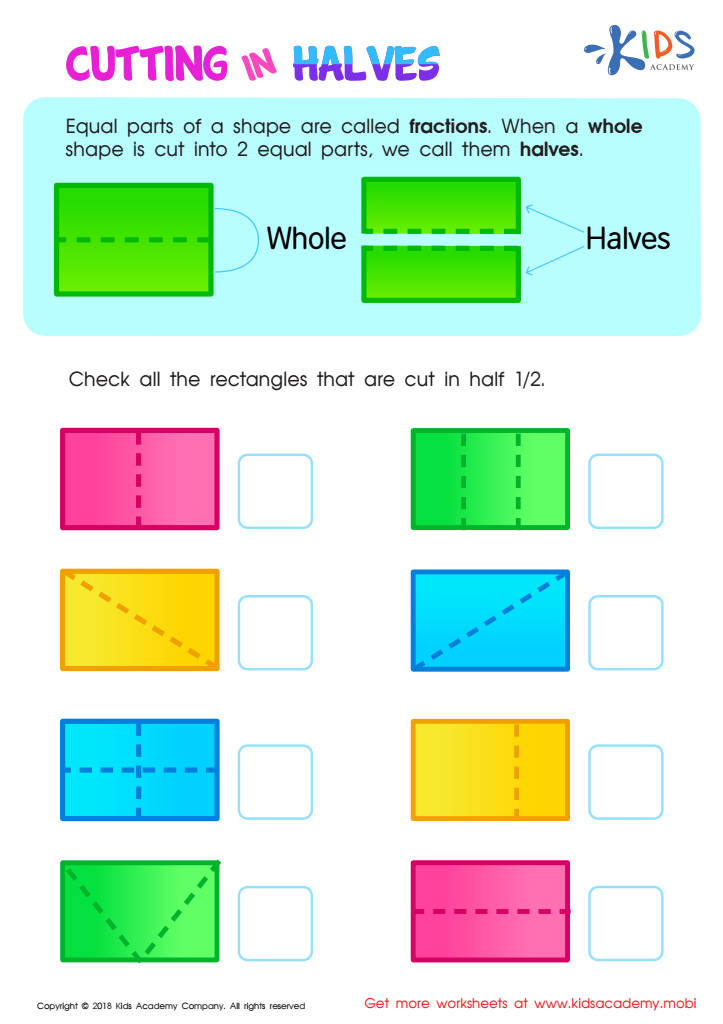
Cutting in Halves Worksheet
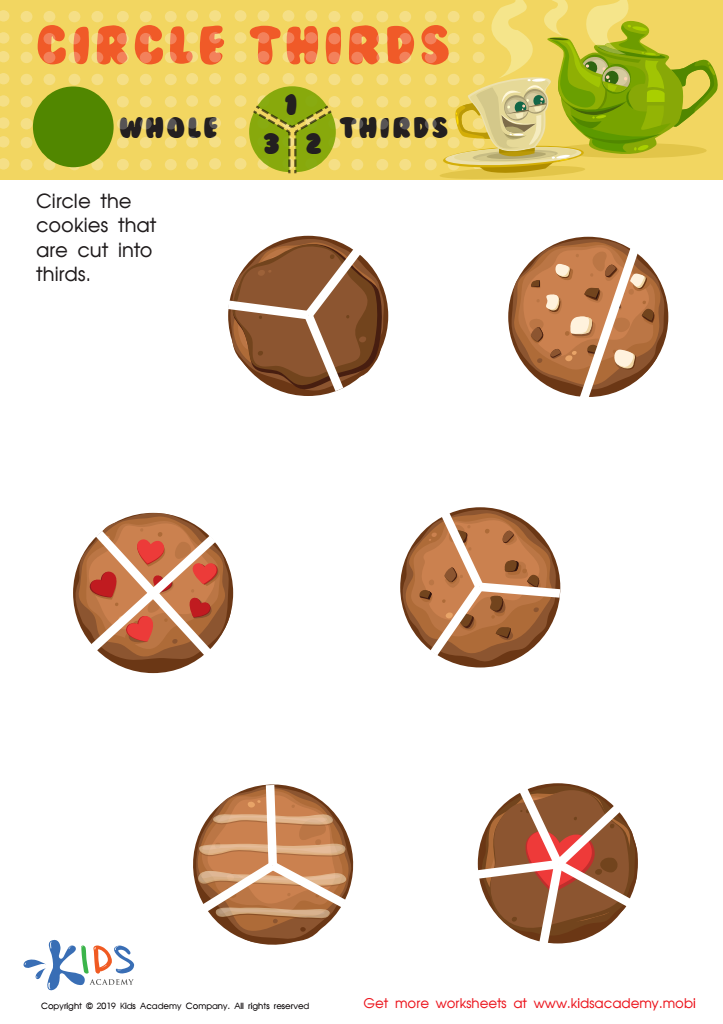
Circle Thirds Worksheet
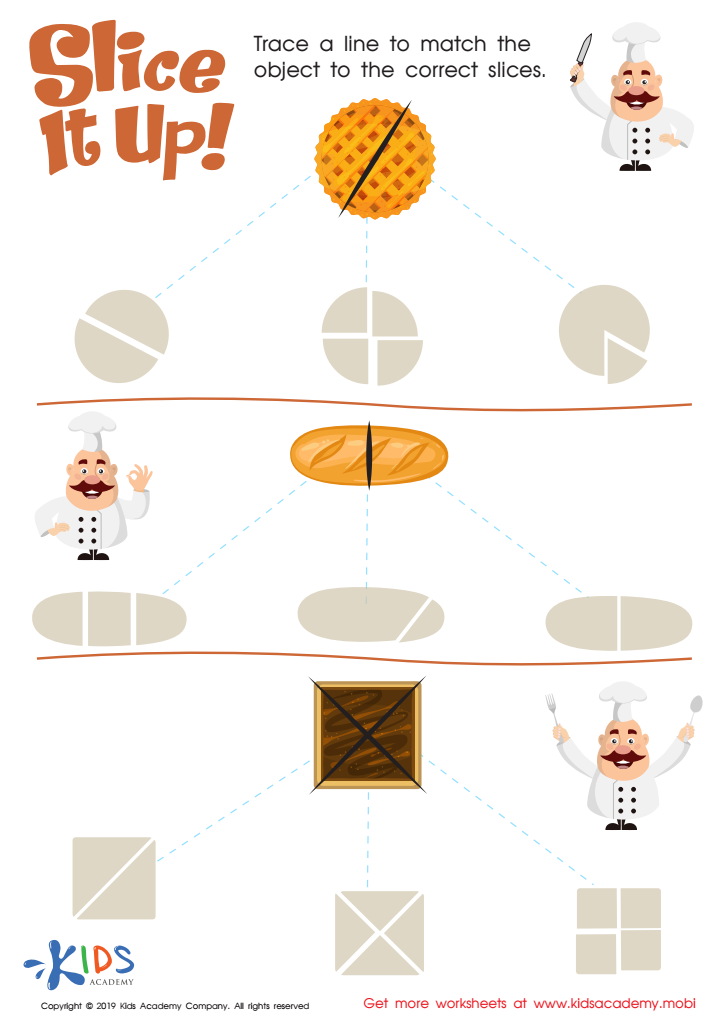
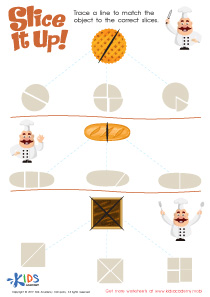
Slice It Up Worksheet
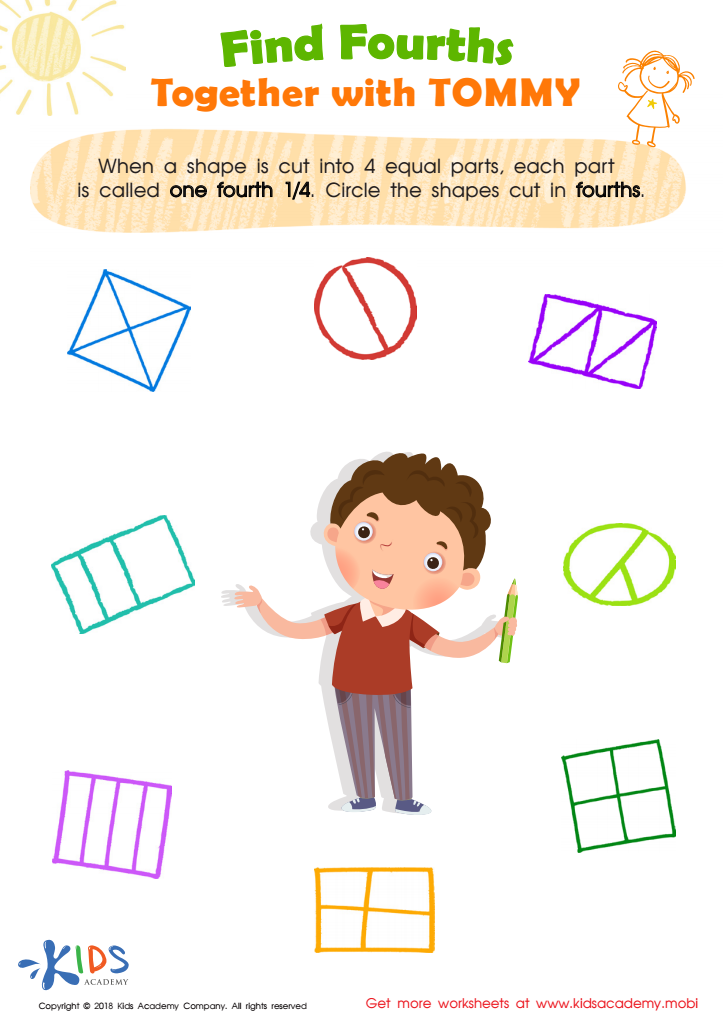
Find Fourths Together with Tommy Worksheet








Understanding fractions, especially in the context of shapes, is foundational for children ages 3-8 as it lays the groundwork for their mathematical literacy. At this age, children are naturally curious and often engage in activities that involve parts and wholes, such as sharing snacks or dividing shapes during crafts. By teaching them about simple fractions through shapes, parents and teachers can harness this innate curiosity to build deeper mathematical understanding.
Learning fractions offers multiple benefits; it helps children develop spatial awareness, enhance problem-solving skills, and improve critical thinking. Recognizing shapes and their fractional parts fosters an understanding of division and proportional reasoning, skills essential for later, more complex mathematics. Furthermore, engaging in hands-on activities can make learning about fractions fun and memorable, fostering a positive attitude towards math.
Additionally, discussing fractions stimulates language development, as children learn to express their thoughts about parts, wholes, and comparisons. Parents and teachers shouldn't overlook the social aspect—dividing objects encourages cooperation and teamwork among peers. Ultimately, developing a solid grasp of fractions in early childhood sets the stage for success in future math courses, contributing to overall academic achievement and confidence in problem-solving capabilities.