Understanding fractions Easy Geometry Worksheets for Ages 3-8
16 filtered results
-
From - To
Welcome to our collection of “Understanding Fractions Easy Geometry Worksheets” designed specifically for children aged 3-8! These engaging worksheets simplify the concept of fractions, making it fun and accessible for young learners. Each activity encourages exploration and hands-on learning, reinforcing essential skills like visual representation and fraction identification. Our thoughtfully crafted resources aim to build a strong foundation in geometry through interactive exercises, puzzles, and creative tasks that cater to various learning styles. Classroom teachers and parents alike will find valuable materials to help children grasp fraction concepts confidently and engage with geometry in a playful way. Start the journey to mathematical success today!
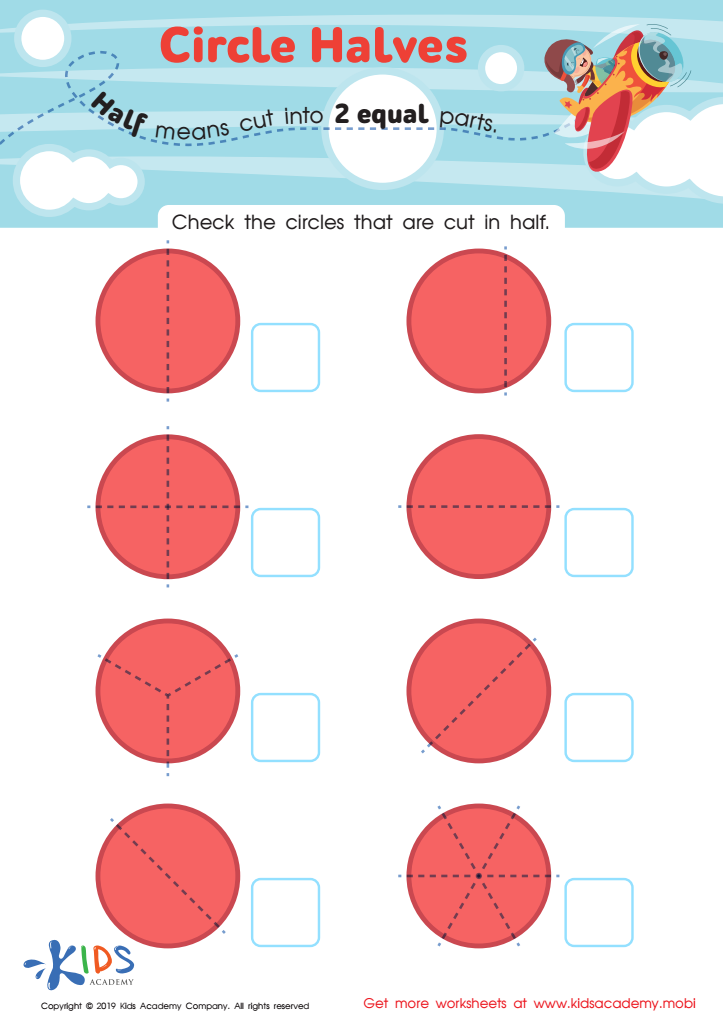
Circle Halves Worksheet
 Assign to My Students











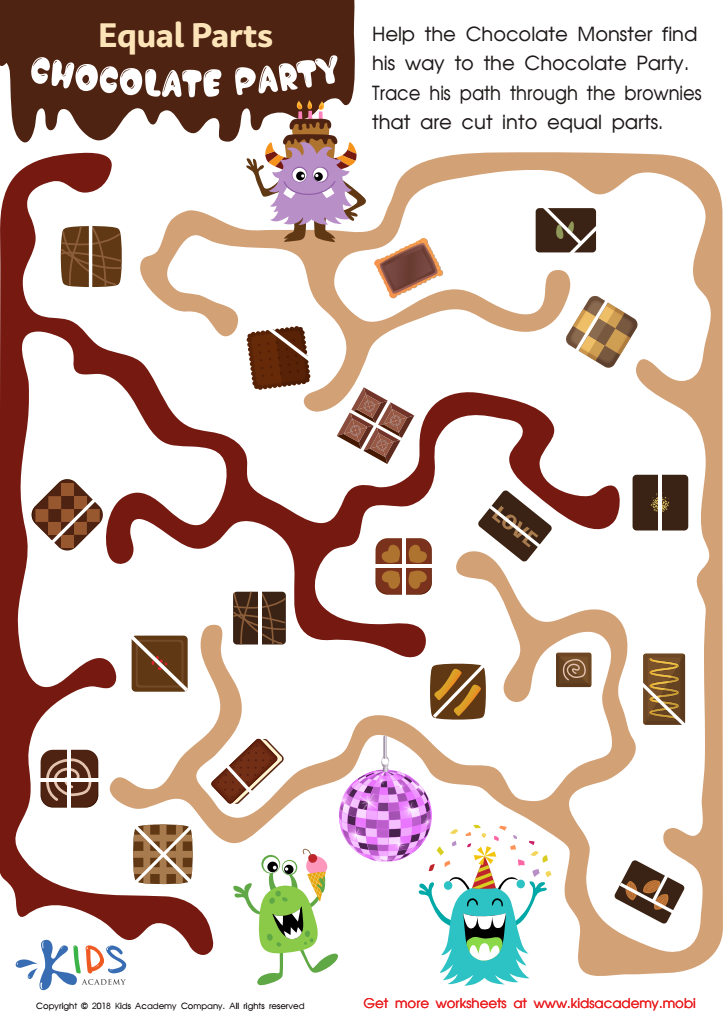
Equal Parts: Chocolate Party Worksheet
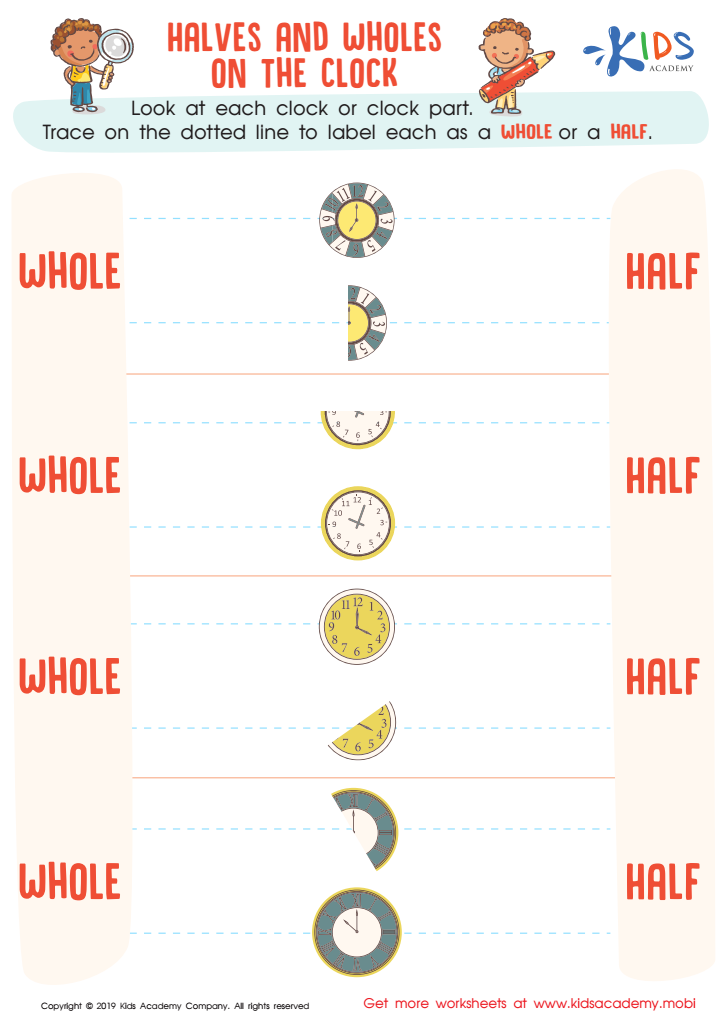
Halves and Wholes on the Clock Worksheet
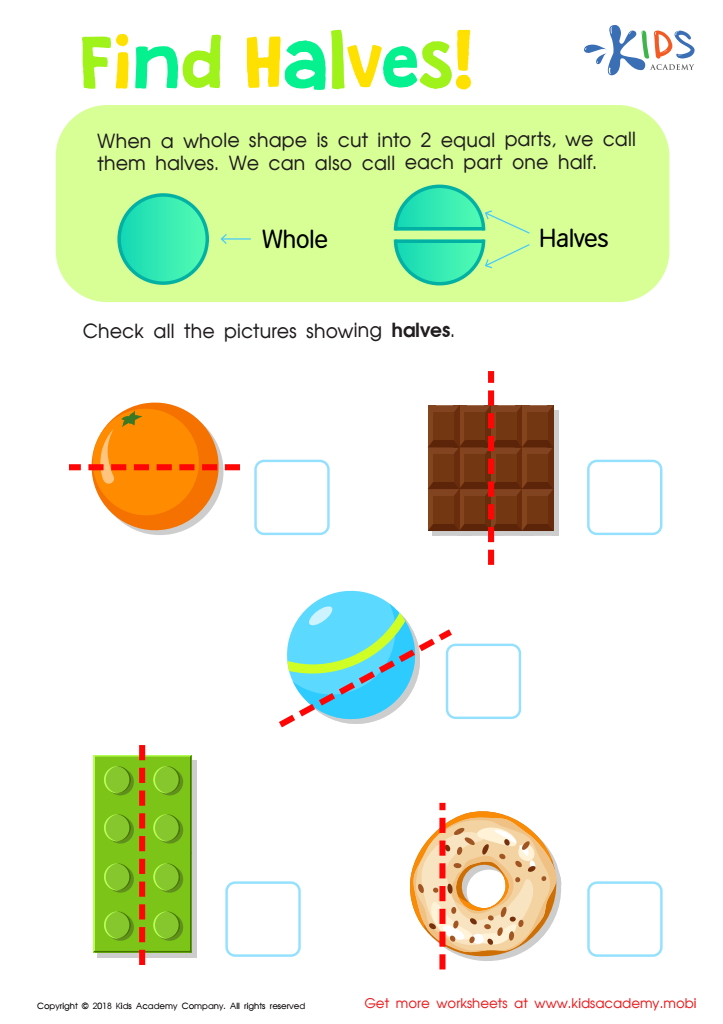
Find Halves Worksheet
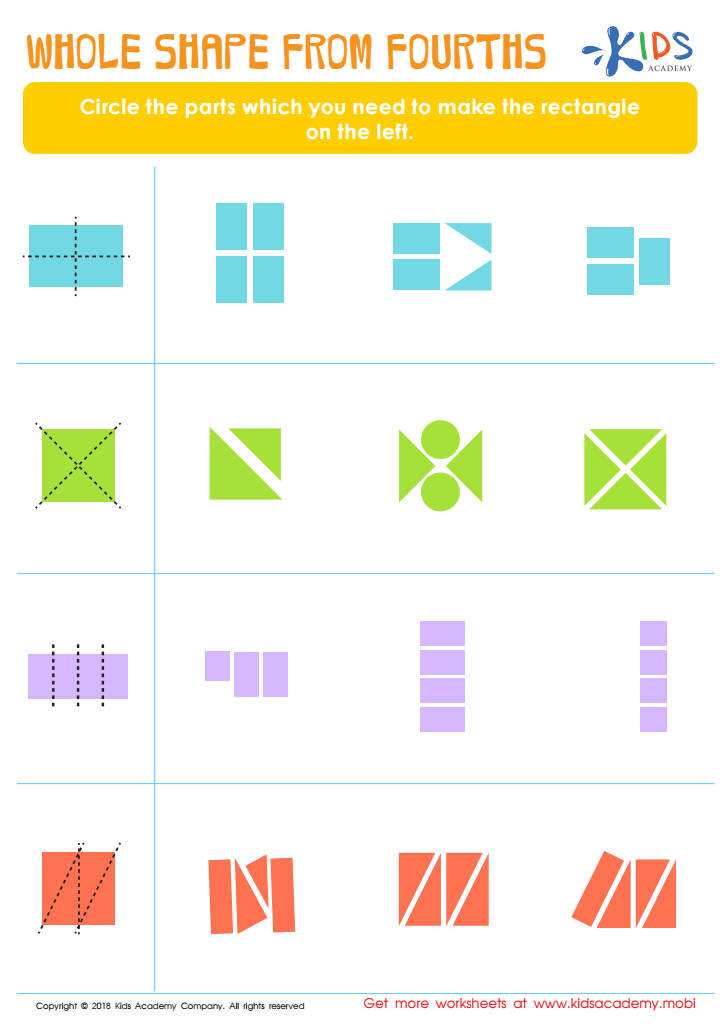
Whole Shape from Fourths Worksheet
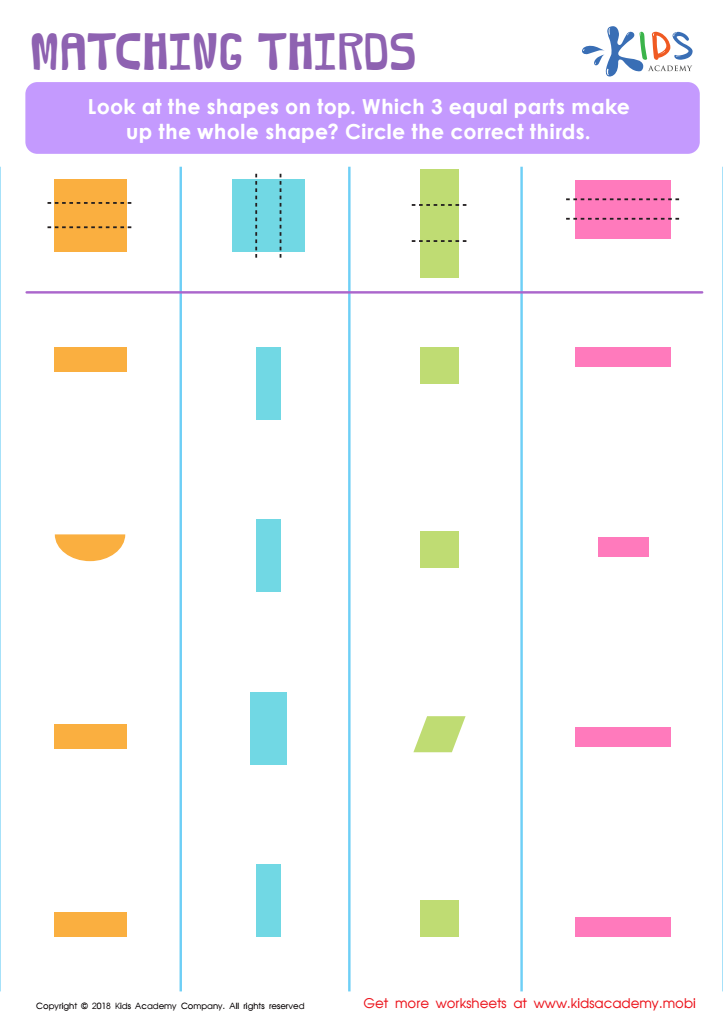
Matching Thirds Worksheet
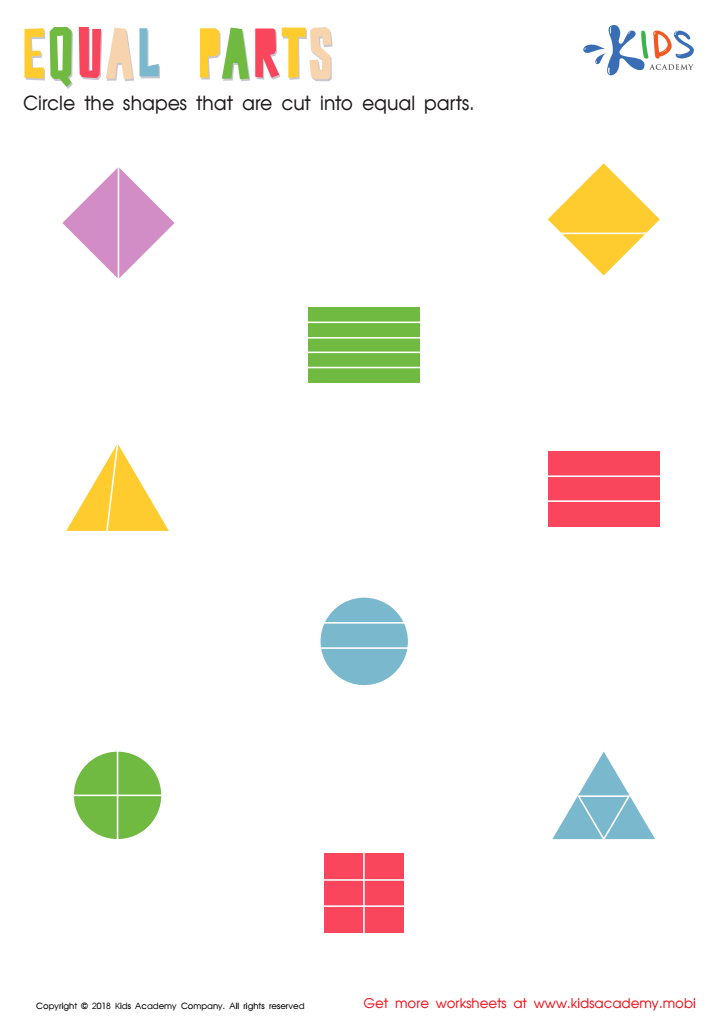
Equal Parts: Shapes Worksheet
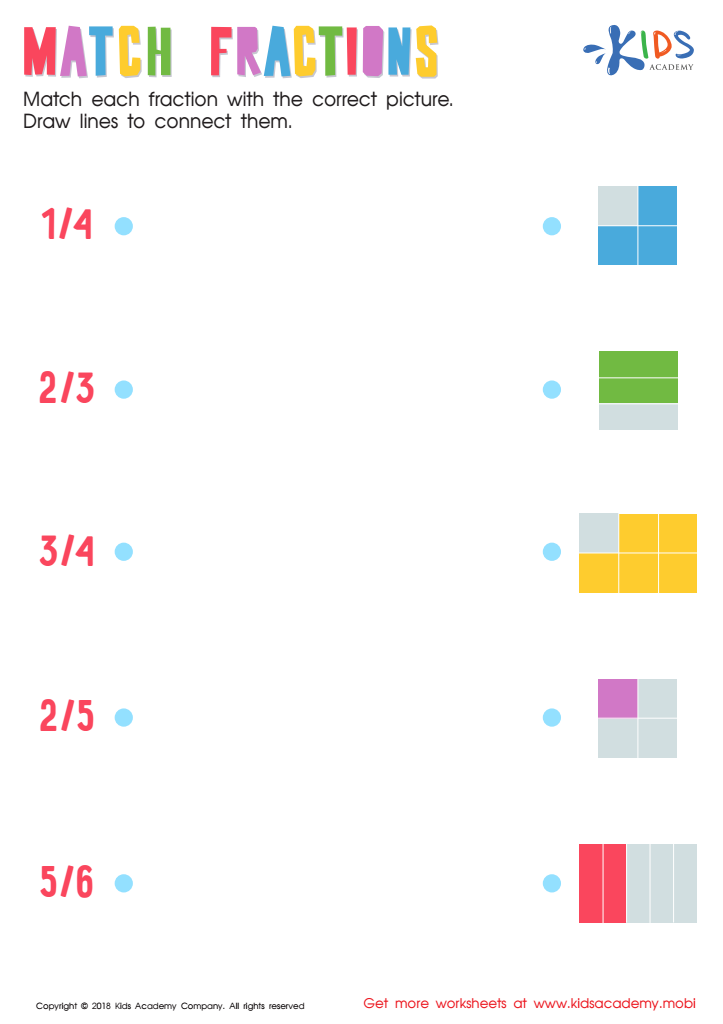
Match Fractions Worksheet
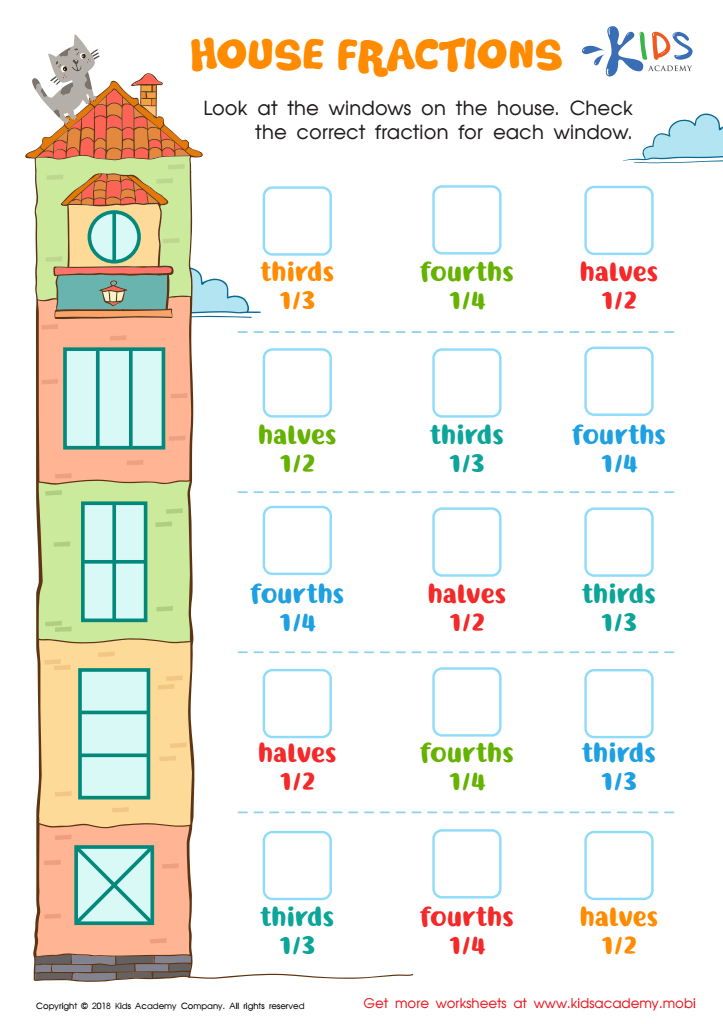
House Fractions Worksheet
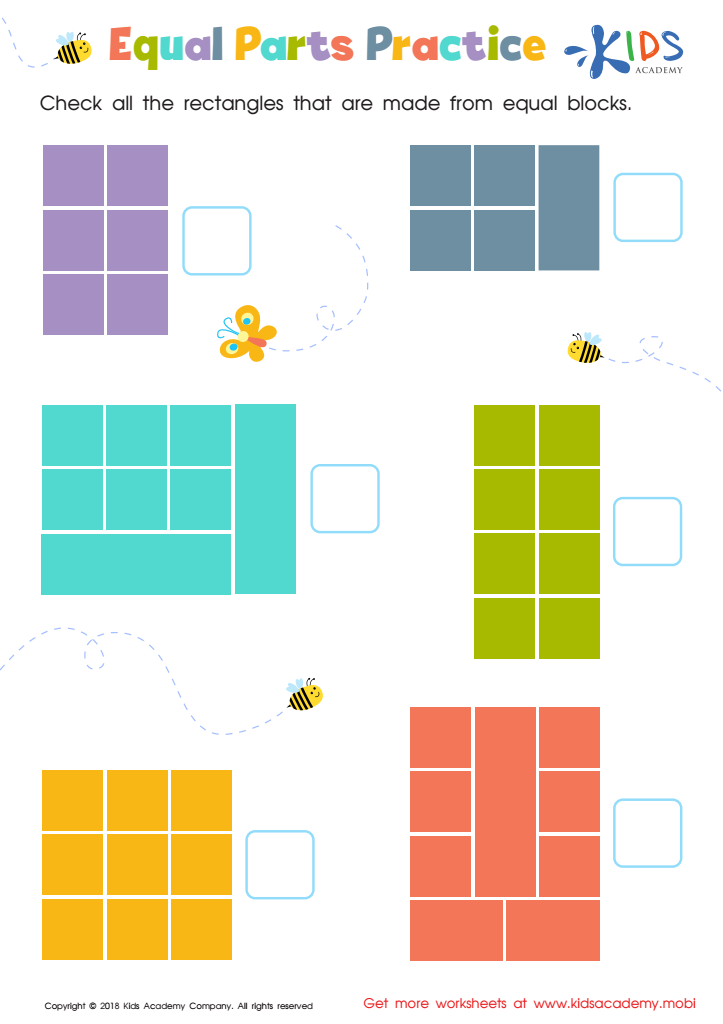
Equal Parts Practice Worksheet
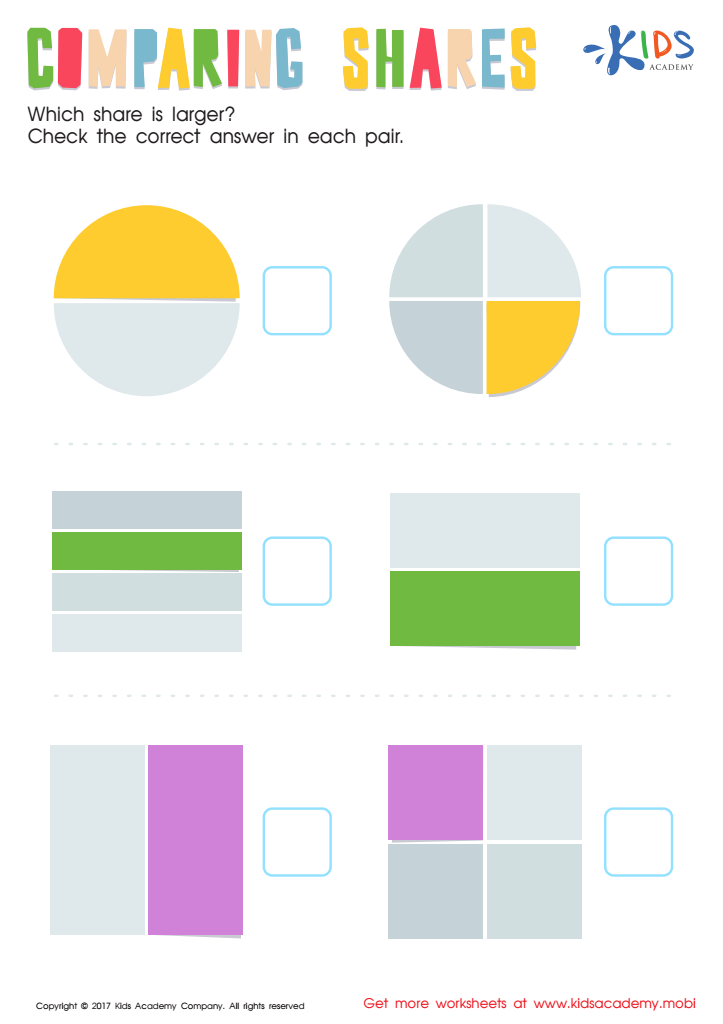
Comparing Shares Worksheet
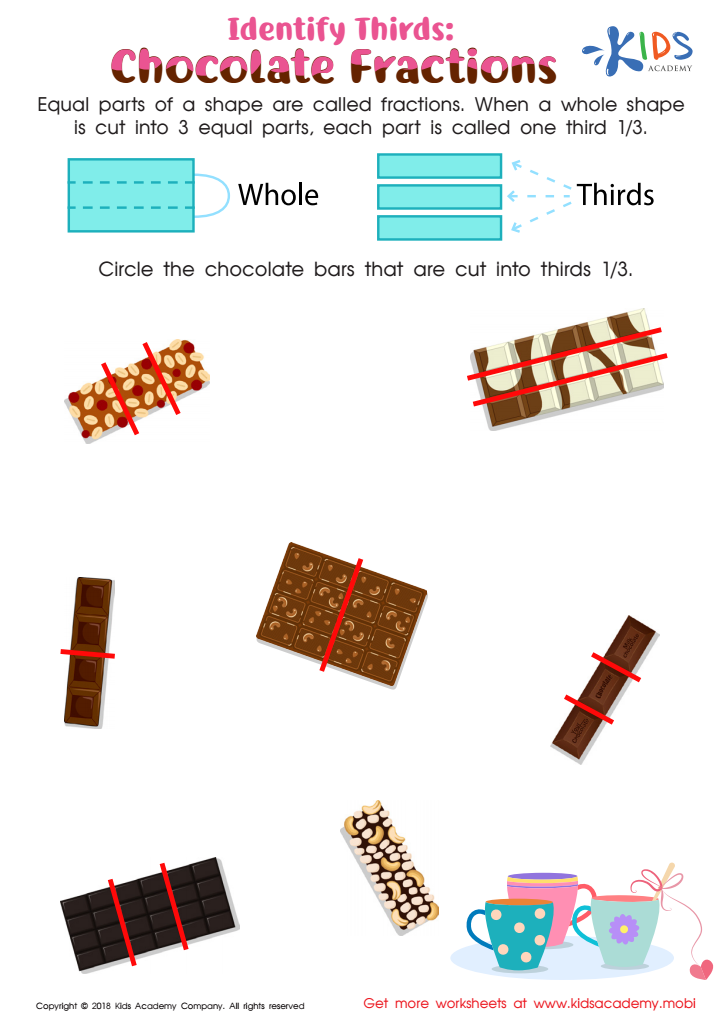
Identify Thirds: Chocolate Fractions Worksheet
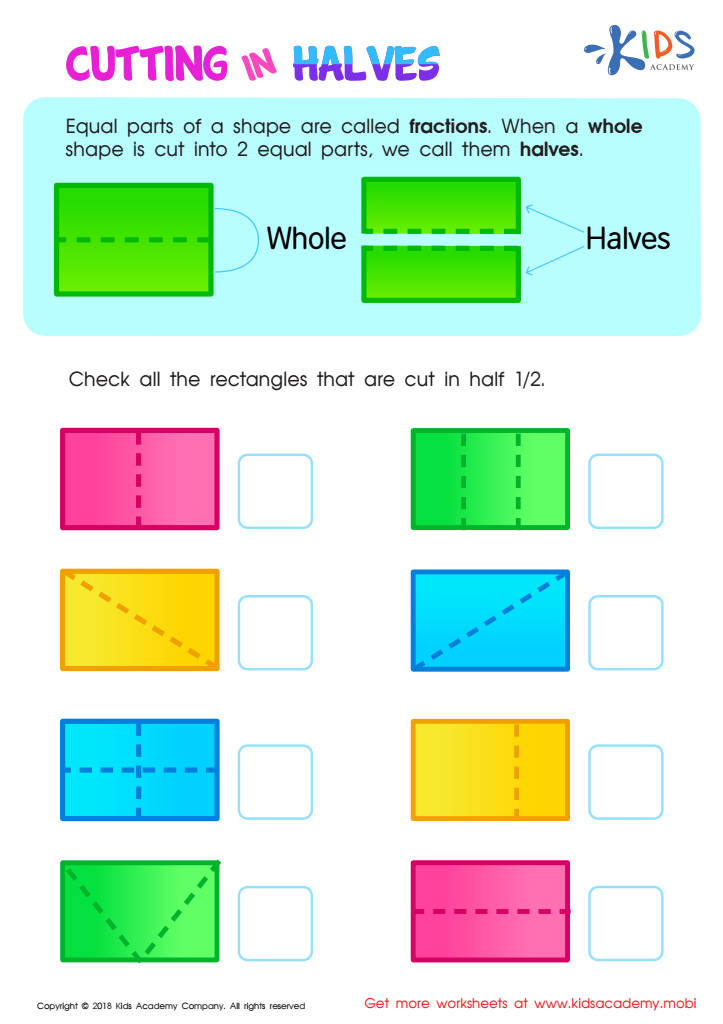
Cutting in Halves Worksheet
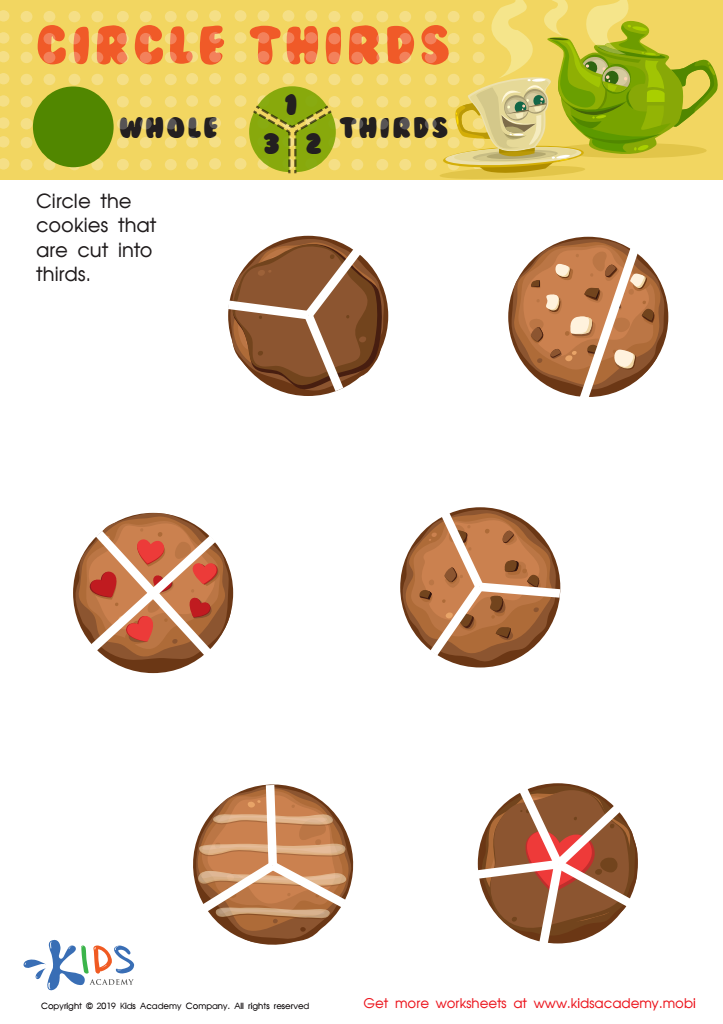
Circle Thirds Worksheet
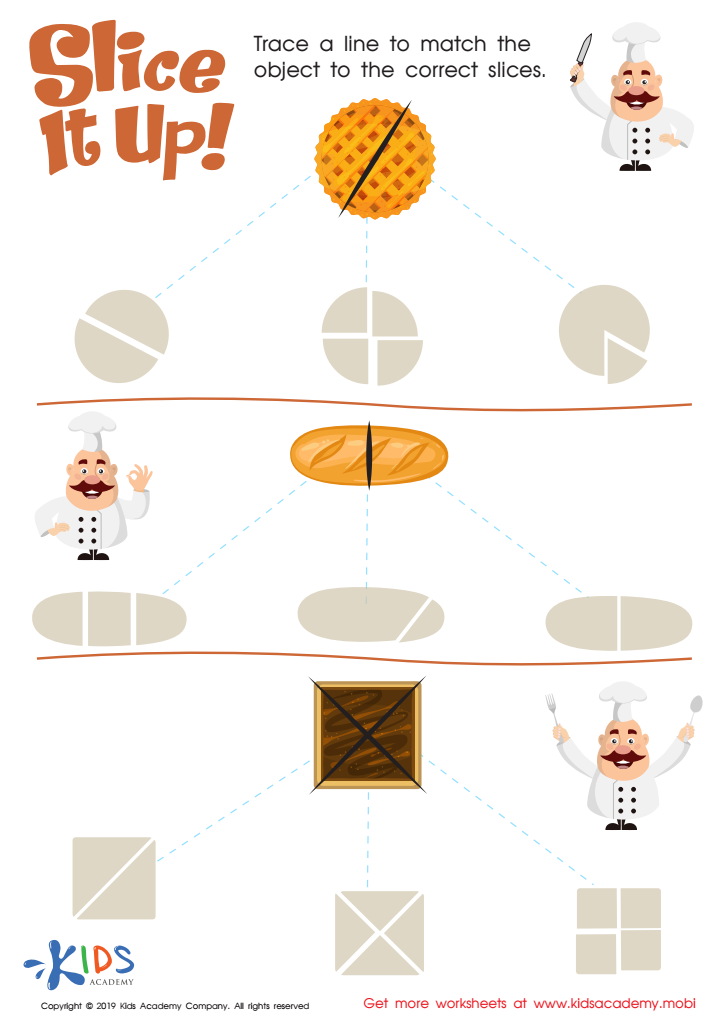
Slice It Up Worksheet
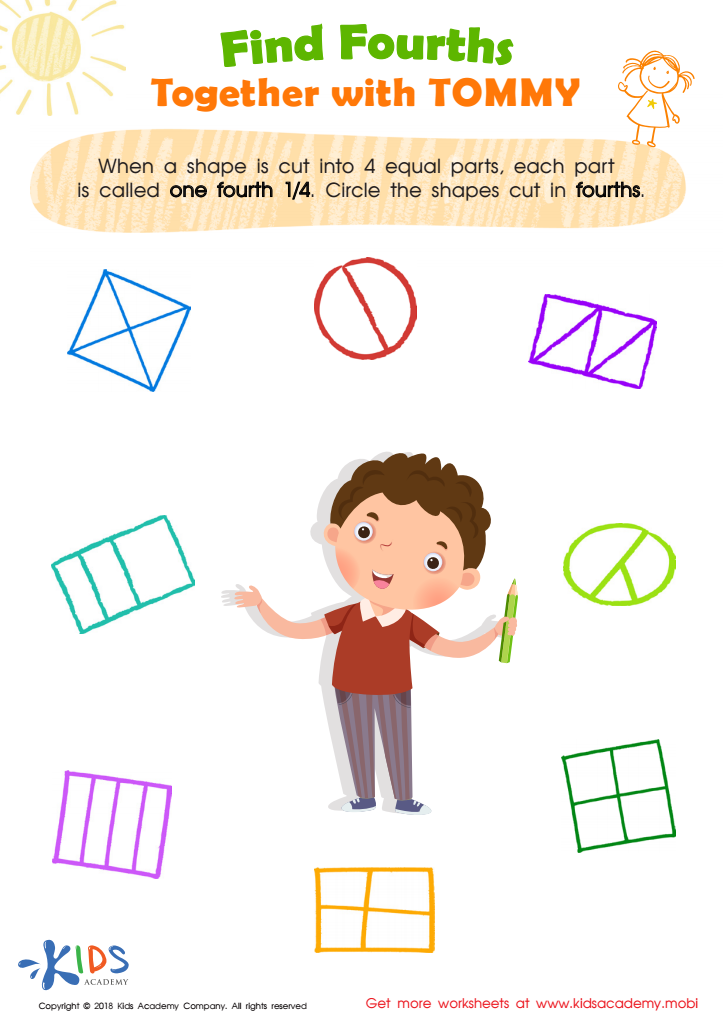
Find Fourths Together with Tommy Worksheet








Understanding fractions and basic geometry is essential for children aged 3-8 because these concepts form the foundation for critical mathematical skills. Early exposure to fractions helps children grasp the idea of parts of a whole, which fosters logical thinking and problem-solving abilities. When they recognize fractions through everyday activities, like sharing food, it builds a strong conceptual understanding that they can expand upon as they mature.
Geometry enhances spatial awareness and critical reasoning skills. Learning about shapes, sizes, and positions helps children develop observational skills and fosters creativity in their surroundings. By engaging with geometry in playful contexts—like building blocks or drawing—they cultivate an interest in mathematics that can lead to increased confidence.
Incorporating these subjects into activities nurtures a positive attitude toward math, making it more relatable and less intimidating. Moreover, these early experiences promote collaborative learning when children work in groups, further enhancing social skills.
By prioritizing an understanding of fractions and geometry at a young age, parents and teachers set a solid foundation for future academic success inclining children's future educational pathways toward advanced mathematics. Fostering these skills early prepares children for real-world applications and enjoyable lifelong learning.








