Vocabulary expansion Easy Reading Fiction Worksheets for Ages 3-8
5 filtered results
-
From - To
Unlock your child's potential with our Vocabulary Expansion Easy Reading Fiction Worksheets, designed specifically for ages 3-8. These engaging worksheets incorporate fun stories and imaginative illustrations to make learning vocabulary enjoyable. Each activity strategically enhances language skills while fostering a love for reading. Our user-friendly resources cover various themes to captivate young readers, supporting their literacy development through age-appropriate texts. Whether at home or in the classroom, these worksheets provide a perfect balance of play and education, ensuring your child builds a strong vocabulary foundation. Dive into the world of words and boost your child's confidence with our captivating materials today!
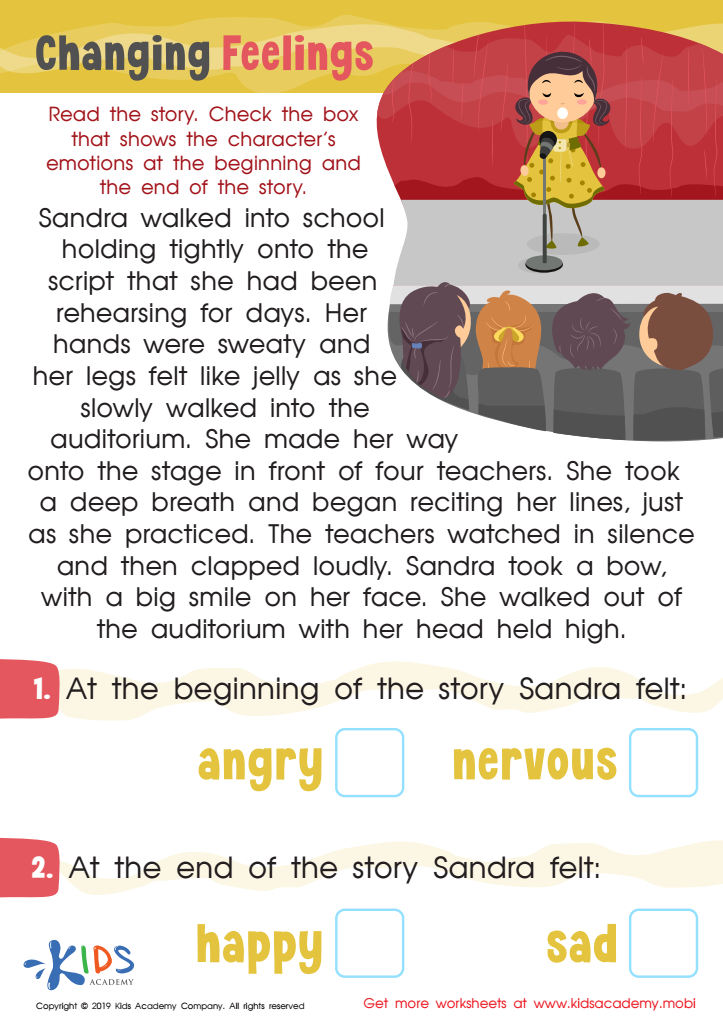
Changing Feelings Worksheet
 Assign to My Students
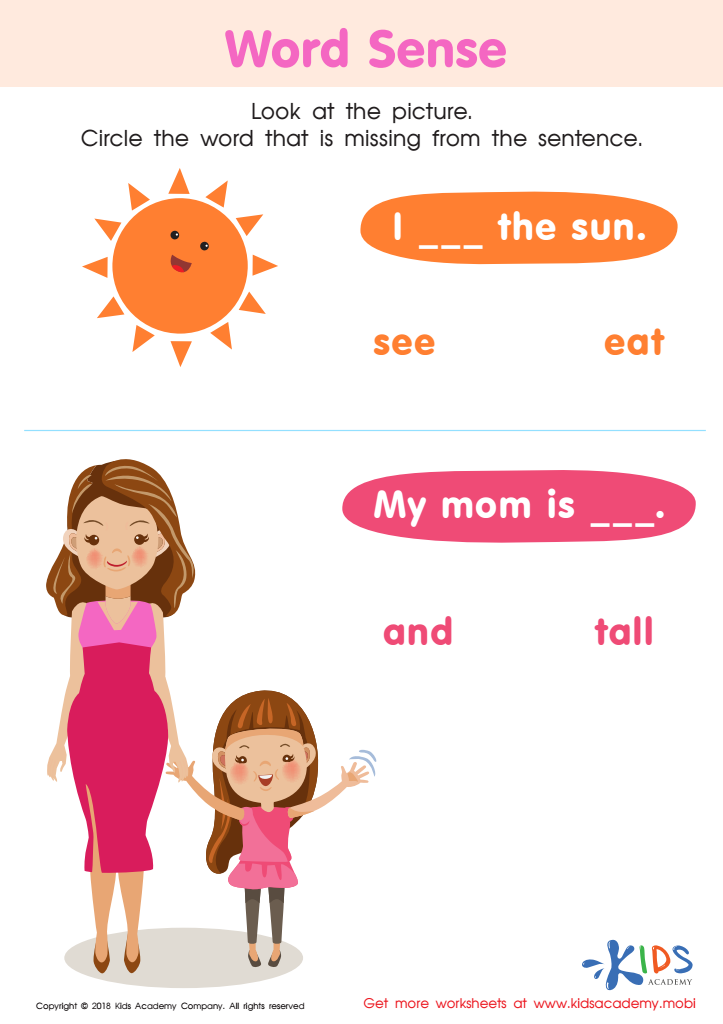
Word Sense Worksheet
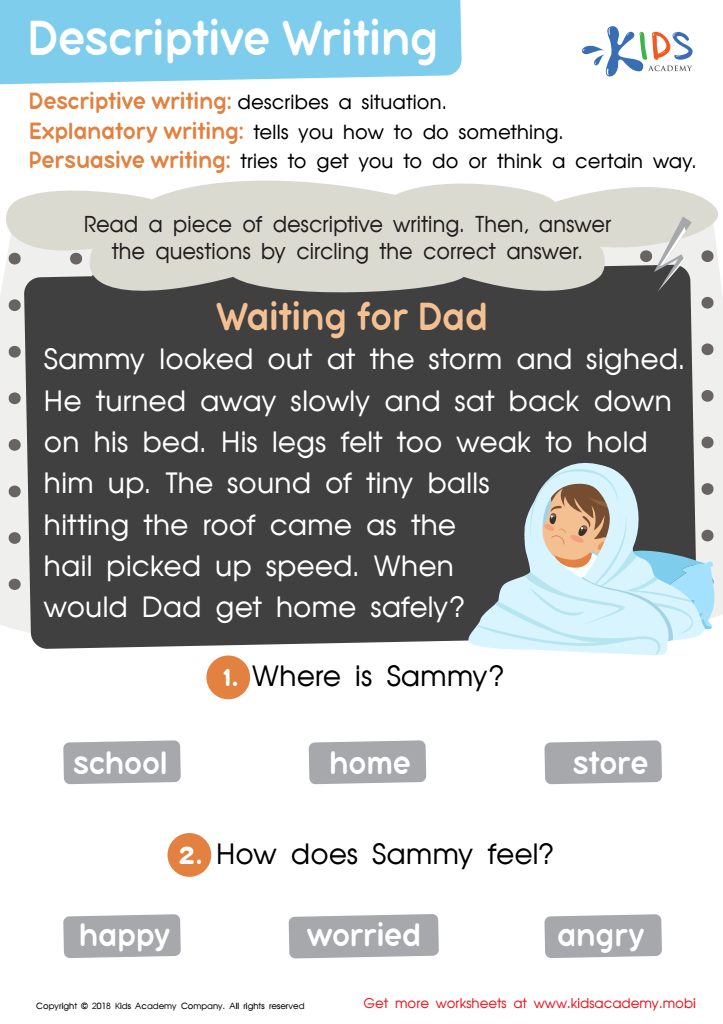
Descriptive Writing Worksheet: Part 2
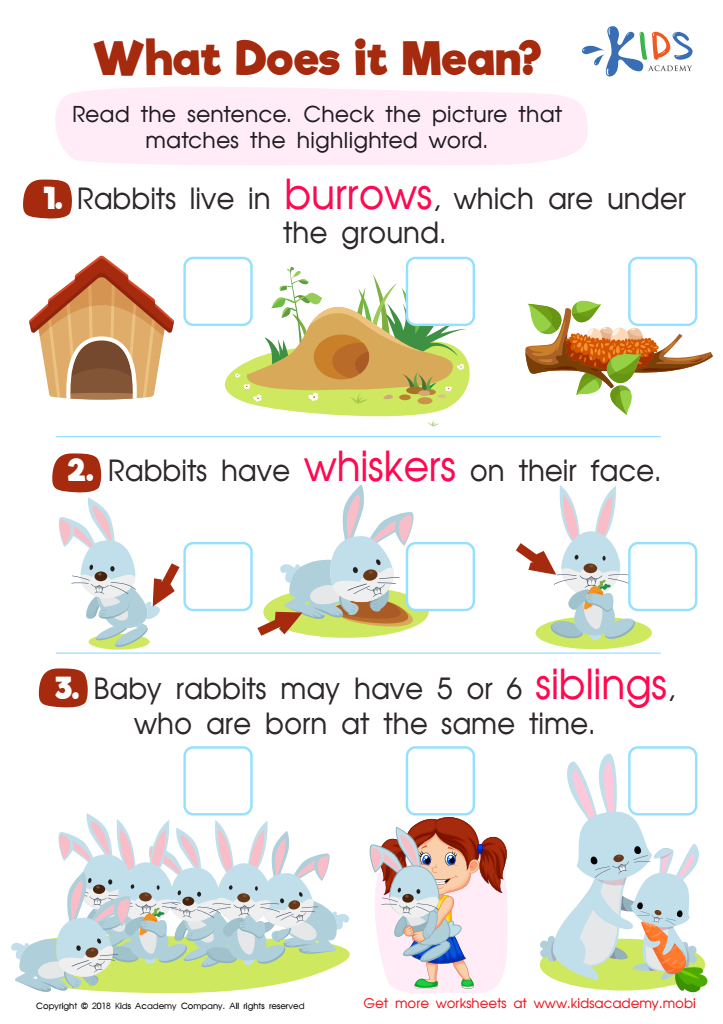
What Does It Mean? Worksheet
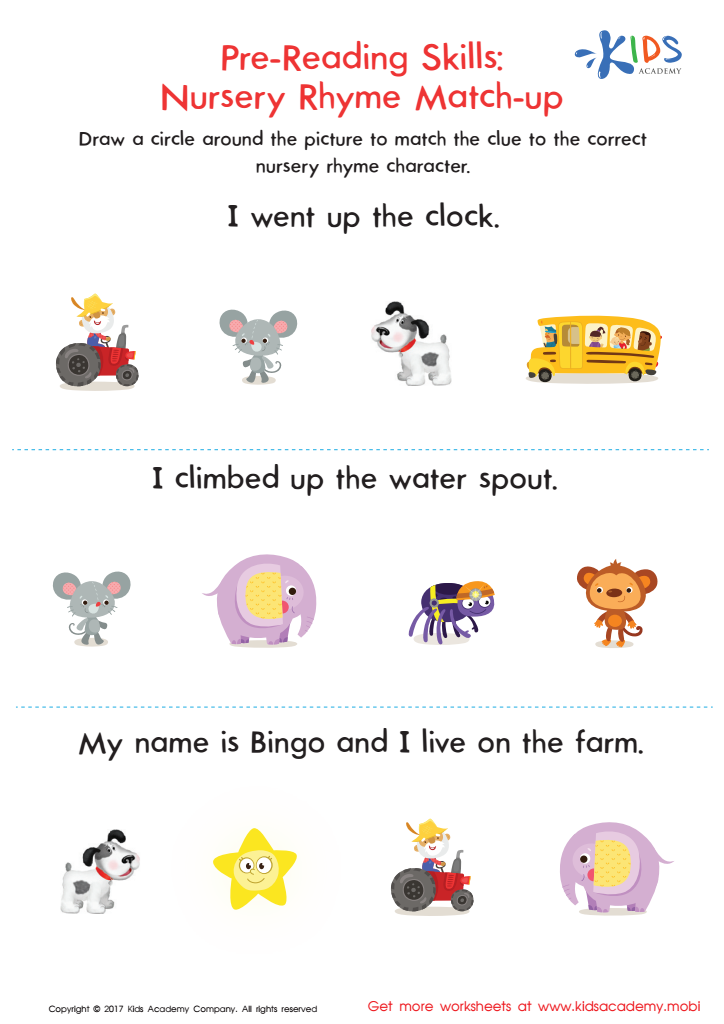
Nursery Rhyme Match–Up Worksheet




.jpg)



Parents and teachers should prioritize vocabulary expansion through easy reading fiction for children aged 3-8 because it lays the groundwork for lifelong literacy and communication skills. Early exposure to rich vocabulary enhances comprehension, enabling young readers to grasp complex ideas and express themselves more effectively. Engaging stories introduce new words in context, allowing children to understand their meanings and usage.
Easy reading fiction often includes engaging narratives and relatable characters that spark imagination and creativity. These stories can foster a love for reading, making it a pleasurable activity rather than a chore. When children identify with characters or become invested in a story, they are more likely to remember and use new vocabulary.
Additionally, vocabulary expansion improves critical thinking skills. As children encounter diverse scenarios and emotions in stories, they learn to think critically about characters' actions and motivations. This not only builds language skills but also develops empathy and social understanding.
Moreover, stronger vocabulary skills in early childhood are linked to academic success later in life. By prioritizing easy reading fiction, parents and teachers equip children with essential tools for effective communication and academic achievement, ultimately enhancing their overall development and future opportunities.