Improving counting skills Easy Worksheets for Ages 3-9
6 filtered results
-
From - To
Boost your child's counting abilities with our fun and engaging worksheets designed for kids ages 3-9! These easy and interactive resources from Kids Academy help young learners build strong numerical foundations through colorful exercises and playful activities. Each worksheet targets key skills such as number recognition, sequencing, and basic math operations. Perfect for home or classroom use, our counting worksheets support early childhood education and keep kids excited about learning math. Start exploring today and watch your child improve their counting skills while having a blast! Visit Kids Academy for free printable worksheets and educational resources.
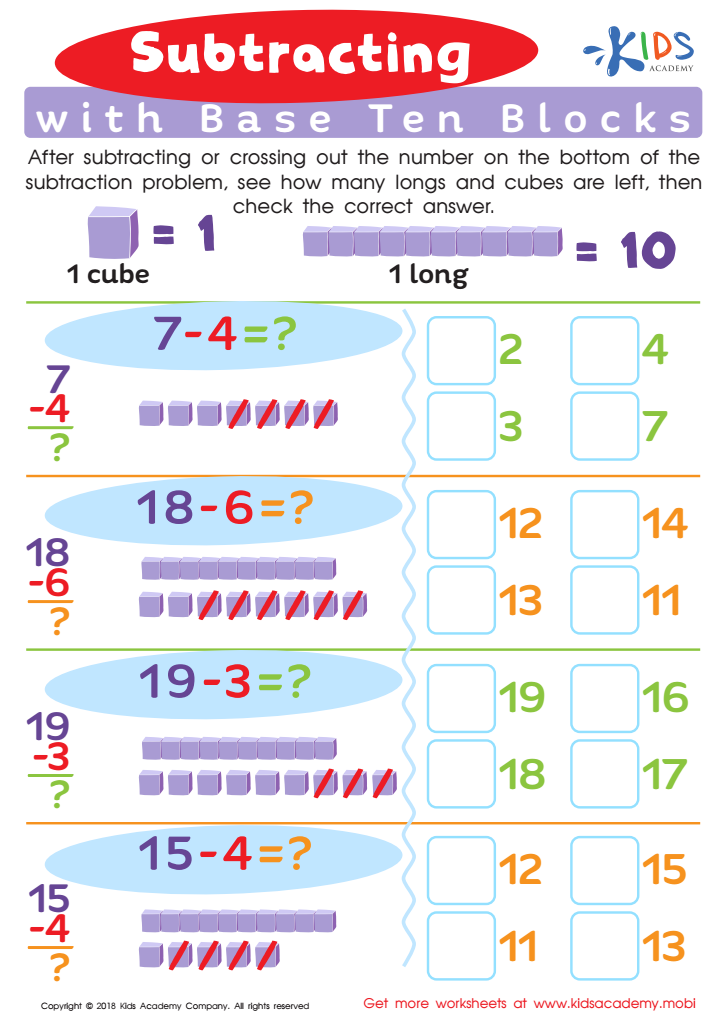
Subtracting With Base 10 Blocks Worksheet
 Assign to My Students
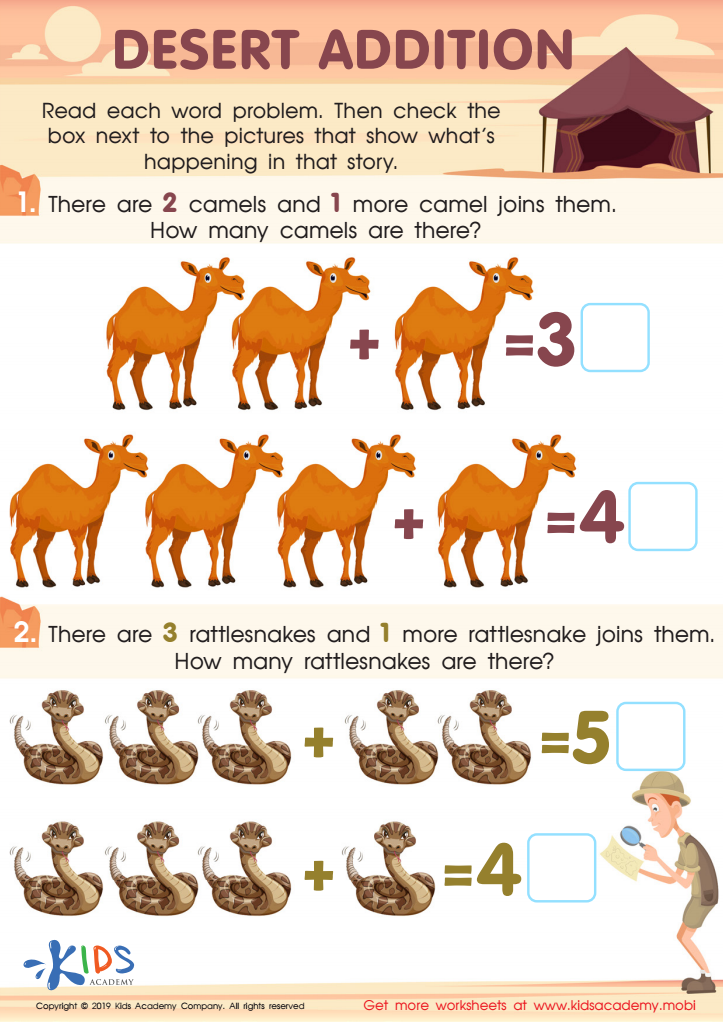
Desert Addition Worksheet
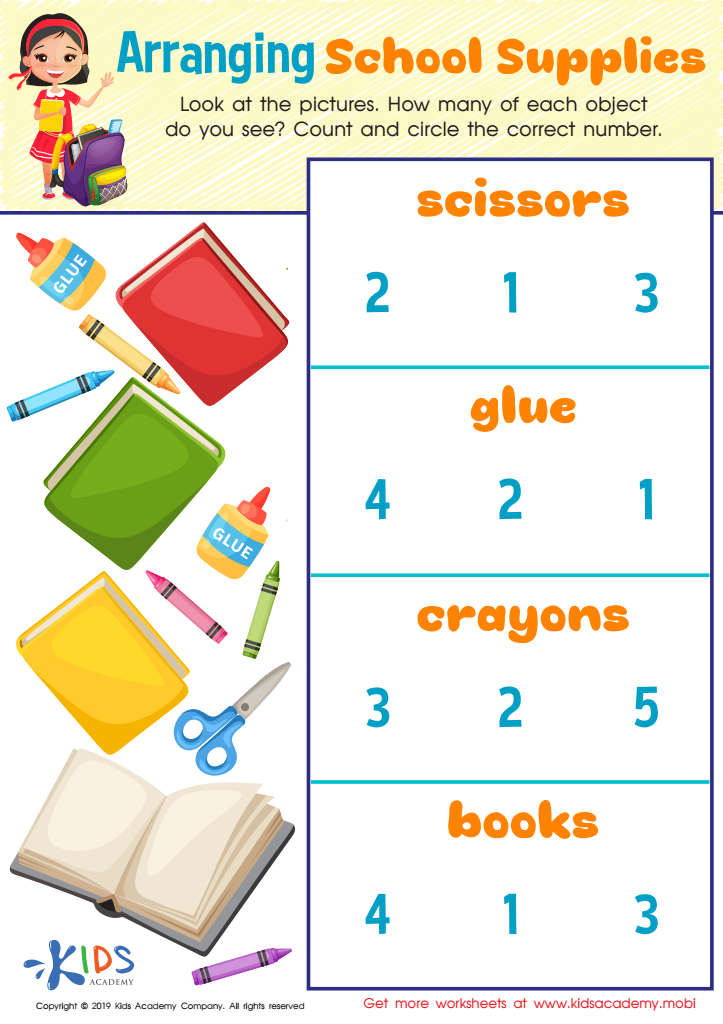
Arranging School Supplies Worksheet
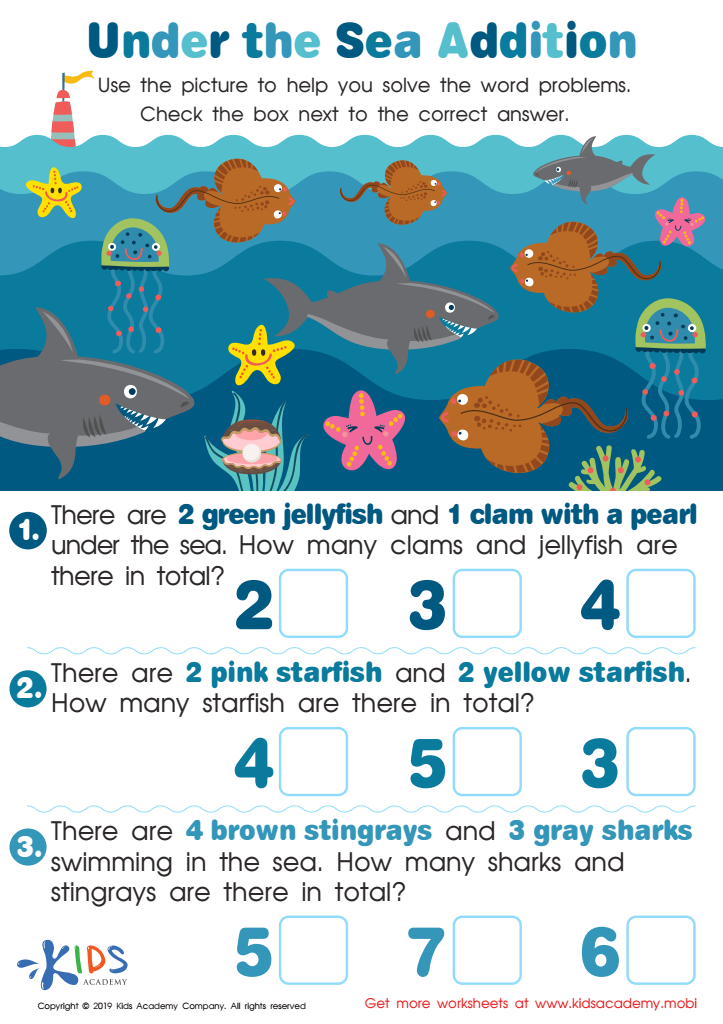
Under the Sea Addition Worksheet
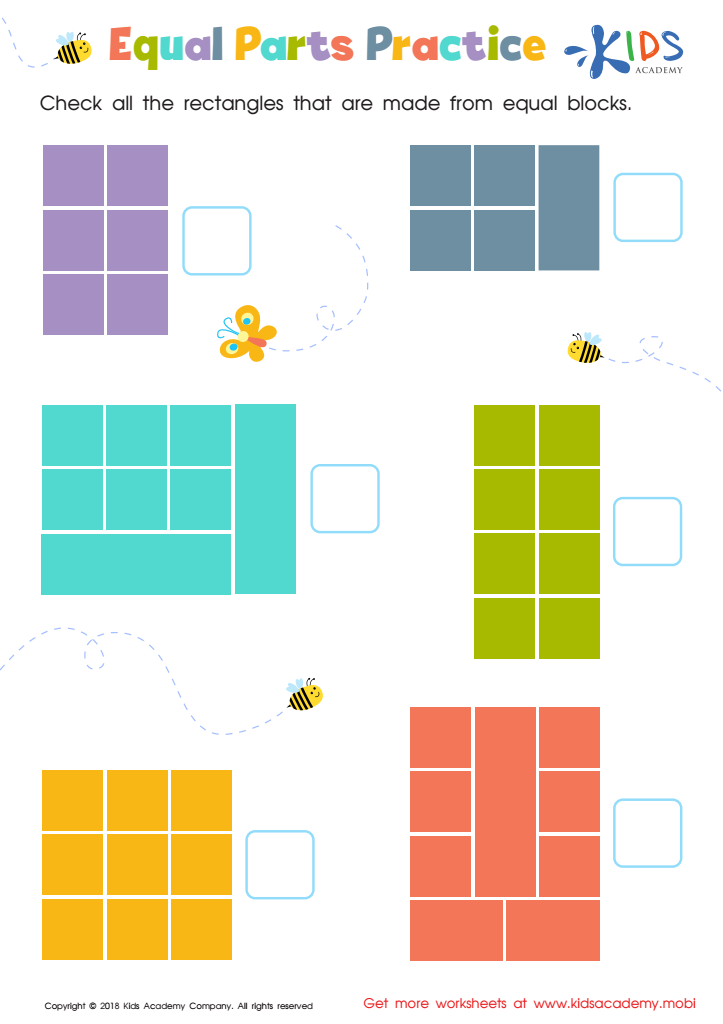
Equal Parts Practice Worksheet
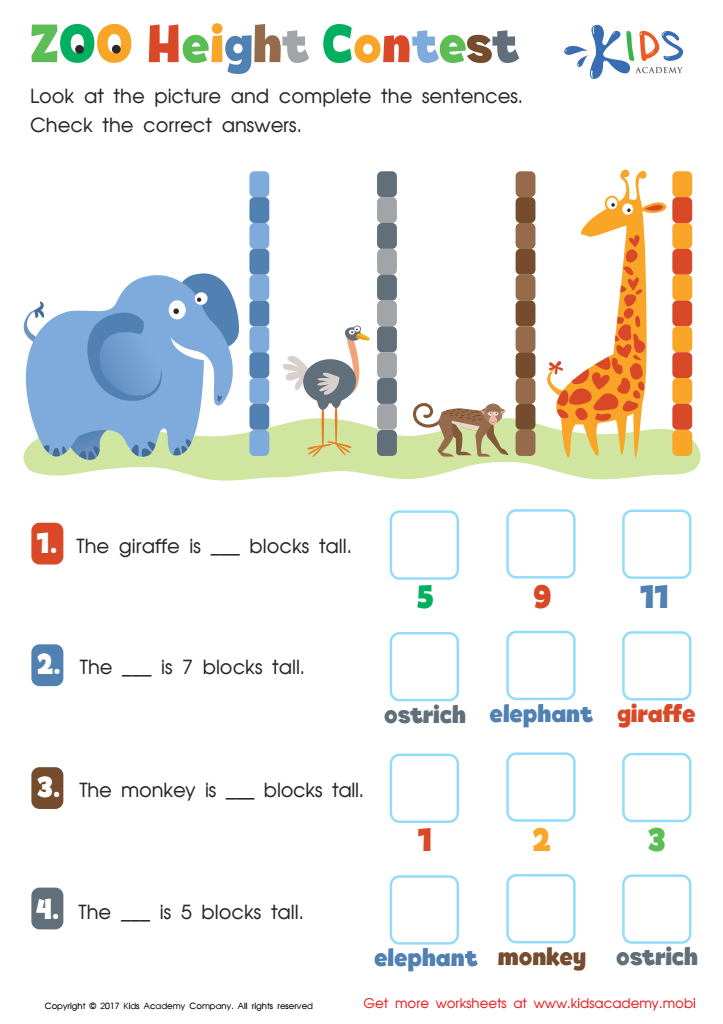
Zoo Height Contest Worksheet







Improving counting skills for children aged 3-9 is essential for several reasons. First, counting forms the foundation of numeracy, a critical component of mathematics. Early proficiency in counting helps children develop a solid understanding of numbers, which is crucial as they progress to more complex math operations such as addition, subtraction, multiplication, and division.
Second, strong counting skills enhance cognitive development. When children count, they not only recognize and remember number sequences, but they also engage in pattern recognition, logical thinking, and problem-solving. These cognitive skills are transferable across various subjects and life situations, promoting overall intellectual growth.
Third, counting fluency fosters confidence and a positive attitude towards learning. When children master counting, they experience a sense of achievement. This boosts their self-esteem and motivates them to take on new challenges, not just in math but in other academic and social areas as well.
Finally, counting is a practical skill used in daily life. From recognizing quantities and managing time to performing tasks that require an understanding of sequence and order, counting is everywhere. Parents and teachers who invest in improving counting skills are not just teaching mathematics; they are equipping children with essential tools for everyday functioning and future success.








