Time reading skills Easy Worksheets for Ages 3-9
4 filtered results
-
From - To
Enhance your child's understanding of time with our "Time Reading Skills Easy Worksheets" designed specifically for ages 3-9! These engaging and interactive worksheets offer a fun way for young learners to master essential time-telling skills. Children will enjoy bright illustrations and hands-on activities that reinforce concepts such as identifying analog and digital clocks, understanding time intervals, and solving simple time-related problems. Each worksheet is tailored to gradually develop time-reading proficiency, making learning enjoyable and effective. Whether at home or in the classroom, these worksheets are perfect for fostering early math and literacy skills in a captivating and age-appropriate manner.
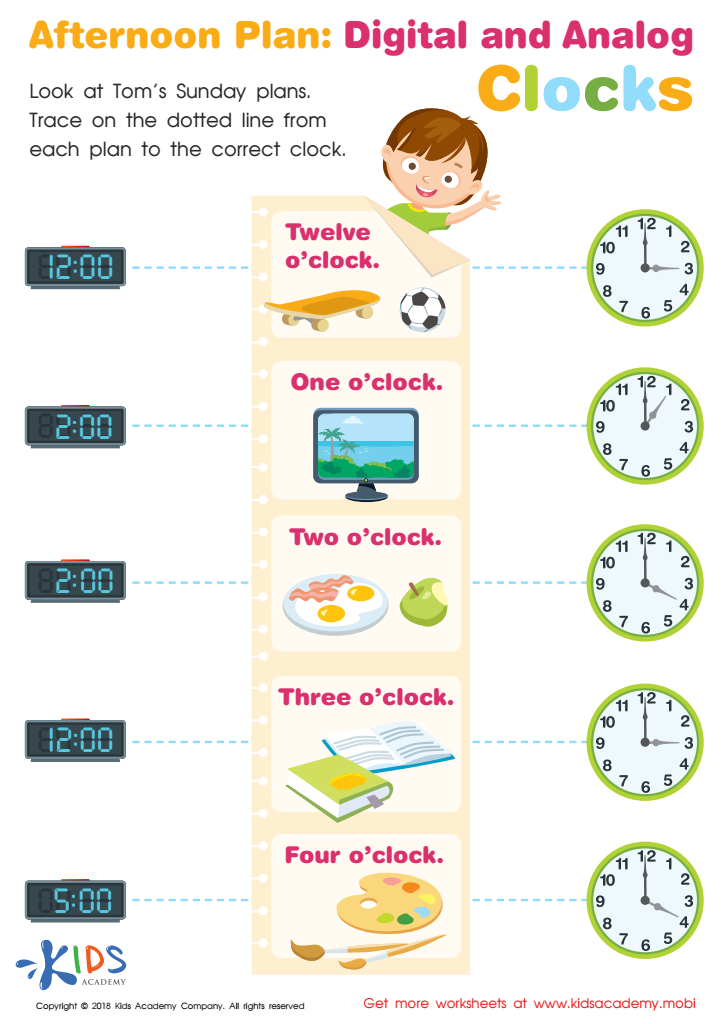
Afternoon Plan: Digital and Analog Clocks Worksheet
 Assign to My Students
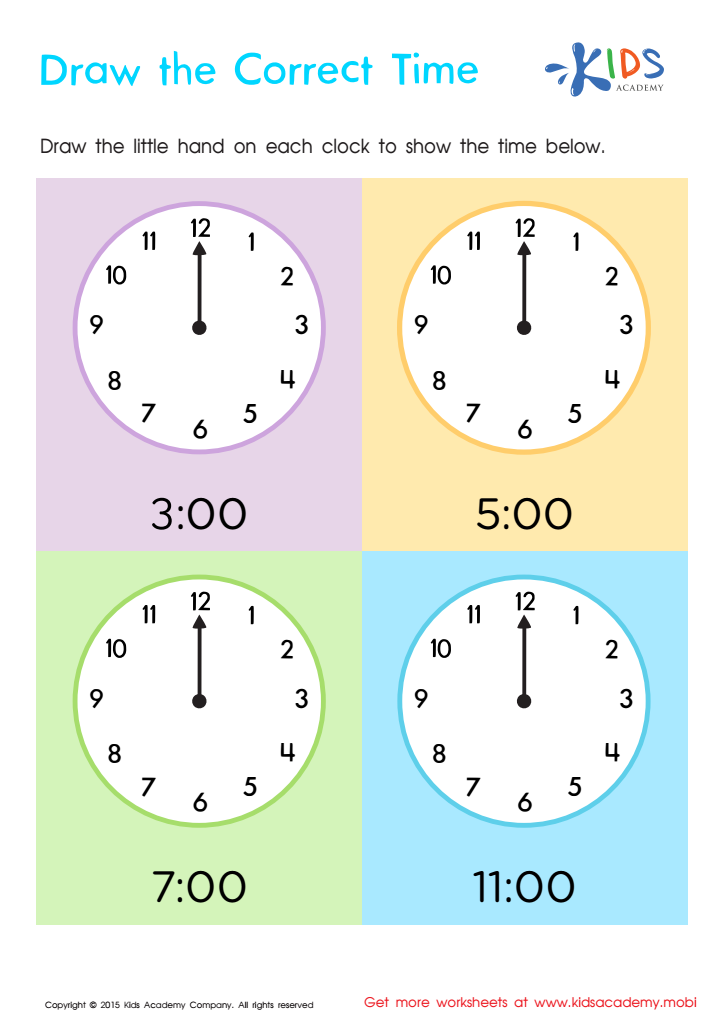
Telling The Time Worksheet: Part 1
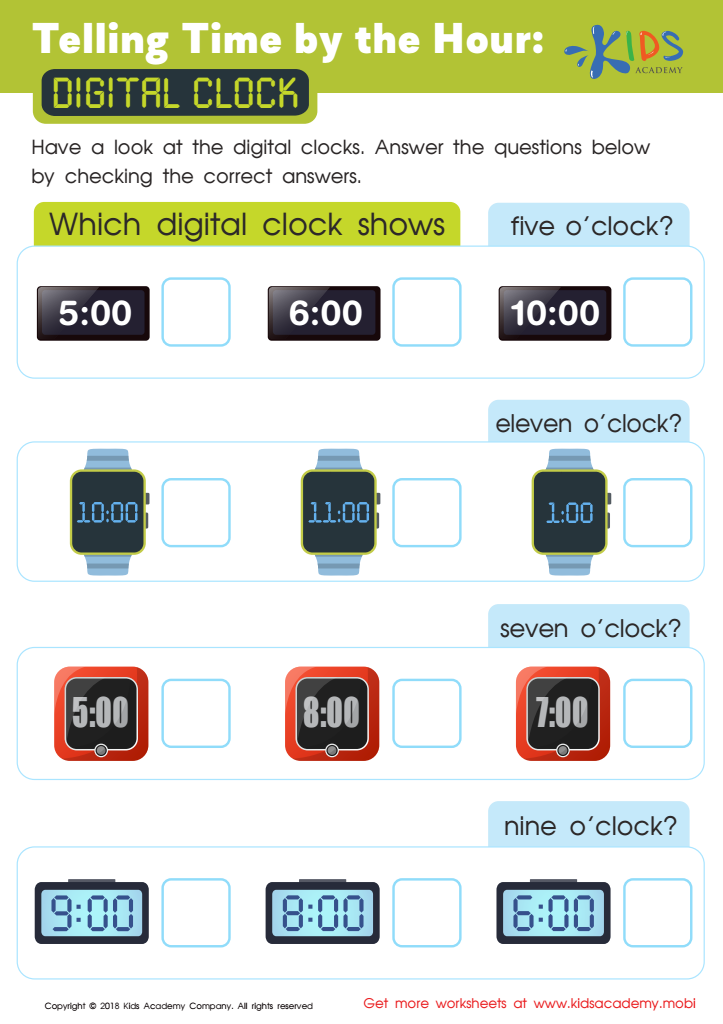
Telling Time by the Hour: Digital Clock Worksheet
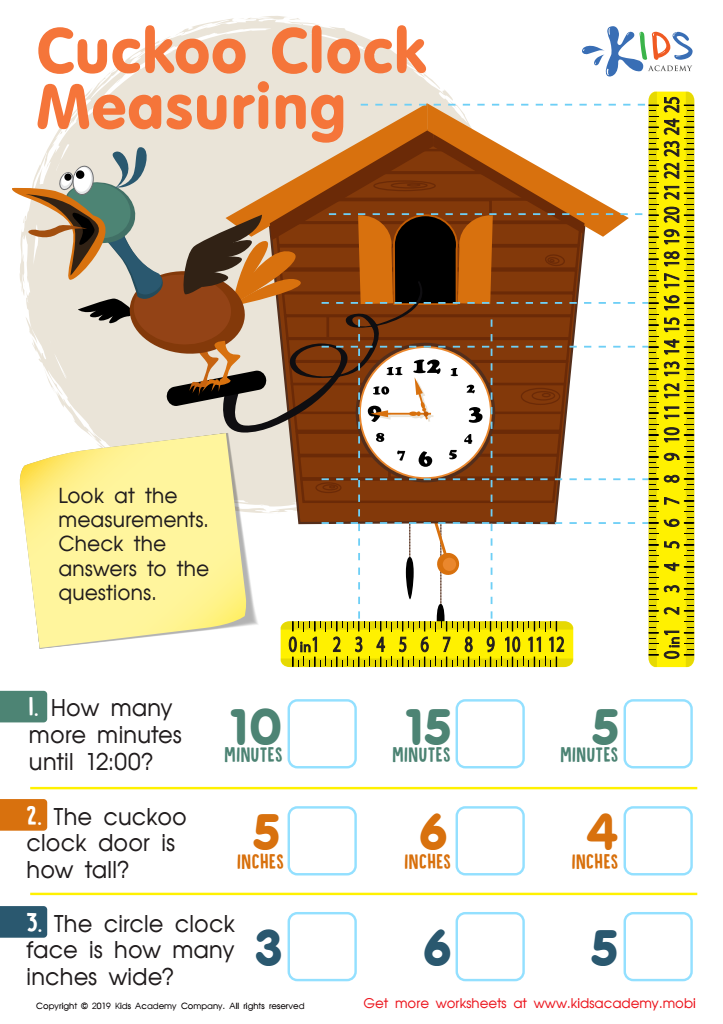
Cuckoo Clock Measuring Worksheet







Reading skills are foundational for children's overall development, particularly for ages 3-9, a crucial period for language acquisition and cognitive growth. As children engage with stories and text, they improve their vocabulary, comprehension, and communication abilities. These skills are not only essential for academic success but also for fostering a lifelong love of learning.
Parents and teachers should care about reading skills because they directly influence a child's confidence and motivation. Mastery in reading empowers children to explore new worlds through literature, enhances critical thinking, and promotes creativity. Moreover, strong reading skills correlate with better performance in other subjects, supporting a more holistic educational experience.
Additionally, reading often serves as a vehicle for social and emotional development. Storytelling can instill values, empathy, and understanding of diverse perspectives, all essential in today's interconnected world. By nurturing reading habits, parents and teachers can provide children with the tools they need to succeed in school and beyond.
Encouraging regular reading—through shared storytime or reading exercises—can be a powerful bonding experience, reinforcing the idea that learning is enjoyable. Ultimately, investing time in developing reading skills early on lays the groundwork for children's future academic and personal achievements.








