
Vocabulary enhancement Easy Addition & Subtraction Worksheets for Ages 3-9
5 filtered results
Difficulty Level
Grade
Age
-
From - To
Subject
Activity
Standards
Boost your child's learning experience with our Vocabulary Enhancement Easy Addition & Subtraction Worksheets for ages 3-9! Designed to blend foundational math skills with vocabulary development, these engaging worksheets help young learners grasp basic addition and subtraction concepts while enhancing their word recognition. Our thoughtfully crafted activities encourage fun, interactive practice, helping kids connect math terminology with numerical operations. Ideal for both classroom and home learning, these worksheets provide step-by-step guidance to boost confidence in young learners. Perfect for children who are beginning their math journeys, these resources promise to make learning enjoyable and effective. Start enhancing their skills today!
Favorites
With answer key
Interactive
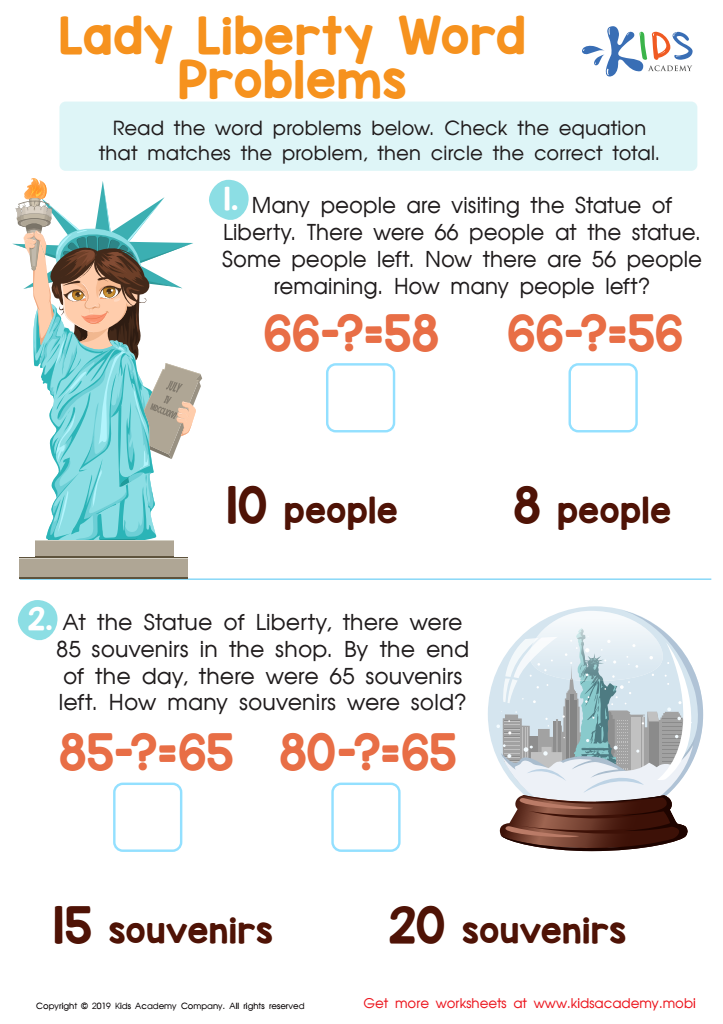
Lady Liberty Worksheet
Have your students ever been to the Statue of Liberty? Ask them to tell you where it is and what it looks like. Every day, the statue draws a crowd admiring its beauty, taking pics and learning more about it. Pose a word problem and help them check the answer. Circle the correct total. (80 words)
 Assign to My Students
Lady Liberty Worksheet
Worksheet
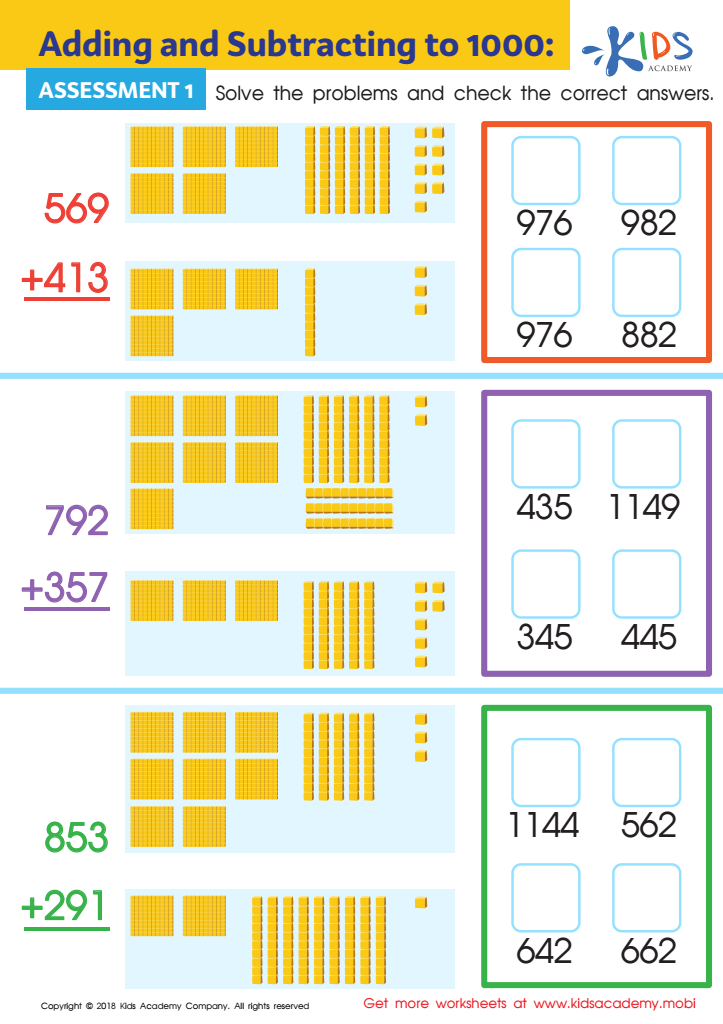
Adding and Subtracting to 1 Worksheet: Assessment 1
This assessment worksheet tests your child's addition skills. It has 3 3-digit problems with base ten blocks for visual aid. Encourage learners to use these visuals for better understanding. When they have solved the problems, they can check the box with the right answer. It's a quick and easy way to gauge numeracy development.
Adding and Subtracting to 1 Worksheet: Assessment 1
Worksheet
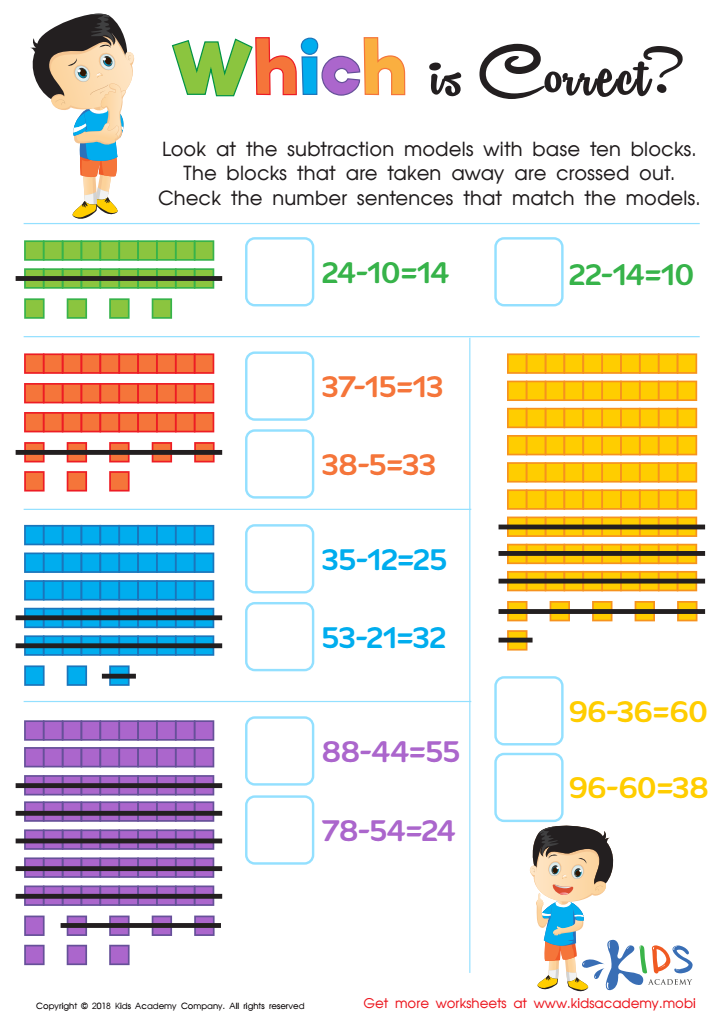
Which Is Correct? Math Worksheet
Young mathematicians will gain confidence solving subtraction problems with this bright, colorful worksheet. They'll use base ten blocks representations, then pick the right number sentence to match. It's great practice for developing number sense, helping them excel in higher-level math.
Which Is Correct? Math Worksheet
Worksheet
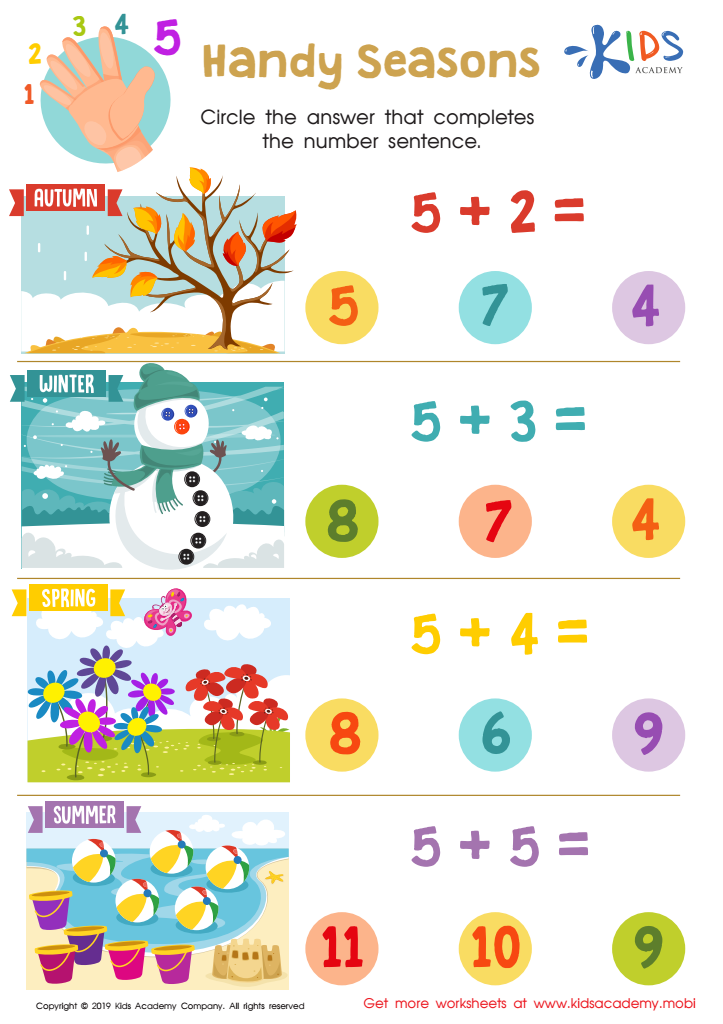
Handy Seasons Worksheet
Help your kids understand number sentences with this fun and colorful worksheet, featuring 4 pictures. Get them to identify each season, then circle the answer that completes the number sentence given. Make math exciting and get your kids excited to learn!
Handy Seasons Worksheet
Worksheet
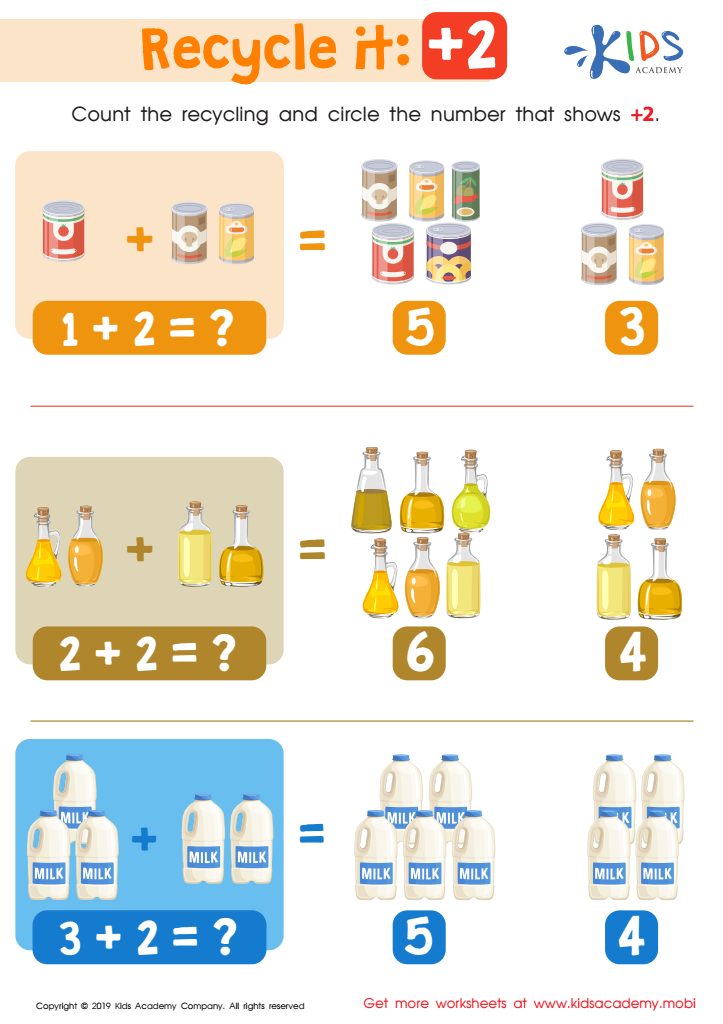
Recycle It: +2 Worksheet
Your kindergartners likely count everything they see, which is great for practice. Give them simple exercises such as in this worksheet to stimulate their minds. Ask them to count the recycling cans and then circle the number that shows +2.
Recycle It: +2 Worksheet
Worksheet
Join Kids Academy for Free
Who is primarily going to use this learning content?








Parents and teachers should prioritize vocabulary enhancement and basic math skills like addition and subtraction for children aged 3-9 because these foundational competencies are crucial for lifelong learning and development. A rich vocabulary fosters effective communication, critical thinking, and social interaction, while a grasp of basic math concepts builds a solid framework for more advanced mathematical reasoning.
At this young age, children’s brains are remarkably pliable, making it an ideal time to introduce new words and phrases while reinforcing early numeracy skills. By enriching their vocabulary, children gain confidence in expressing themselves, which is directly linked to academic success and emotional development. It also fosters a love for reading and exploration.
Simultaneously, easy addition and subtraction lay the groundwork for future math skills, helping children understand concepts such as counting, measurement, and problem-solving. Incorporating these essential skills into everyday activities—through games, songs, or storytelling—makes learning engaging and intuitive. Ultimately, helping children enhance their vocabulary and math abilities not only enhances their current academic performance but also prepares them for future educational challenges, creating confident learners ready to navigate a complex world. In short, investing time in these areas today reaps rewards in children's futures.








