Easy Multiplication Worksheets for Ages 3-9 - Page 2
29 filtered results
-
From - To
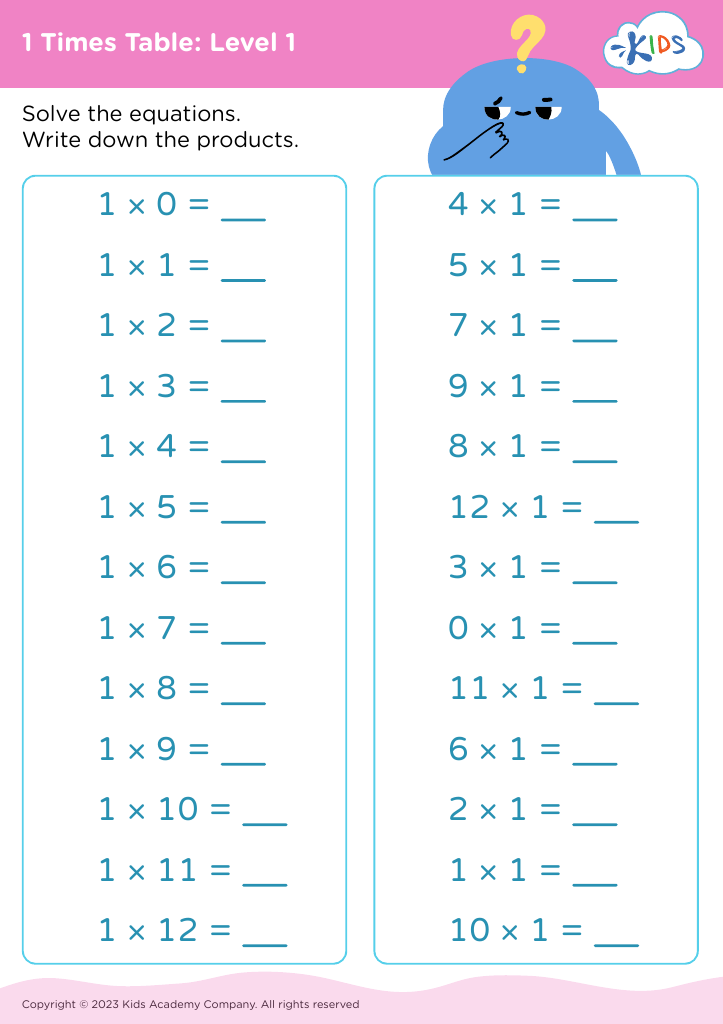
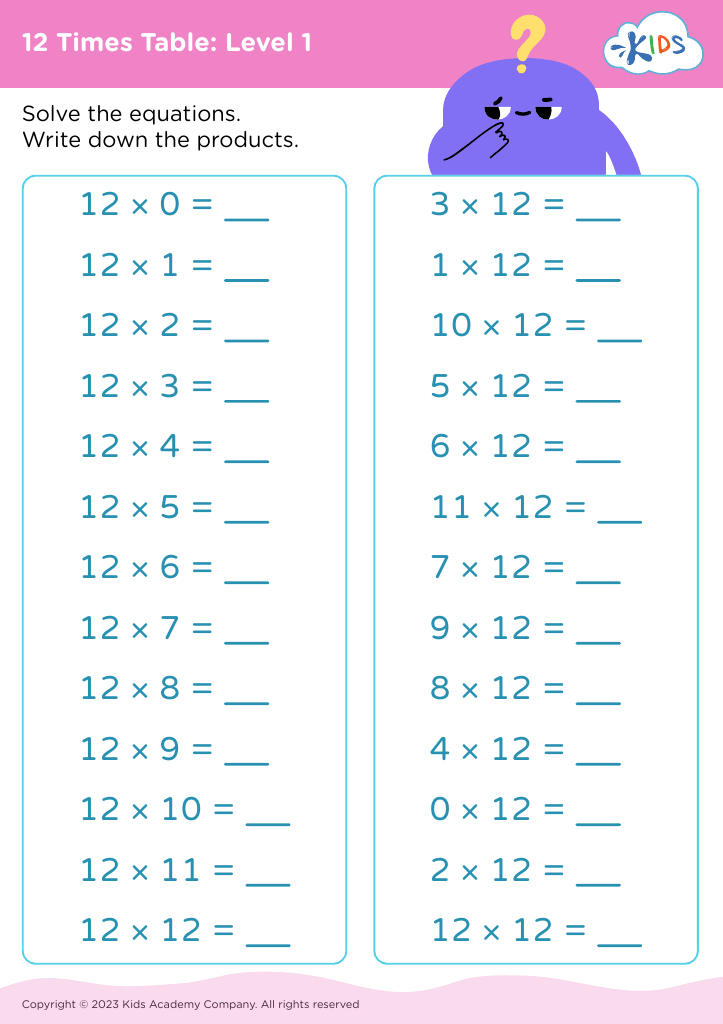
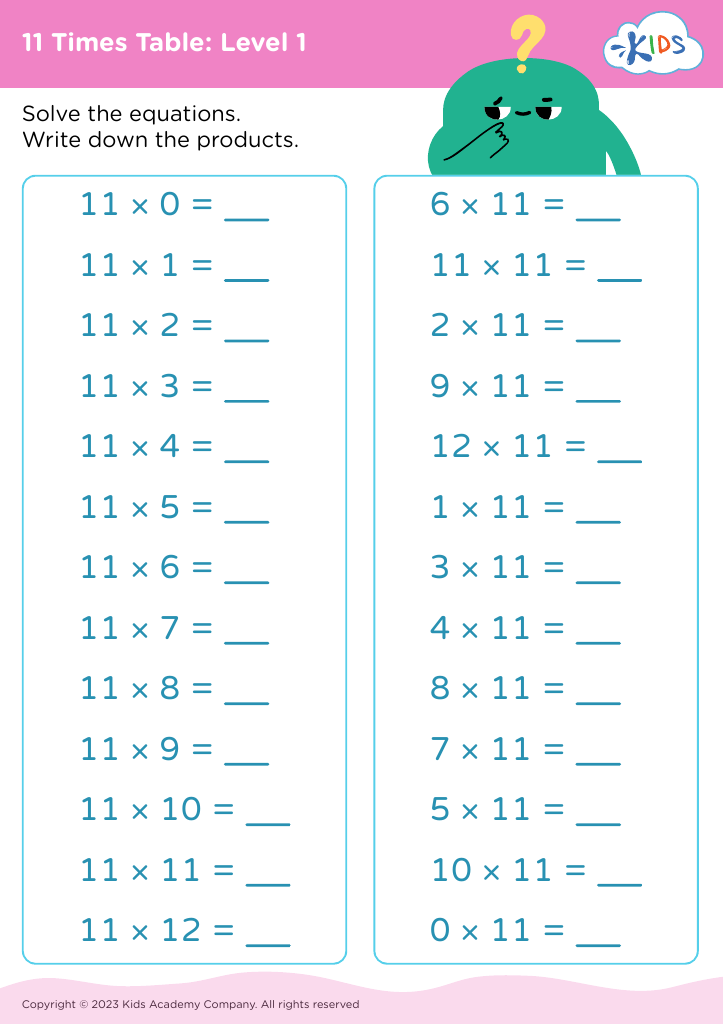
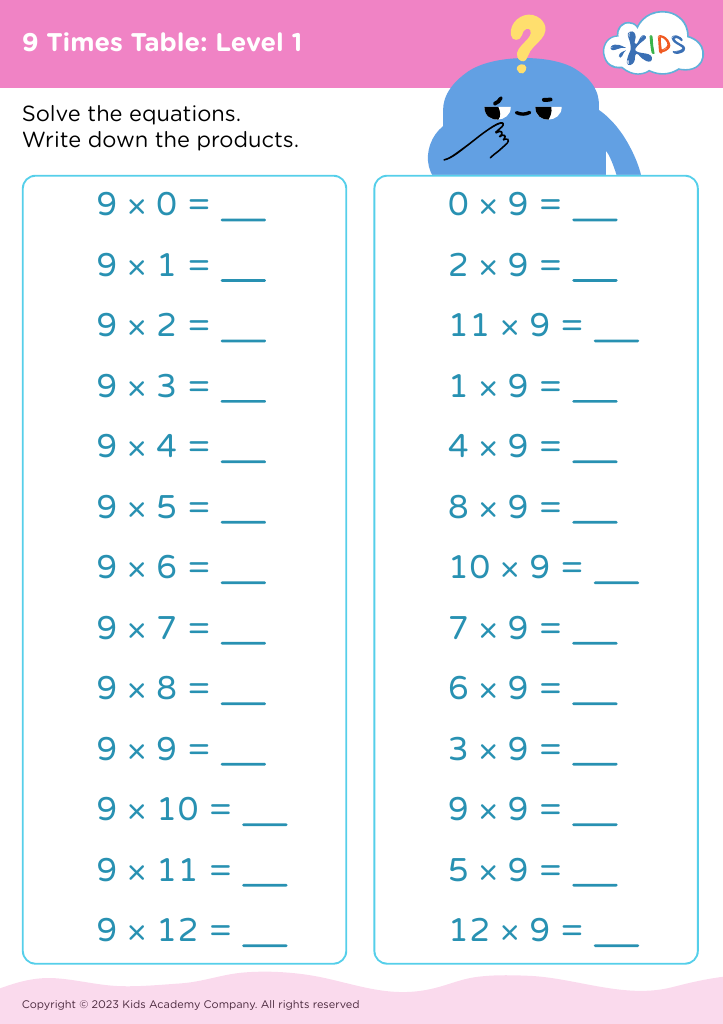
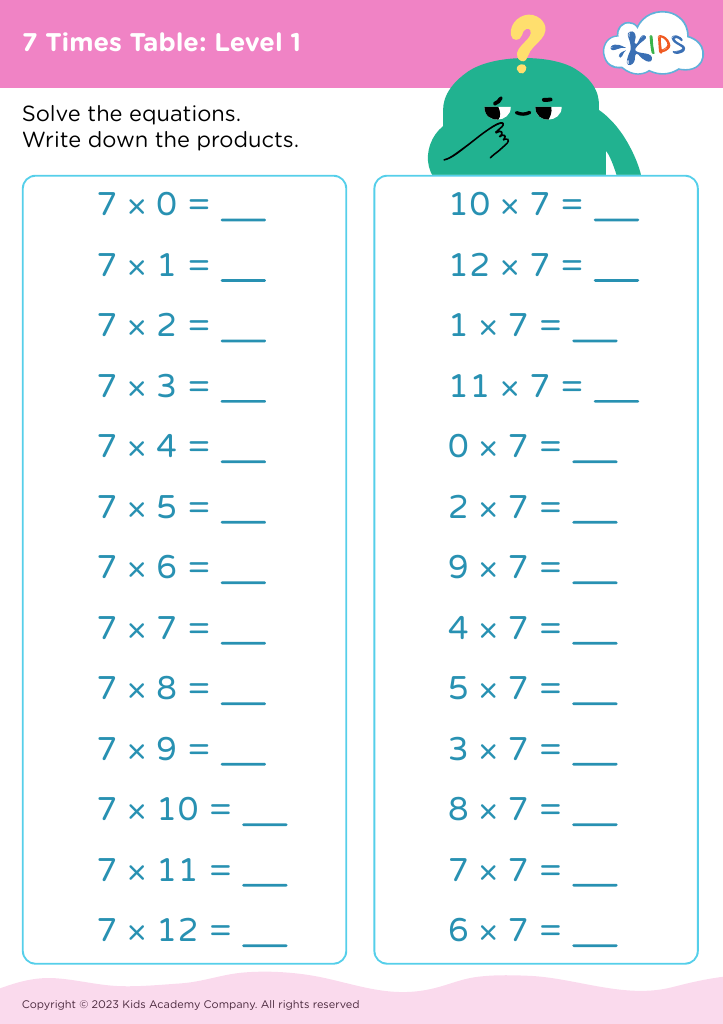








Easy multiplication activities for ages 3-9 are crucial because they lay the foundation for strong mathematical skills. At a young age, children have an incredible capacity to absorb new information, and introducing them to multiplication concepts early on can foster a positive attitude toward math. Multiplication is not just about numbers; it anchors more complex mathematical operations such as division, fractions, and algebra. By making multiplication fun and easy, parents and teachers can bolster a child's confidence and interest in the subject.
Early familiarity with multiplication helps develop problem-solving skills and logical thinking. It encourages pattern recognition, which is essential for all future math learning. For instance, understanding that 3 groups of 4 make 12 helps children grasp more abstract ideas like area and scaling in later grades.
Incorporating playful methods—like songs, games, and hands-on activities—makes learning multiplication enjoyable. These methods are particularly effective for young children who benefit from engaging, multi-sensory experiences. When parents and teachers prioritize easy multiplication at a young age, they are not just teaching children to multiply; they are equipping them with lifelong learning tools. This early support can make math a subject of strength and interest rather than anxiety and aversion, promoting a smoother educational journey.








