Subtraction practice Easy Subtraction Worksheets for Ages 3-9
22 filtered results
-
From - To
Discover our fun and engaging subtraction practice worksheets designed specifically for children ages 3-9. These easy-to-follow sheets help young learners develop foundational math skills while making subtraction enjoyable. Each worksheet is thoughtfully crafted to suit the learning needs of varying age groups and skill levels, ensuring gradual progression from simple to more complex problems. Ideal for home or classroom use, our worksheets are an excellent resource for reinforcing essential subtraction concepts. Printable and easily accessible, parents and teachers can provide limitless practice opportunities, fostering confidence and competence in young mathematicians. Start exploring today and watch your child's math skills soar!
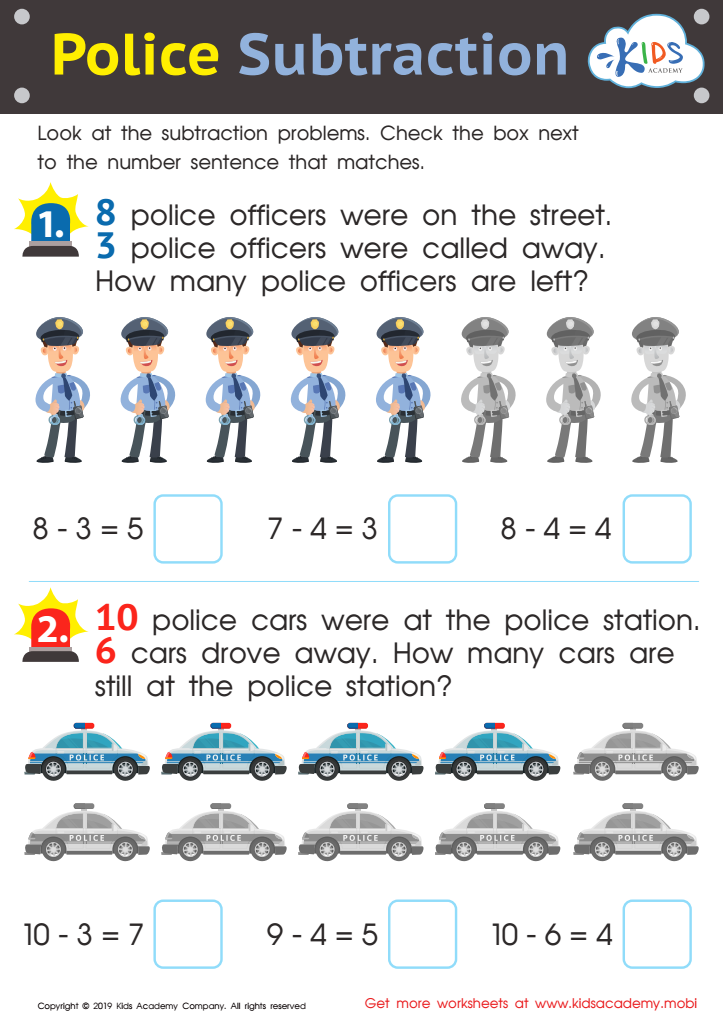
Police Subtraction Worksheet
 Assign to My Students
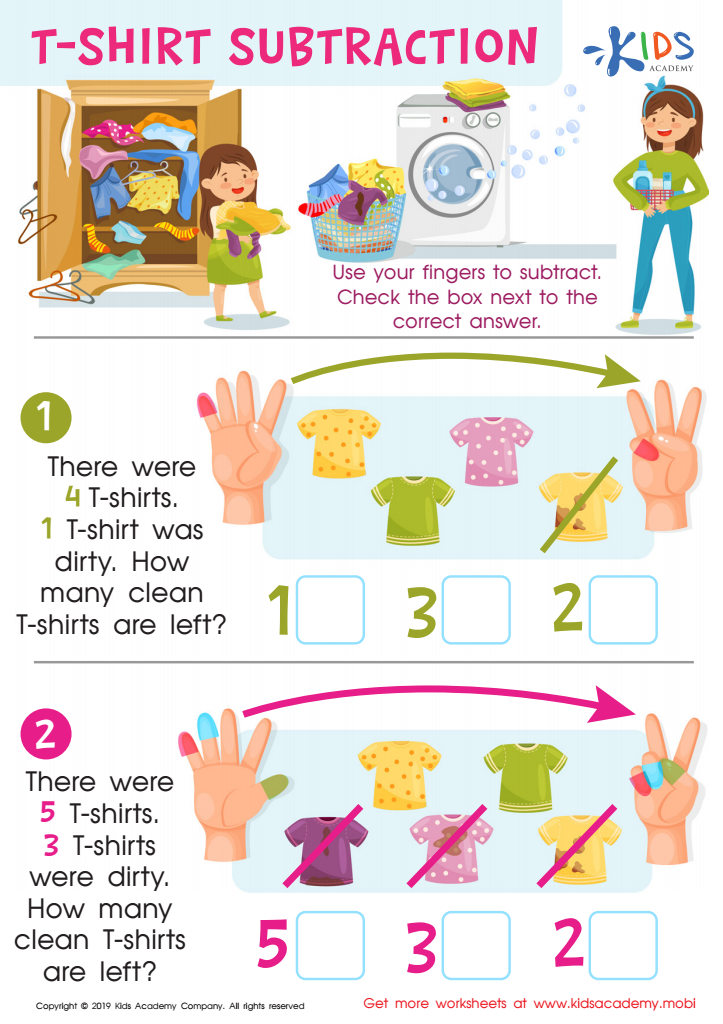
T-shirt Subtraction Worksheet
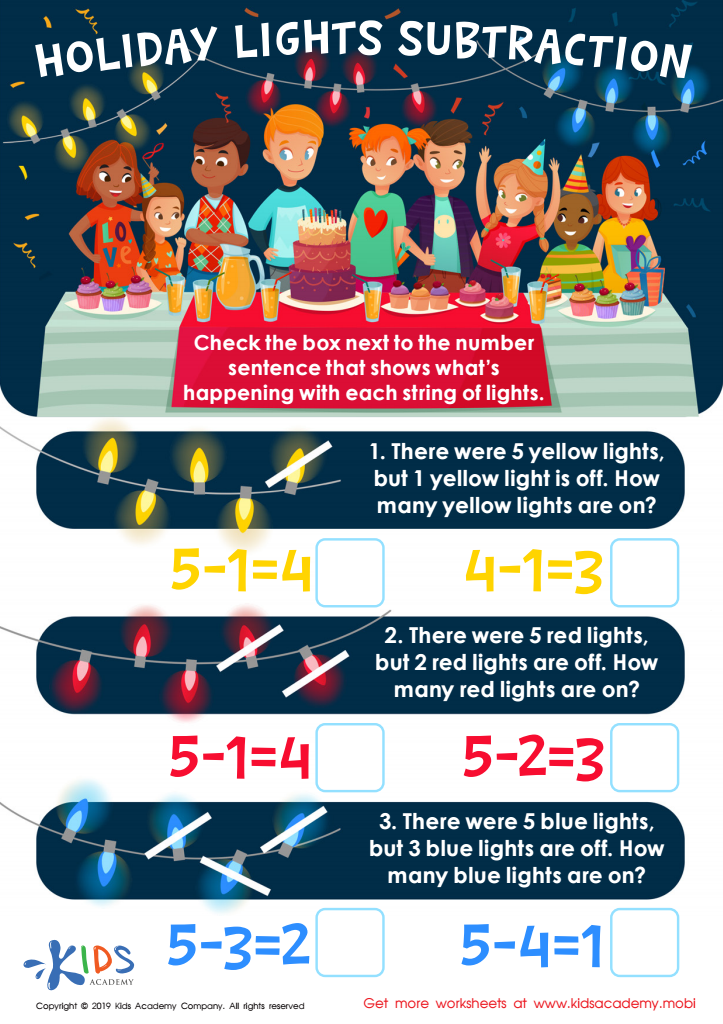
Holiday Lights Subtraction Worksheet
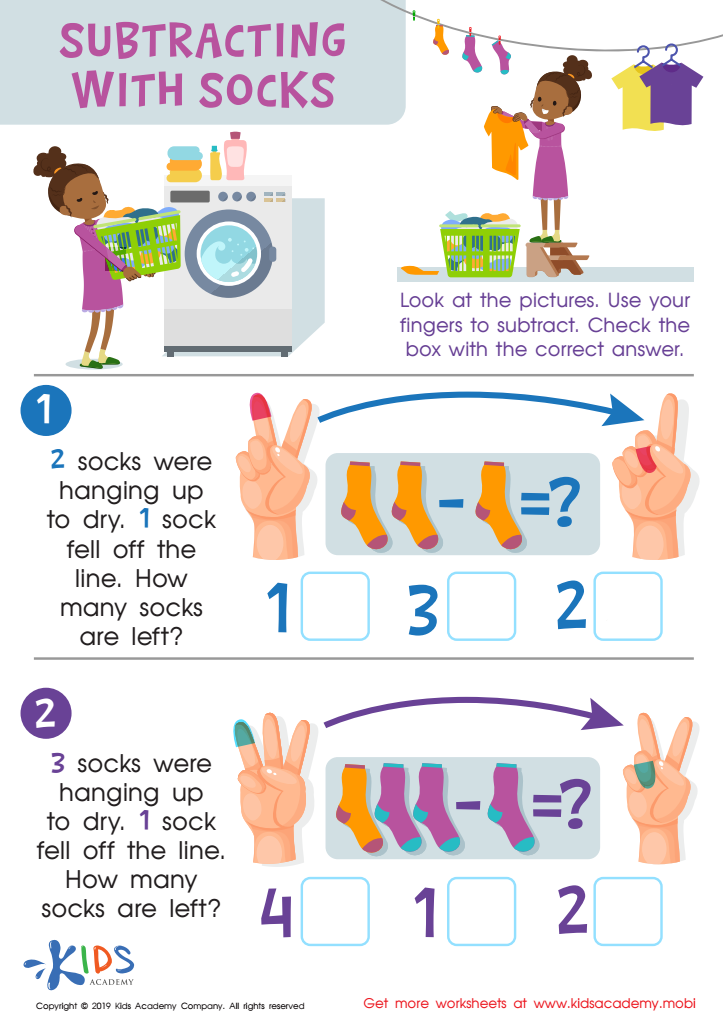
Subtracting Socks Worksheet
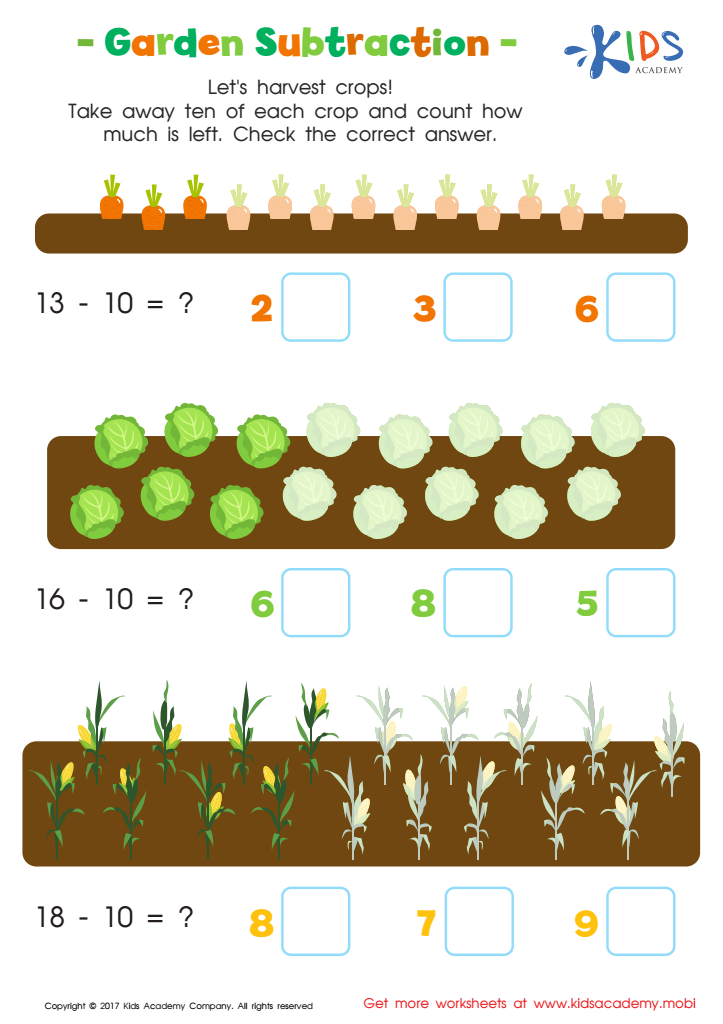
Garden Subtraction Worksheet
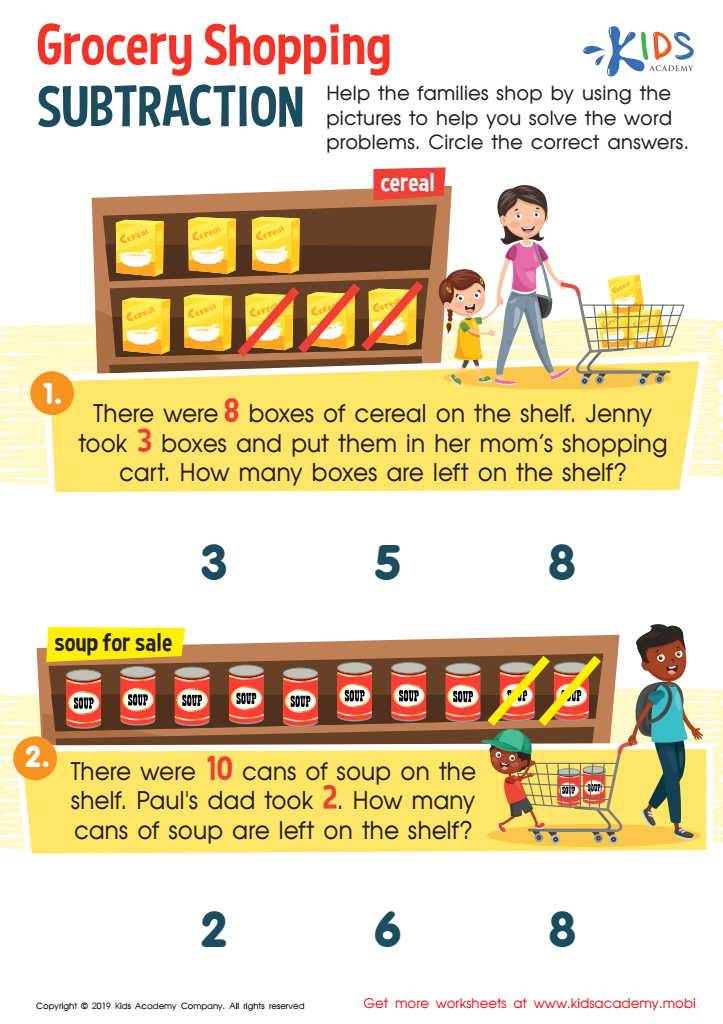
Grocery Shopping Subtraction Worksheet
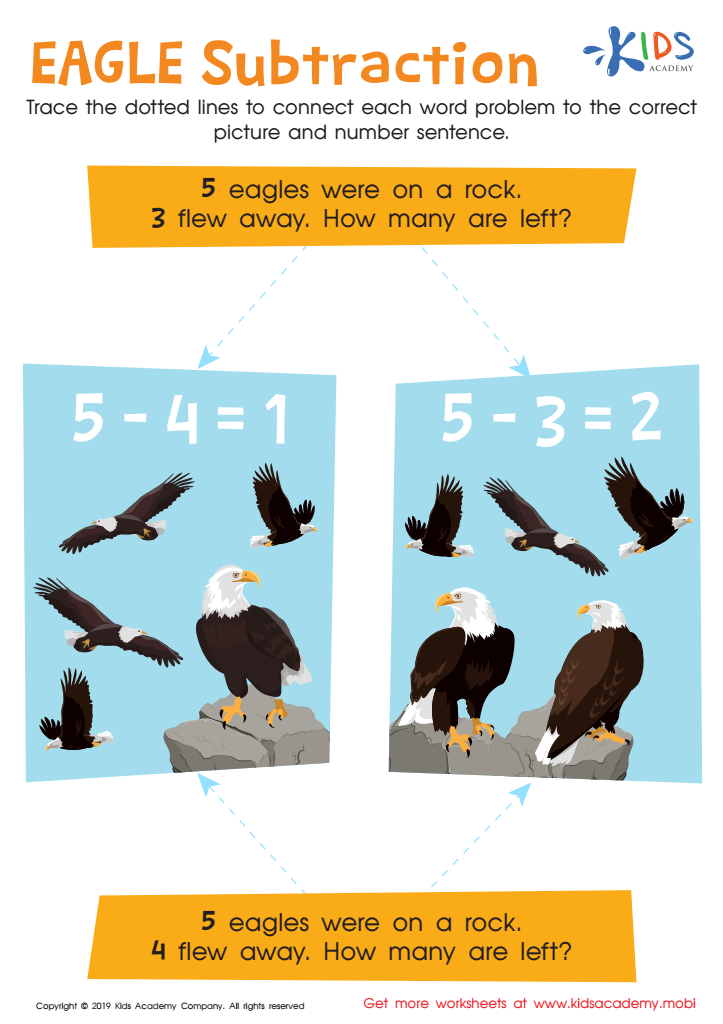
Eagle Subtraction Worksheet
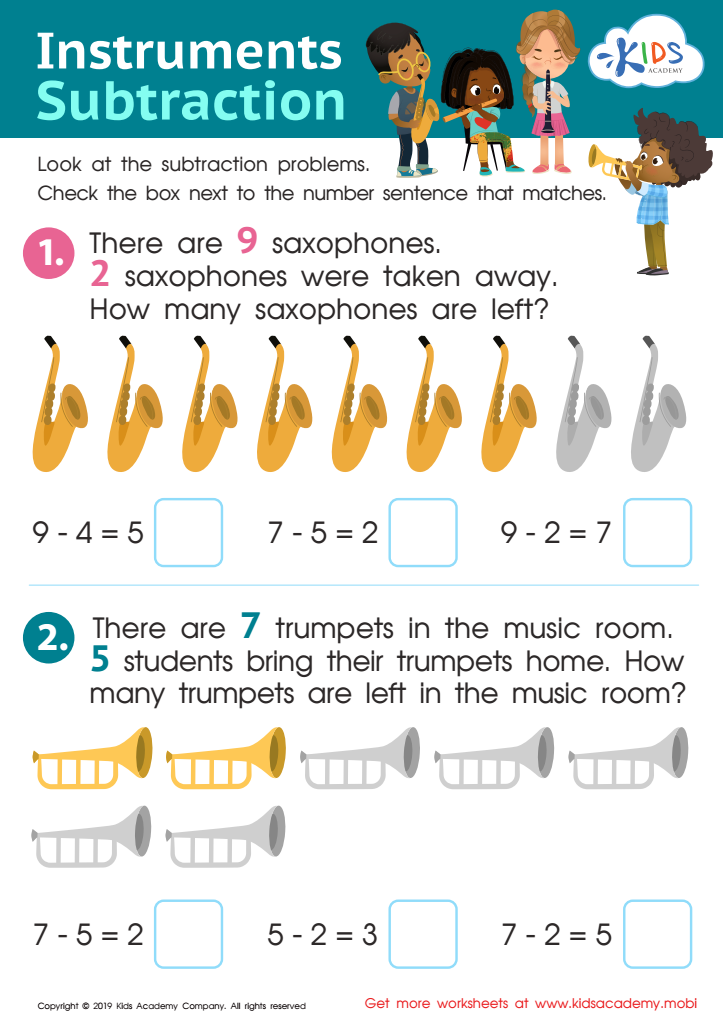
Instrument Subtraction Worksheet
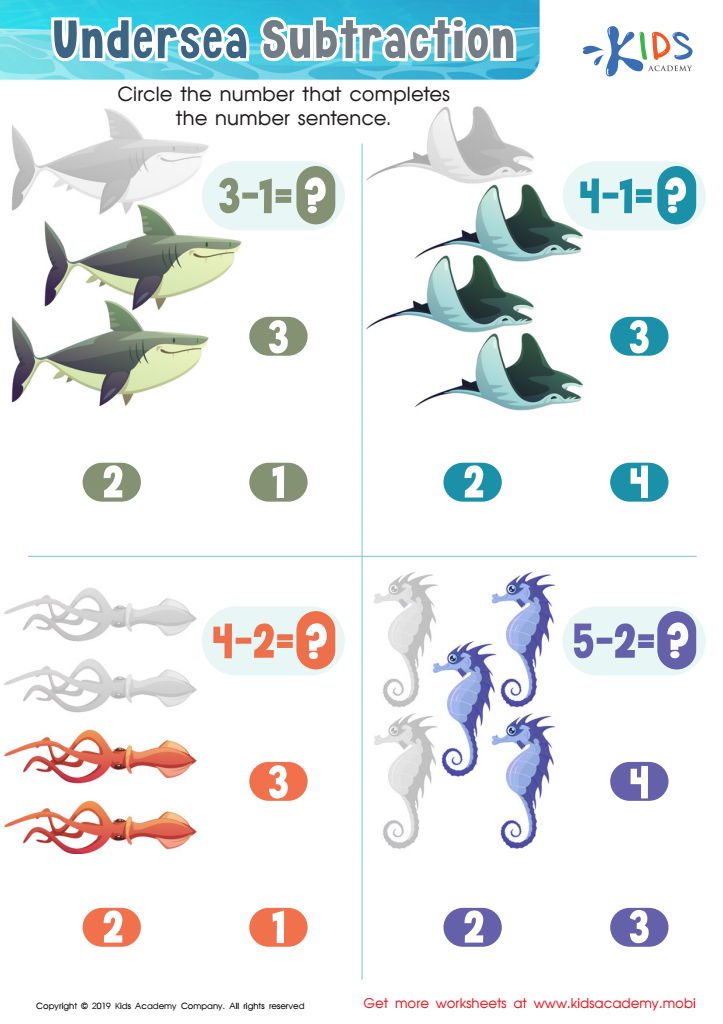
Undersea Subtraction Worksheet
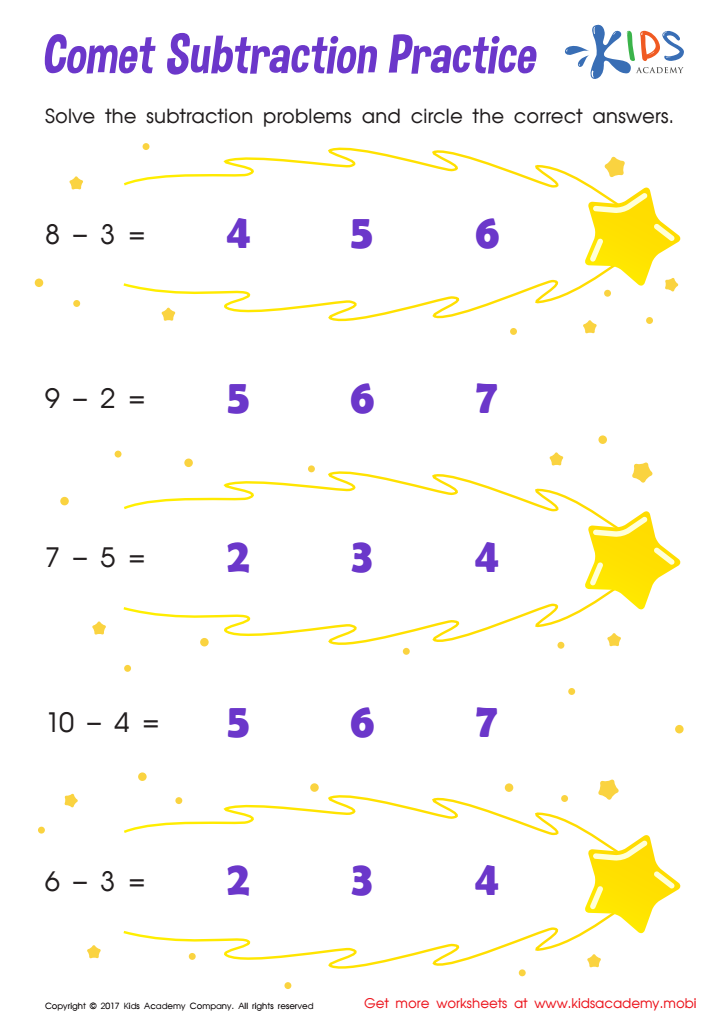
Comet Subtraction Practice Substraction Worksheet
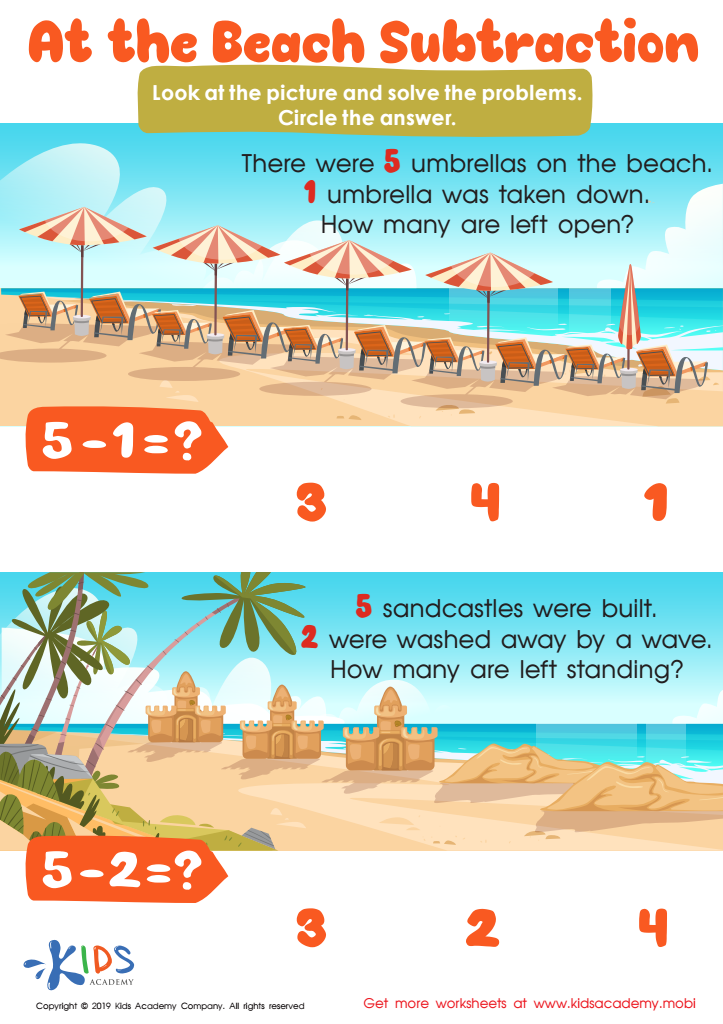
At the Beach Subtraction Worksheet
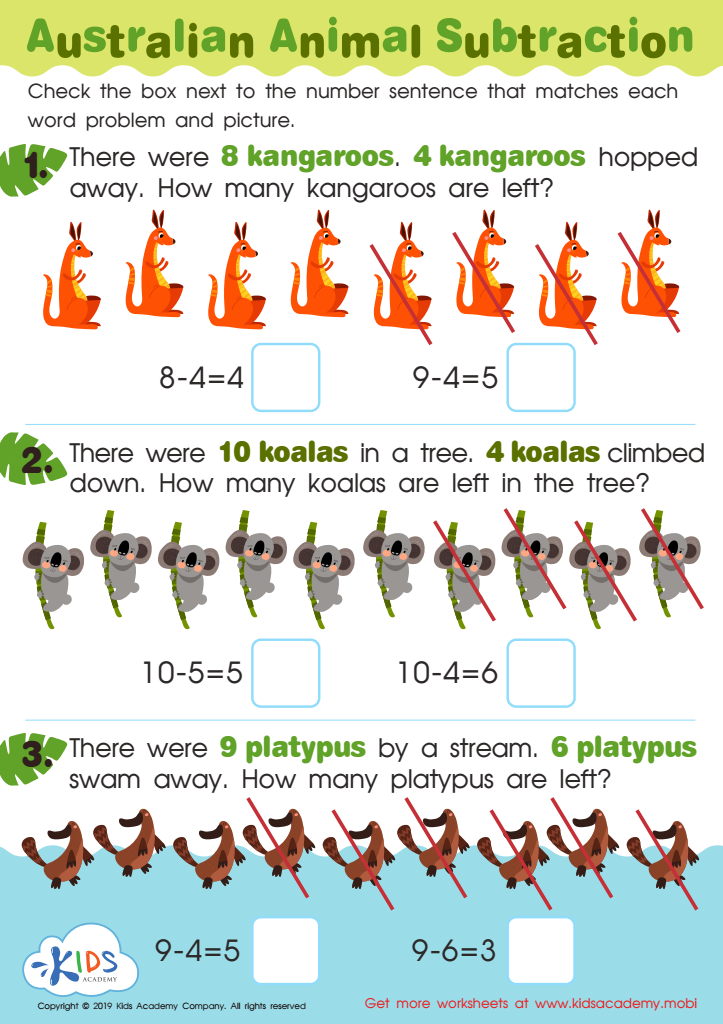
Australian Animal Subtraction Worksheet
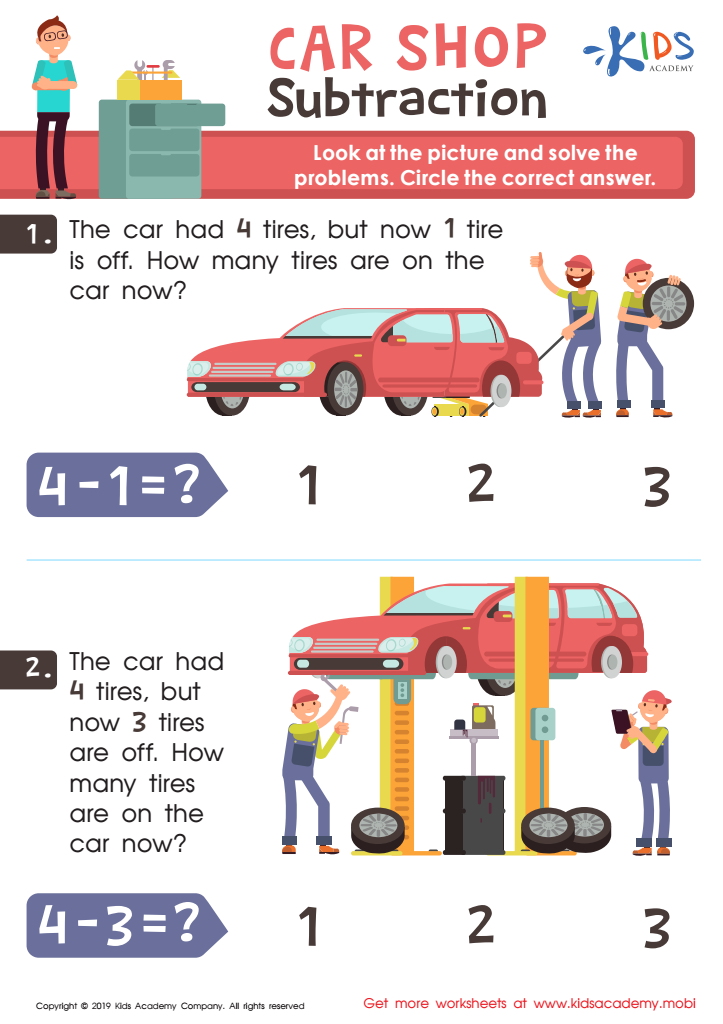
Car Shop Subtraction Worksheet
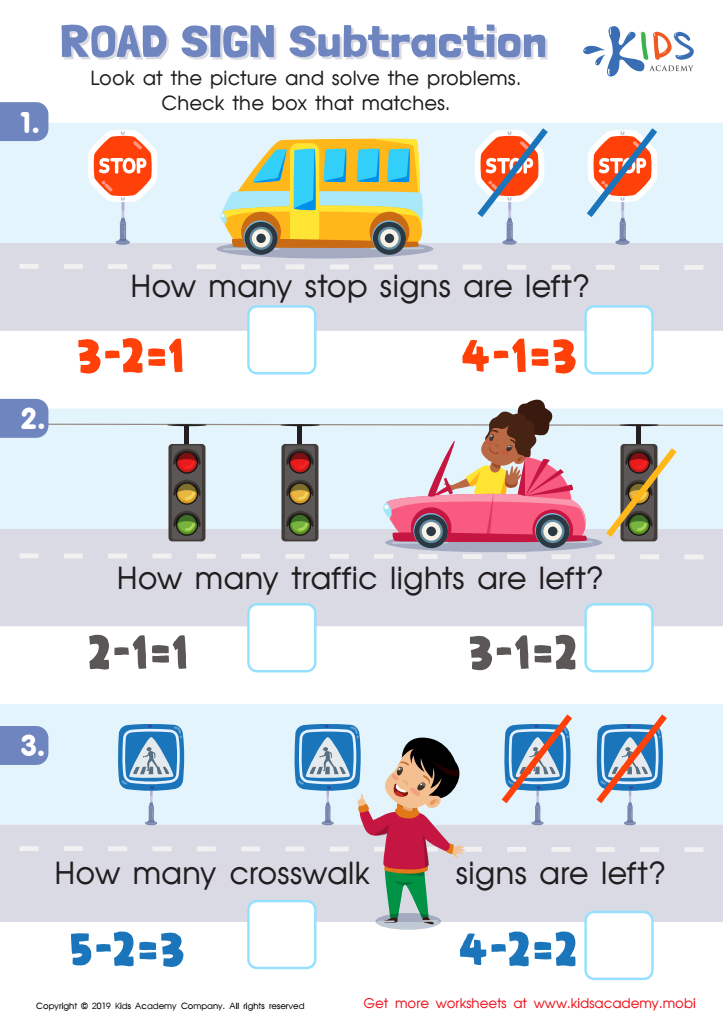
Road Sign Subtraction Worksheet
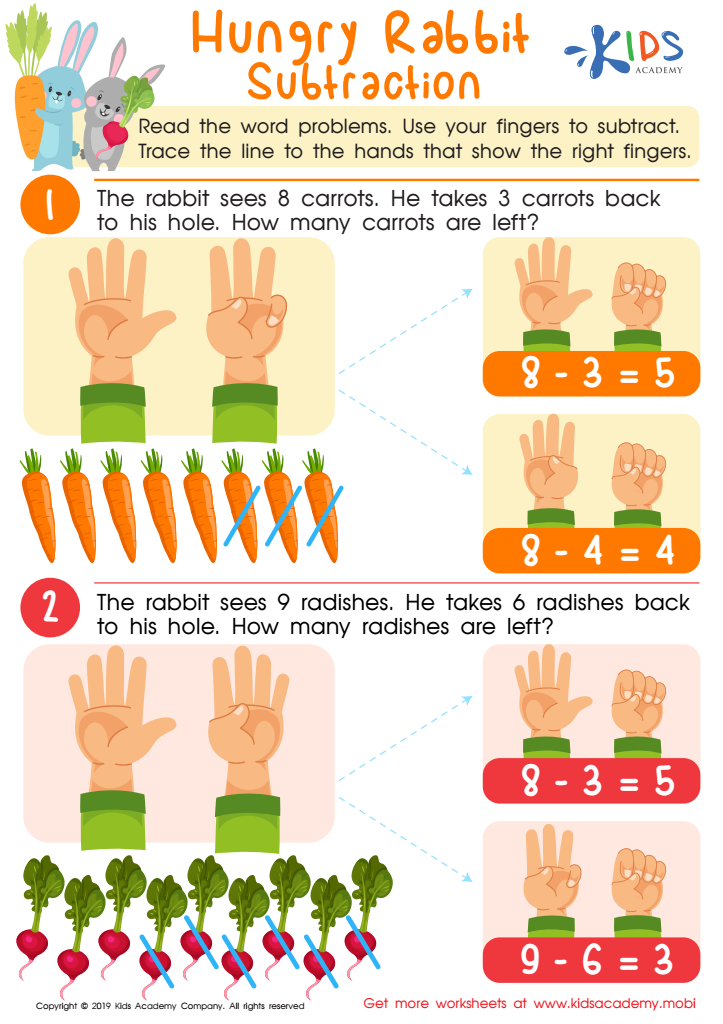
Hungry Rabbit Subtraction Worksheet
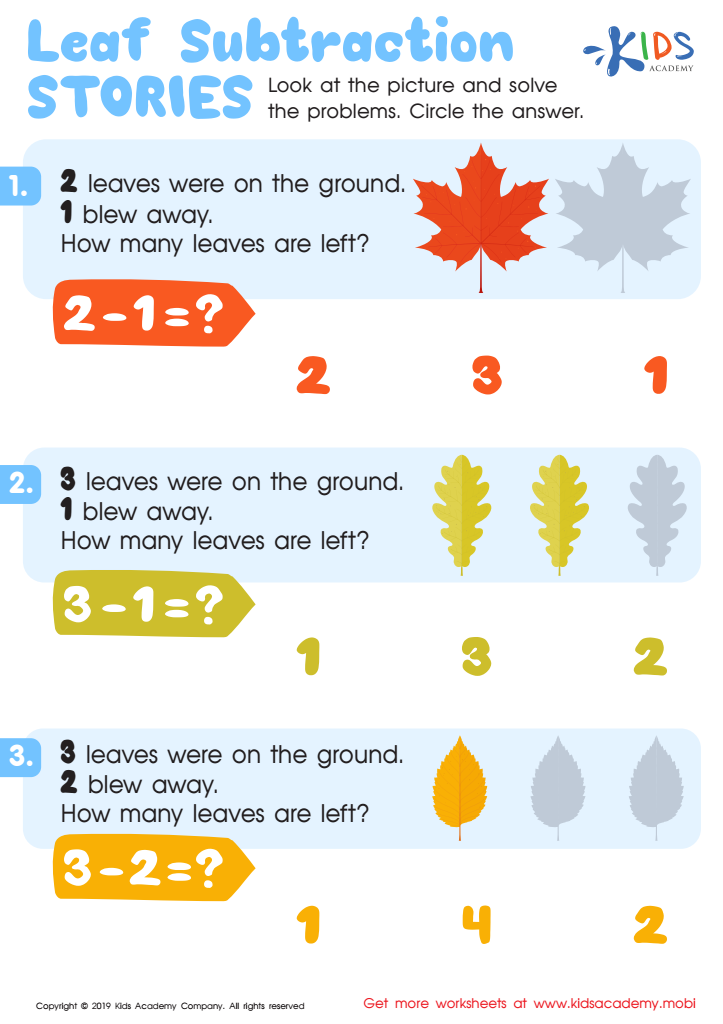
Leaf Subtraction Stories Worksheet
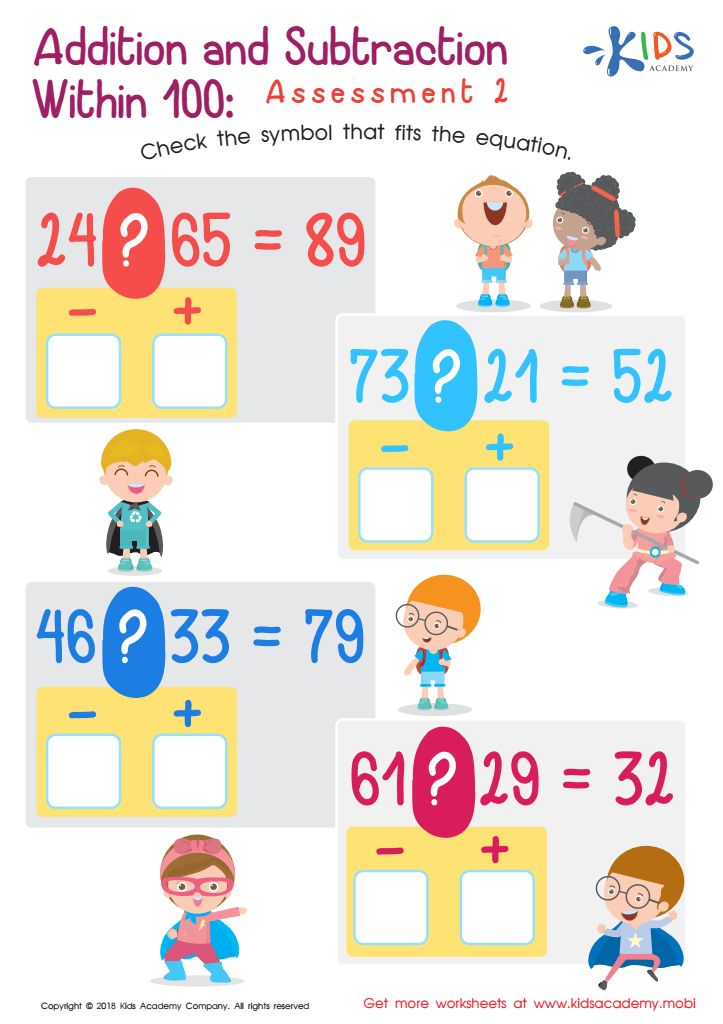
Addition and Subtraction Within 1: Assessment 2 Worksheet
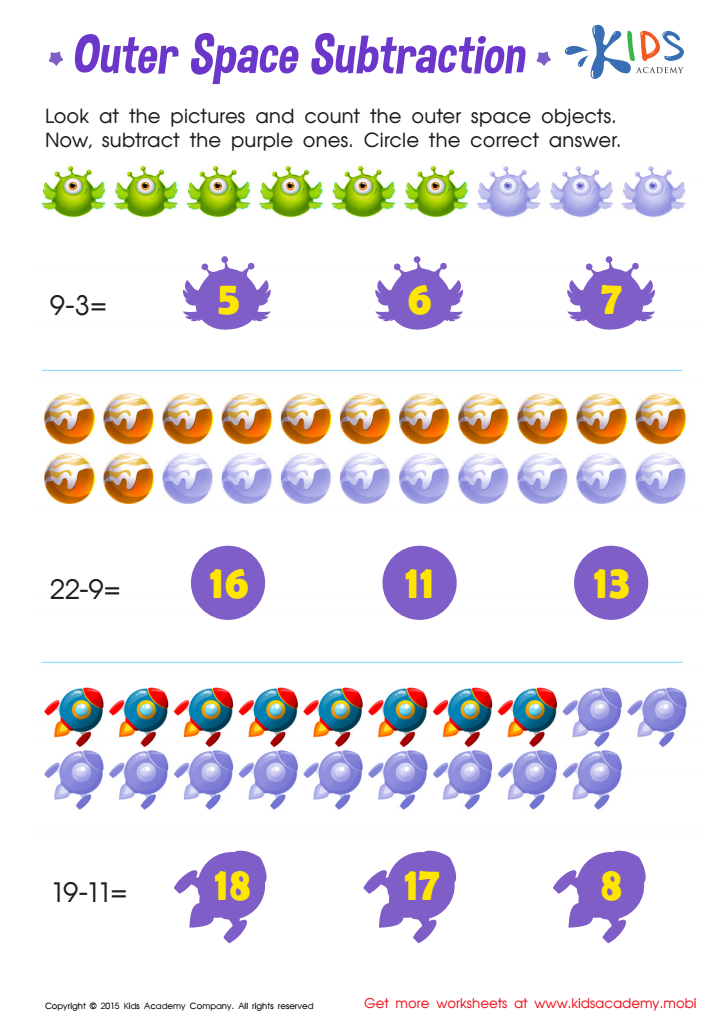
Outer Space Substraction Worksheet
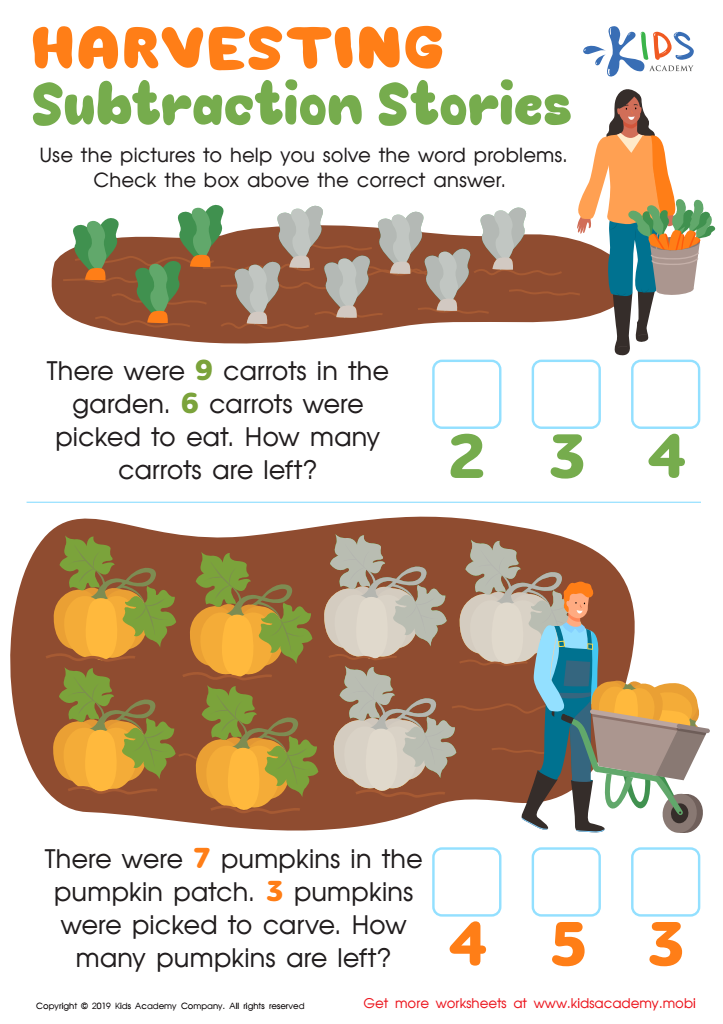
Harvesting Subtraction Stories Worksheet
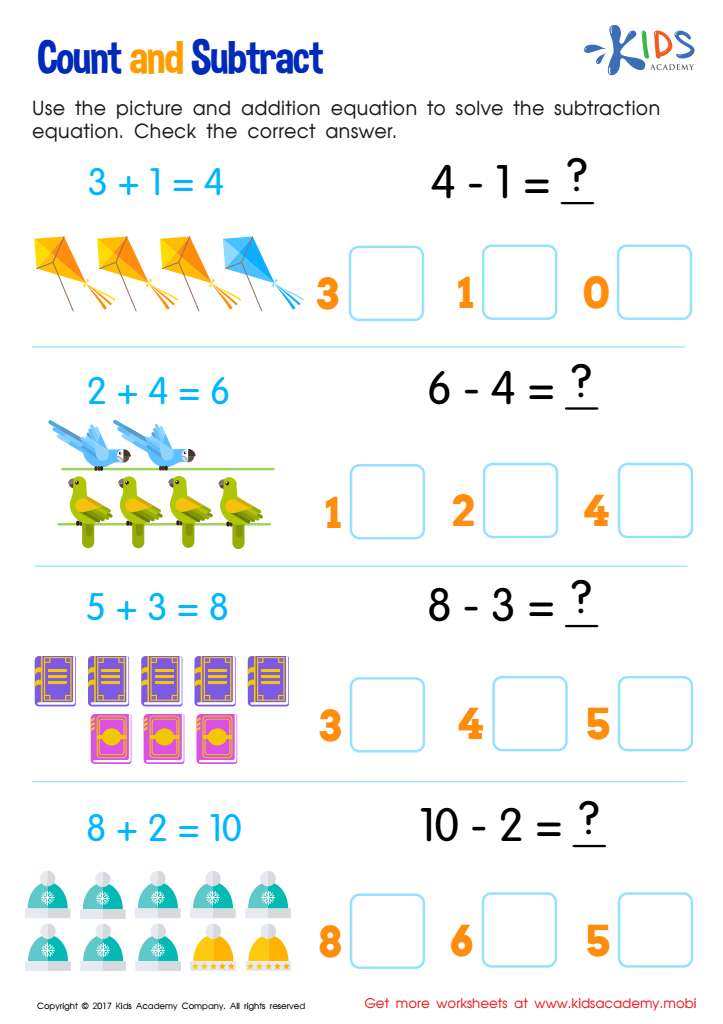
Count and Subtract Worksheet
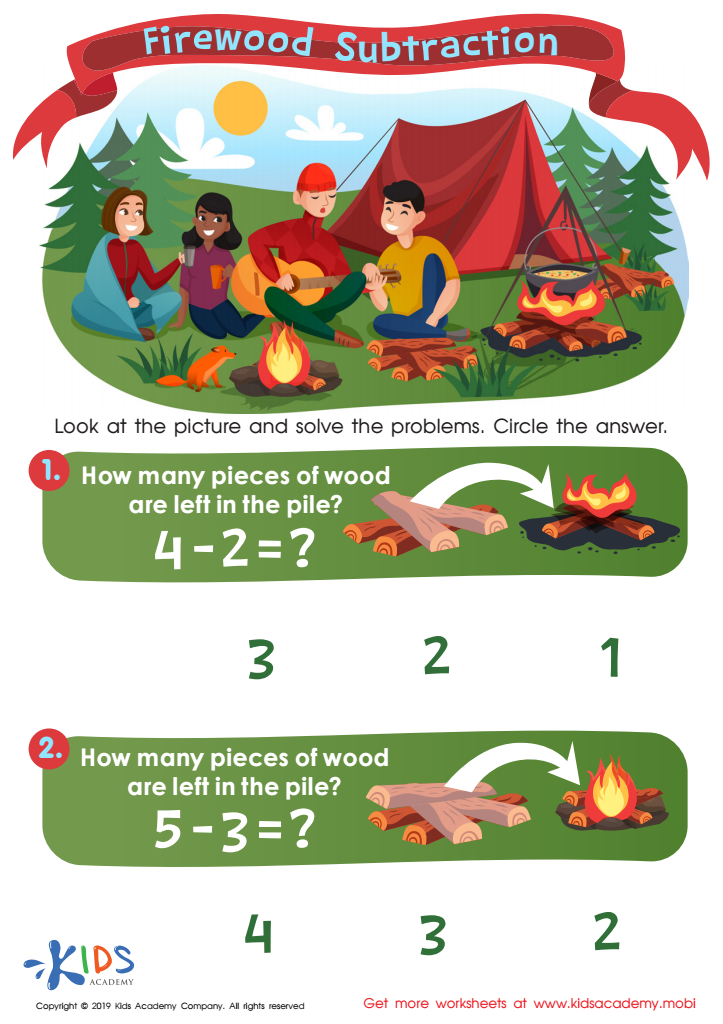
Firewood Subtraction Worksheet
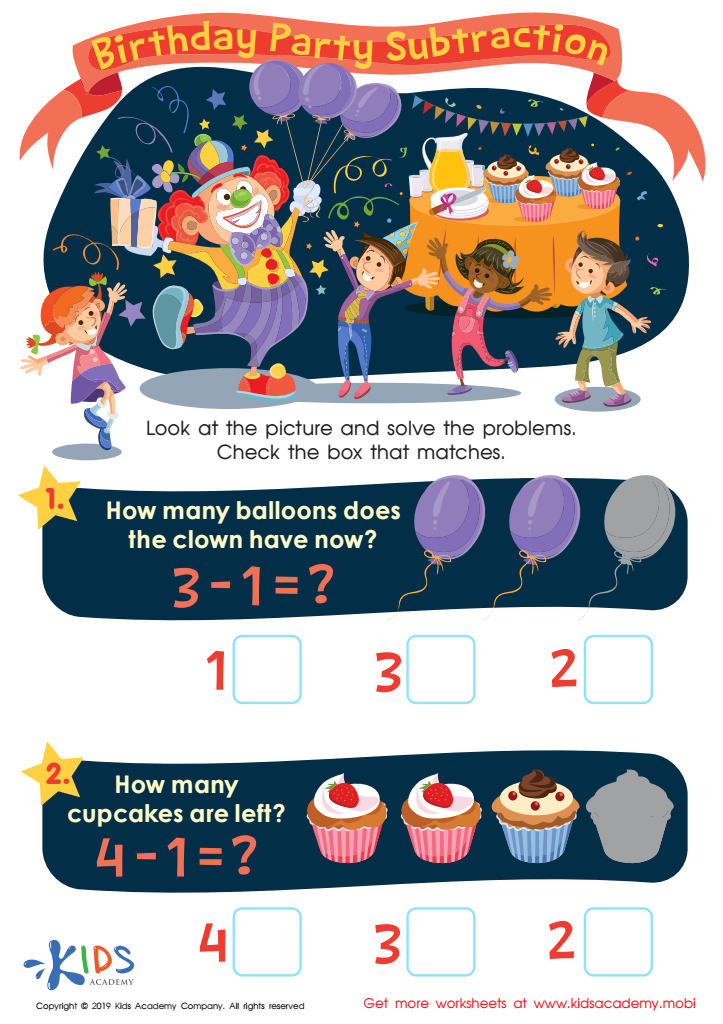
Birthday Party Subtraction Worksheet








Parents and teachers should care about easy subtraction practice for children aged 3-9 because it lays a fundamental cornerstone for their mathematical development. At this tender age, children's brains are highly receptive and plastic, meaning fundamental concepts like subtraction can be more easily and effectively understood. Early mastery of subtraction forms a critical building block for more advanced arithmetic skills such as multiplication, division, and problem-solving strategies.
Practicing subtraction enhances a child’s numerical literacy and understanding of the relationship between numbers. These early skills make future mathematical concepts less intimidating and promote academic confidence. Frequent subtraction exercises build children's mental math abilities, fostering cognitive skills such as attention, memory, and logical thinking.
Apart from academic benefits, learning to subtract also has practical real-world applications. Children begin to grasp how math relates to everyday activities, like sharing toys or snacks, which reinforces the value of learning these skills beyond the classroom. It instills a sense of accomplishment and nurtures a positive attitude toward learning, integral for lifelong educational prowess.
Crucially, engaging in subtraction practice can also strengthen the parent-child or teacher-student bond, as interactions during such activities provide opportunities for encouragement, patience, and tailored support, which contribute to both academic and interpersonal growth.