Multiplication practice Easy Science Worksheets for Ages 3-9
5 filtered results
-
From - To
Unlock the joy of learning with Multiplication Practice Easy Science Worksheets for Ages 3-9! Our engaging worksheets are designed to introduce young learners to the wonders of multiplication. Through fun, interactive activities, children will develop essential math skills, strengthen their understanding of numbers, and build a solid foundation for future math success. Perfect for parents, teachers, and homeschoolers, these worksheets cater to kids in pre-K through third grade, providing a seamless blend of education and entertainment. Watch your child's confidence soar as they master multiplication with ease. Start their journey to mathematical success today!
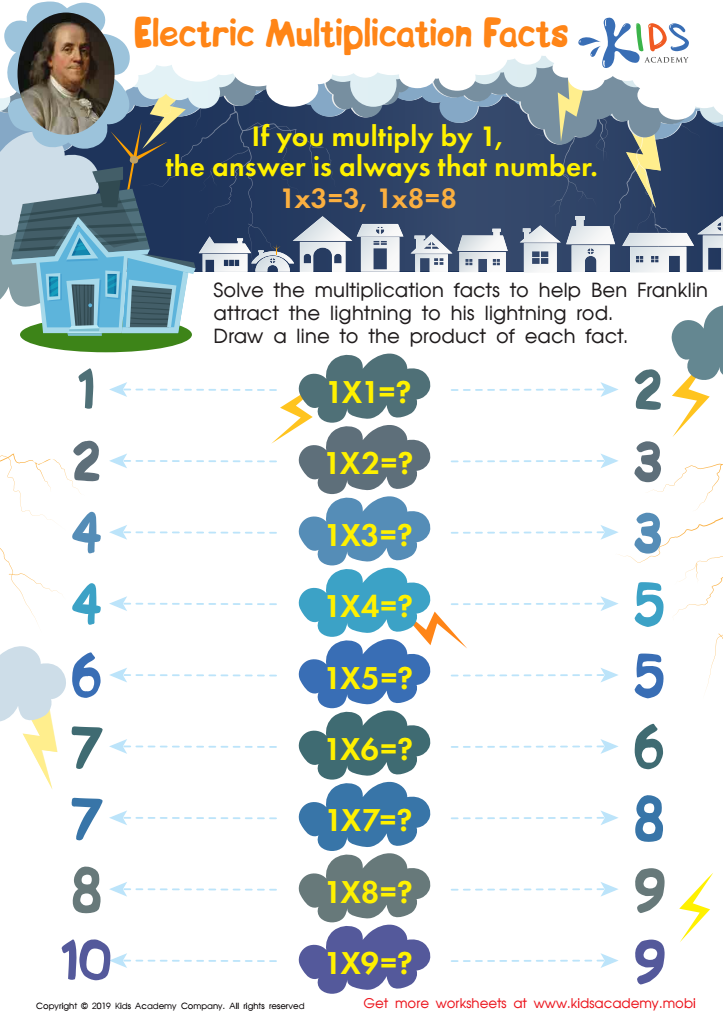
Electric Multiplication Facts Worksheet
 Assign to My Students
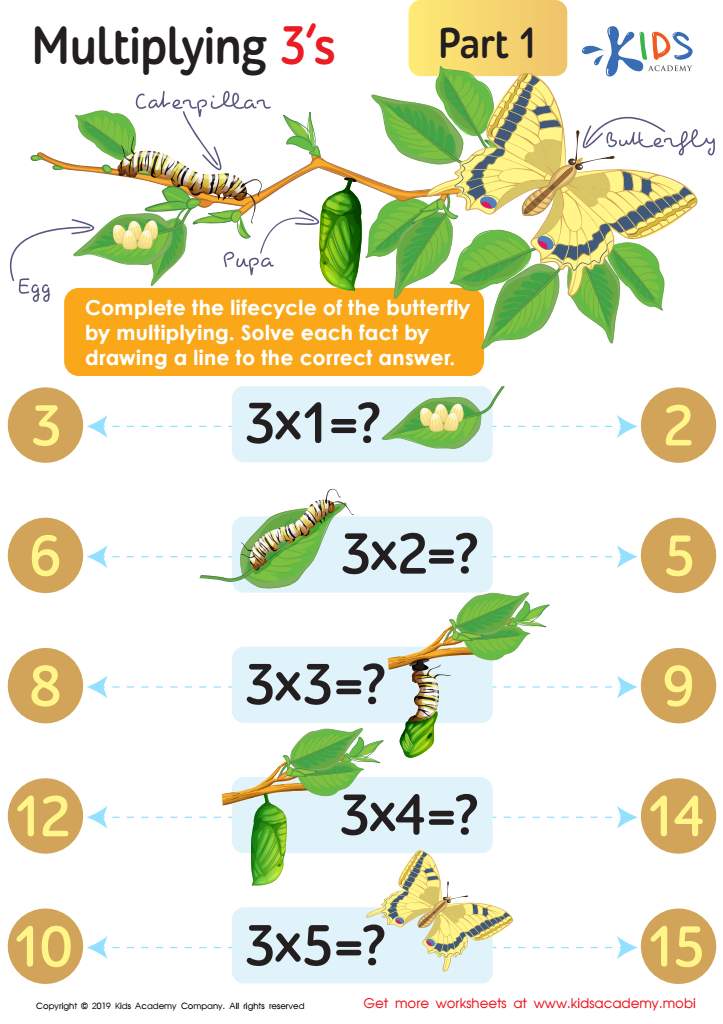
Multiplying 3’s Part 1 Worksheet
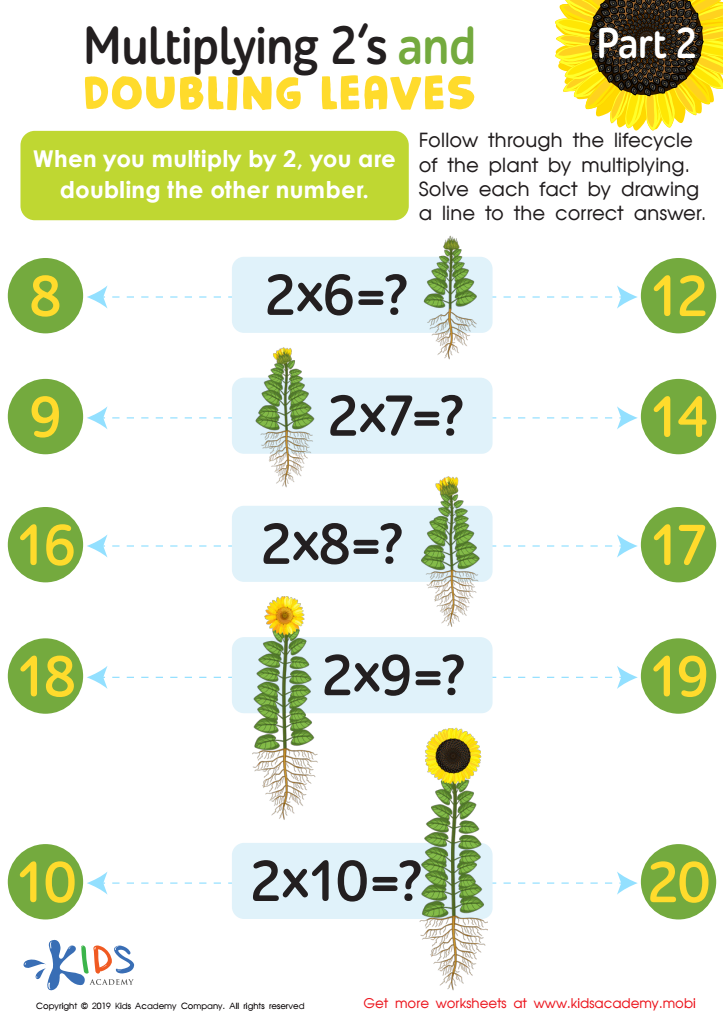
Multiplying 2’s and Doubling Leaves Part 2 Worksheet
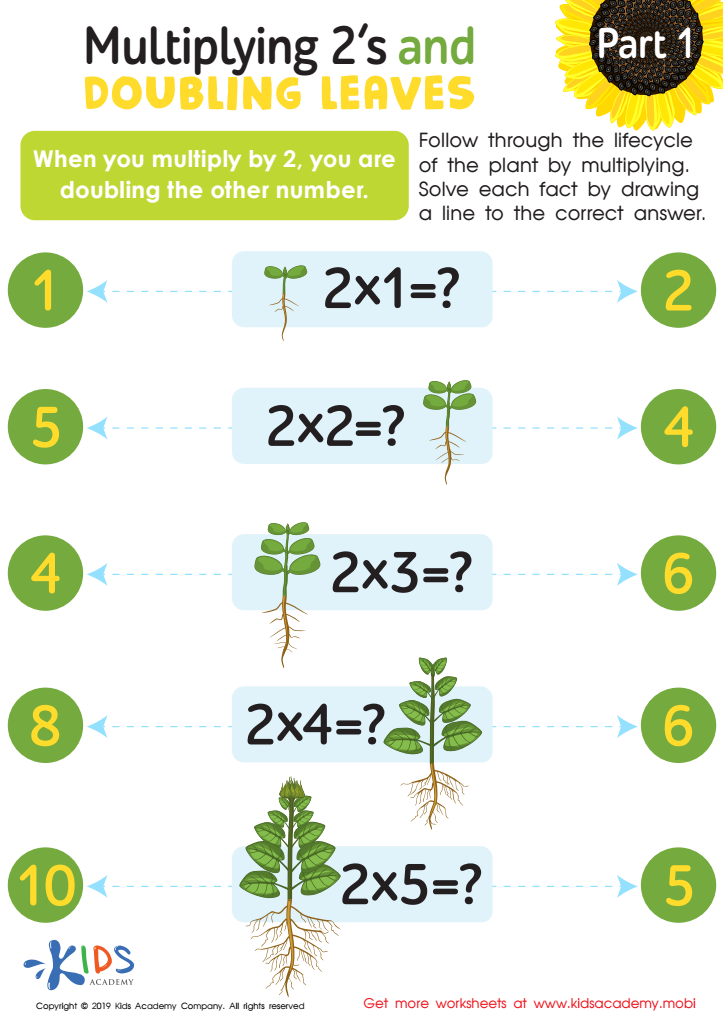
Multiplying 2’s and Doubling Leaves Part 1 Worksheet
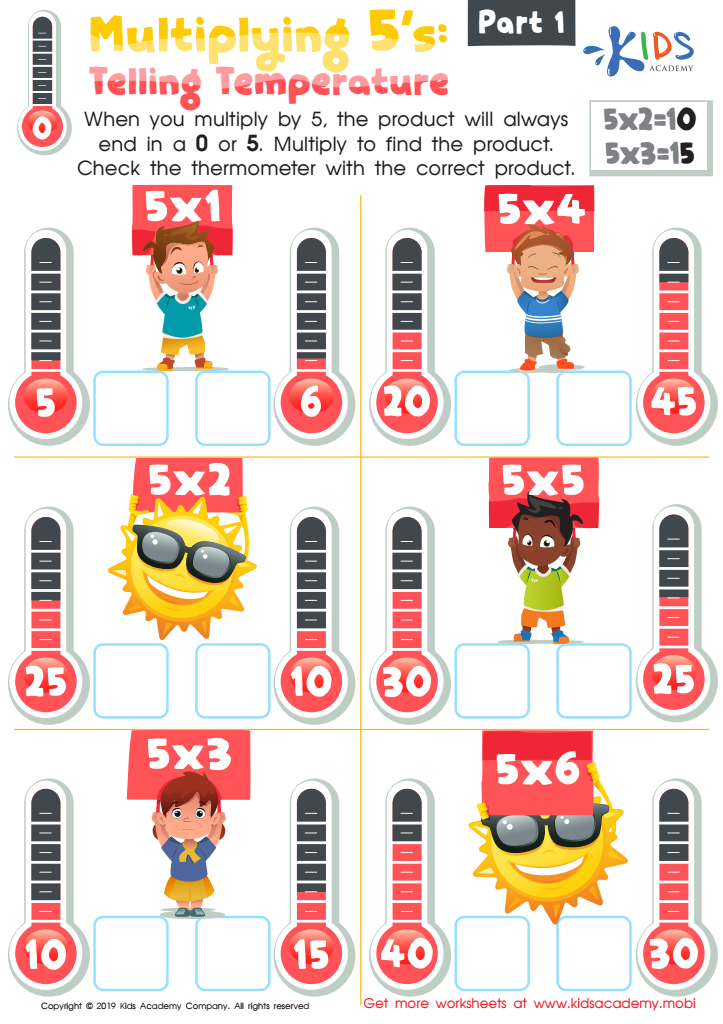
Multiplying 5’s: Telling Temperature Worksheet




Parents and teachers should prioritize multiplication practice and introductory science for children aged 3-9 because these subjects form the foundation of critical thinking and problem-solving skills that are essential for later academic success. Early exposure to multiplication helps young children understand and recognize patterns, boosting their numerical literacy and confidence in handling more complex math concepts. Practicing multiplication in a fun and engaging way ensures children don't perceive math as daunting but instead as an exciting challenge.
Easy science activities foster curiosity and nurture a child's intrinsic desire to explore and understand the world around them. At this formative stage, children are natural scientists with an innate curiosity. Guiding them through simple experiments and observational activities helps develop their analytical skills and scientific thinking, which are crucial across various disciplines.
Moreover, blending multiplication with science can create interdisciplinary connections, showing children the practical application of math in real-life scenarios like counting objects or measuring ingredients. This approach makes learning more relevant and enjoyable, encouraging lifelong love for both subjects. Parents' and teachers' active involvement through positive reinforcement and interactive methods significantly enhances a child’s learning experience, laying strong foundations for their future academic and personal success.