
Animal recognition Easy Worksheets for Ages 4-5
6 filtered results
Difficulty Level
Grade
Age
-
From - To
Subject
Activity
Standards
Discover our engaging "Animal Recognition Easy Worksheets" designed specifically for children ages 4-5. These worksheets provide a fun and interactive way for young learners to identify various animals, enhancing their language skills and cognitive development. Featuring vibrant images and simple tasks, children can easily navigate through each exercise, promoting early literacy while fostering a love for nature. Ideal for homeschooling or educational settings, our worksheets encourage fine motor skills through coloring and tracing activities. Help your little ones connect with the animal world and develop foundational learning skills in a playful and enjoyable manner. Download and get started today!
Favorites
With answer key
Interactive
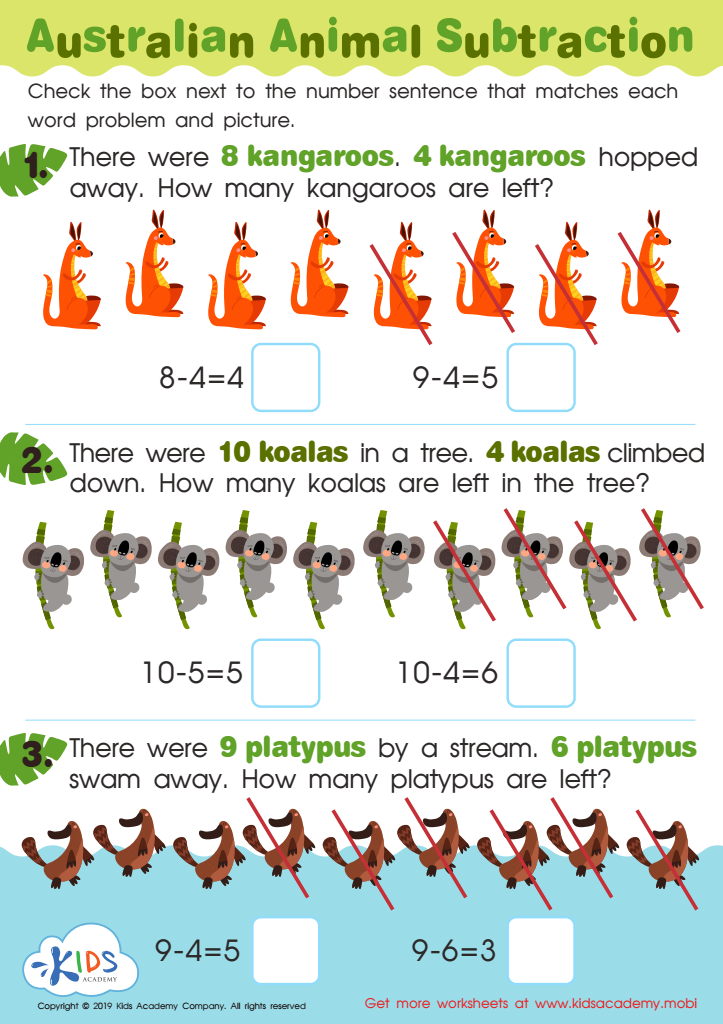
Australian Animal Subtraction Worksheet
Test your child's wildlife knowledge. Ask them to name animals indigenous to Australia or other countries. Show them the animals in this worksheet and have them match each word problem and picture with the correct number sentence.
 Assign to My Students
Australian Animal Subtraction Worksheet
Worksheet
Ordering 11–20: Chicken & Egg Dot–to–dot Worksheet
Help your child hatch the chick and practice their counting skills with this dot to dot worksheet – the chicken came first! Connect the dots 11-20 to have fun and learn at the same time. Experience meaningful practice and gain confidence while drawing great pictures.
Ordering 11–20: Chicken & Egg Dot–to–dot Worksheet
Worksheet
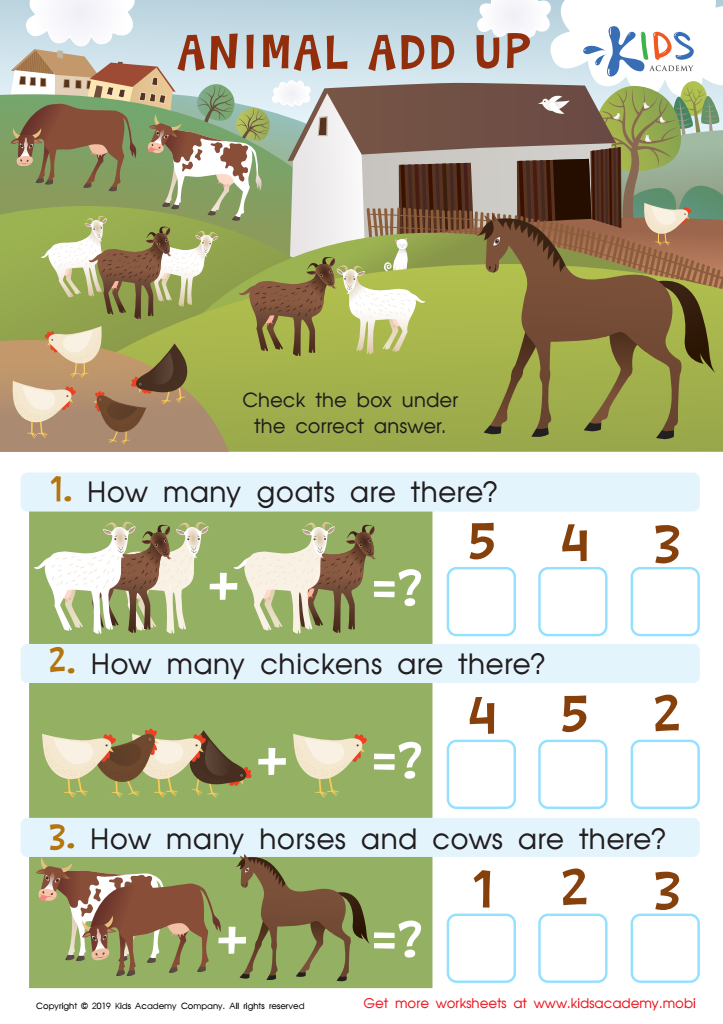
Animal Add Up Worksheet
Animals are fun to observe and interact with. They can be seen at the zoo, parks, farms and in homes with pets. This worksheet helps kids identify animals, and build addition skills. Look at the picture with them and help name each animal. After that, add the animals up and check the box for the correct answer. 80 words.
Animal Add Up Worksheet
Worksheet
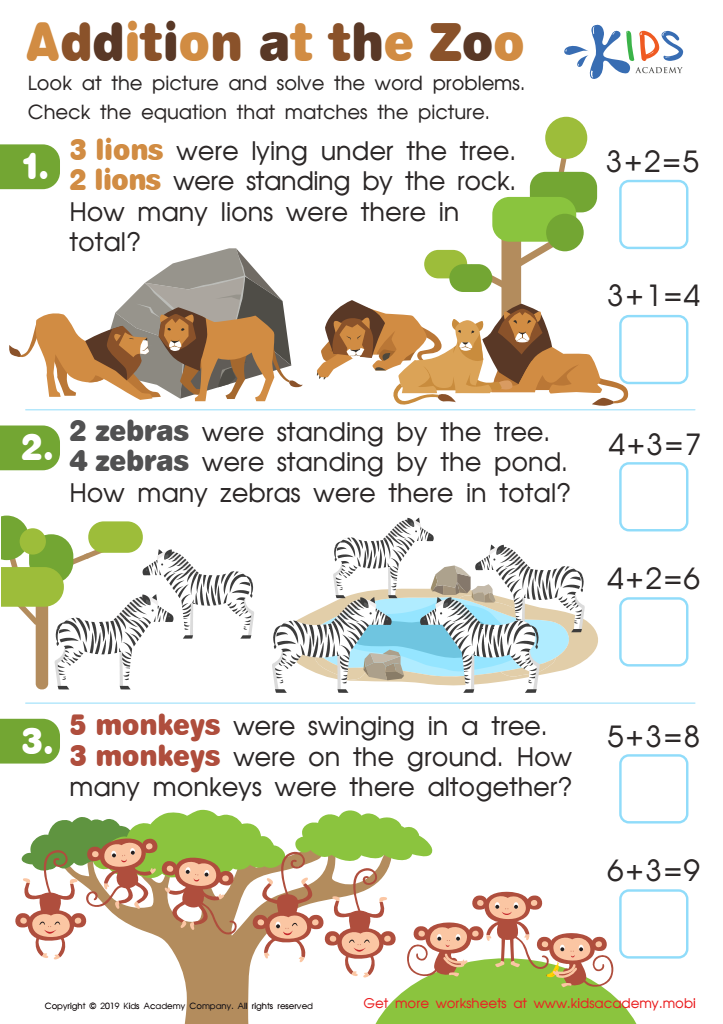
Addition at the Zoo Worksheet
Visit the zoo with your kids and point out all the different animals. Ask them to name their favorites and identify animals on a worksheet. Challenge them to solve word problems related to the pictures. Ask them for the equation that fits the picture and check the answer.
Addition at the Zoo Worksheet
Worksheet
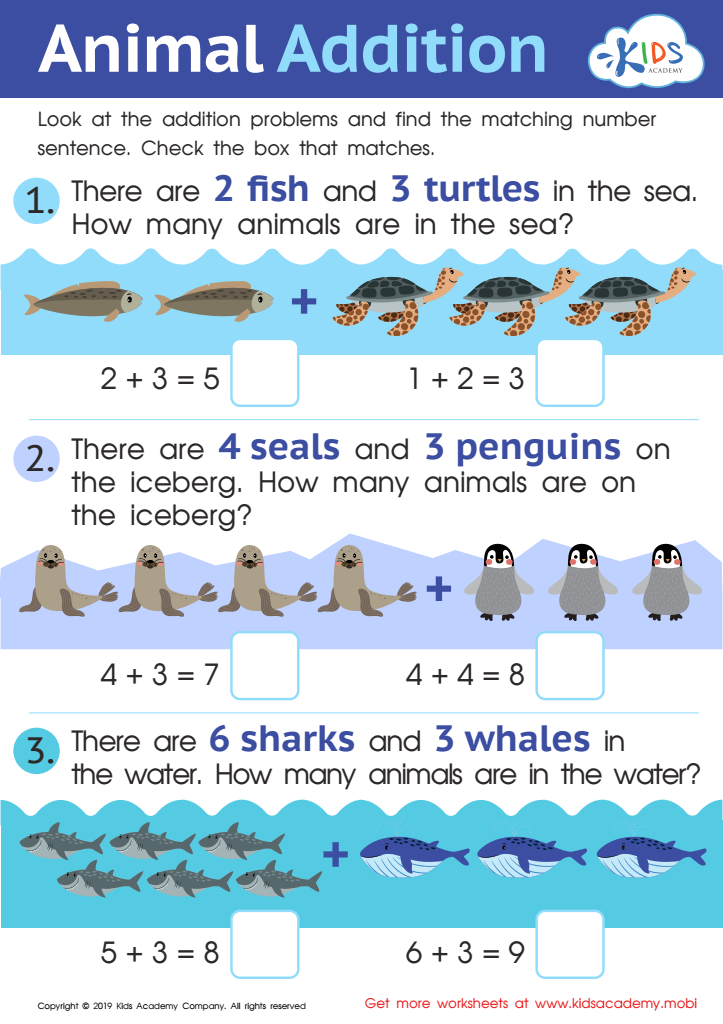
Animal Addition Worksheet
Get your kids learning addition and subtraction with this fun worksheet! Show them that solving equations can be enjoyable and help them match number sentences to the correct boxes. By doing this together, you'll create a positive learning experience that your kids won't forget.
Animal Addition Worksheet
Worksheet
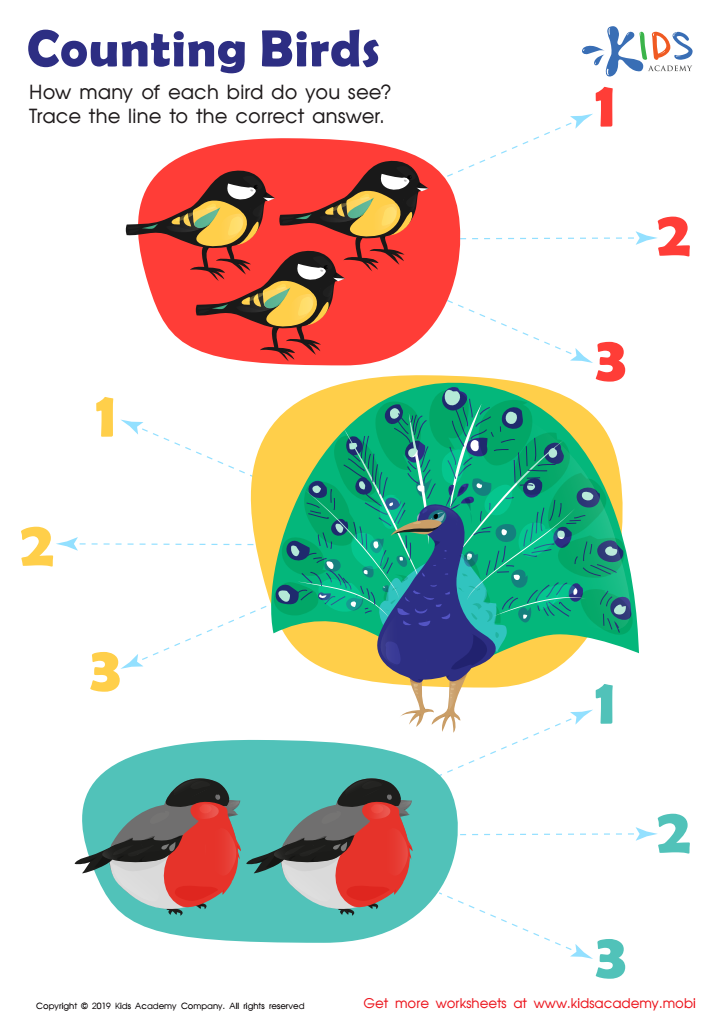
Counting Birds Worksheet
Kids love counting! With each number they learn, they can make a one-to-one representation with an item. The more practice they get, the better. Try this counting worksheet with traceable lines, to give your children practice and work on their fine motor skills. They will enjoy connecting the picture to the right number, and will feel like mathematicians with each success!
Counting Birds Worksheet
Worksheet
Join Kids Academy for Free
Who is primarily going to use this learning content?








Parents and teachers should care about teaching animal recognition to young children aged 4-5 because it lays the foundation for important skills. First, recognizing animals helps children develop their vocabulary. Young kids learn new words when they see pictures of animals and hear their names.
Furthermore, animal recognition enhances cognitive skills. As children identify different animals and comprehend where they live or what they eat, they build their understanding of the world. This involves critical thinking and connecting concepts, such as habitats and animal classifications.
Additionally, learning about animals sparks curiosity and inquisitiveness. Children naturally love animals, and this interest can be harnessed to encourage them to ask questions, explore nature, and engage in reading and storytelling.
Recognizing animals also fosters social skills. Children often share what they know or enjoy discussing their favorite animals, leading to better communication with peers and adults.
Lastly, understanding animals can nurture empathy as children learn to care for living beings. When they recognize different species, they can begin to understand the importance of conservation and respecting our environment. Overall, animal recognition is an enriching experience that supports multiple areas of childhood development!








