
Understanding Sequences Easy Worksheets for Ages 4-5
5 filtered results
Difficulty Level
Grade
Age
-
From - To
Subject
Activity
Standards
Discover our "Understanding Sequences Easy Worksheets" designed specifically for children aged 4-5! These engaging worksheets help young learners grasp the concept of sequences through fun and interactive activities. With colorful illustrations and simple step-by-step instructions, children will practice ordering events, completing patterns, and creating their own sequences. Each worksheet fosters critical thinking, enhances cognitive skills, and encourages creativity, making learning enjoyable and straightforward. Perfect for at-home learning or classroom use, these worksheets are an excellent resource for parents and educators alike. Start your child’s journey to mastering sequences today with our easy-to-use worksheets that promote essential early math skills!
Favorites
With answer key
Interactive
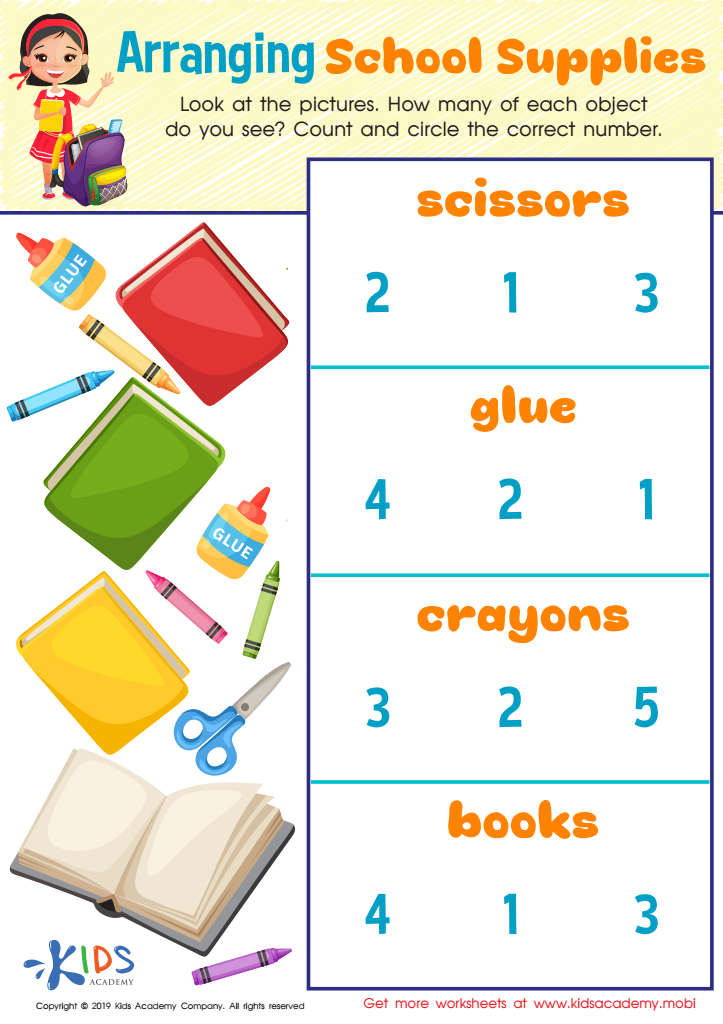
Arranging School Supplies Worksheet
Help your kids identify and count the school supplies in this colorful printout. Ask them to circle the correct number from the options provided. This is an easy and fun way for your child to practice their counting skills and recognize everyday objects.
 Assign to My Students
Arranging School Supplies Worksheet
Worksheet
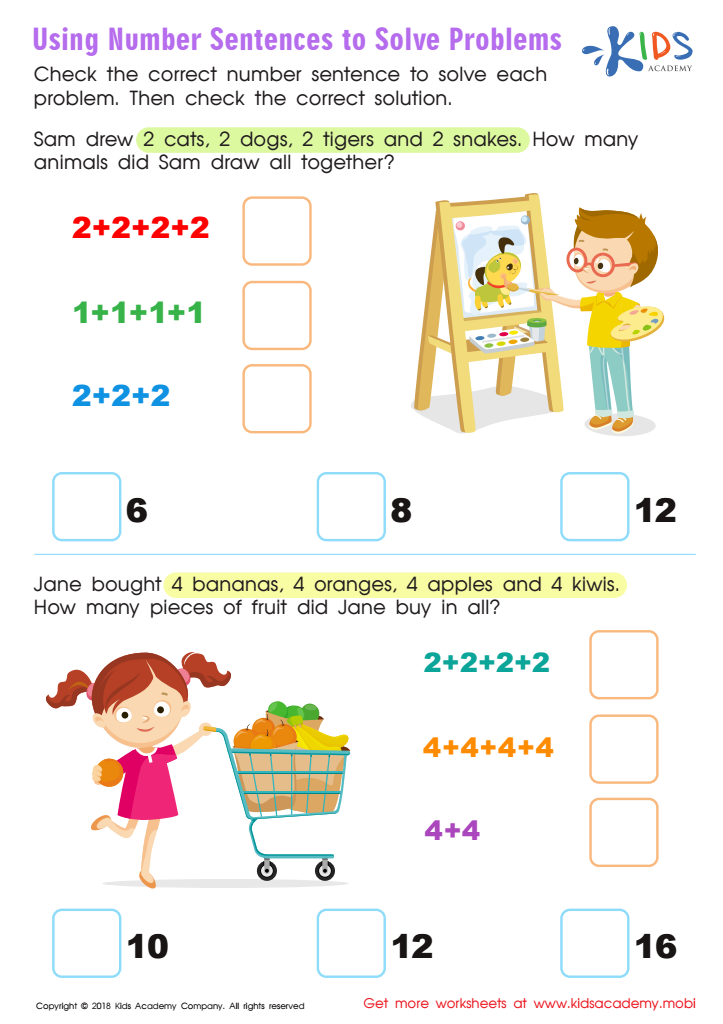
Using Number Sentences to Solve Problems Worksheet
Solving math problems requires an efficient strategy. Picture representation can help young mathematicians with basic addition problems, especially when it involves repeated addends. As they gain confidence, they'll be able to apply their number sentence solving abilities to more complex equations.
Using Number Sentences to Solve Problems Worksheet
Worksheet
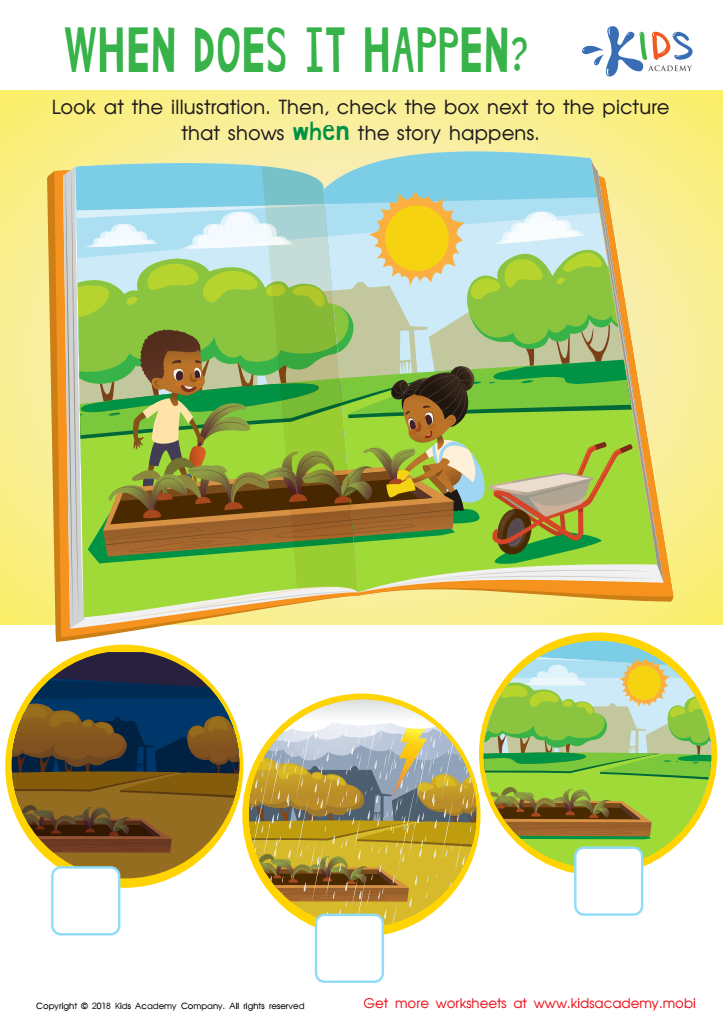
When Does It Happen? Worksheet
Help your kids learn about the different times of day and when events occur using this worksheet. Ask them to look at the pictures and determine which box shows when the story happened. Then, discuss how they can use this knowledge to better describe events that occur.
When Does It Happen? Worksheet
Worksheet
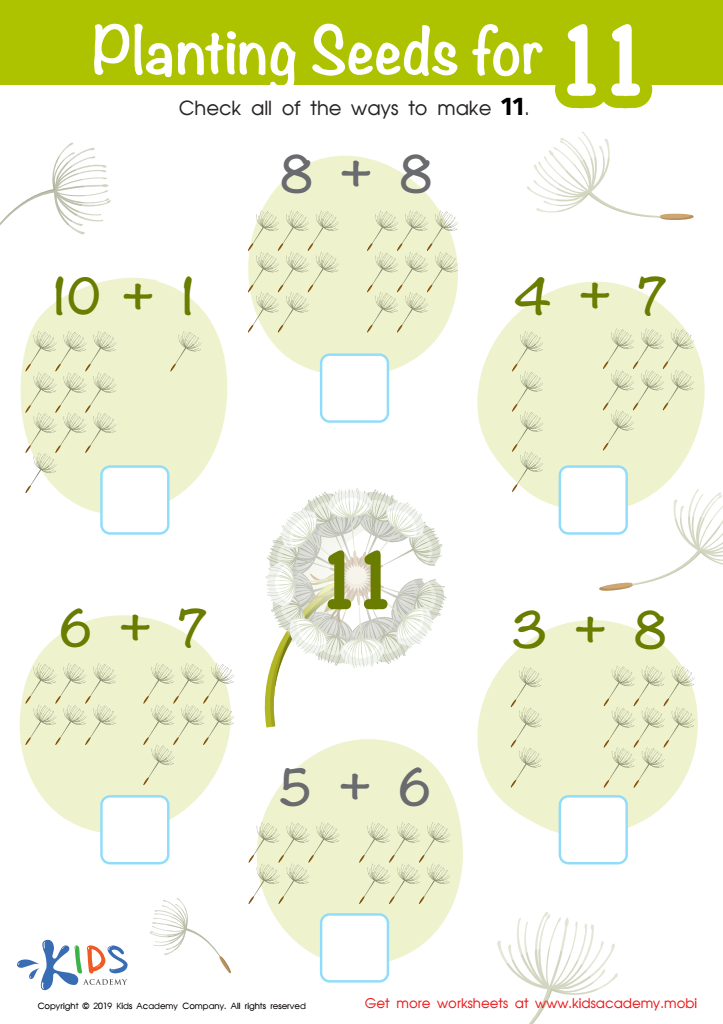
Planting Seeds for 11 Worksheet
Before starting, ask your students to count as high as they can. Explain that different numbers can add up to the same total. Give examples like 2+2 =4 and 3+1 =4. Ask if they can think of other examples. Then have them work through the equations in the printout and circle all that add up to 11.
Planting Seeds for 11 Worksheet
Worksheet
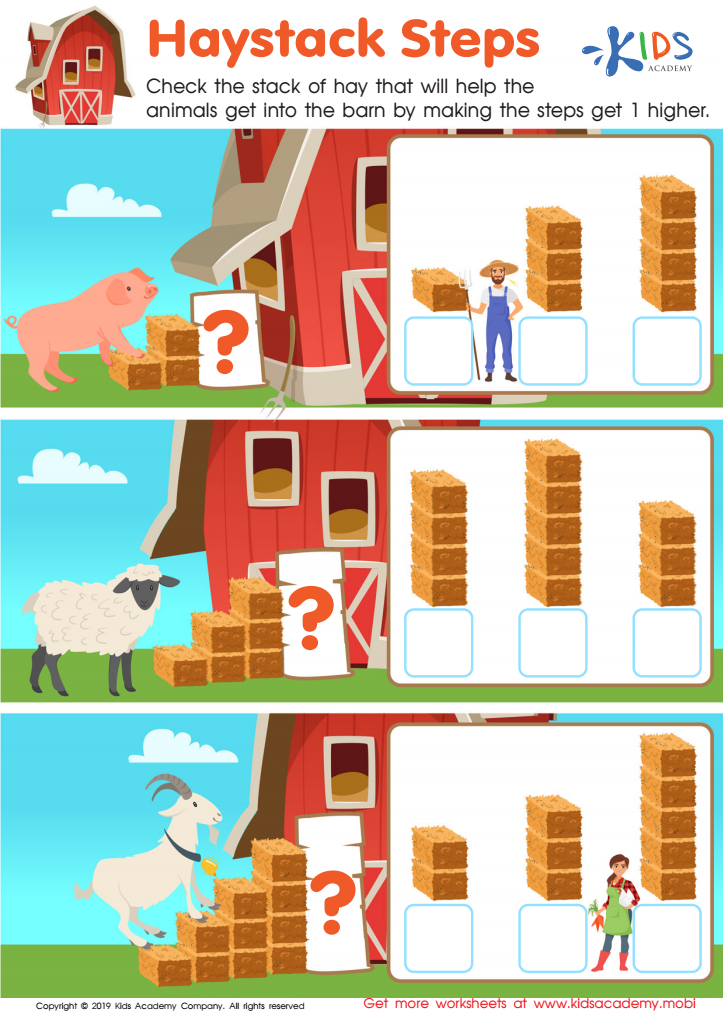
Haystack Steps Worksheet
Have your kids ever visited a farm? What activities and sights did they enjoy? Farmers are essential to our lives, growing food and providing us with dairy and eggs. In this worksheet, a farmer has made a haystack for his animals to climb into the barn. Ask your kids to add an extra layer to the stack to make the climb easier.
Haystack Steps Worksheet
Worksheet
Join Kids Academy for Free
Who is primarily going to use this learning content?




Understanding sequences is a fundamental skill for early learners ages 4-5, and it serves as a building block for critical thinking, problem-solving, and more complex mathematical concepts they will encounter later. Parents and teachers should care about teaching this important concept as it lays the groundwork for children's cognitive development.
When children grasp the idea of sequences, they learn to identify patterns and predict outcomes, enhancing their analytical skills. This not only assists in mathematics but also relates to daily life scenarios, like understanding routines or following instructions in stories. For example, when children learn to recognize a pattern in colors or shapes, they develop essential skills in categorization and organization.
Moreover, understanding sequences fosters language development, as children often describe and communicate patterns verbally. Engagement with sequences also promotes the joy of discovery, encouraging a lifelong love for learning.
By incorporating sequence-related activities into daily lessons or playtime, parents and teachers can create a fun and dynamic learning environment. Ultimately, nurturing this skill in young children prepares them for academic success by building their confidence in tackling more advanced topics in later years.








