Counting practice Easy Numbers up to 100 Worksheets for Ages 4-5
3 filtered results
-
From - To
Welcome to our "Counting Practice Easy Numbers up to 100 Worksheets" designed specifically for children aged 4-5! Our engaging worksheets provide your little learners with the perfect opportunity to develop essential counting skills through fun and interactive exercises. With colorful illustrations and a variety of activities, children will enjoy practicing their numbers and building confidence in their math abilities. Each worksheet encourages hands-on learning, promoting both recognition and understanding of numbers up to 100. Let your child embark on an exciting educational journey that equips them with the foundational skills necessary for future success in math! Download and print your worksheets today!
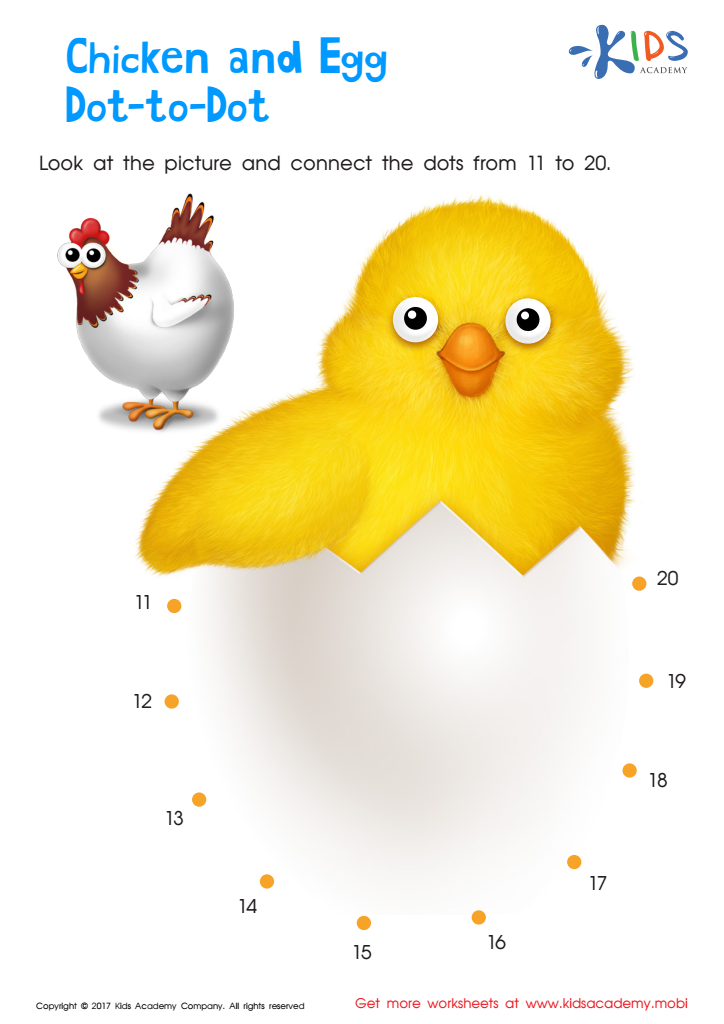
Ordering 11–20: Chicken & Egg Dot–to–dot Worksheet
 Assign to My Students
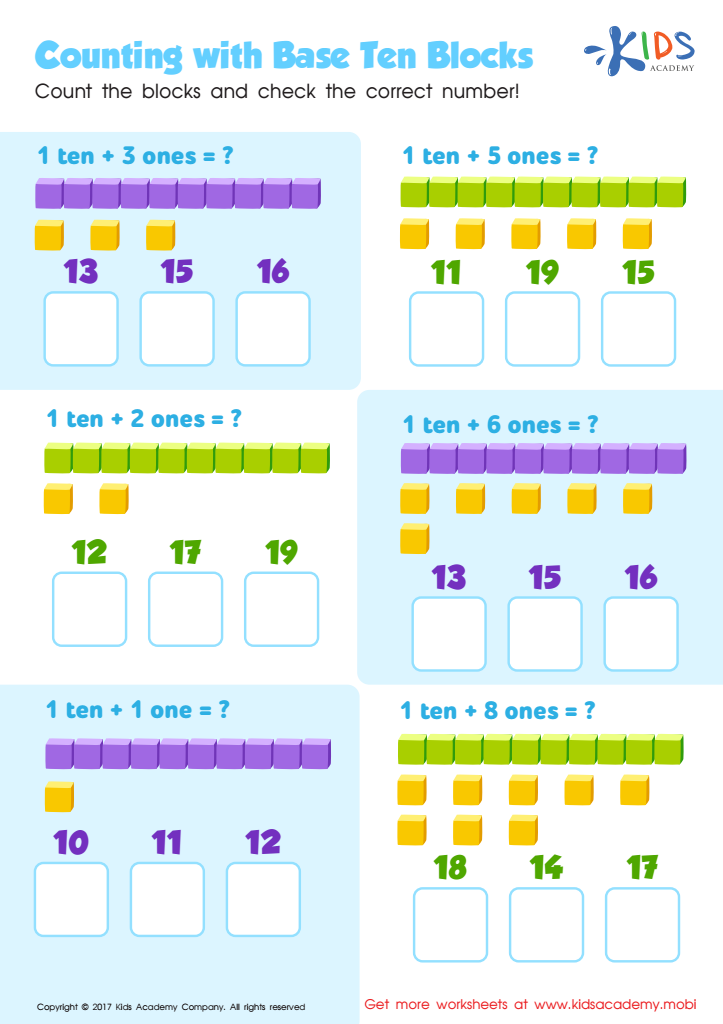
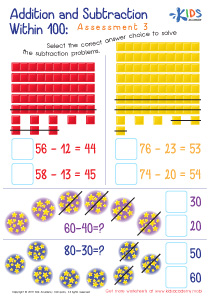
Counting with Base Ten Blocks Worksheet

Counting on the City Skyline: Dot-to-Dot Worksheet








Counting practice in early childhood, especially for ages 4-5, is crucial for several reasons. First, it lays a strong foundation for mathematical understanding. As young children count numbers up to 100, they not only become familiar with numerical concepts but also develop number sense, which is the ability to work with numbers intuitively. This foundational skill is essential for more complex mathematical learning in the future.
Moreover, engaging in counting practices enhances cognitive abilities, including memory and concentration. These activities encourage children to recognize patterns and sequences, nurturing problem-solving skills that extend beyond math. Additionally, counting promotes language development; children learn number-related vocabulary and improve their communication skills as they verbalize their counting.
Counting practice can also foster parent-child or teacher-student relationships through interactive learning exercises. It provides fun, hands-on activities such as counting objects, singing counting songs, or playing educational games. These shared experiences not only reinforce learning but also motivate children to engage with numbers enthusiastically.
Ultimately, understanding numbers is a critical life skill that supports children in everyday situations, such as shopping or sharing, thereby preparing them for future success both academically and in daily life. Parents and teachers should prioritize these practices to ensure holistic development.