Number Recognition Easy Tracing Numbers Worksheets for Ages 4-5
8 filtered results
-
From - To
Introduce your little ones to the world of numbers with our "Number Recognition Easy Tracing Numbers Worksheets for Ages 4-5." These engaging and interactive worksheets are designed to help preschoolers and kindergarteners effortlessly master number recognition and handwriting skills. By tracing numbers 1-10, children develop fine motor skills and strengthen number formation techniques. With visually appealing illustrations and guided tracing paths, our worksheets turn learning into an enjoyable experience. Perfect for parents and educators, these resources provide a solid foundation for early math success. Make number learning fun and effective with our expertly crafted worksheets today!
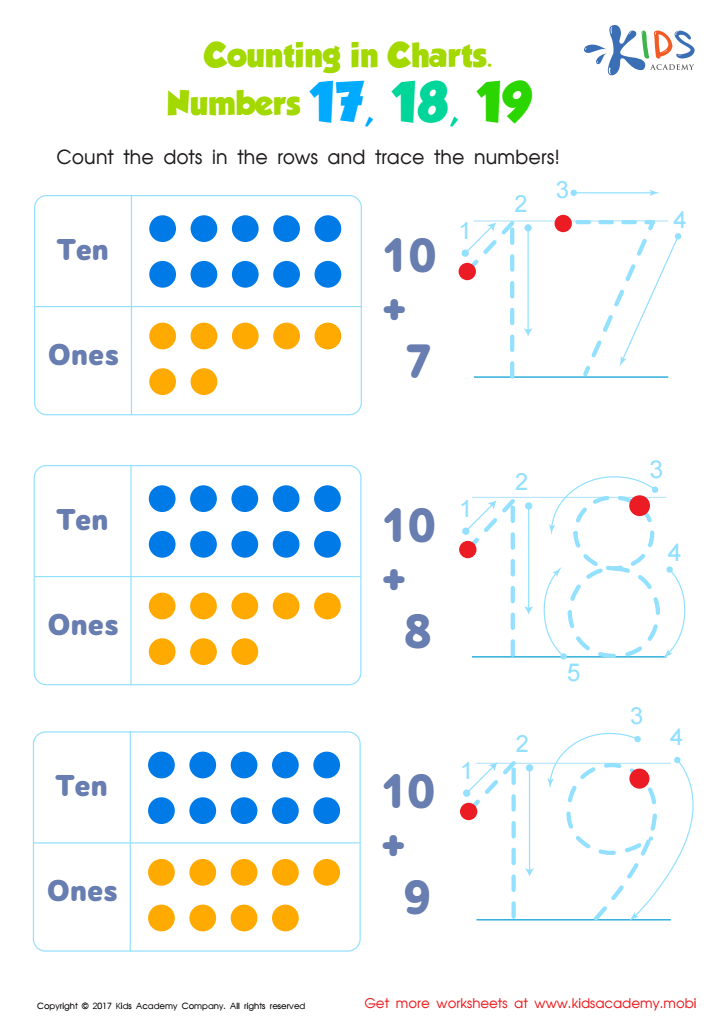
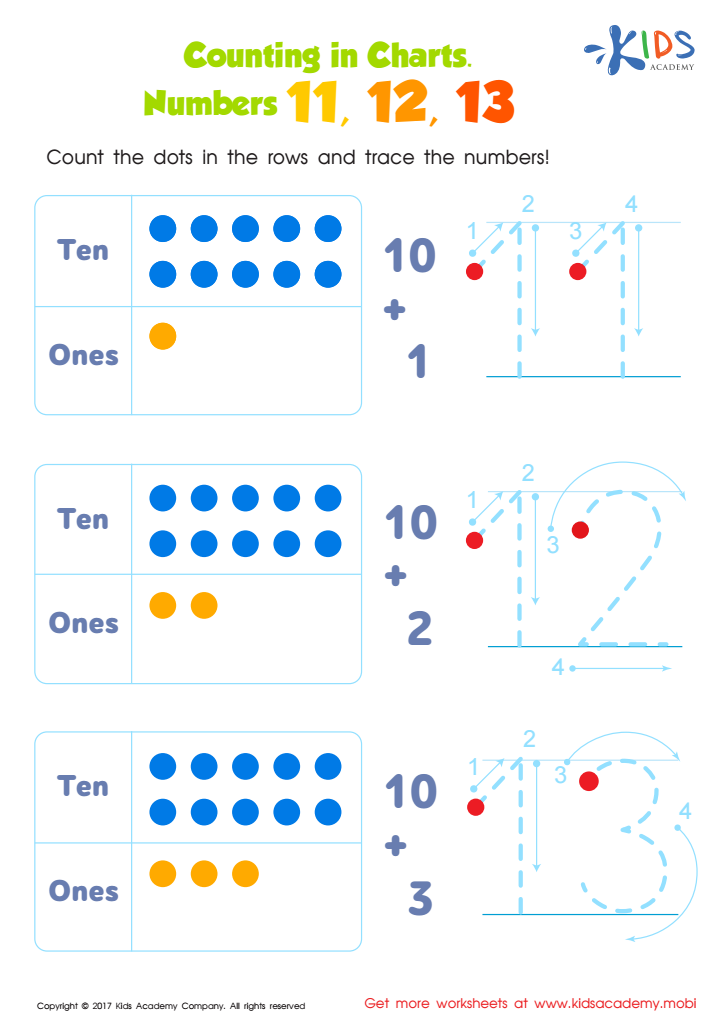
Kindergarten Number Tracing: Counting in Charts Worksheet
 Assign to My Students
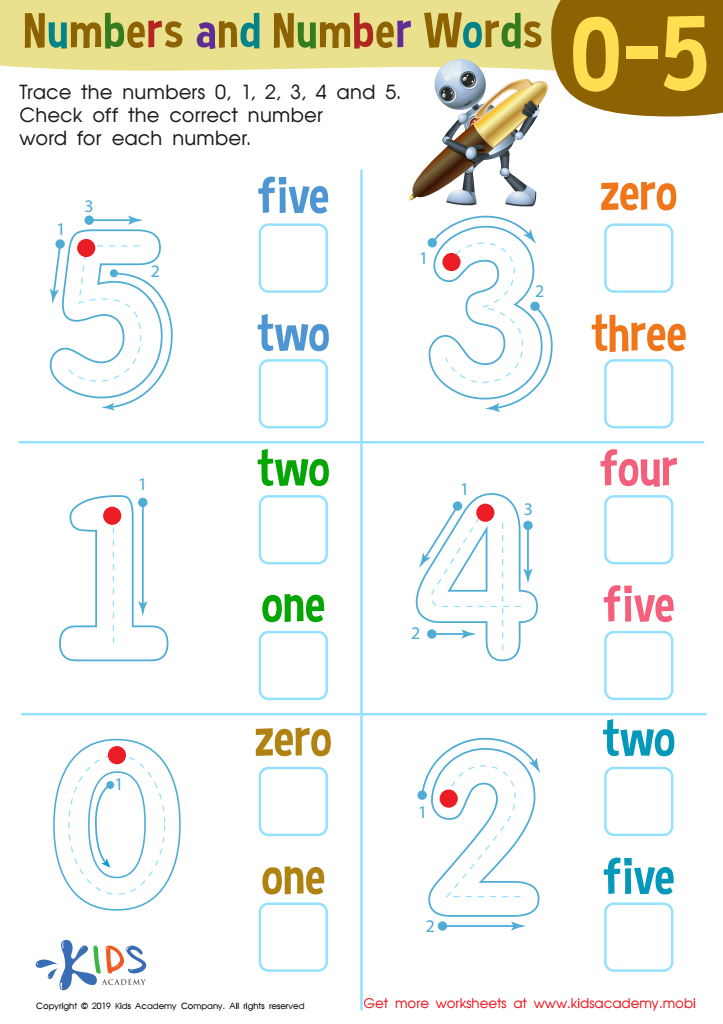
Numbers and Number Words Worksheet
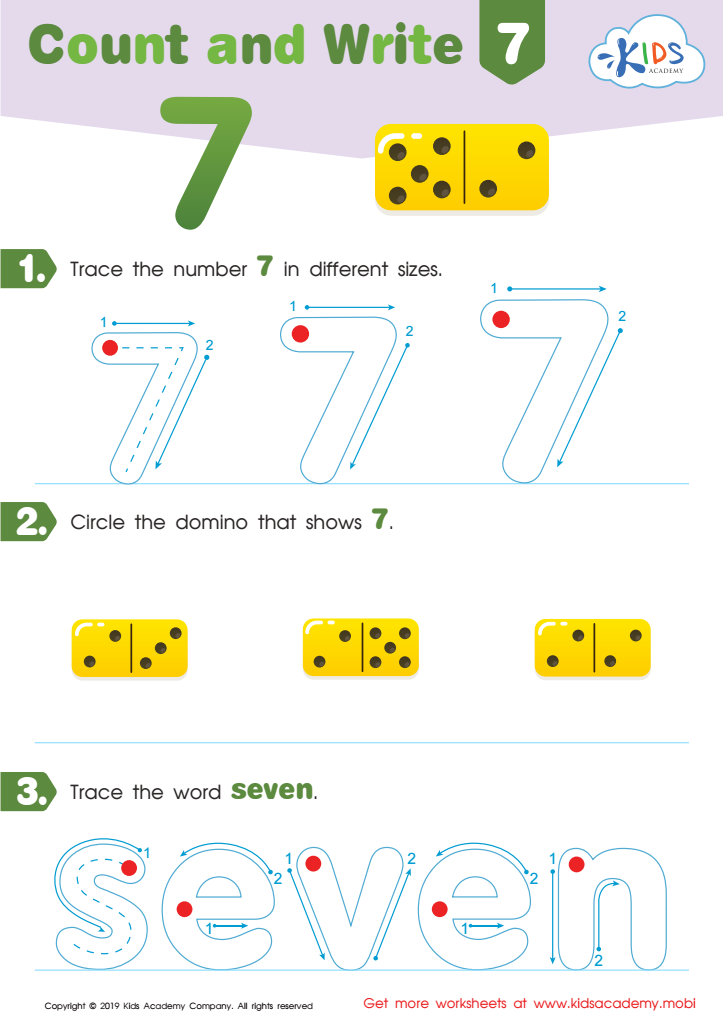
Count and Write 7 Worksheet
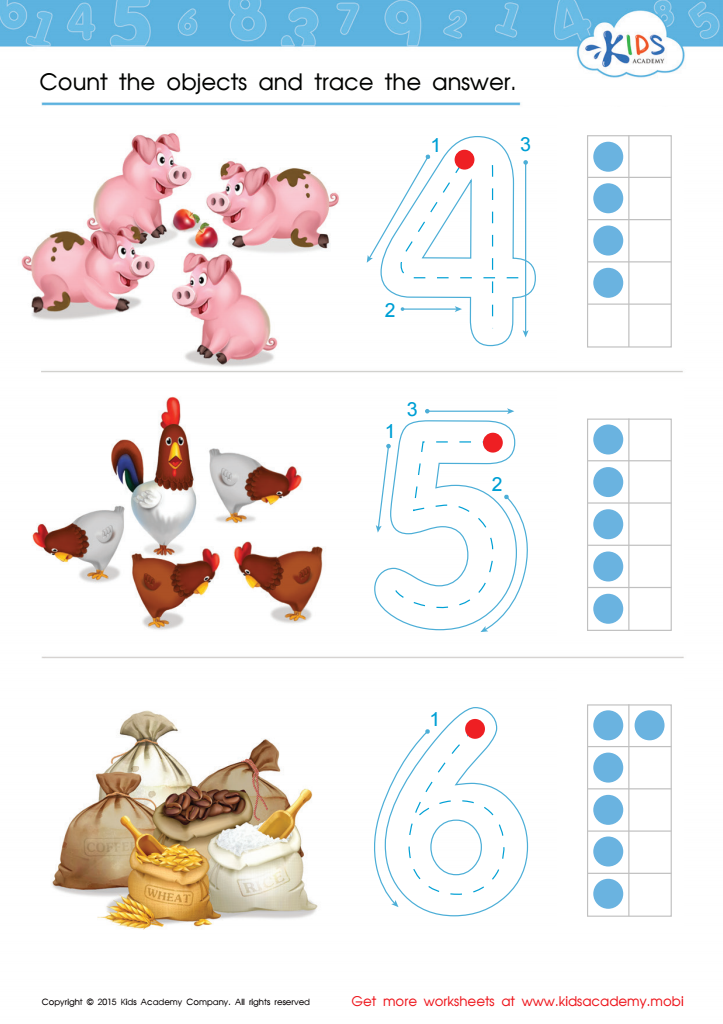
Count and Trace 4 – 6 Worksheet
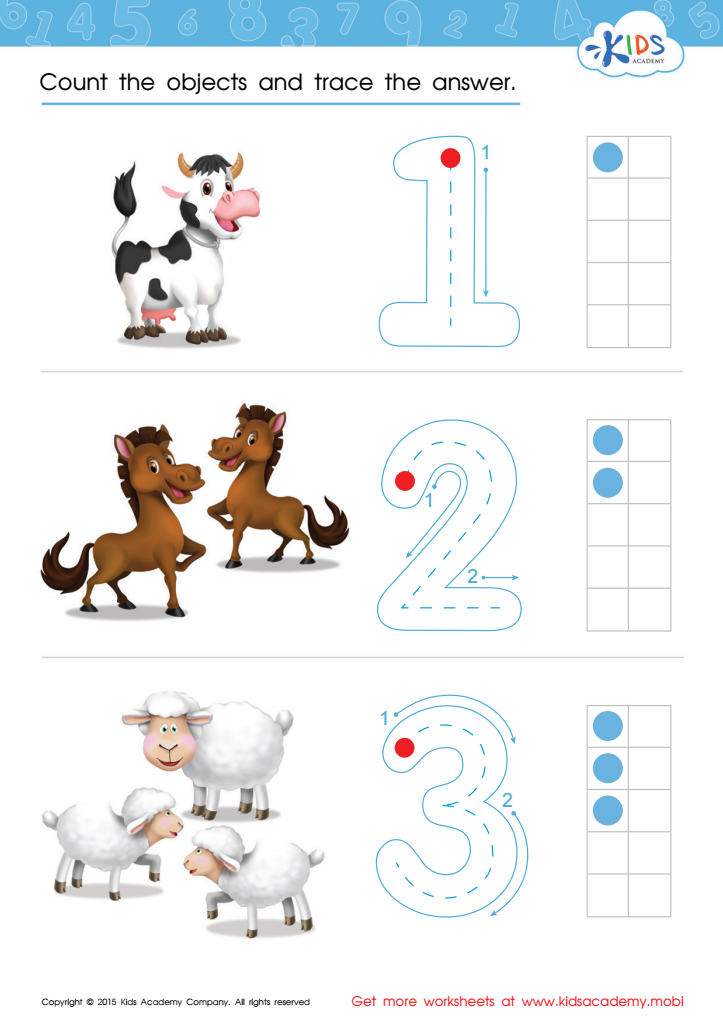
Count and Trace 1 – 3 Worksheet
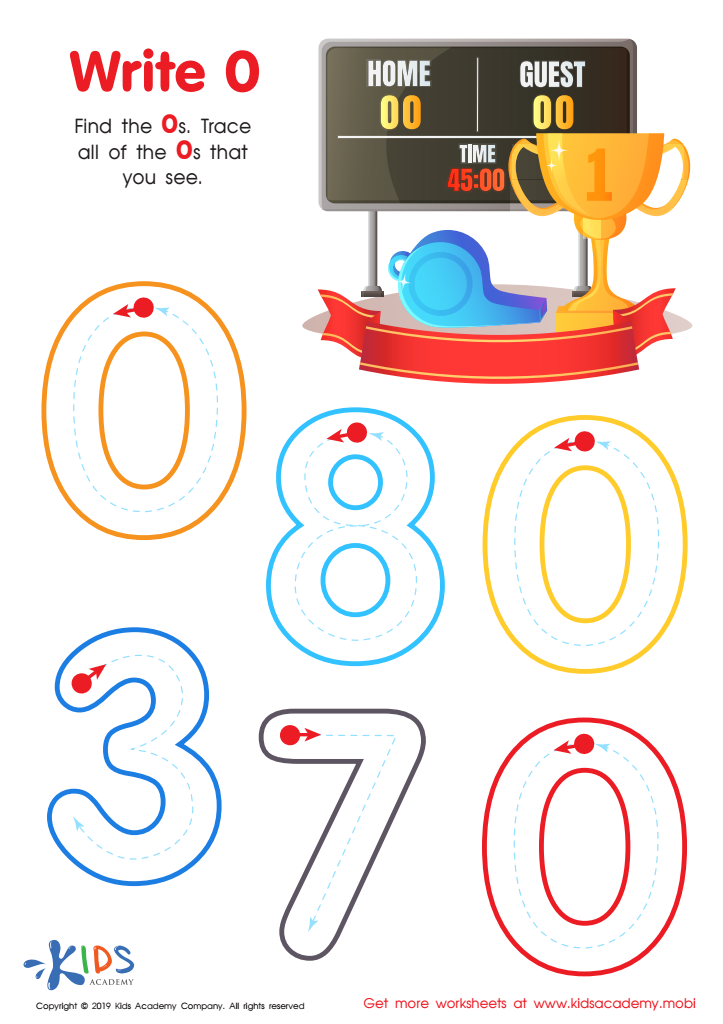
Write 0 Worksheet
Number Tracing Worksheet For Kindergarten
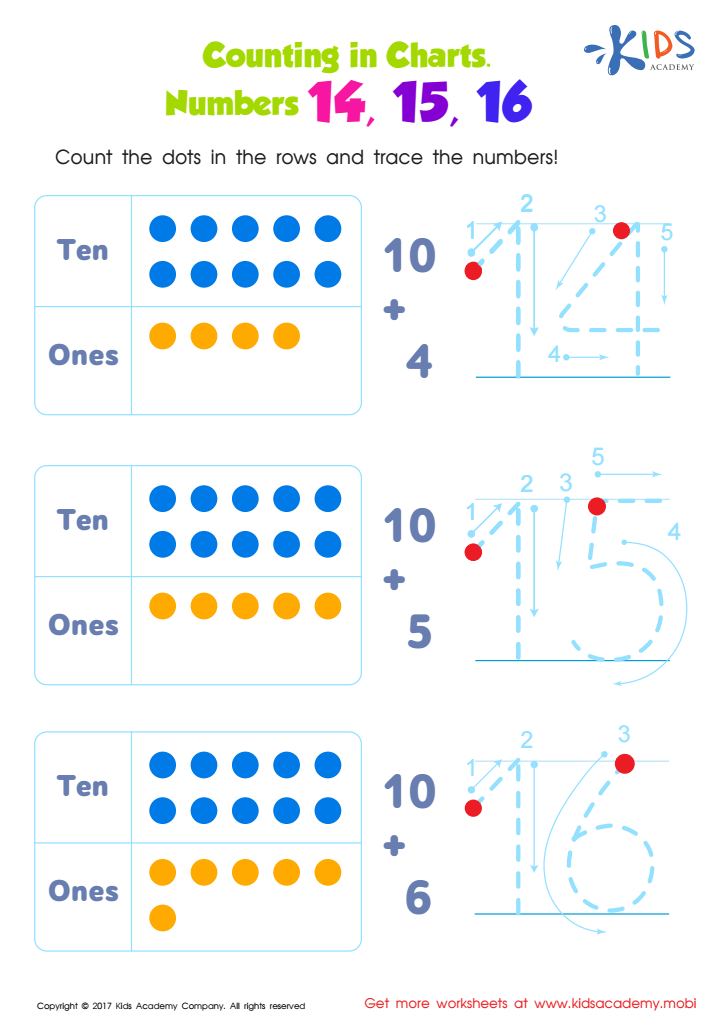
Number Tracing Worksheet








Number recognition and easy tracing of numbers for children aged 4-5 forms a foundational skill for early math learning. At this critical developmental stage, young minds are highly receptive to new concepts, and establishing a strong understanding of numbers provides a crucial stepping stone for future academic success.
Firstly, number recognition helps children to identify and name numbers, setting the stage for more complex arithmetic skills such as counting, addition, and subtraction. Recognizing numbers up to 10 or beyond aids in understanding quantity and basic comparisons, pivotal for problem-solving and logical thinking.
Secondly, tracing numbers enhances fine motor skills and hand-eye coordination, essential for writing. It teaches children proper pencil grip, control, and the ability to form numbers correctly, ensuring better legibility and confidence in their writing abilities later on.
Moreover, integrating fun activities like tracing ensures learning is engaging, reducing anxiety and fostering a positive attitude toward math. This early intervention alleviates future struggles and positions children to progress smoothly into kindergarten and first-grade curricula.
Parents and teachers who emphasize number recognition and tracing contribute significantly to a child's cognitive development, educational preparedness, and their overall confidence in learning. These skills are not just academic fundamentals but also critical life skills that pave the way for lifelong analytical and spatial reasoning abilities.