Counting proficiency Easy Worksheets for Ages 4-6
3 filtered results
-
From - To
Welcome to our Counting Proficiency Easy Worksheets for Ages 4-6! Our engaging worksheets are designed to help young learners develop essential counting skills in a fun and interactive way. Tailored for preschool and kindergarten children, these activities feature colorful illustrations that spark creativity and maintain interest. As kids navigate through various counting exercises, they'll enhance their understanding of numbers, improve number recognition, and build a strong foundation for future math skills. Each worksheet aims to foster confidence and proficiency in counting, setting your child on the path to success. Explore our collection today and make counting an enjoyable adventure!
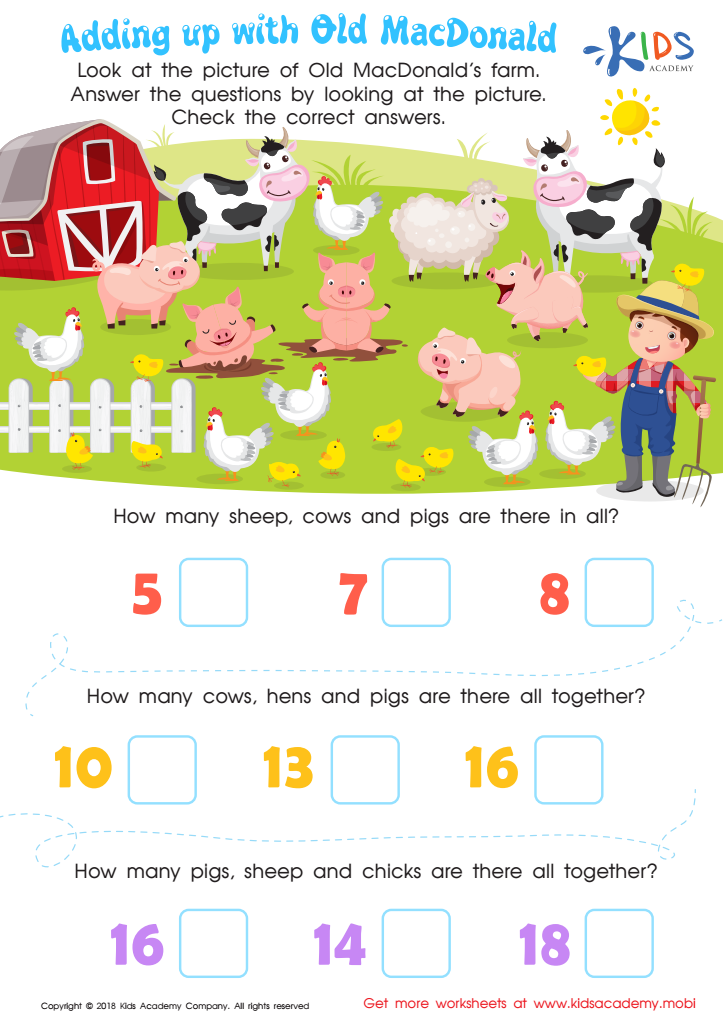
Adding Up with Old MacDonald Worksheet
 Assign to My Students
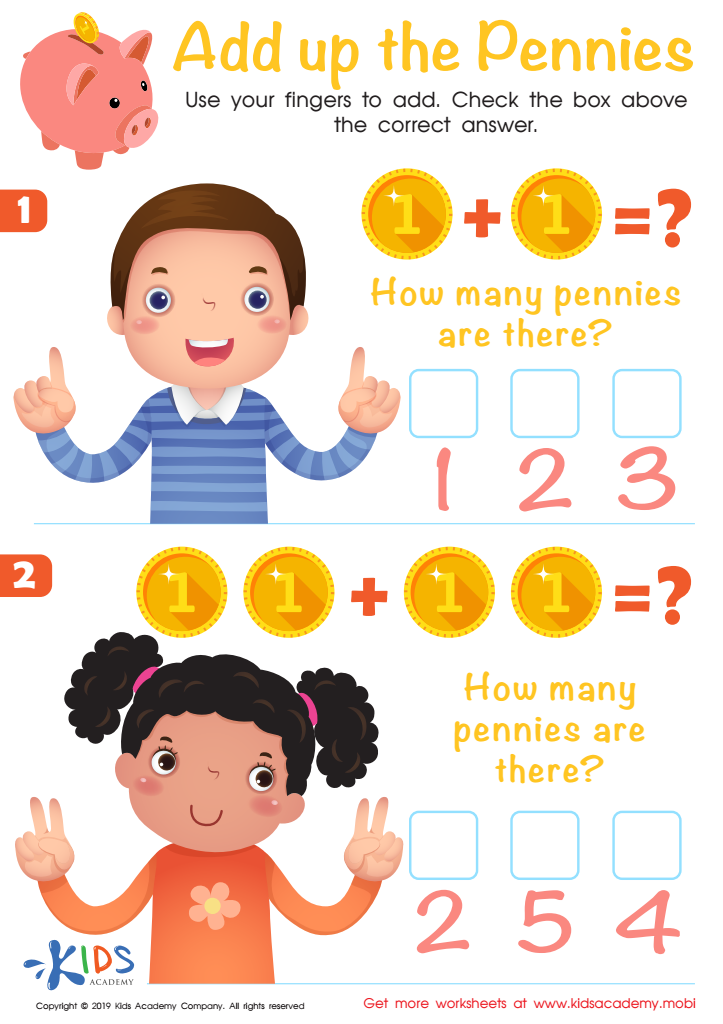
Add up the Pennies Worksheet
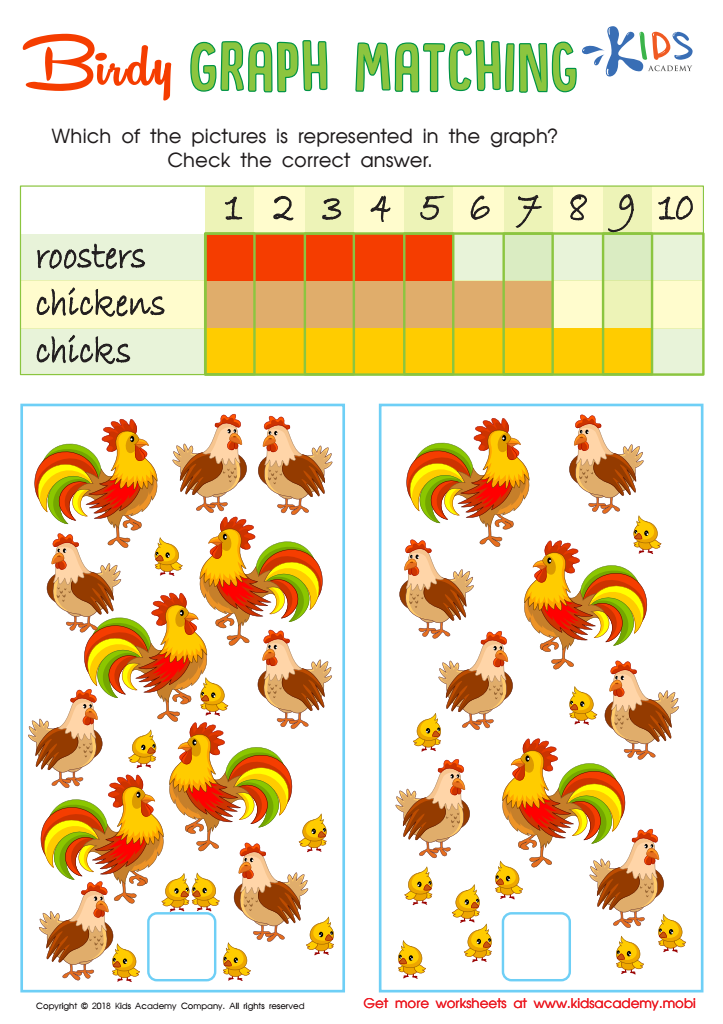
Birdy Graph Matching Worksheet



.jpg)



Counting proficiency is crucial for children aged 4-6 as it lays the foundation for future mathematical concepts and logical reasoning skills. At this developmental stage, children are naturally curious and eager to learn, making it the perfect time to introduce counting. Mastering basic counting helps boost their confidence and fosters a sense of achievement when they are able to count objects, understand quantity, and engage in simple mathematical operations.
Counting proficiency enhances a child's cognitive development, encouraging problem-solving and critical thinking. It also supports early literacy skills, as numbers and quantities become integral to everyday language and experiences.
Furthermore, counting serves as a key social skill. Whether they are sharing toys, distributing snacks, or participating in group activities, counting helps children understand fairness and cooperation. Parents and teachers who prioritize early counting skills create enriched learning environments that promote collaboration and communication.
Investing time in counting activities, such as using everyday objects for playful counting exercises, creates meaningful connections that can stimulate a child's curiosity and enthusiasm for learning. Ultimately, fostering counting proficiency equips children with the tools they need for academic success and lifelong learning, making it a priority for both parents and educators.








