Understanding time Easy Worksheets for Ages 4-6
3 filtered results
-
From - To
Introducing "Understanding Time: Easy Worksheets for Ages 4-6," a comprehensive collection designed to help young learners grasp the fundamentals of time. Our engaging worksheets, from Kids Academy, make learning fun and interactive, offering various activities like clock reading, sequencing daily events, and distinguishing between day and night. Through vibrant graphics and simple exercises, children develop crucial time-telling skills and improve their cognitive abilities, aligning with their developmental stages. Perfect for parents and teachers looking to support early education, these worksheets foster a solid foundation in understanding time, making learning an enjoyable journey for kids aged 4 to 6.
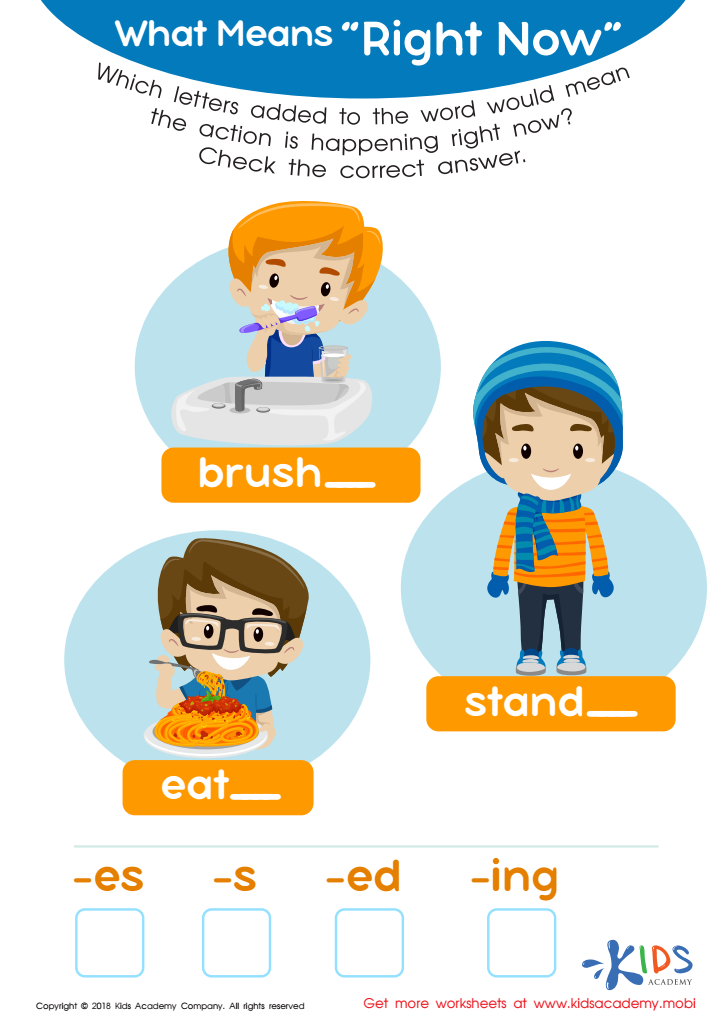
What Means "Right Now" Worksheet
 Assign to My Students
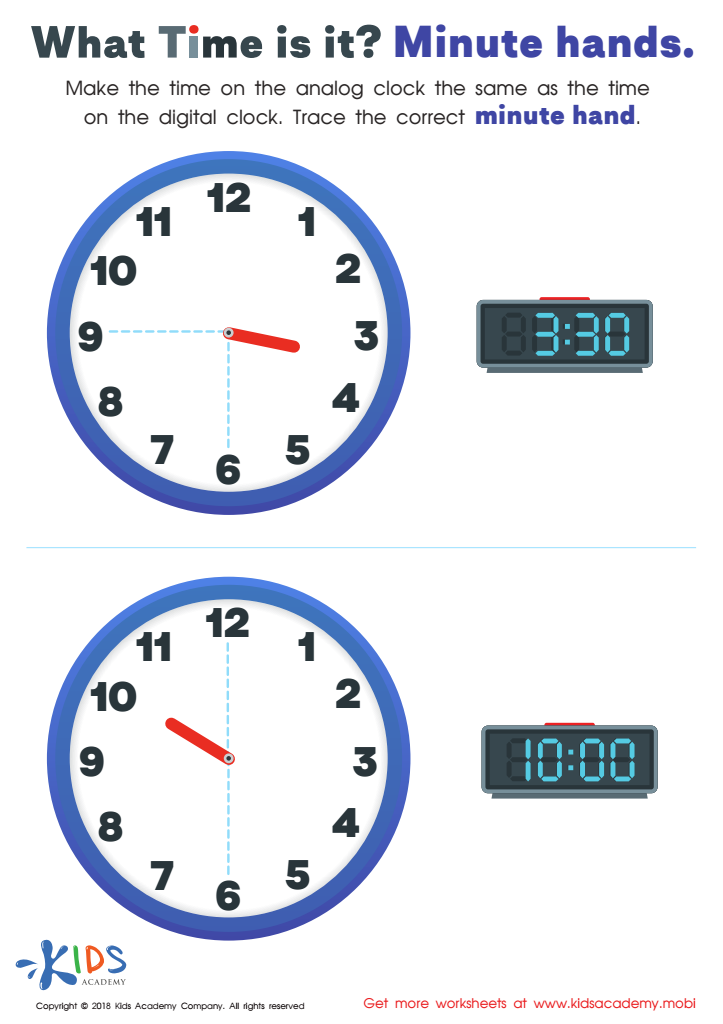
What Time Is it? Minute Hands Worksheet
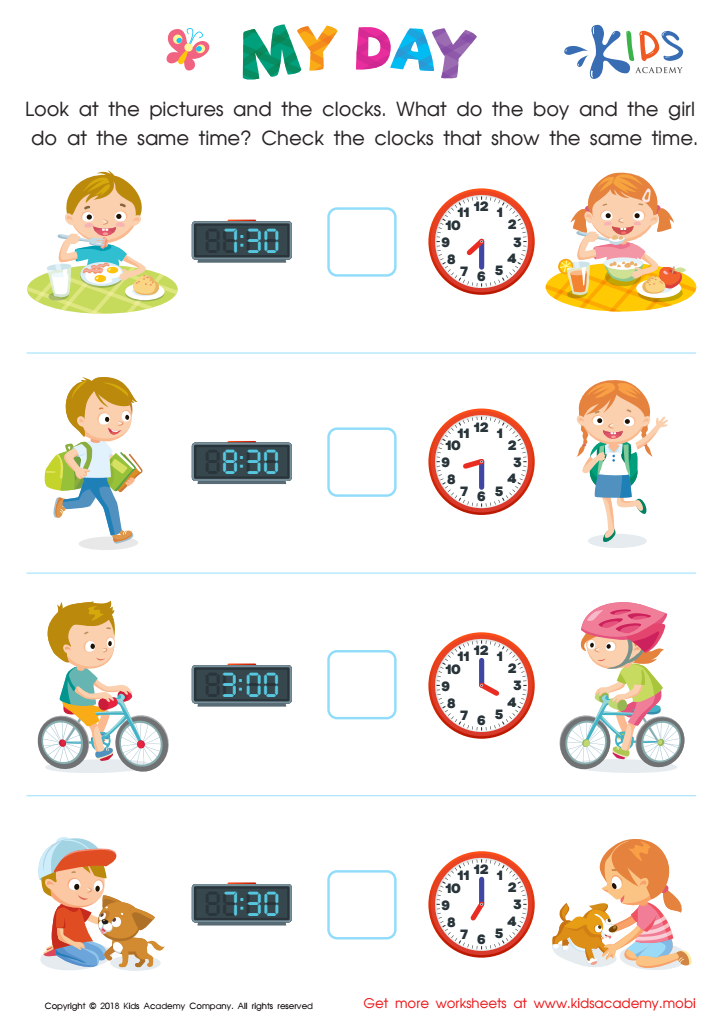
My Day Worksheet







Understanding time is a crucial skill for young children aged 4-6 as it lays the foundation for effective daily routines, personal responsibility, and cognitive development. At this stage, children are innately curious about the world around them, and time concepts like morning, afternoon, days, and seasons begin to shape their daily experiences.
For parents and teachers, making time comprehension easy and fun is essential. When children grasp the basics of time, they can better predict and understand their schedules, such as knowing when it's playtime, snack time, or bedtime. This creates a sense of security and helps minimize resistance to transitions, leading to smoother daily routines.
Moreover, learning about time helps in developing numeracy skills through the counting and sequence understanding required to tell time. Engaging activities like using clocks, calendars, and daily planners can intellectually stimulate children, fostering an early love for learning.
Emotionally, understanding time enhances a child's ability to be patient, wait their turn, and manage expectations. Teaching time concepts involves storytelling, songs, and hands-on activities, making the process enjoyable. Therefore, guiding children to understand and manage time offers immediate everyday benefits and sets the stage for future academic success and personal growth.








