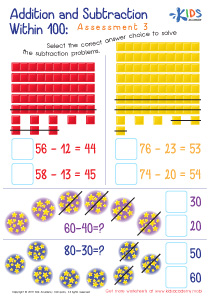
Number Recognition Easy Numbers up to 100 Worksheets for Ages 4-6
10 filtered results
-
From - To
Enhance your child's number skills with our "Number Recognition Easy Numbers up to 100 Worksheets" designed for ages 4-6. These engaging worksheets, available at Kids Academy, help young learners recognize and identify numbers up to 100 through captivating exercises and interactive activities. Perfect for reinforcing foundational math skills, these printables support early education, ensuring kids grasp essential concepts with ease. Ideal for preschool and kindergarten students, our worksheets provide ample practice, promoting confidence in counting and number recognition while fostering a love for learning math. Set your child on the path to success with these fun, educational resources.
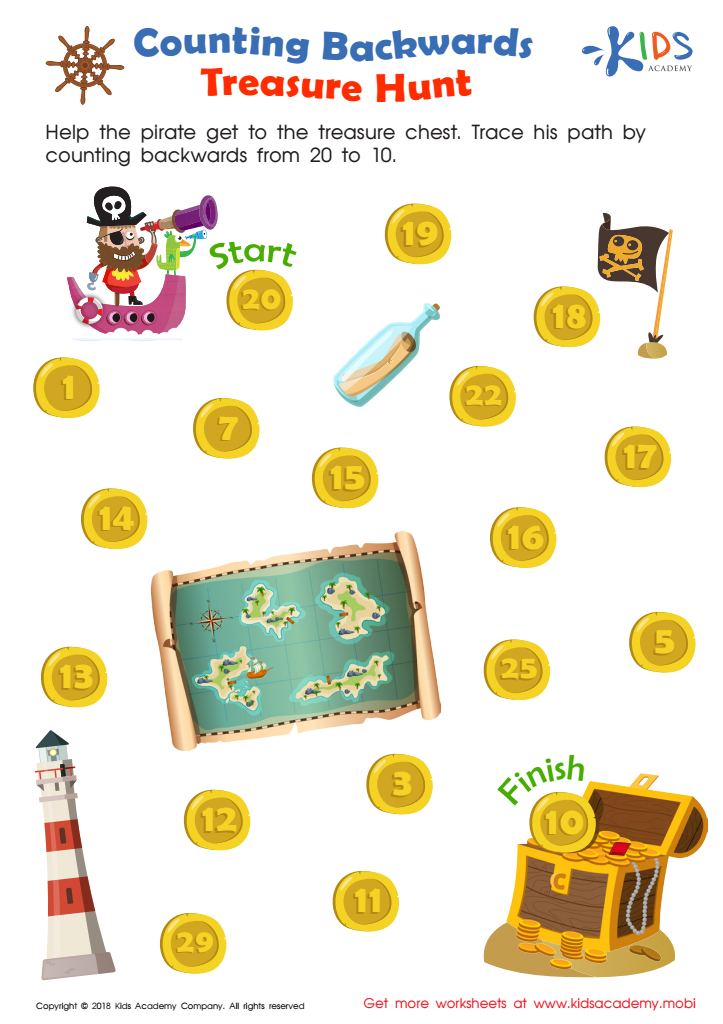
Counting Backwards: Treasure Hunt Worksheet
 Assign to My Students
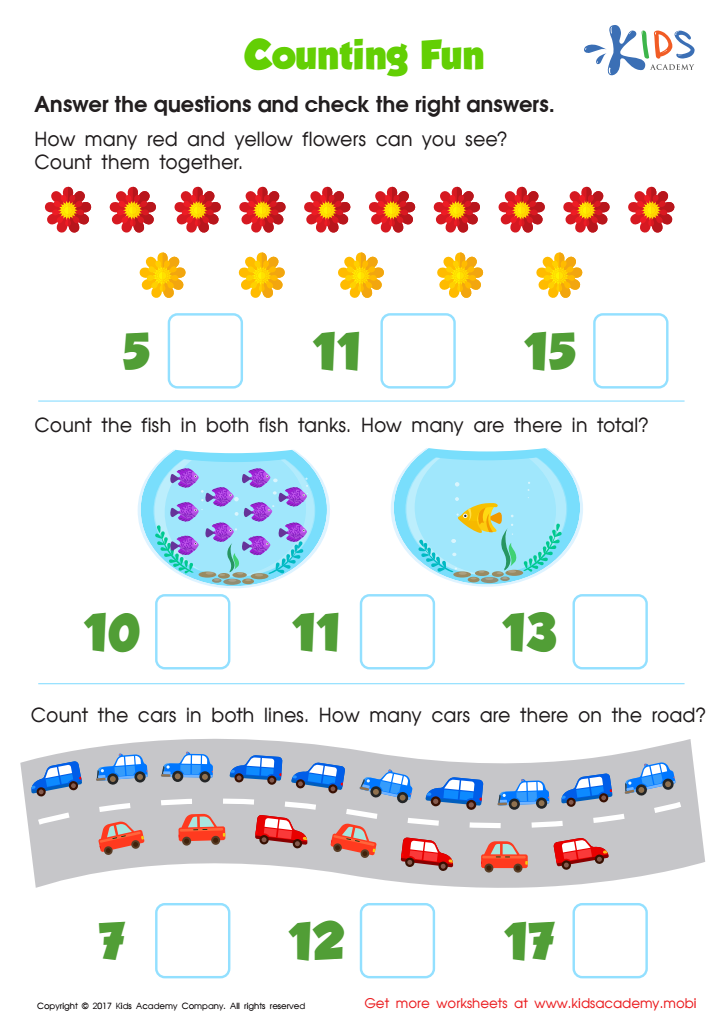
Counting Fun Worksheet
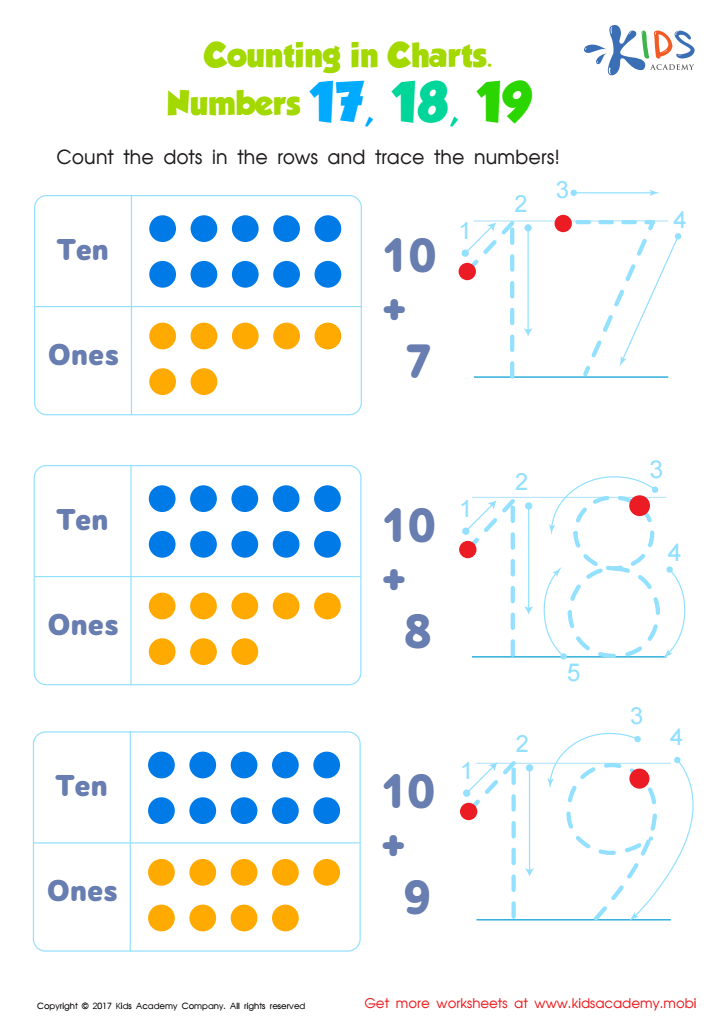
Kindergarten Number Tracing: Counting in Charts Worksheet
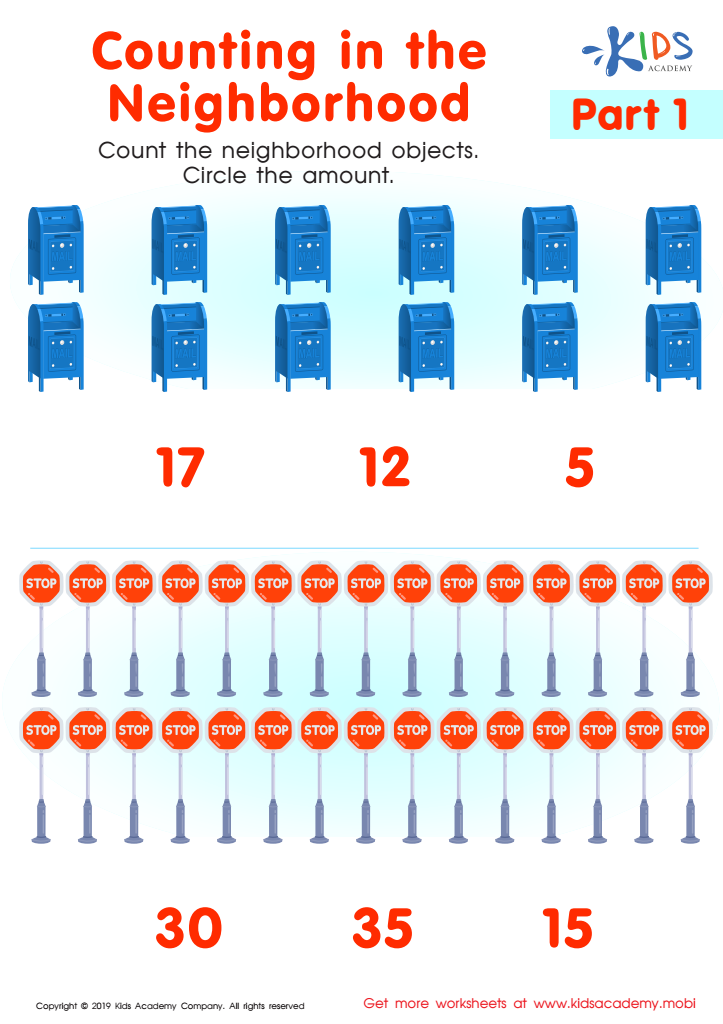
Counting in the Neighborhood Part1 Worksheet
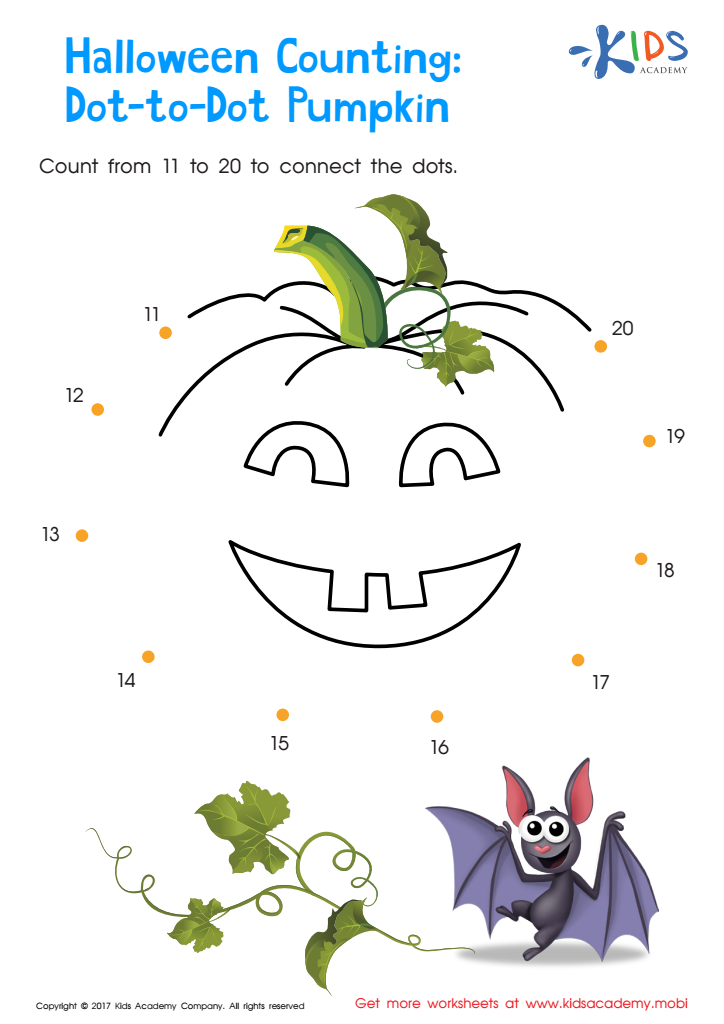
Ordering 11–20: Halloween Counting Worksheet
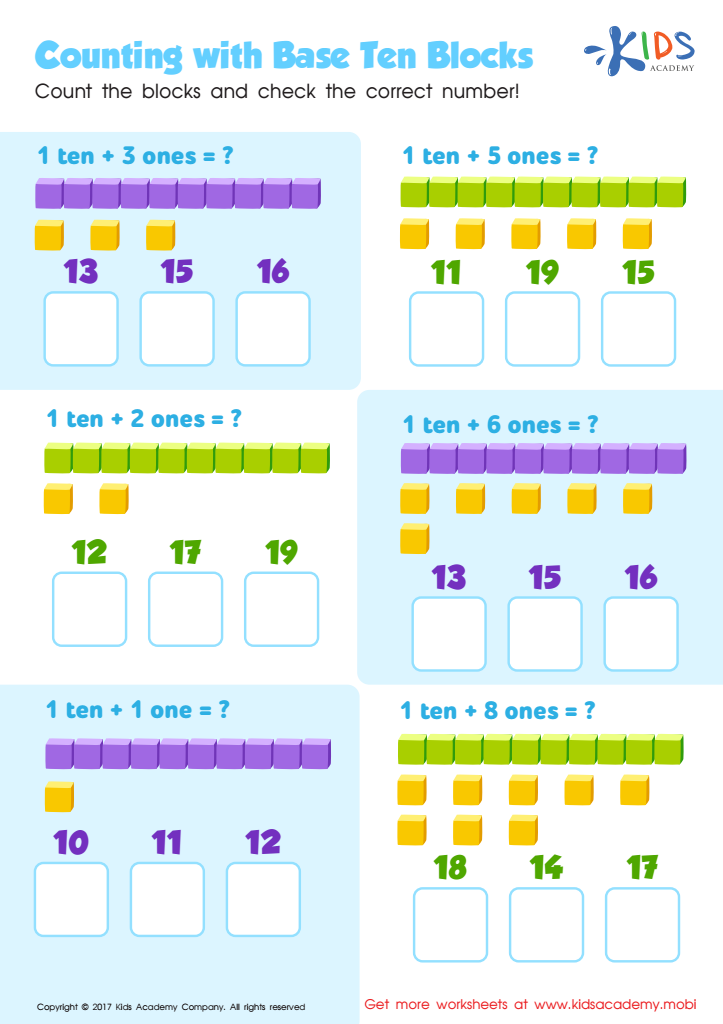
Counting with Base Ten Blocks Worksheet
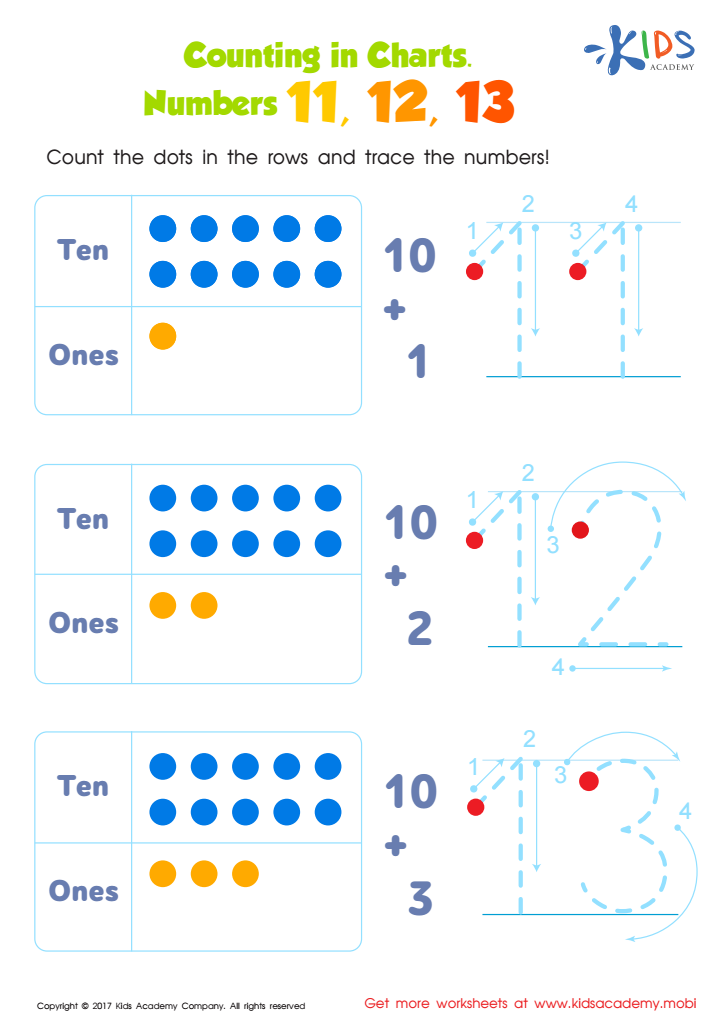
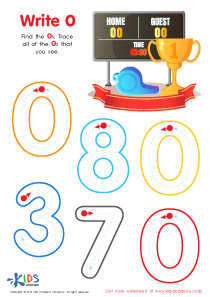
Number Tracing Worksheet For Kindergarten
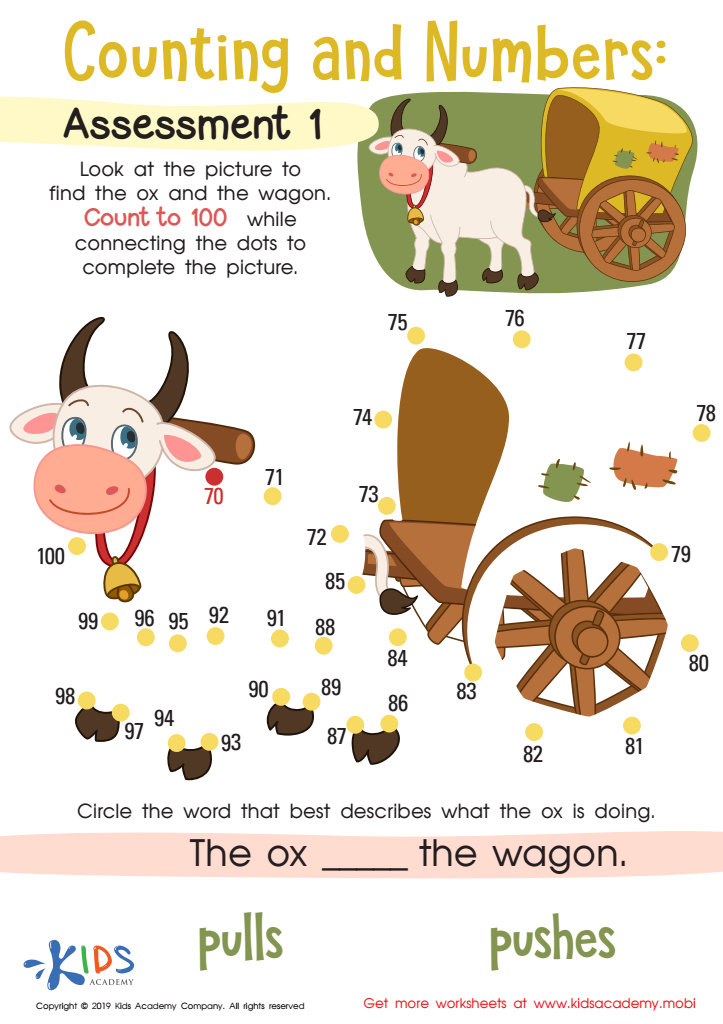
Counting and Numbers: Assessment 1 Worksheet
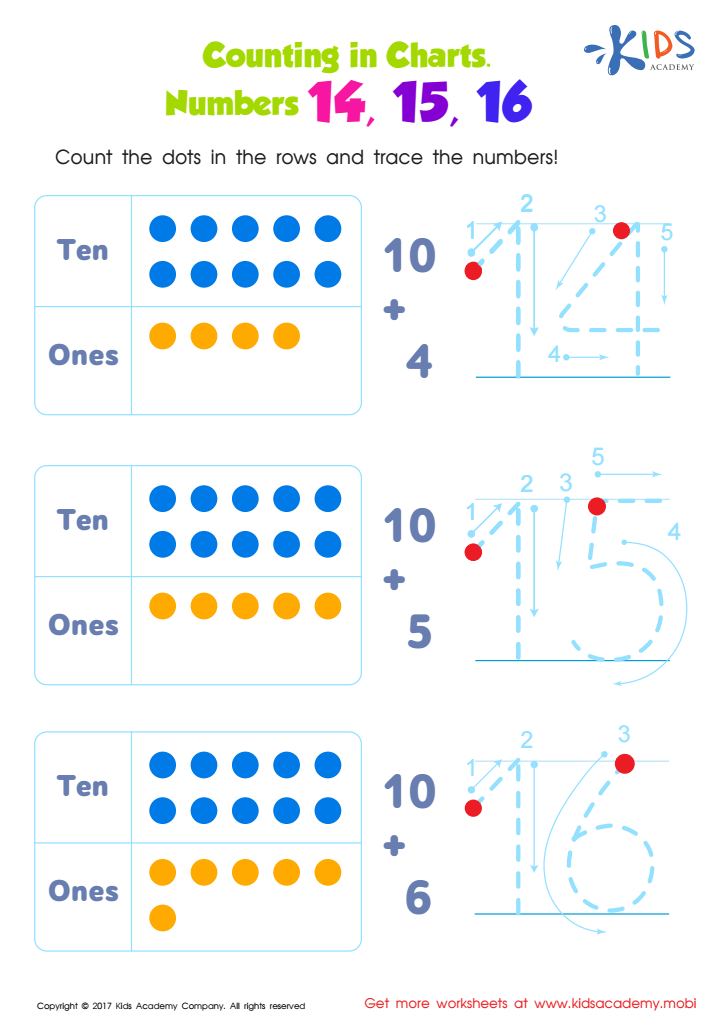
Number Tracing Worksheet

Counting on the City Skyline: Dot-to-Dot Worksheet



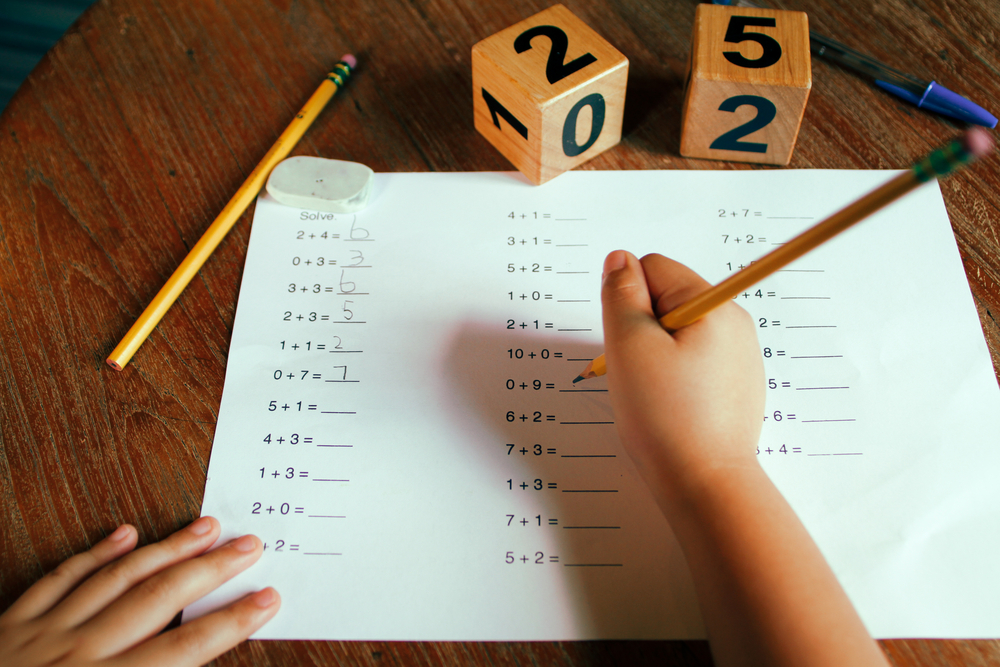




Number recognition up to 100 is a fundamental skill for young children and serves as a building block for mathematical understanding and success. At ages 4-6, children are in a critical developmental stage where they rapidly acquire cognitive and motor skills. Learning to recognize numbers up to 100 enhances their ability to grasp more complex concepts later.
Firstly, number recognition fosters numeracy skills. Recognizing and understanding numbers help children perform basic arithmetic operations such as addition, subtraction, and eventually multiplication and division. This foundational skill promotes confidence and a positive attitude towards math, a subject essential in many life areas.
Secondly, early exposure to numbers promotes cognitive development by enhancing memory, attention, and problem-solving abilities. Recognizing numbers also underpins logical thinking, aiding in sequencing, pattern recognition, and even literacy skills as they begin to correlate symbols (numbers) with quantities.
Furthermore, number recognition plays a crucial role in everyday living skills. Understanding numbers enables children to manage time, follow instructions, play games, and identify numbers in their environment, such as on buses, houses, or in phone numbers.
Finally, early number recognition effectively bridges home and school learning. Parents and teachers collaborating to reinforce this skill contribute to a consistent learning experience, ensuring children gain a strong mathematical foundation, thereby supporting their long-term academic and life success.