Filters

6 filtered results

Clear all filters
Favorites
With answer key
Interactive

6 filtered results

Difficulty Level

Grade


Discover our engaging "Reading Comprehension Easy Animals Worksheets" designed specifically for children aged 4-6! These fun and interactive worksheets help young learners enhance their reading skills while exploring the fascinating world of animals. Each worksheet includes age-appropriate texts accompanied by colorful illustrations and simple questions that spark curiosity and promote understanding. With a focus on comprehension, vocabulary, and critical thinking, these resources are perfect for at-home learning or classroom activities. Support your child's literacy journey while fostering a love for animals and nature. Explore our easy-to-use worksheets today and watch your child's confidence soar as they read!

Check out this FREE Trial Lesson on Animals for age 4-6!

Parent and Offspring Behavior

Favorites
With answer key
Interactive
  • 4-6
  • Reading comprehension
  • Animals
  • Easy
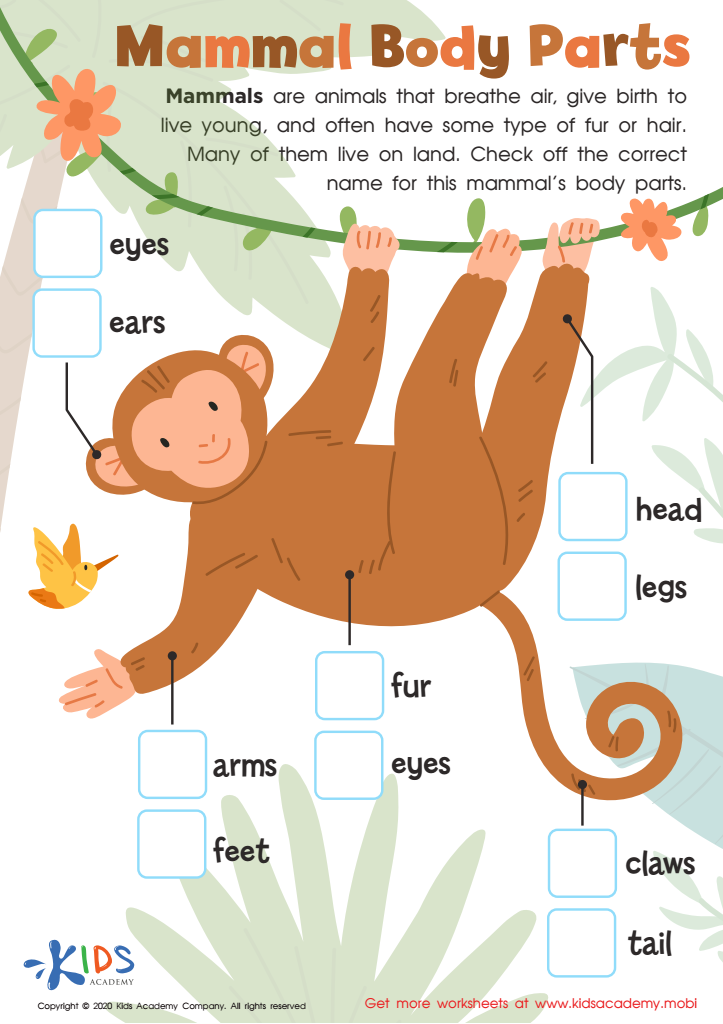
Mammal Body Parts Worksheet

Mammal Body Parts Worksheet

Help your little scientist identify a mammal's body parts with this cute and colorful worksheet. It includes fur, arms, legs, tails, and more! Read the passage to learn what makes an animal a mammal, then have them check off the boxes to identify parts of the monkey. It's a fun way to learn about animals in the animal kingdom!
Mammal Body Parts Worksheet
Worksheet
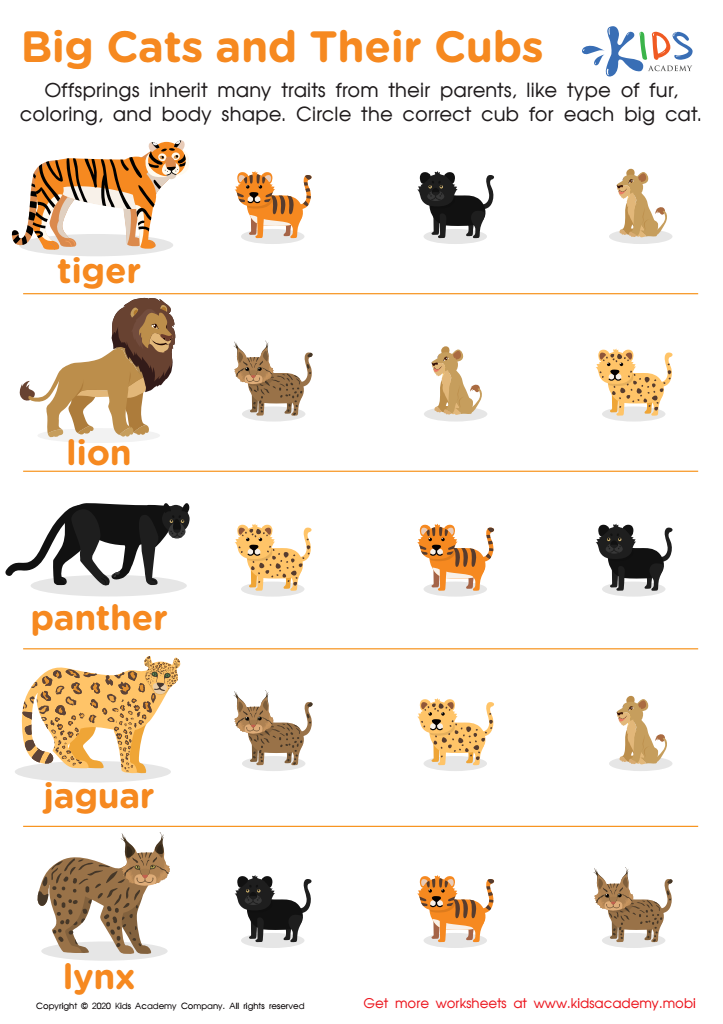
Big Cats and Their Cubs Worksheet

Big Cats and Their Cubs Worksheet

Kids are often like their parents, and the same is true for big cats and their cubs. Introduce your young scientists to genetics with this fun printable worksheet from Kids Academy! Observe the big cats and their cubs, then circle the right cub to complete! It's a great way to teach an early lesson in genetics.
Big Cats and Their Cubs Worksheet
Worksheet
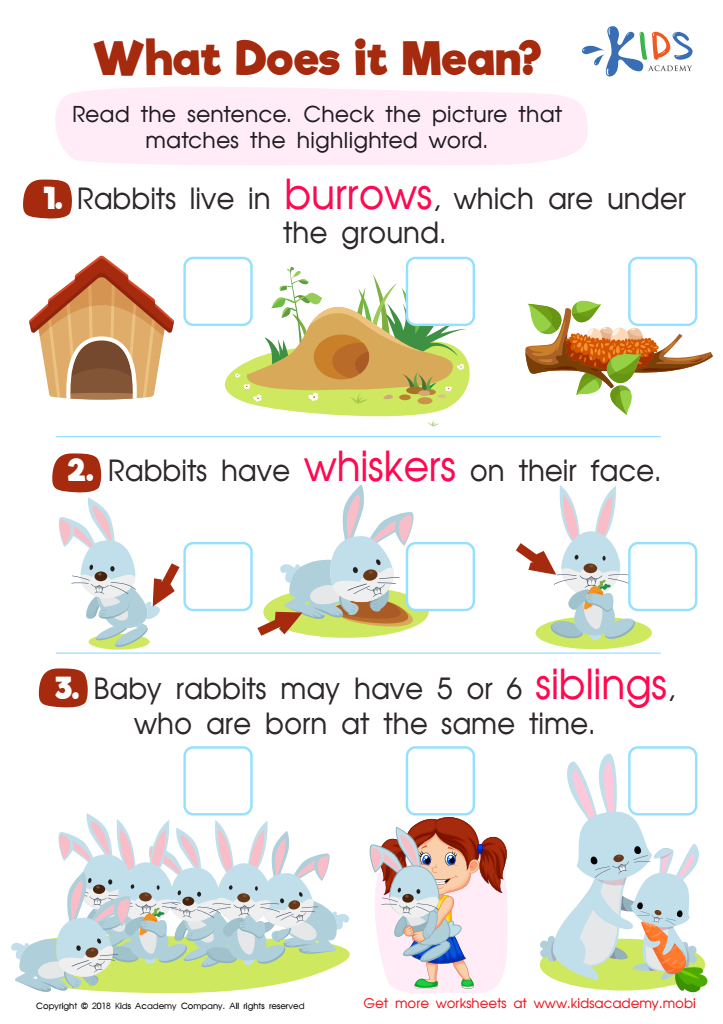
What Does It Mean? Worksheet

What Does It Mean? Worksheet

Teach your child to use context clues with this engaging Kids Academy worksheet. Read the sentences and find the pink-highlighted word. Use the other words in the sentence to figure out the meaning, then check the box next to the picture that represents it.
What Does It Mean? Worksheet
Worksheet
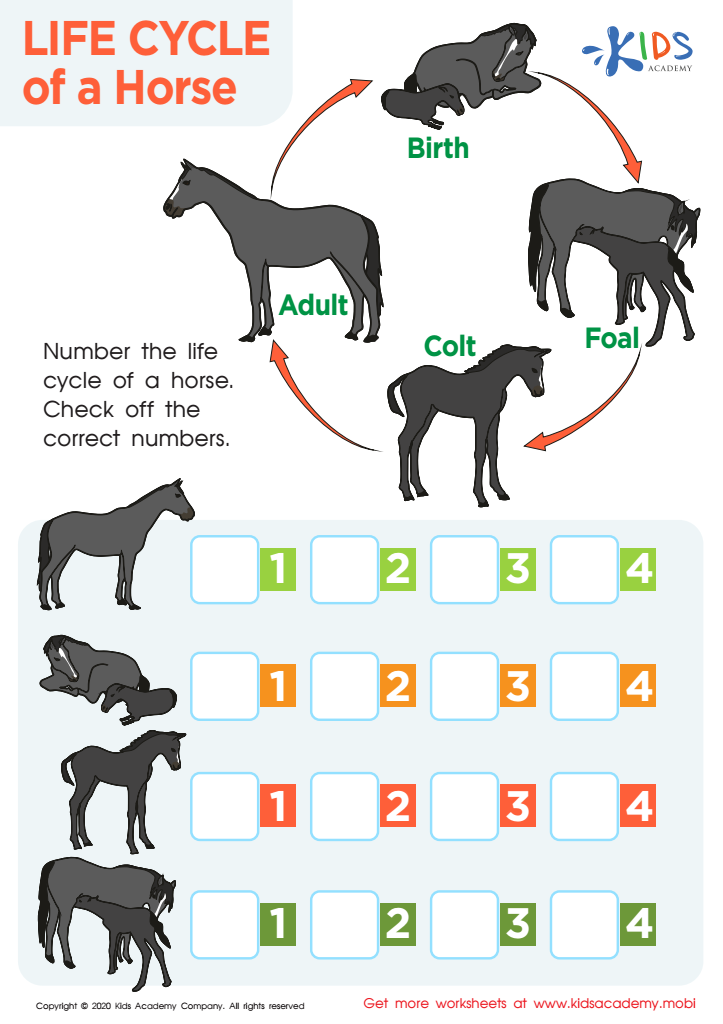
Life Cycle of a Horse Worksheet

Life Cycle of a Horse Worksheet

Kids Academy's science worksheet on horses' lifecycles offers an engaging way for kids to learn! They'll study the diagram and label each stage of life, from birth to adulthood, and then number the pictures to mark the correct sequence. Fun and educational - a perfect way to get your kids learning!
Life Cycle of a Horse Worksheet
Worksheet
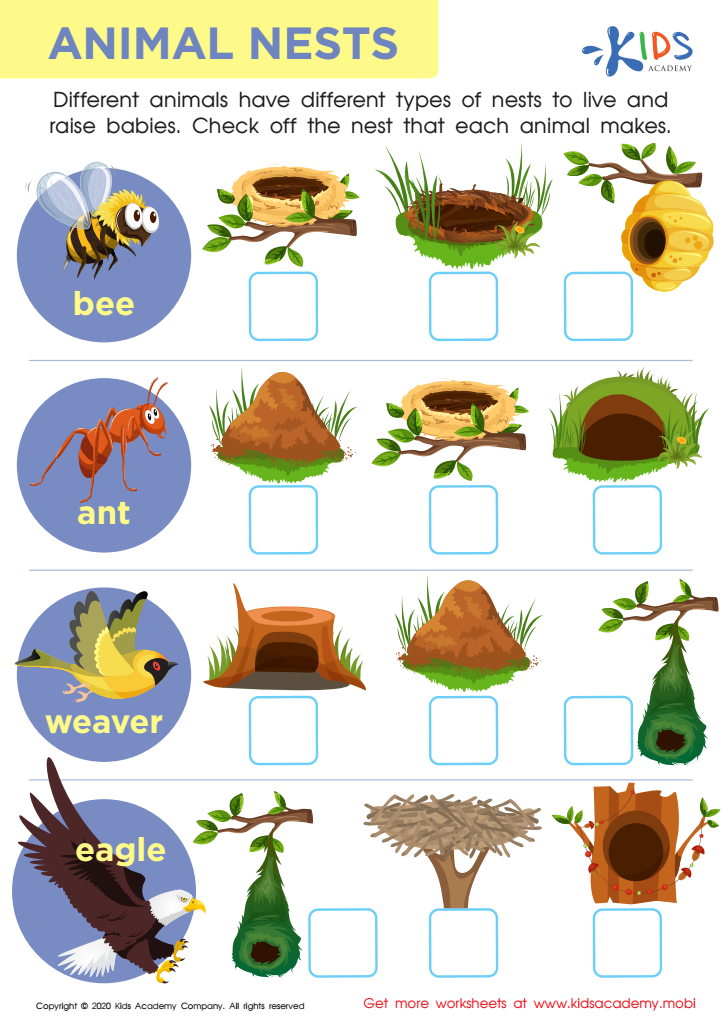
Animal Nests Worksheet

Animal Nests Worksheet

Animals need homes to sleep and stay safe. Look at the animal on the left and examine the nests and hives to the right. Check off the correct one for each animal to complete the worksheet! From birds to bees, it's a great way to show different types of homes animals make!
Animal Nests Worksheet
Worksheet
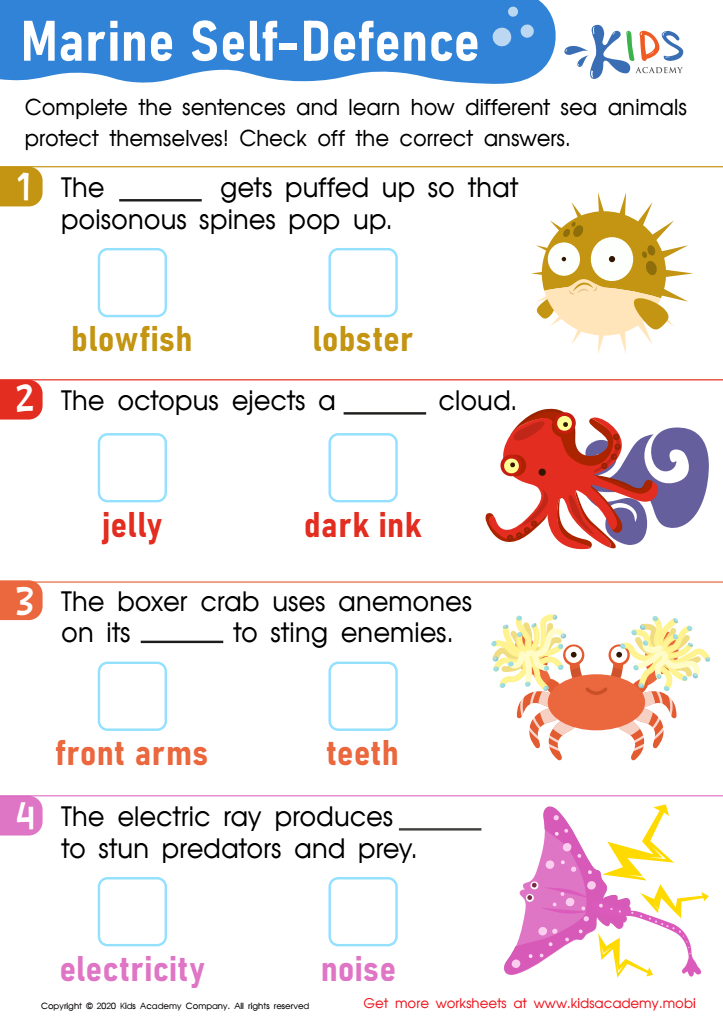
Marine Self-Defence Worksheet


Marine Self-Defence Worksheet

Kids will love discovering the ingenious ways sea creatures protect themselves from predators such as sharks and whales! Let them explore the strategies with this fun science worksheet, which features vibrant illustrations. Have them fill in the blanks with each creature's defense strategy, such as shells, spikes, ink, or even electricity!
Marine Self-Defence Worksheet
Worksheet


Parents and teachers should prioritize reading comprehension resources like "Easy Animals" for children ages 4-6 because these early years are critical for language development. Understanding what is read lays the foundation for all future learning. "Easy Animals" engages young learners with simple, relatable content that captures their attention while introducing them to new vocabulary and concepts in a fun way.

At this age, children are naturally curious about the world around them, and animals are particularly captivating subjects. Stories about animals not only enhance vocabulary but also foster critical thinking skills as children learn to make connections, predict outcomes, and discern facts from imagination. Furthermore, discussing the stories encourages effective communication skills.

Reading together also strengthens the bond between parents and children, making learning a shared experience. Teachers can use such resources to develop group activities that promote collaborative learning. By focusing on reading comprehension, parents and teachers work together to ensure children develop a love for reading, which is crucial for their academic success. Ultimately, investing in tools like "Easy Animals" sets the stage for cognitive development and instills a lifelong appreciation of reading, which can positively influence all areas of a child's education.