Basic counting skills Easy Worksheets for Ages 4-7
6 filtered results
-
From - To
Explore our "Basic Counting Skills Easy Worksheets" designed specifically for children ages 4 to 7. These engaging and interactive worksheets provide young learners with the foundational counting skills they need to thrive in early math education. Featuring colorful illustrations and age-appropriate activities, children will practice counting objects, recognizing numbers, and developing essential number sense in a fun way. Perfect for classroom use or at-home learning, these worksheets help boost confidence and make learning enjoyable. Download today and embark on a counting adventure that lays the groundwork for future math success and inspires a lifelong love for learning!
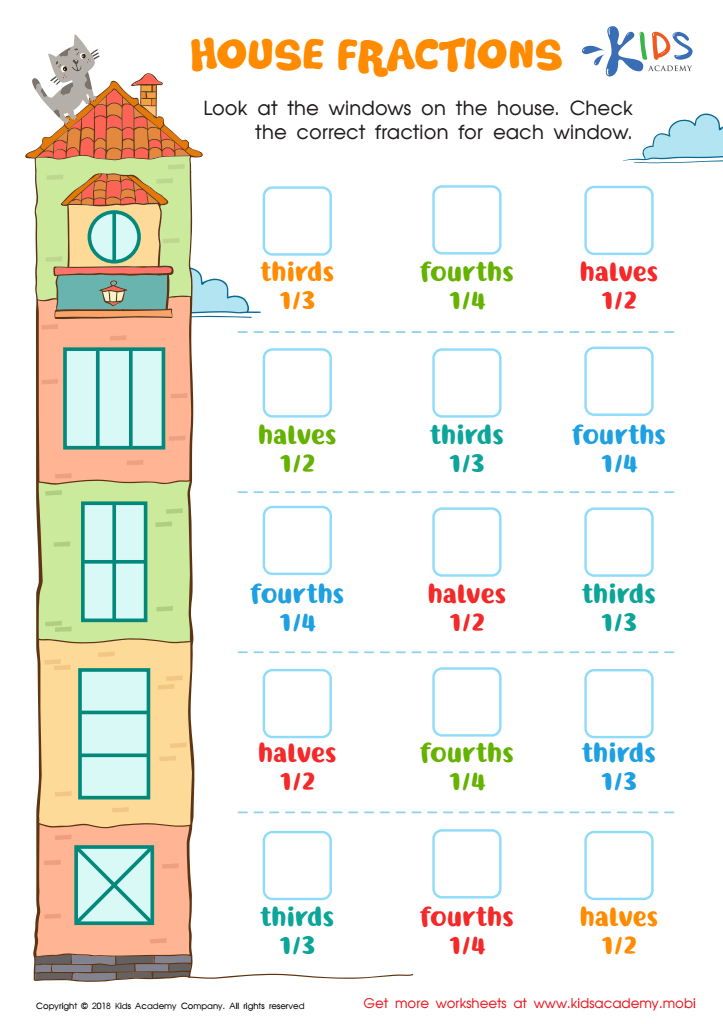
House Fractions Worksheet
 Assign to My Students

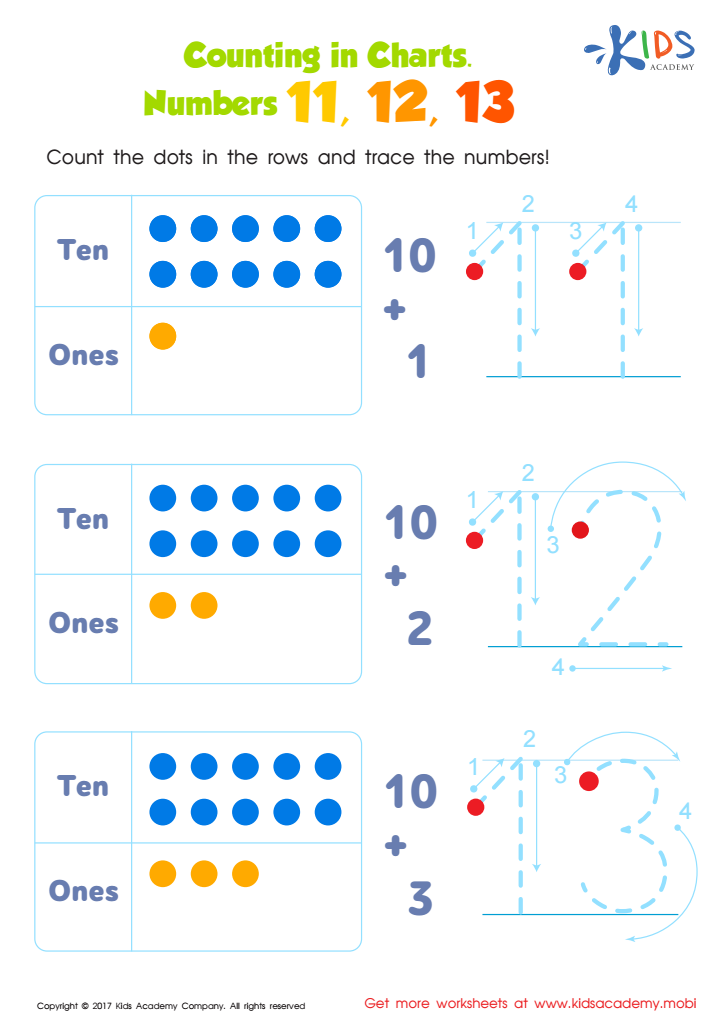
Number Tracing Worksheet For Kindergarten
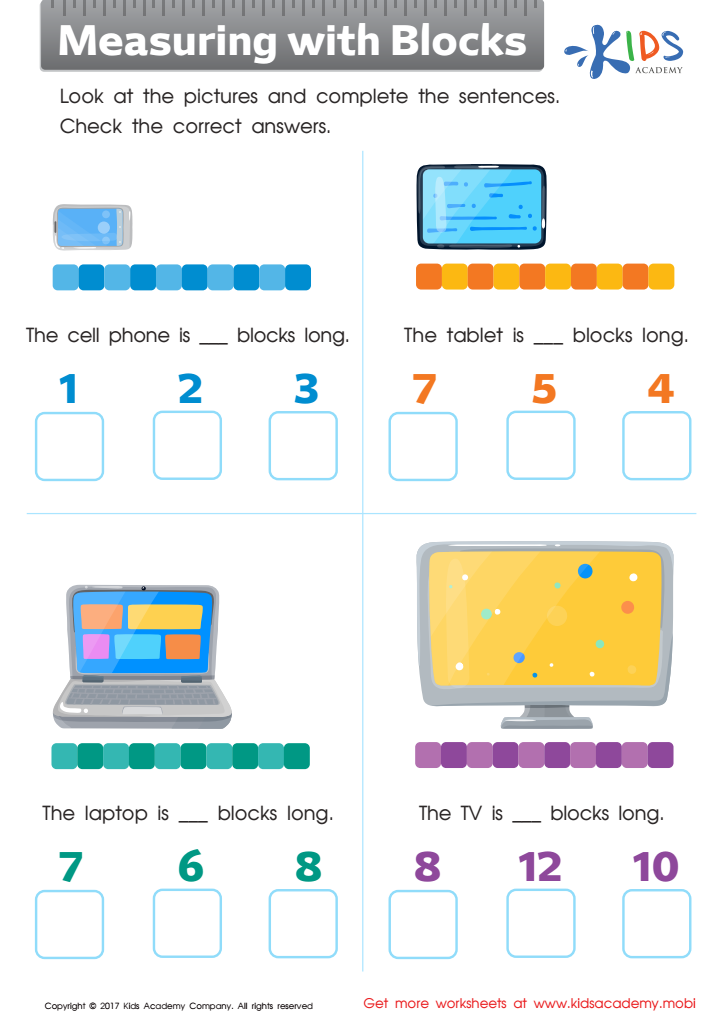
Measuring with Blocks Worksheet
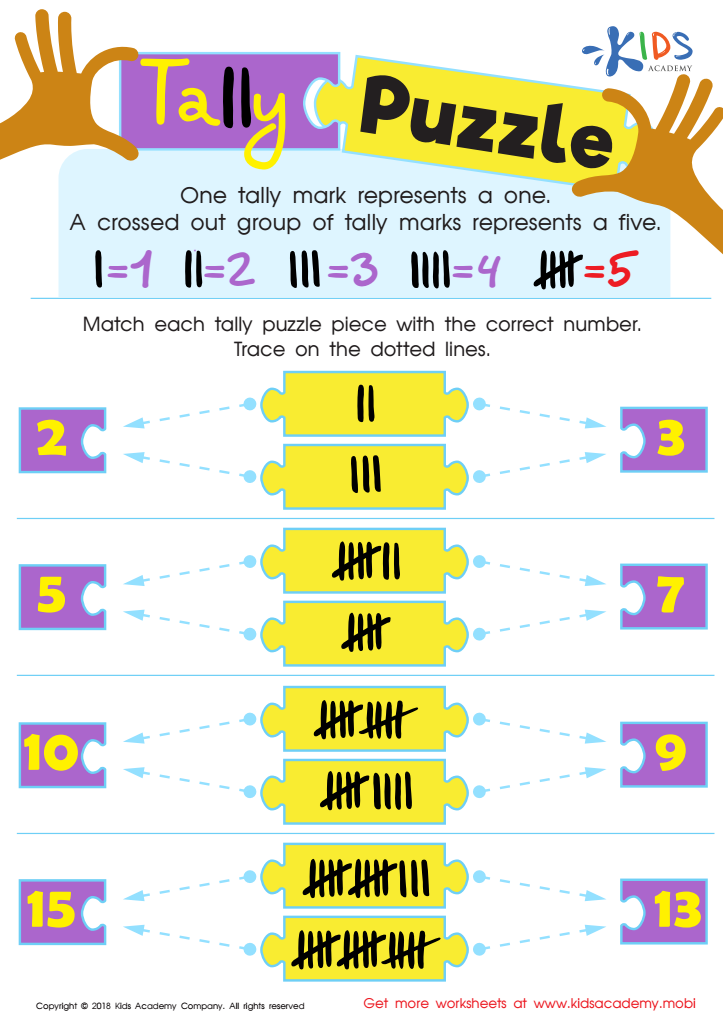
Tally Puzzle Worksheet
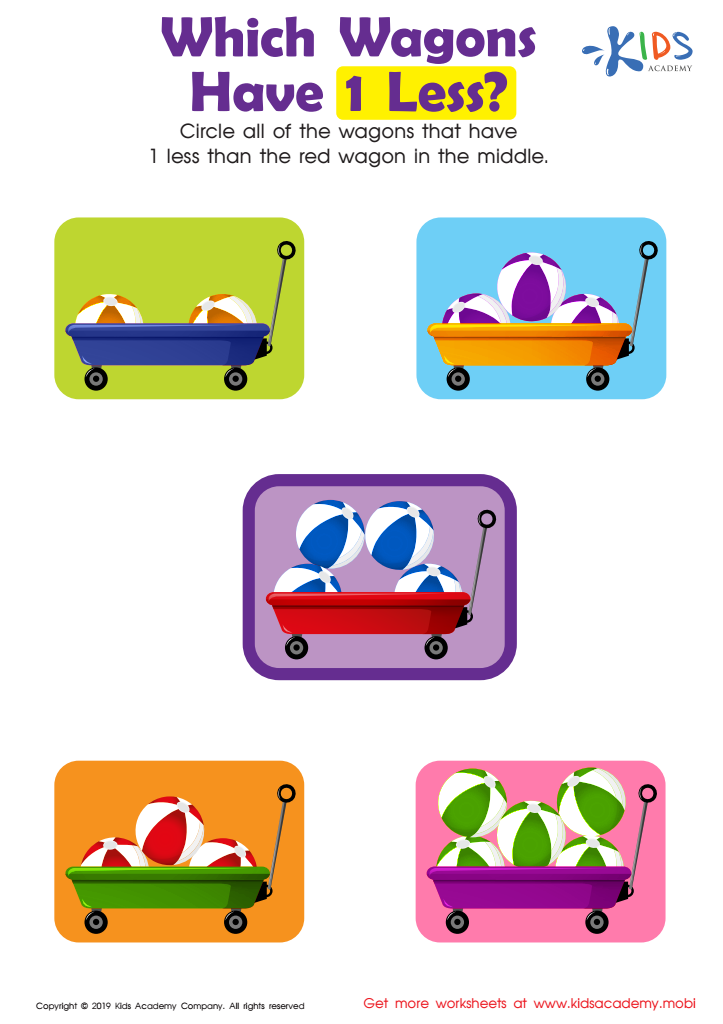
Which Wagons Have 1 Less? Worksheet






Basic counting skills are foundational to a child’s overall cognitive development, making them crucial for parents and teachers to emphasize from ages 4 to 7. At this stage, children are developing essential problem-solving and critical thinking abilities. Basic counting serves as the building block for more advanced mathematical concepts, such as addition, subtraction, and measurement.
Furthermore, counting goes beyond academics; it fosters symbolic thinking as children learn to associate numbers with quantities, enhancing their understanding of the world around them. Engaging in counting activities helps children develop fine motor skills and encourages language development through number-related vocabulary.
Additionally, early counting helps establish positive attitudes toward learning and math. When children feel confident in these skills, they are more likely to embrace future challenges rather than shy away from them.
By incorporating counting into daily activities—like counting fruits during snack time or steps while walking—parents and teachers can create fun and enriching environments that promote engagement. Understanding and prioritizing basic counting skills ultimately lays the groundwork for academic success and lifelong learning, enabling children to navigate not just math but various real-life situations with confidence.








