Basic counting skills Easy Worksheets for Ages 4-9
6 filtered results
-
From - To
Unlock your child's potential with our "Basic Counting Skills Easy Worksheets for Ages 4-9." Carefully designed by educational experts, these worksheets offer engaging and interactive activities to help young learners master counting up to 10, 20, and beyond. Perfect for preschool and early elementary students, each printable sheet features fun themes, colorful illustrations, and clear instructions to enhance number recognition, counting sequences, and basic math foundations. Encourage your child's love for learning and build their confidence with our comprehensive set of counting practice exercises. Visit our site to download these essential learning resources today!
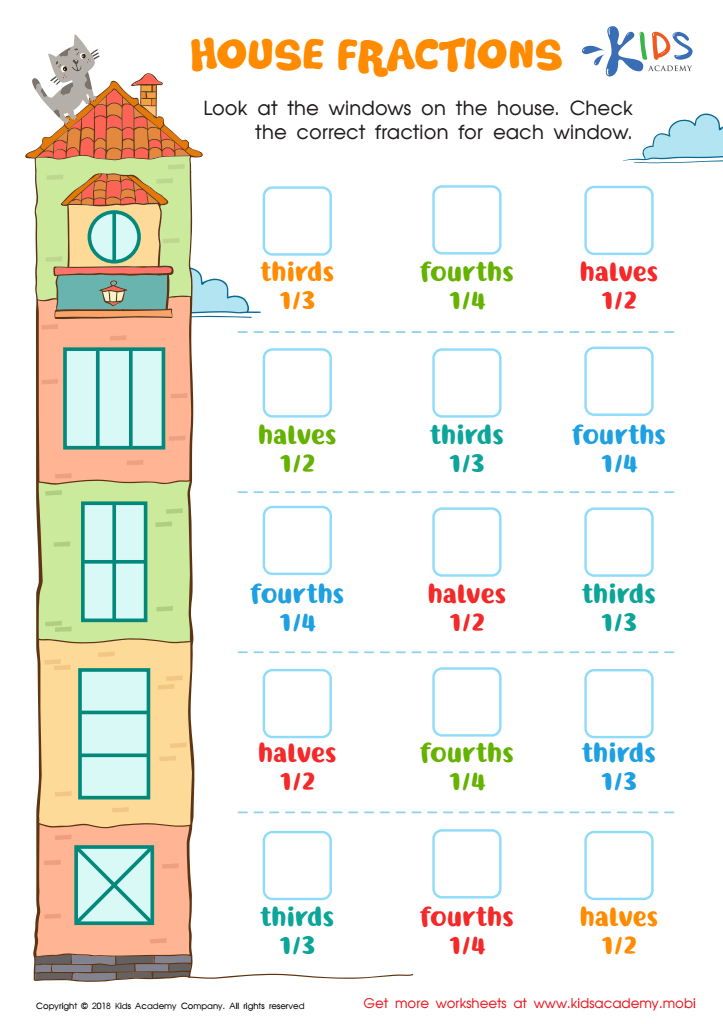
House Fractions Worksheet
 Assign to My Students

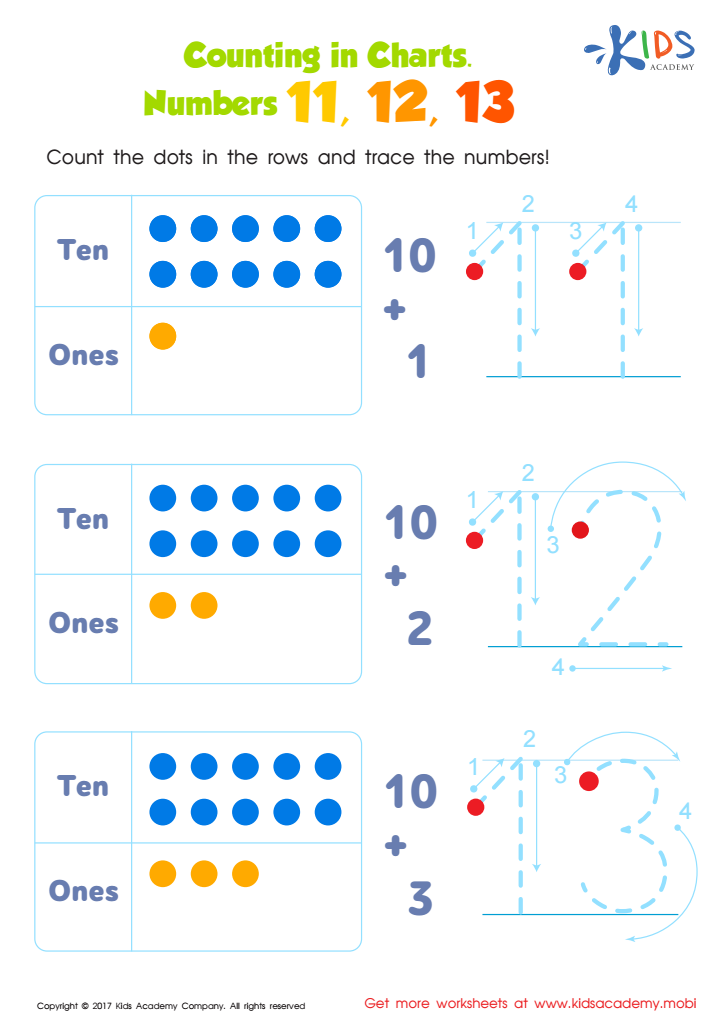
Number Tracing Worksheet For Kindergarten
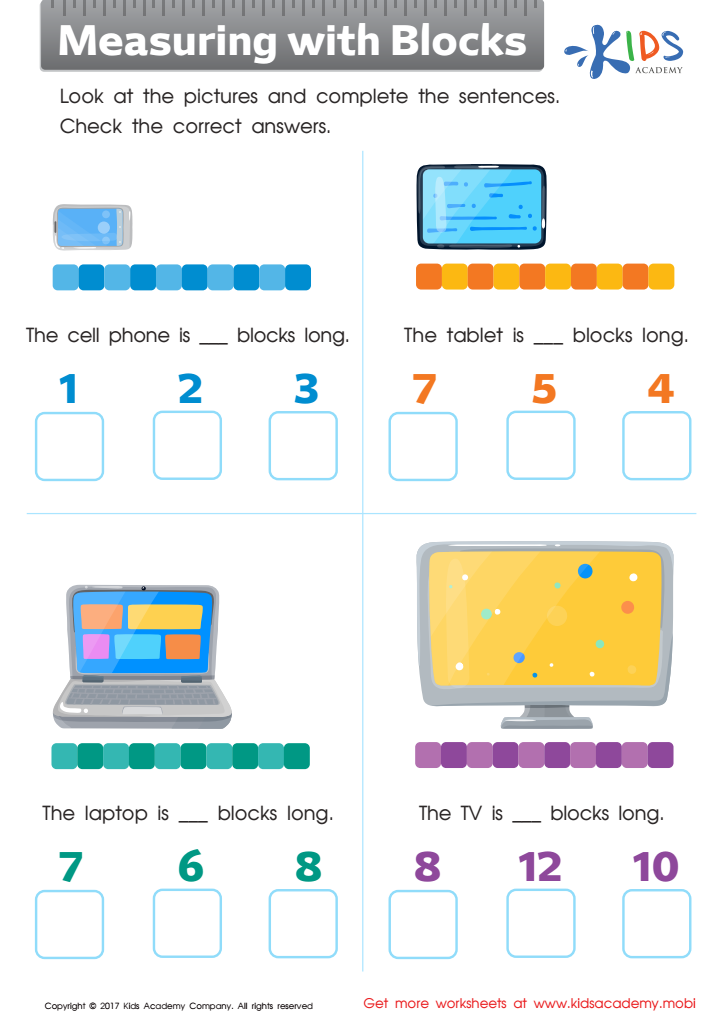
Measuring with Blocks Worksheet
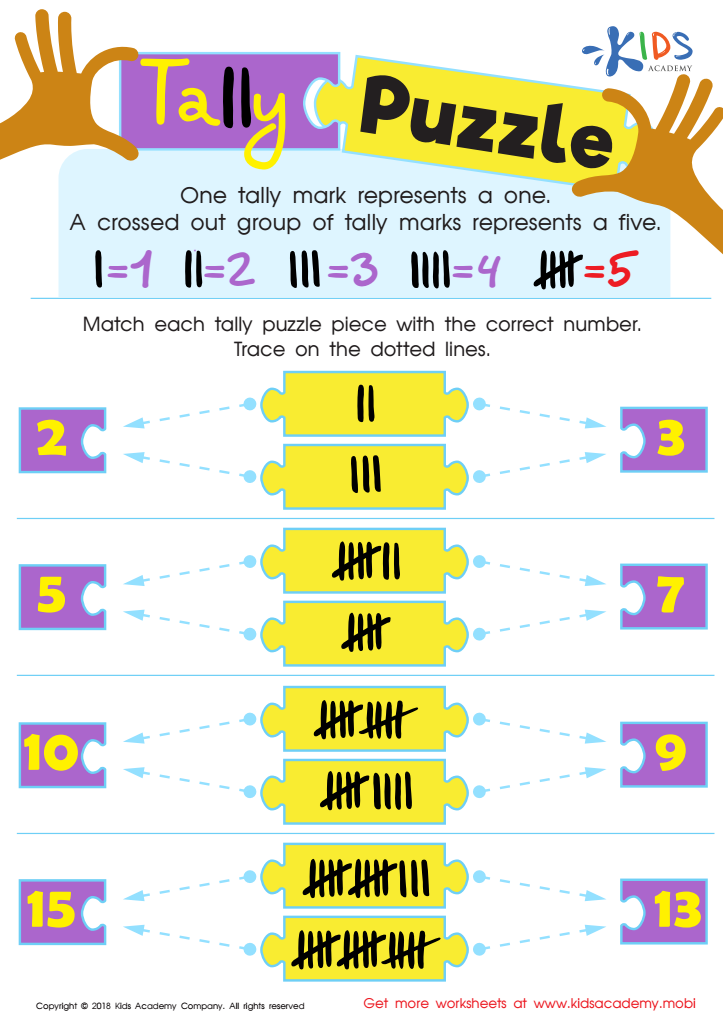
Tally Puzzle Worksheet
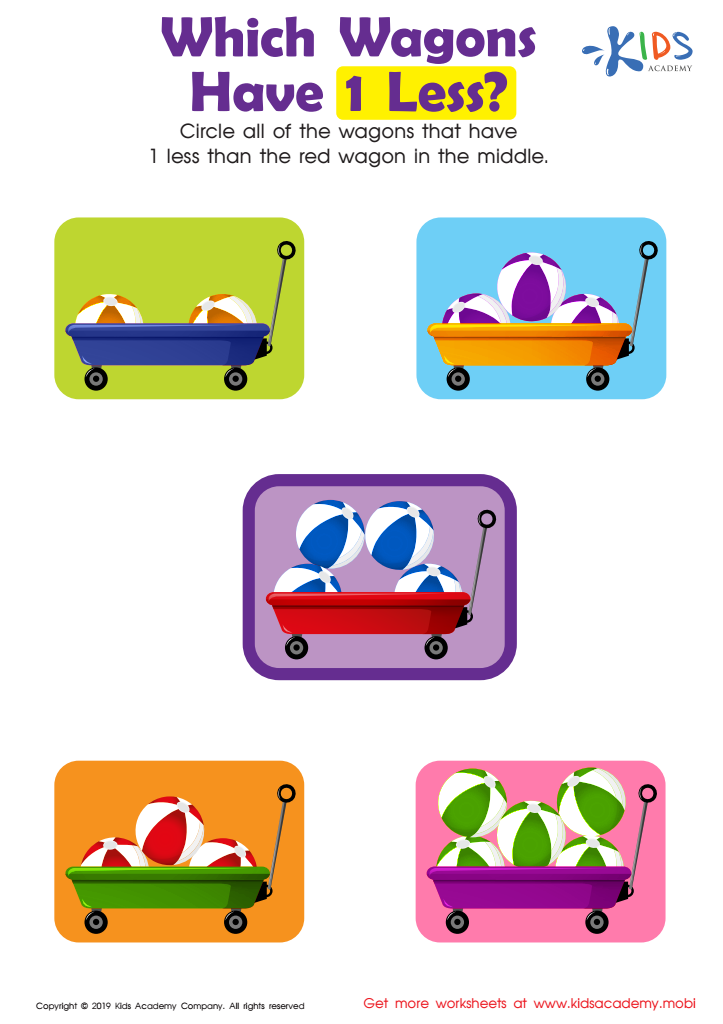
Which Wagons Have 1 Less? Worksheet





.jpg)

Basic counting skills are fundamental for children's early mathematical understanding and their overall cognitive development. These skills are foundational for more complex mathematical concepts introduced later in school. For children ages 4-9, counting is not only about learning numbers but also about understanding their value and the ability to manipulate them, like recognizing patterns or performing basic arithmetic.
By focusing on counting skills, parents and teachers help children develop their problem-solving abilities and logical thinking. Counting also enhances memory and attention spans, as young children learn to focus and keep track of numbers. Furthermore, early counting experiences can build a child's confidence in their academic abilities, fostering a positive attitude toward learning.
Counting skills are also practical in real-life situations. Children use counting to share items fairly, manage their time, and even understand basic money transactions. Incorporating counting activities in daily routines, such as counting toys, steps, or snacks, can establish a strong mathematical foundation, making future learning smoother and more intuitive.
Thus, nurturing these skills from a young age equips children with critical tools for academic success and everyday problem-solving, setting them up for a lifetime of learning and critical thinking. Parents and teachers play an essential role in this foundational stage by integrating counting into engaging and meaningful activities.








