Understanding fractions Easy Geometry Worksheets for Ages 4-9
16 filtered results
-
From - To
Explore the world of fractions with our "Understanding Fractions Easy Geometry Worksheets" designed for children ages 4-9! These engaging, interactive worksheets make learning about fractions fun and accessible. Tailored to young learners, our materials offer vibrant visuals and simple exercises that promote understanding and confidence in basic fraction concepts. Kids will enjoy hands-on activities that reinforce their knowledge while developing essential math skills. Perfect for classroom use or at-home learning, these worksheets foster a positive learning experience through playful engagement. Bring mathematics to life, helping your child build a strong foundation in geometry and fractions today!
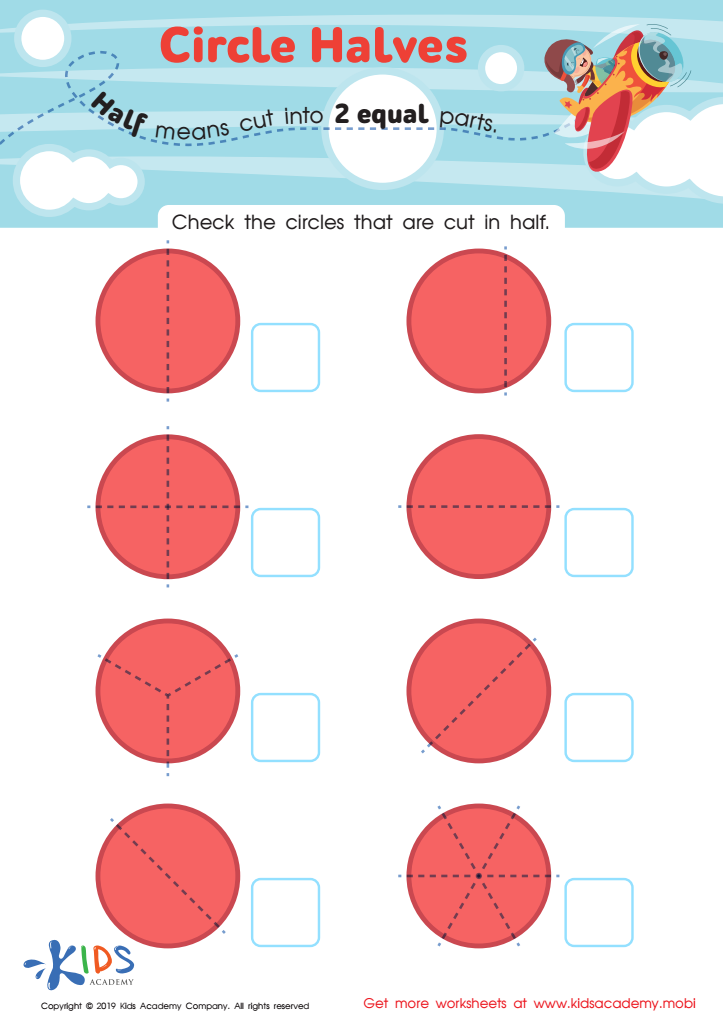
Circle Halves Worksheet
 Assign to My Students











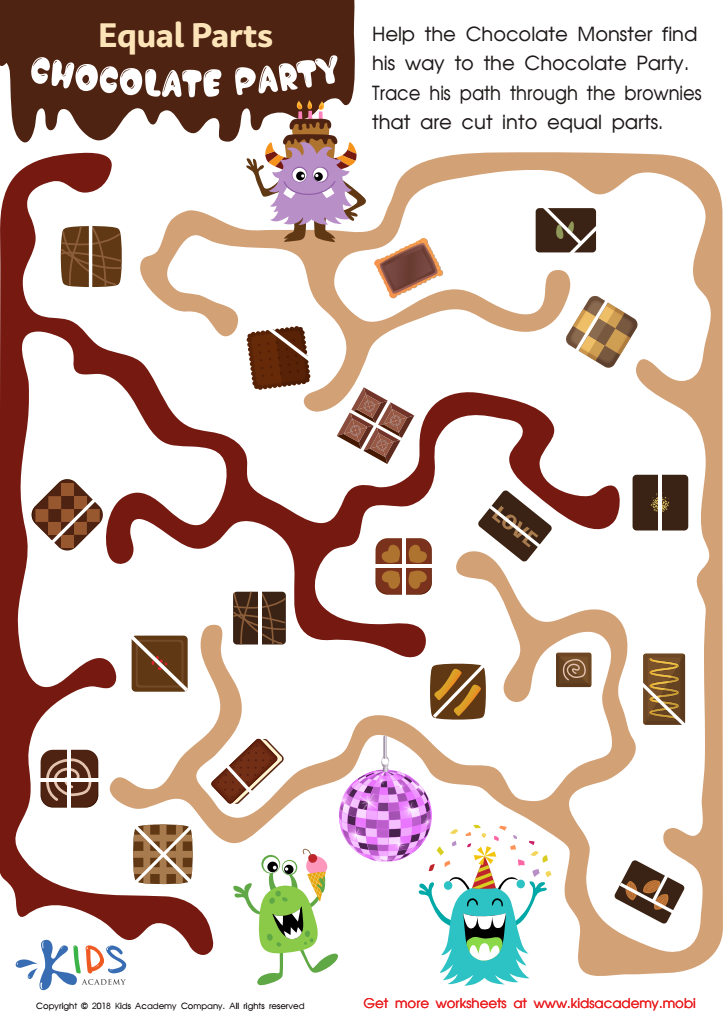
Equal Parts: Chocolate Party Worksheet
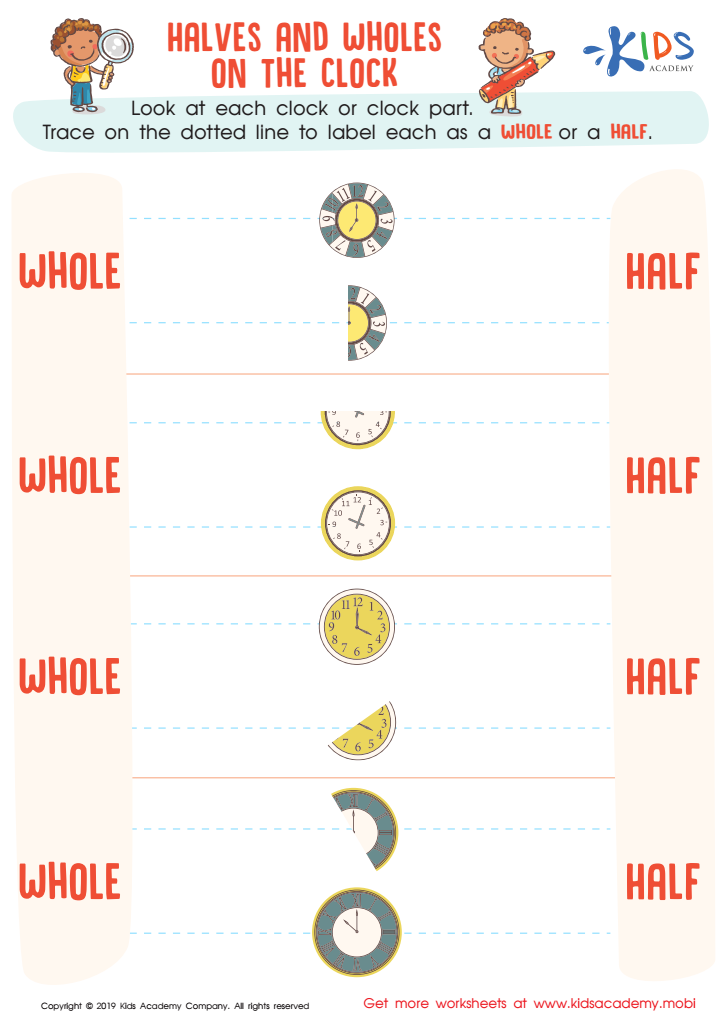
Halves and Wholes on the Clock Worksheet
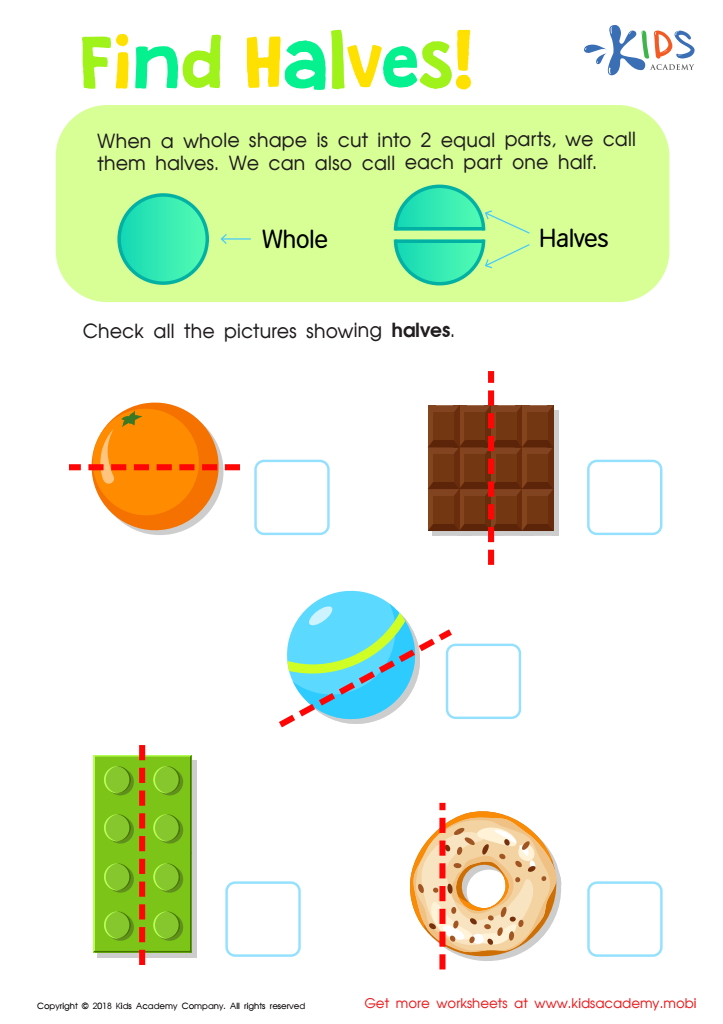
Find Halves Worksheet
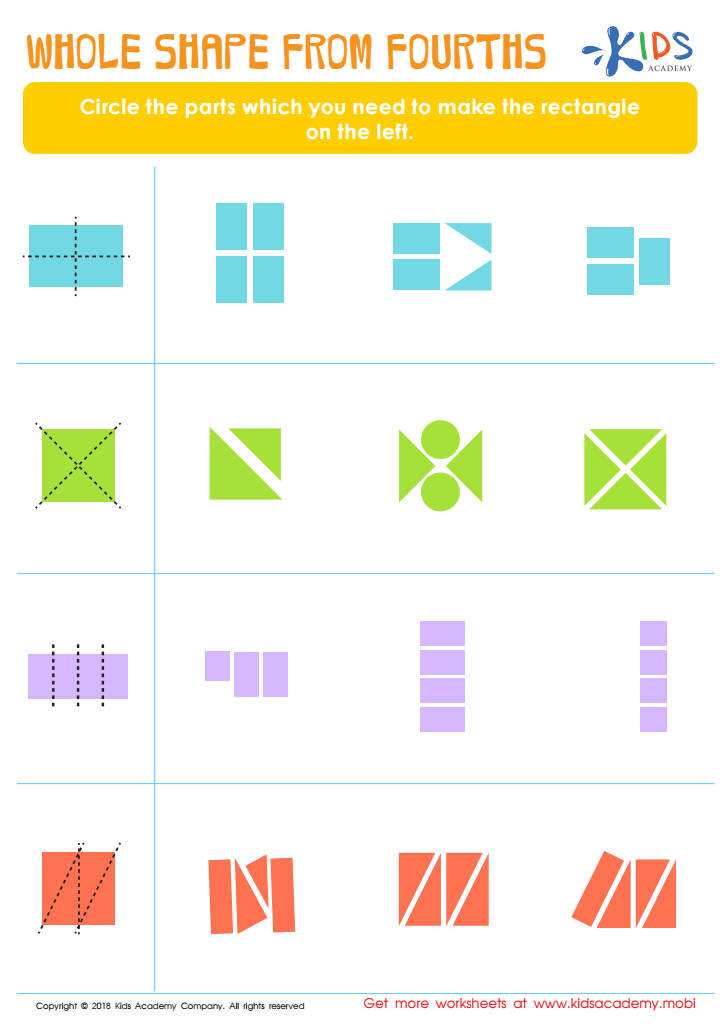
Whole Shape from Fourths Worksheet
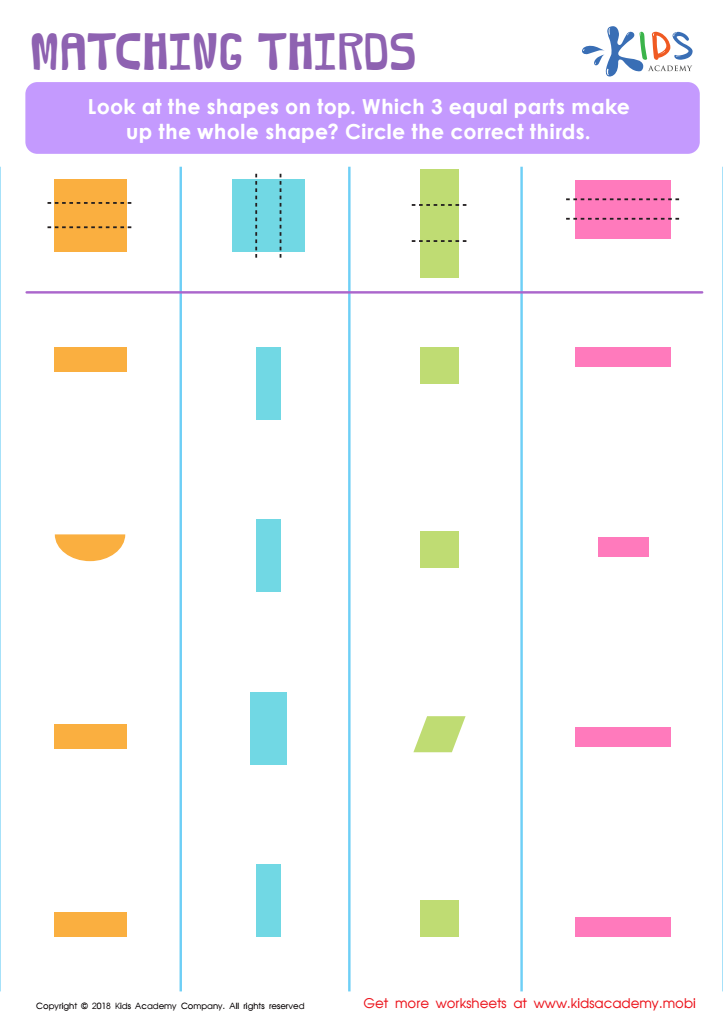
Matching Thirds Worksheet
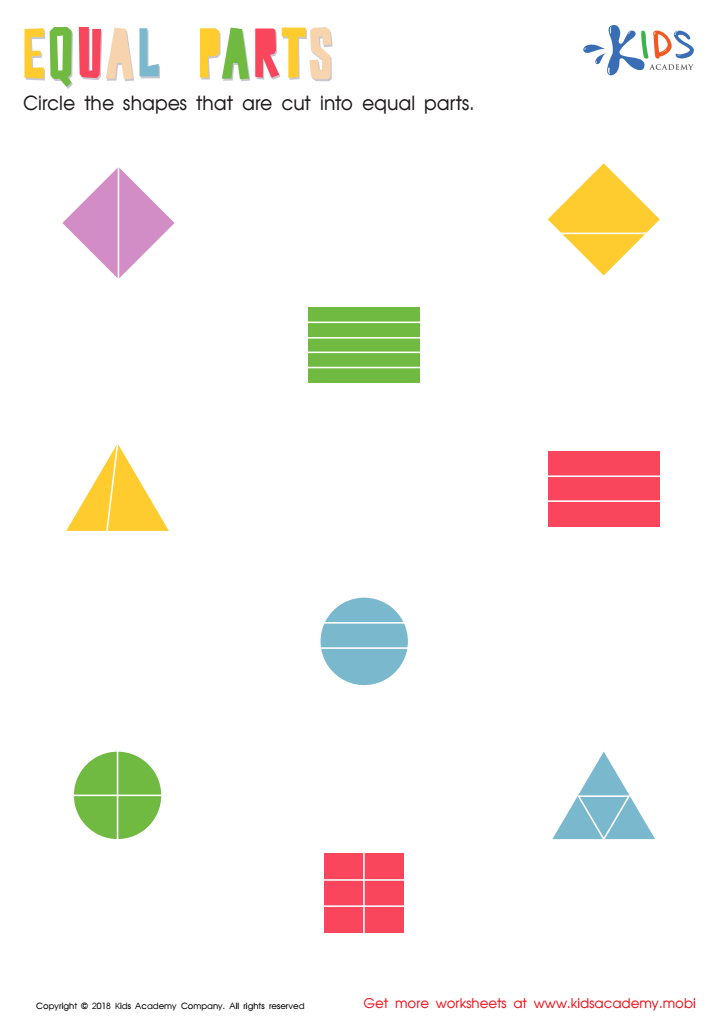
Equal Parts: Shapes Worksheet
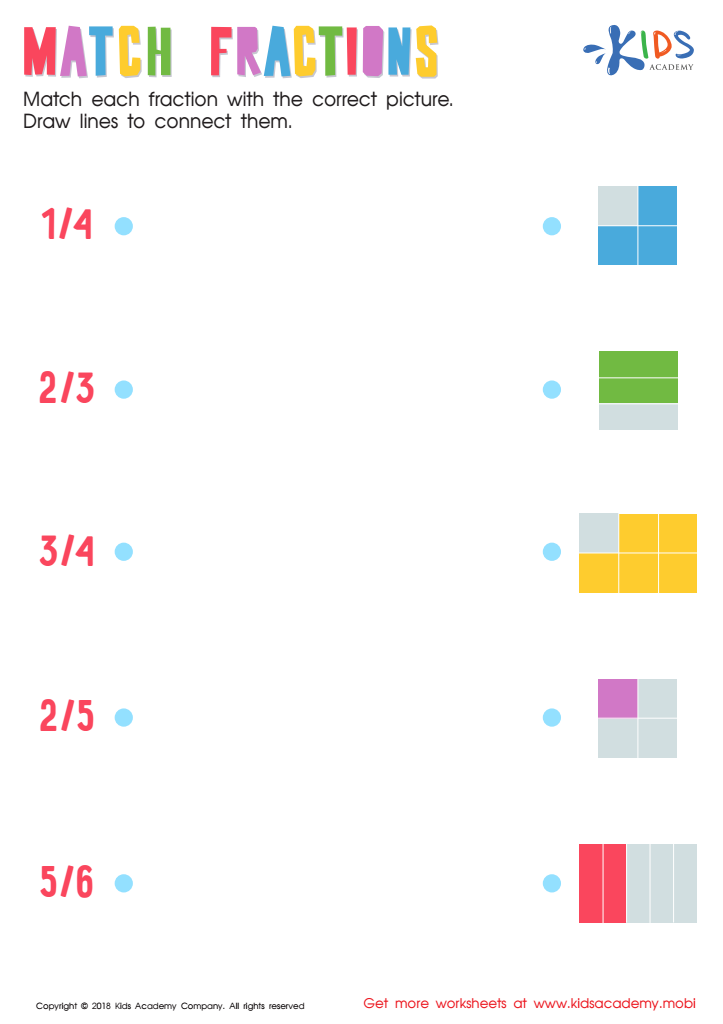
Match Fractions Worksheet
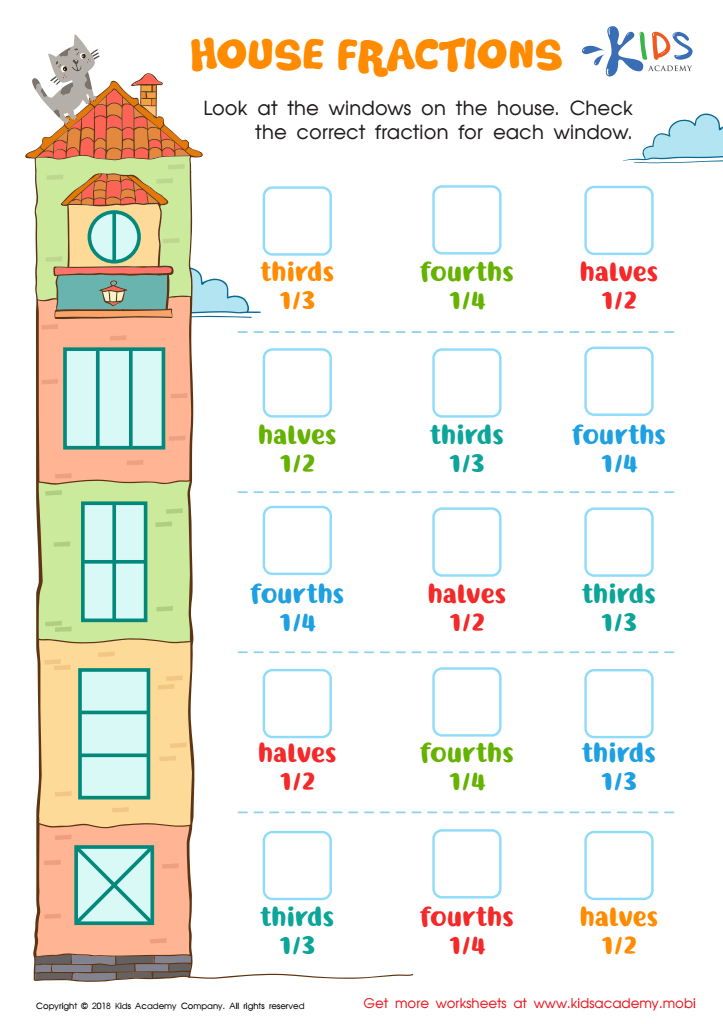
House Fractions Worksheet
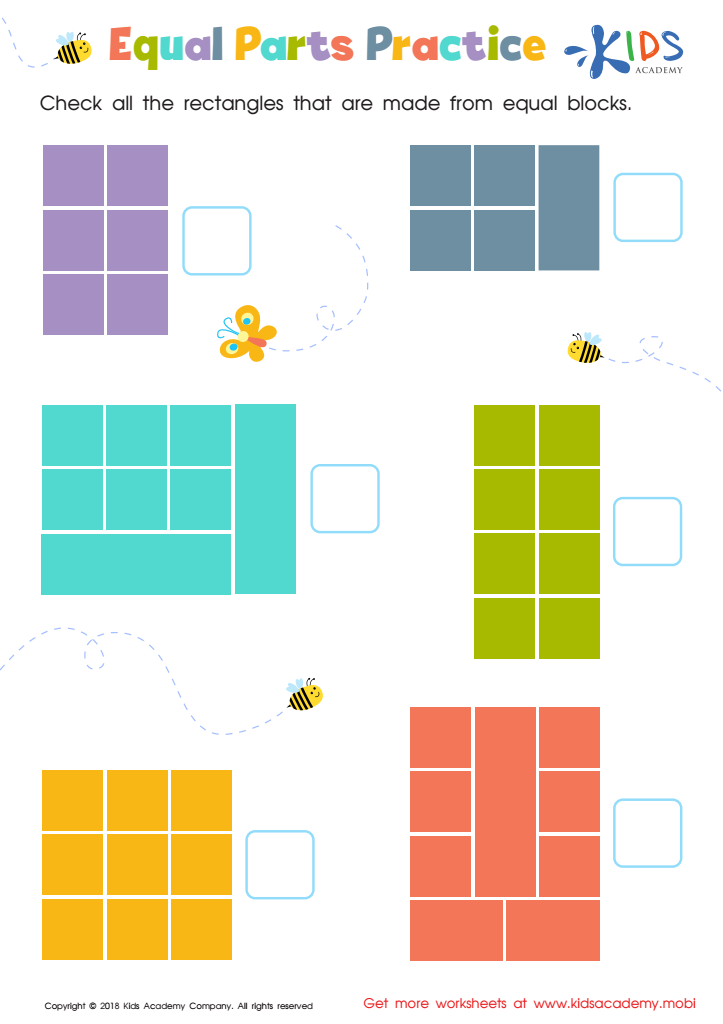
Equal Parts Practice Worksheet
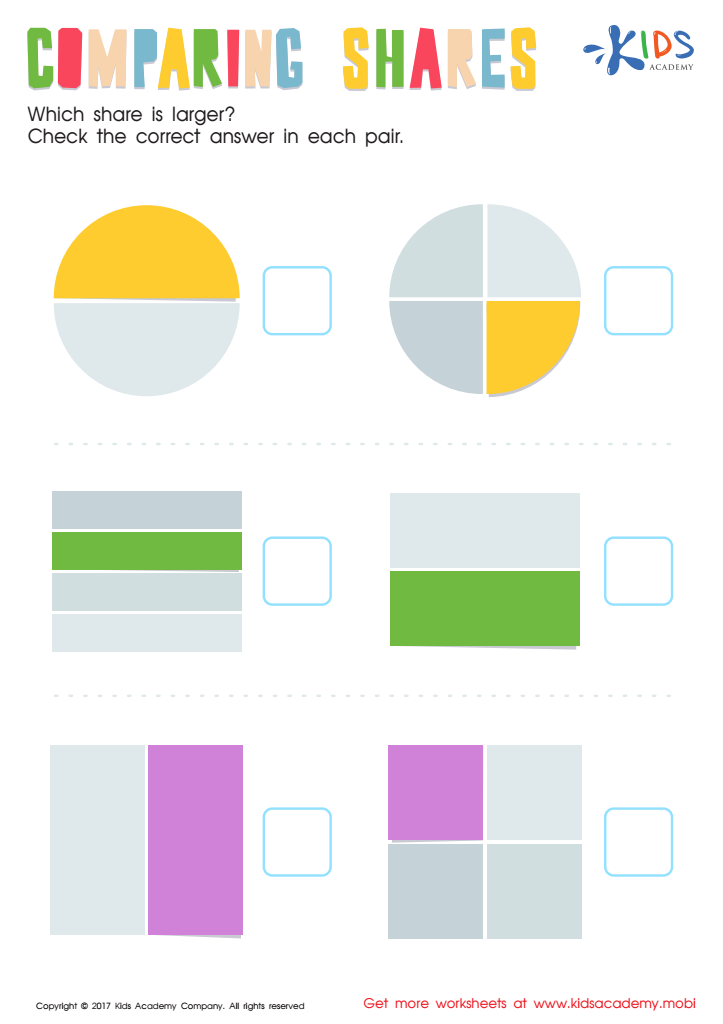
Comparing Shares Worksheet
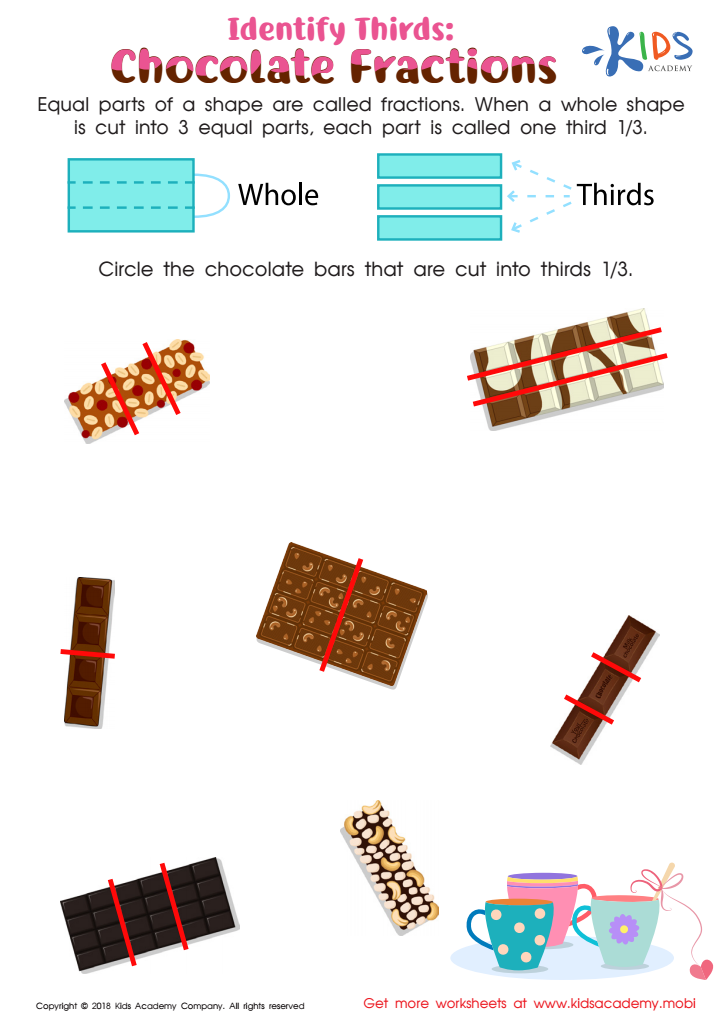
Identify Thirds: Chocolate Fractions Worksheet
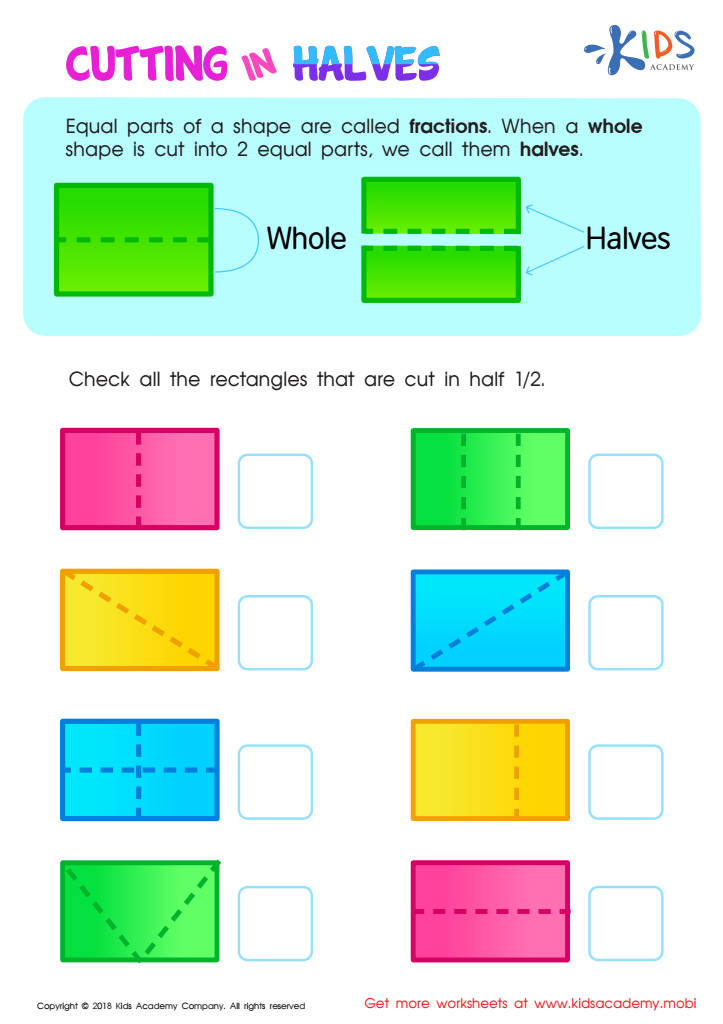
Cutting in Halves Worksheet
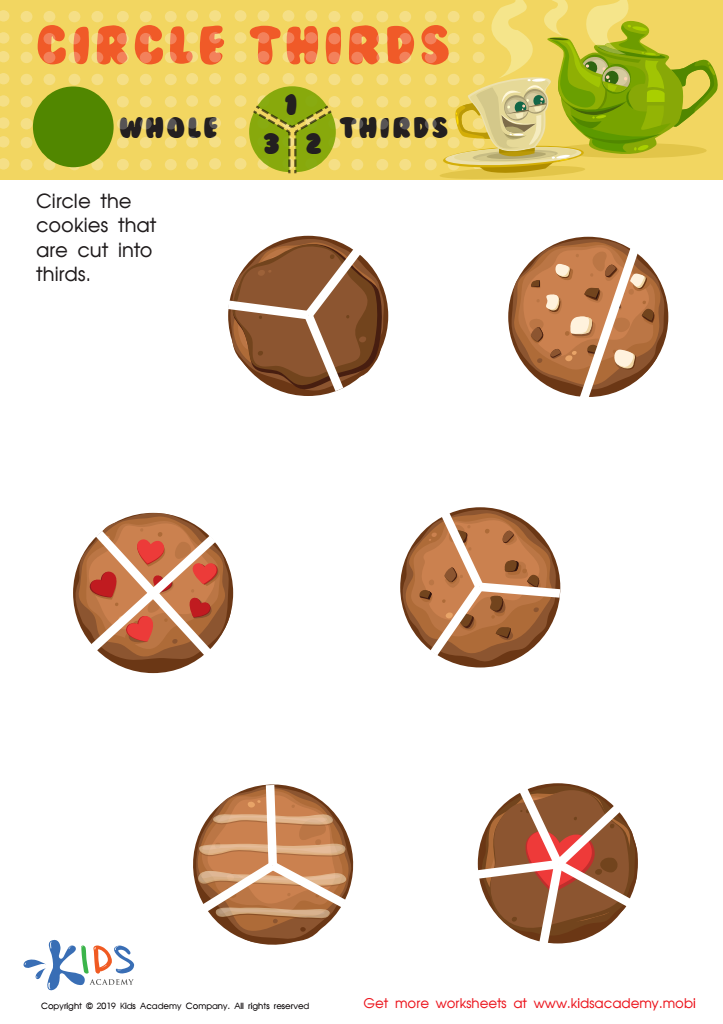
Circle Thirds Worksheet
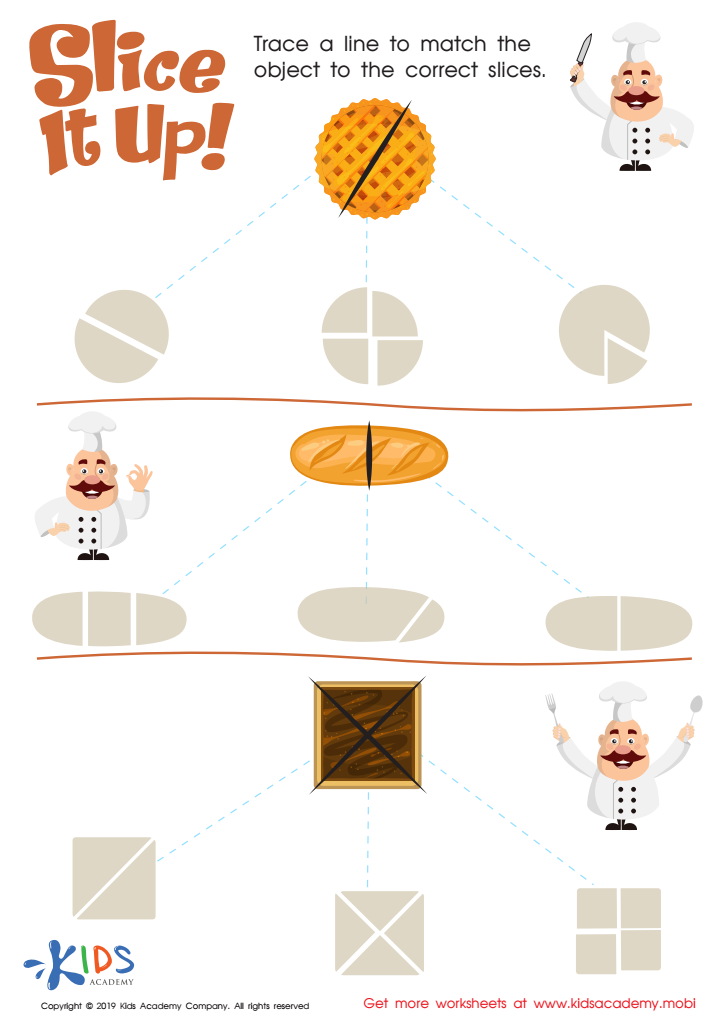
Slice It Up Worksheet
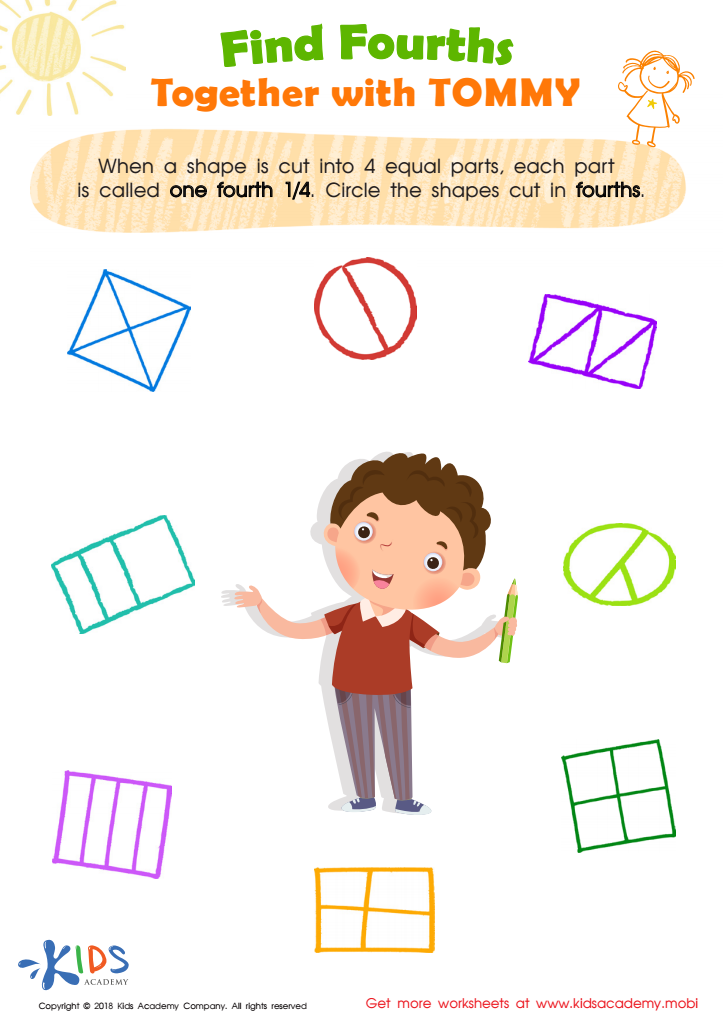
Find Fourths Together with Tommy Worksheet








Understanding fractions and geometry at an early age is essential for children's cognitive development and mathematical literacy. For parents and teachers, introducing these concepts to children aged 4-9 helps foster critical thinking skills and lays the groundwork for future learning in mathematics.
Fractions introduce children to the idea of part-whole relationships, enabling them to understand and compare quantities. This understanding is crucial not only for math but for everyday situations, such as cooking, sharing, and measuring. Mastery of fractions promotes a sense of fairness and collaboration when it comes to sharing resources or dividing tasks.
Geometry, on the other hand, helps children develop spatial awareness and visualization skills. Recognizing shapes and understanding their properties enhances their ability to navigate their environment and enhances problem-solving capabilities. Engaging with geometry through hands-on activities spurs creative thinking and offers children opportunities to explore and build things, thus integrating play with learning.
By prioritizing these concepts, parents and educators can contribute to a strong mathematical foundation and inspire a lifelong love for learning. Early mastery of fractions and geometry ultimately boosts children's confidence and prepares them for more complex mathematical challenges in the future.








