Number Recognition Easy Numbers Worksheets for Ages 4-9 - Page 4
75 filtered results
-
From - To

Counting on the City Skyline: Dot-to-Dot Worksheet
 Assign to My Students
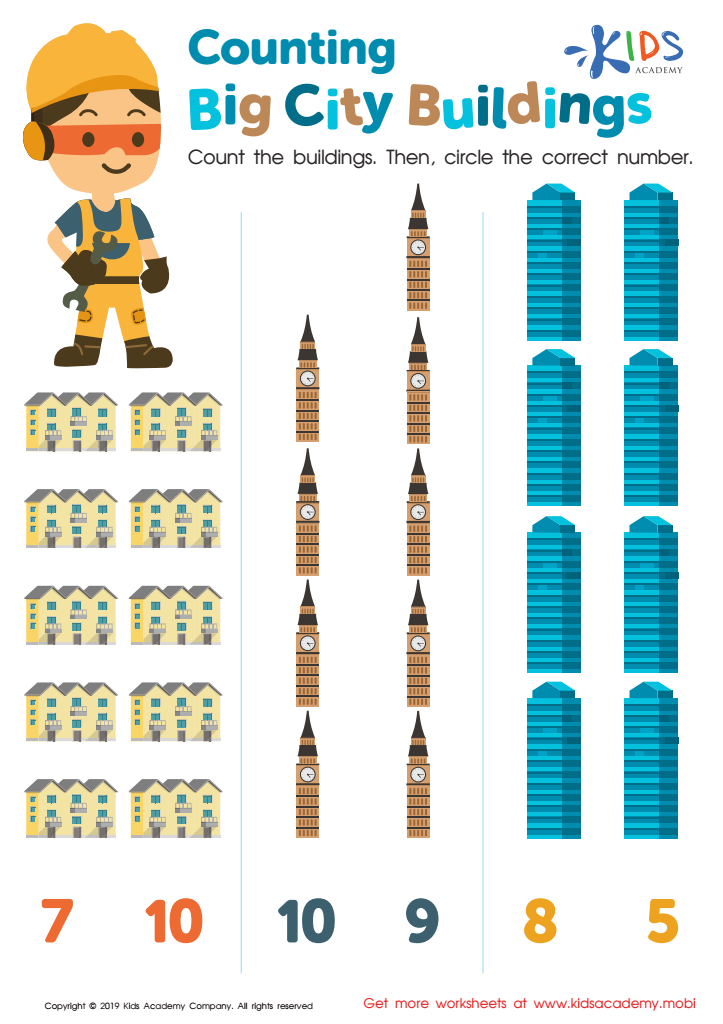
Counting Big City Buildings Worksheet

Night Sky Numbers Worksheet








Number recognition is a critical foundational skill for children aged 4-9, influencing their mathematical development and cognitive growth. This period is crucial as children transition from recognizing numbers to understanding their value and relationships. For parents and teachers, fostering early number recognition helps develop a strong mathematical literacy, essential for later arithmetic tasks, problem-solving, and critical thinking.
When children are familiar with numbers, they build confidence to engage with math concepts in everyday life, from counting objects to telling time or handling money. Engaging in number recognition activities encourages cognitive processes like memory, attention, and reasoning. This skill also provides opportunities for children's social interactions through games and shared activities that involve numeric play.
Moreover, an early focus on number recognition can help identify learning challenges early on. If children struggle, targeted support can be provided, ensuring they don’t fall behind their peers. Beyond academics, developing number skills aids emotional growth, building persistence and a positive attitude towards learning.
Ultimately, by prioritizing number recognition, parents and teachers equip children with the essential tools they need for future academic success and everyday functional skills, fostering a lifelong positive relationship with mathematics.








