Filters

28 filtered results

Clear all filters
Favorites
With answer key
Interactive

28 filtered results

Difficulty Level

Grade


Check out this FREE "Cognitive Development" Trial Lesson for age 5-6!

Read Words with ED at the End

Favorites
With answer key
Interactive
  • 5-6
  • Cognitive Development
  • Easy
Night Sky Numbers Worksheet

Night Sky Numbers Worksheet

Help your child develop their writing skills with this fun PDF worksheet! Using guiding stars, it teaches them the correct patterns for numbers 1, 2 and 3. They'll have a great time tracing their way from the top and will feel a sense of achievement when they finish.
Night Sky Numbers Worksheet
Worksheet
Check Memory Worksheet

Check Memory Worksheet

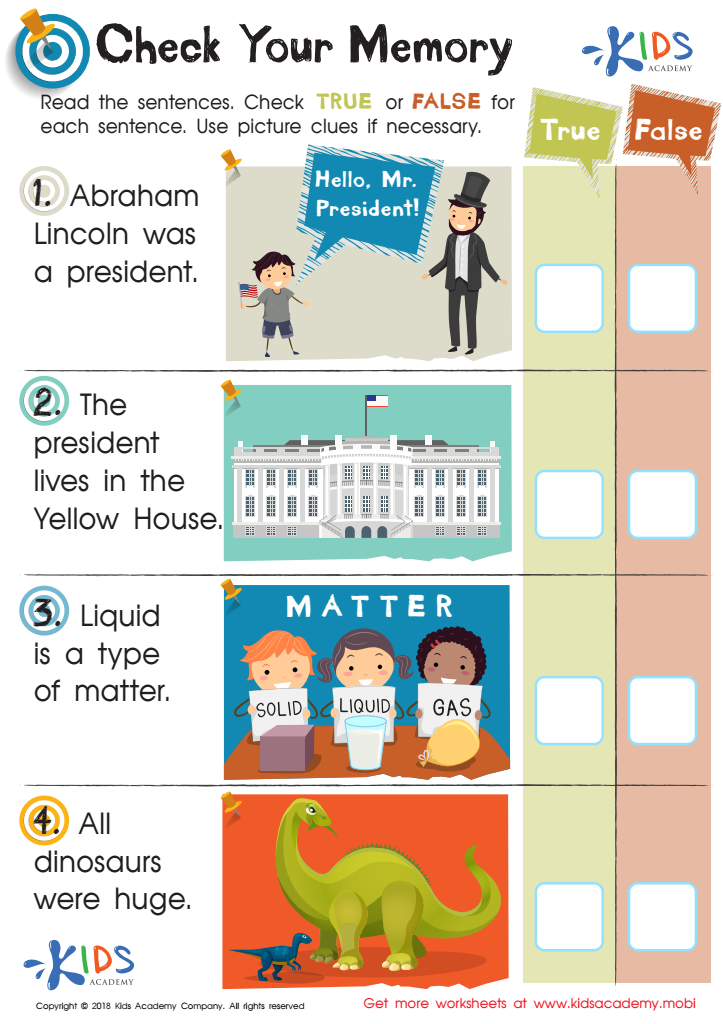
Assisting your kids with their homework and using worksheets is a great way for them to learn. The vibrant visuals in this printout can help stimulate the mind and motivate your child. Have them read the sentences and then point to the associated images. Afterwards, ask them to state True or False for each sentence. If they are still uncertain, offer them the picture clues to assist further.
Check Memory Worksheet
Worksheet
Finish the Word Worksheet

Finish the Word Worksheet

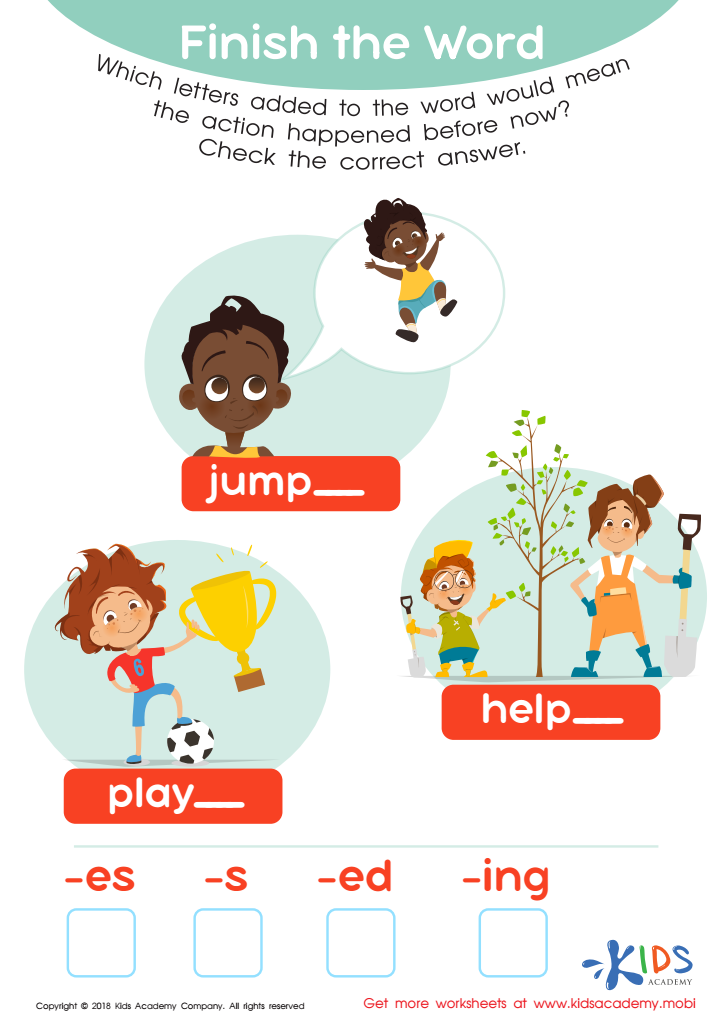
Does your kid know tenses? Listen to see if they are using words correctly. With this worksheet, your kids will learn to use the appropriate past tense forms. Ask them which letters added to words make the action past. Help them check the answers.
Finish the Word Worksheet
Worksheet
What Does Not Match? Worksheet


What Does Not Match? Worksheet

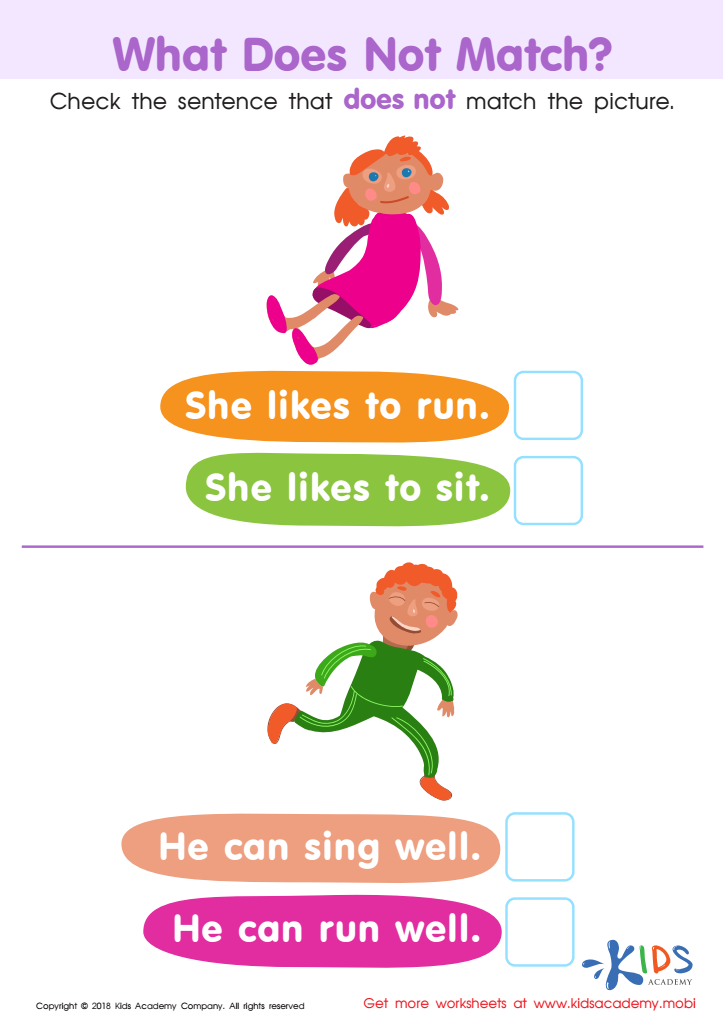
Emerging readers need to practice using visual cues and repetitive text. This colorful PDF provides them with an opportunity to look at pictures, use discrimination and discern which phrase does not match. It also enables them to gain familiarity with high-frequency words to aid decoding longer sentences.
What Does Not Match? Worksheet

Worksheet


Cognitive development is crucial for children aged 5-6 because it lays the foundation for their future learning and overall growth. During this stage, children are constantly exploring, thinking, and problem-solving, which means that their brains are developing rapidly. Engaging in cognitive activities helps improve their memory, attention, and critical-thinking skills, all of which are essential for academic success.

Parents and teachers play a key role in fostering cognitive development by providing stimulating environments. This can include activities such as reading together, playing educational games, or encouraging curiosity through questions and discussions. These interactions not only enhance cognitive skills but also build communication abilities and social skills, helping children learn to express themselves effectively.

Additionally, cognitive development impacts children's emotional growth. A solid foundation in problem-solving and reasoning helps them navigate challenges and build resilience. When parents and teachers actively support this development, they contribute to children's confidence, independence, and love for learning.

By understanding the importance of cognitive development, parents and teachers can work together to create enriching experiences that promote lifelong learning and success for children as they grow.