Welcome to our "Sentence Structure Easy Worksheets for Ages 5-7" page! Designed specifically for early learners, these worksheets encourage young students to explore sentence formation in a fun and interactive way. Each worksheet focuses on age-appropriate activities that simplify the concepts of subject, verb, and object, allowing children to create their own sentences. With colorful illustrations and engaging exercises, kids will build essential grammar skills while boosting their confidence in writing. Perfect for home learning or classroom use, our resources make mastering sentence structure enjoyable and accessible. Start your child’s journey towards effective communication today!

Check out this FREE "Sentence structure" Trial Lesson for age 5-7!

Base 10 and standard Subtraction

Favorites
With answer key
Interactive
  • 5-7
  • Sentence structure
  • Easy
Forming Sentences: Assessment 3 Worksheet

Forming Sentences: Assessment 3 Worksheet

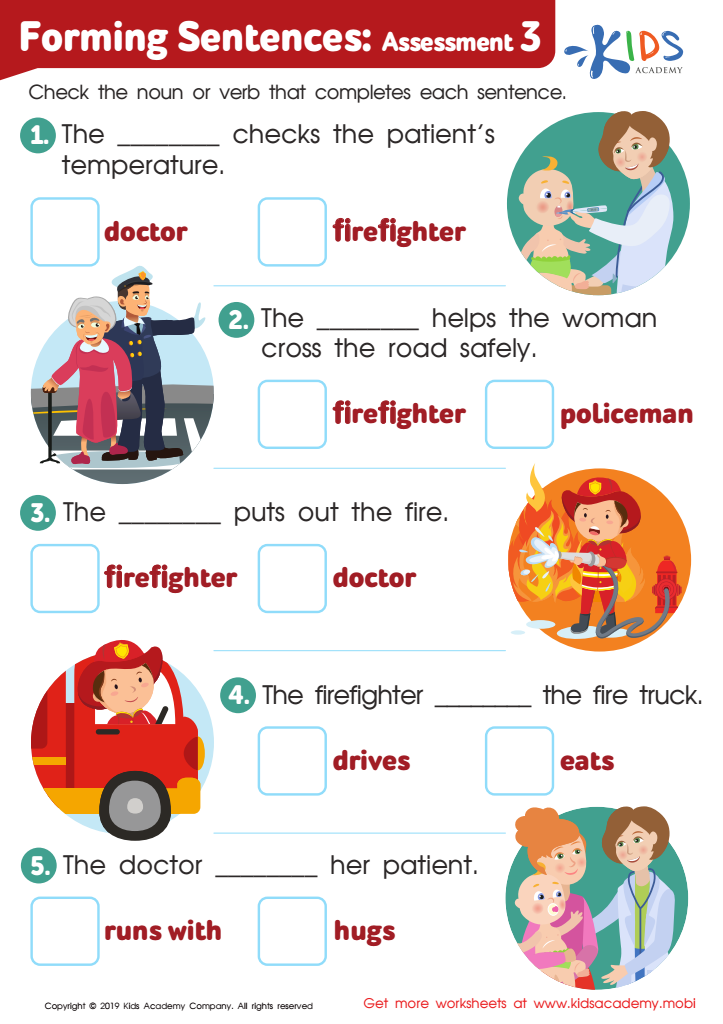
Students must master sentence formation to be successful English learners. After grasping the ABCs and basic words, the next step is to construct sentences using those words. Worksheets like this one can help teach kids how to make sentences; they need to look at the pictures and select the correct noun or verb to complete each sentence.
Forming Sentences: Assessment 3 Worksheet
Worksheet
Capitalization. Punctuation. Spelling. Assessment 3 Worksheet

Capitalization. Punctuation. Spelling. Assessment 3 Worksheet

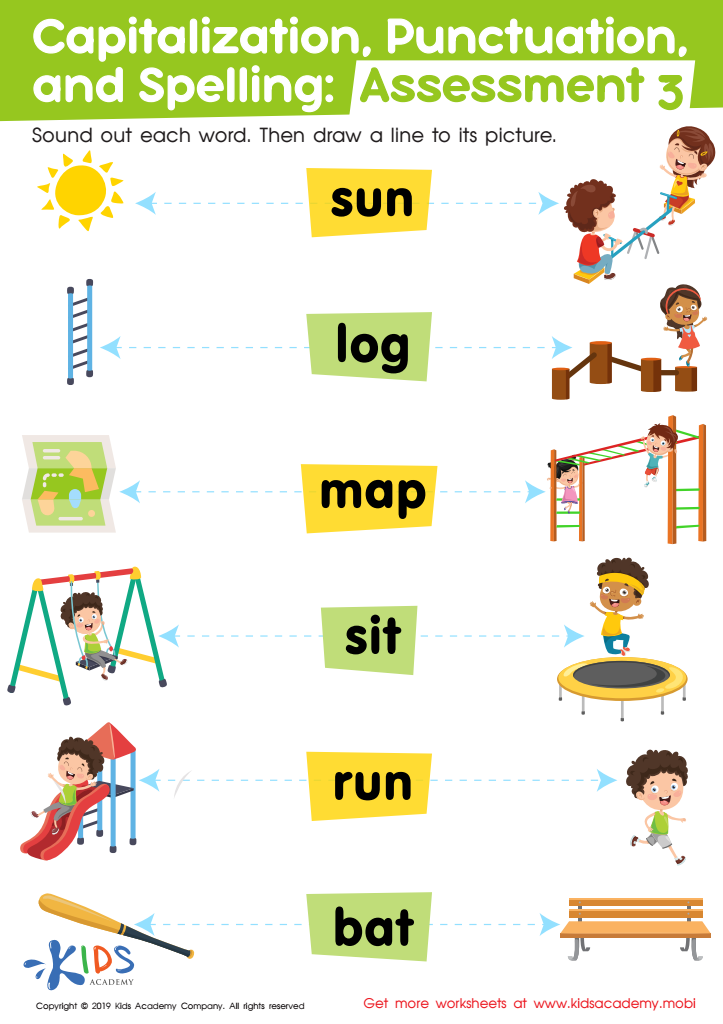
Before starting this worksheet, have your kids spell some simple words. Correct if wrong and show the right spellings. Then, ask them to link the pictures to the words you read out. Spelling is key for a good writer, and kids need to know how to spell to read texts easily.
Capitalization. Punctuation. Spelling. Assessment 3 Worksheet
Worksheet
Which Is Correct? Math Worksheet

Which Is Correct? Math Worksheet

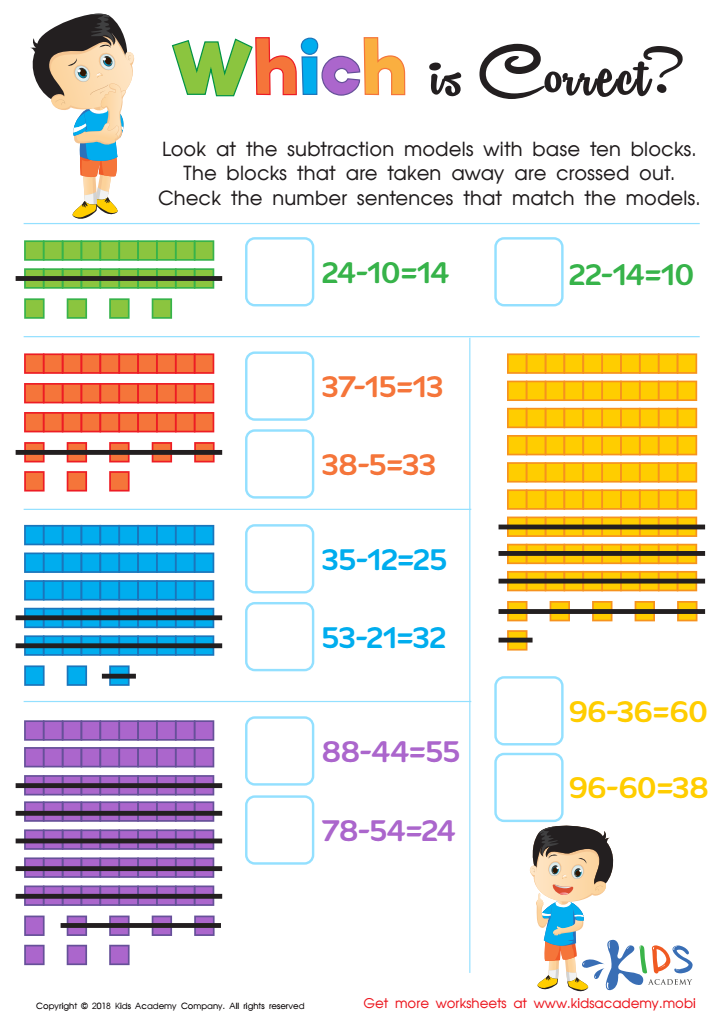
Young mathematicians will gain confidence solving subtraction problems with this bright, colorful worksheet. They'll use base ten blocks representations, then pick the right number sentence to match. It's great practice for developing number sense, helping them excel in higher-level math.
Which Is Correct? Math Worksheet
Worksheet
Assessment: Make a Sentence Worksheet

Assessment: Make a Sentence Worksheet

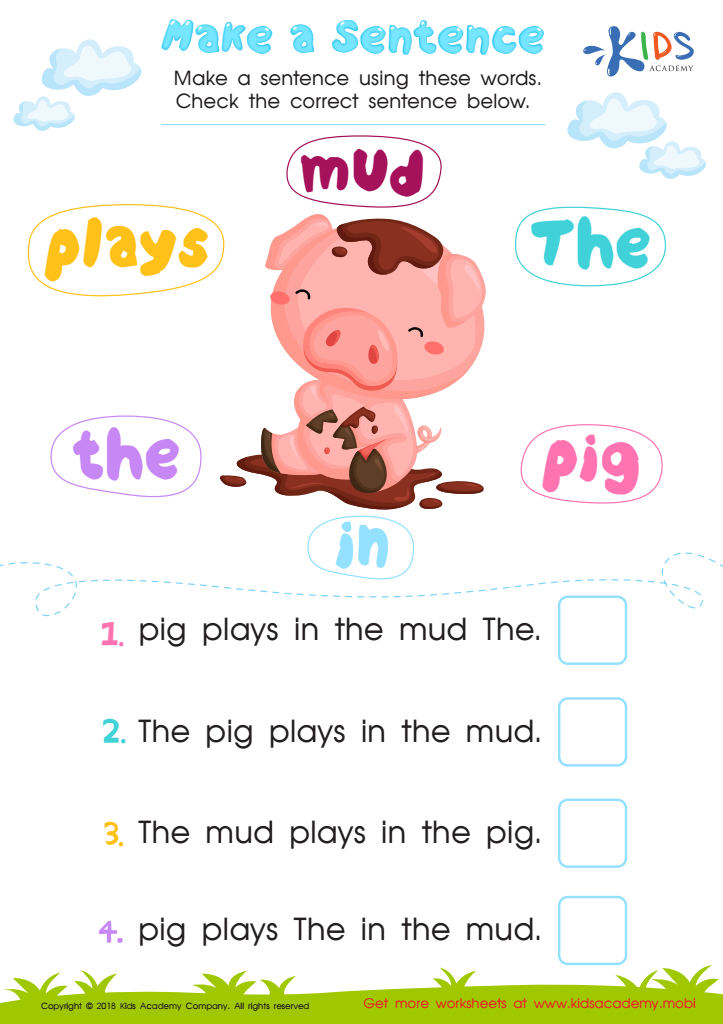
Help your kids identify the animal in the printout. Read the words in the bubbles and then read the four sentences in the options 1 – 4. Ask them to check the box with the correct sentence.
Assessment: Make a Sentence Worksheet
Worksheet
Fix Capital Letters Worksheet

Fix Capital Letters Worksheet

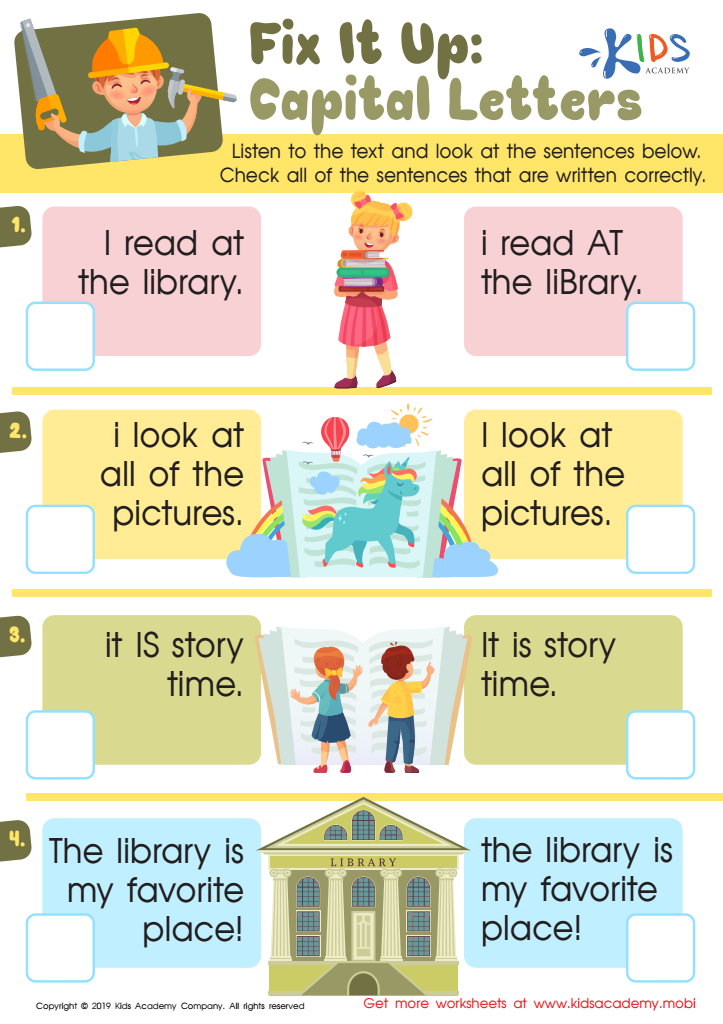
Put on your hardhats and get out the tools - it's time to do some repair work! Have your child identify sentences written with proper capitalization on this fun and colorful worksheet. Ask more advanced students to rewrite incorrect sentences correctly - it'll help them understand letter case better.
Fix Capital Letters Worksheet
Worksheet
How to Capitalize Worksheet Preview


How to Capitalize Worksheet

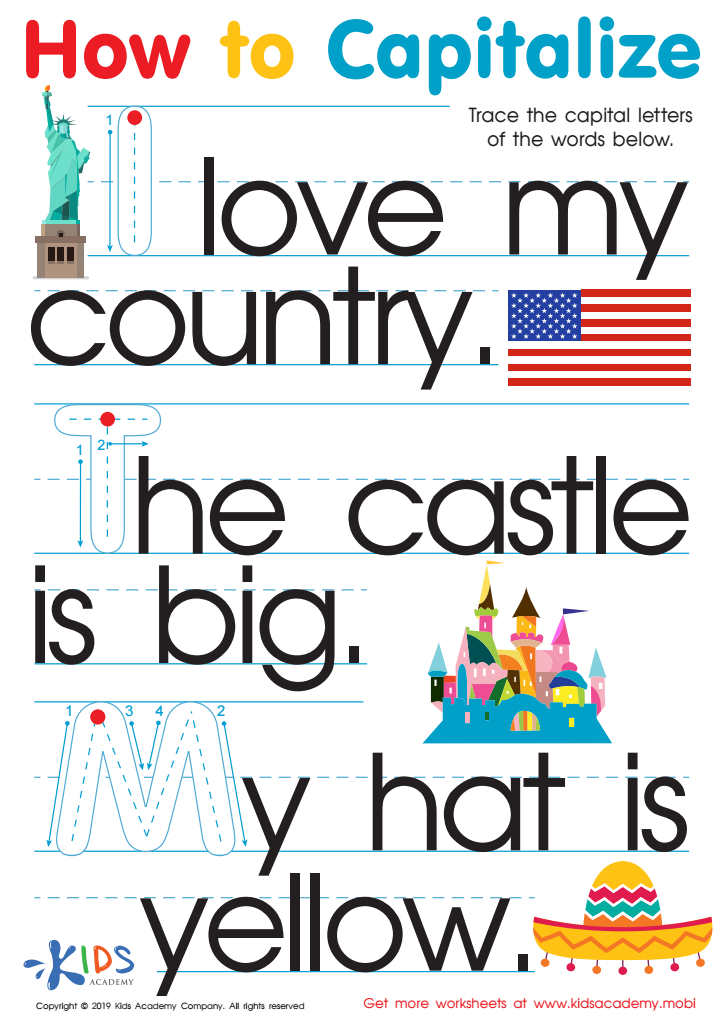
Capitalizing letters is important in English. This worksheet will help your child learn how to write them. Words such as "the" and "I" will be covered, with visuals such as the Statue of Liberty, the American Flag, a castle, and a sombrero. The "How to Capitalize" PDF is a great way to sharpen your child's writing and aid their success!
How to Capitalize Worksheet
Worksheet


Sentence structure is vital for children aged 5-7 as it lays the foundation for effective communication and literacy skills. At this age, children are beginning to develop their reading and writing abilities, and understanding how sentences are built helps them create clear and compelling messages. Good sentence structure teaches kids how to combine words and ideas, enhancing their ability to express thoughts coherently.

Furthermore, mastering sentence structure fosters critical thinking. Children learn to arrange words logically, which encourages them to think about how ideas relate to one another. It also aids in comprehension; when young learners can identify subject-verb combinations and recognize different types of sentences—like statements, questions, and exclamations—they become better readers.

When parents and teachers focus on sentence structure, they empower children to communicate confidently in both spoken and written forms. This skill not only supports language development but also enhances classroom participation, allowing them to share their ideas and ask questions effectively.

In summary, by caring about sentence structure, caregivers equip children with essential tools for learning and understanding the world around them, creating a pathway to successful communication as they grow.