Number comprehension Easy Subtraction Worksheets for Ages 5-7
6 filtered results
Difficulty Level
Grade
Age
-
From - To
Subject
Activity
Standards
Discover the fun and engaging world of number comprehension with our Easy Subtraction Worksheets, designed specifically for children ages 5-7. These worksheets provide a playful yet effective way to reinforce essential subtraction skills. Featuring vibrant illustrations and age-appropriate exercises, your child will grasp the concepts of subtraction while building confidence in their math abilities. Each worksheet focuses on key learning skills, helping children understand and apply number sense with ease. Perfect for independent practice or reinforcing classroom learning, our subtraction worksheets make math enjoyable and accessible. Start your child's math journey today and watch their comprehension soar!
Favorites
With answer key
Interactive
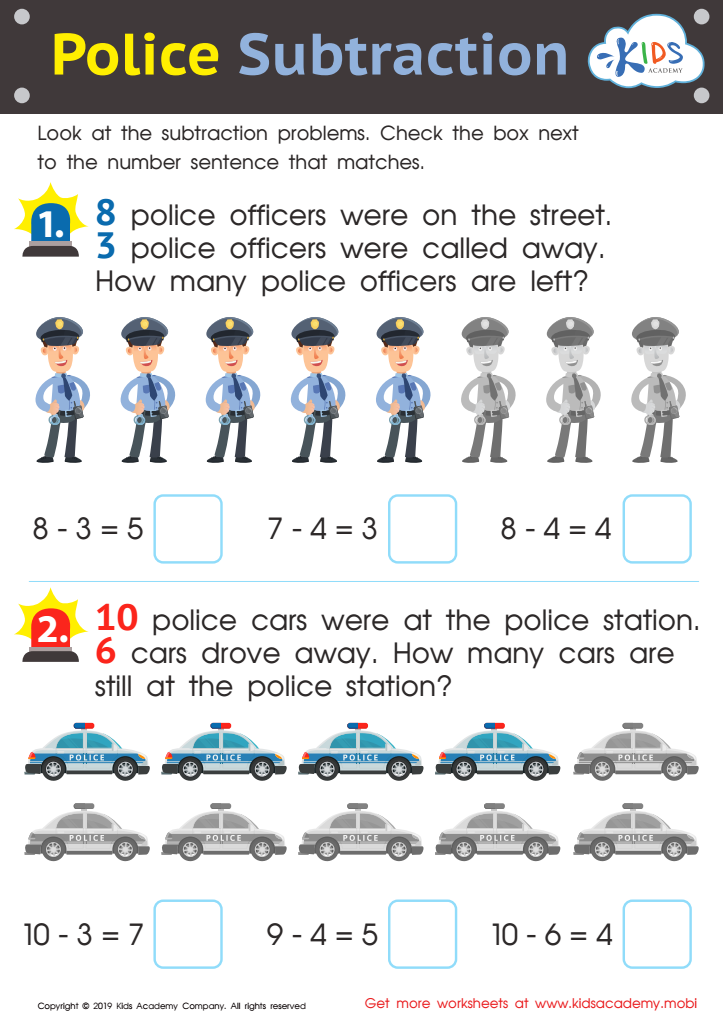
Police Subtraction Worksheet
Police protect citizens and do more in the community. Kids can learn numbers with this math worksheet: two subtraction problems in the downloadable PDF. Read the problems with your kids, then check the box next to the number sentences that are correct.
 Assign to My Students
Police Subtraction Worksheet
Worksheet
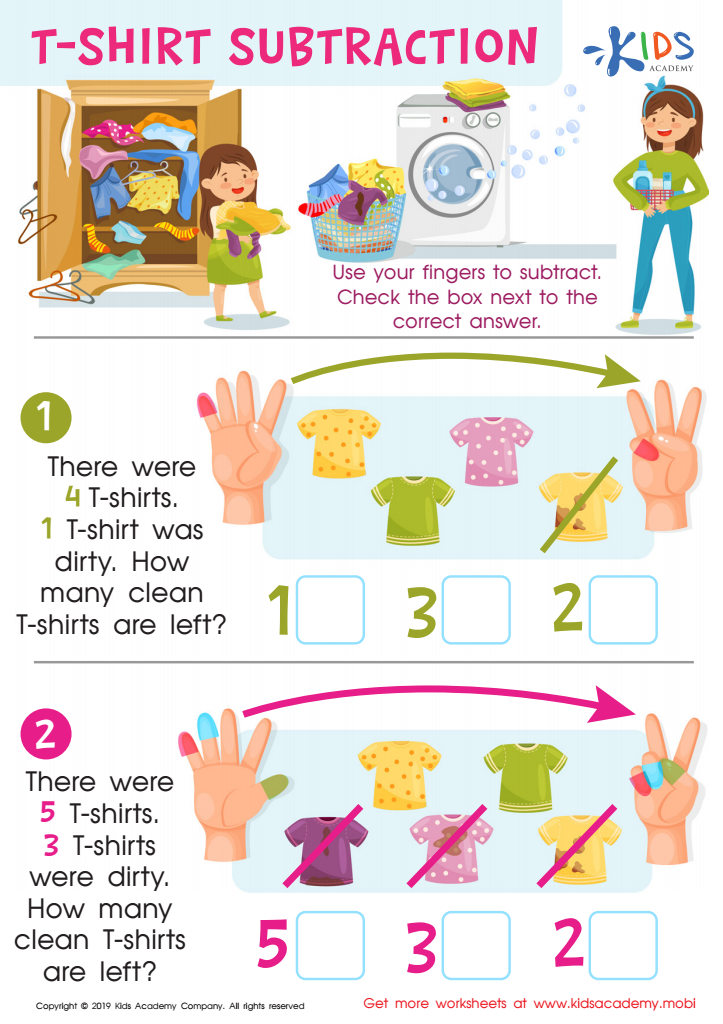
T-shirt Subtraction Worksheet
Use colorful items and activities to help your students learn. Show them this worksheet with objects to identify. Guide them to solve the two word problems with their fingers and tick the correct answer from the given choices.
T-shirt Subtraction Worksheet
Worksheet
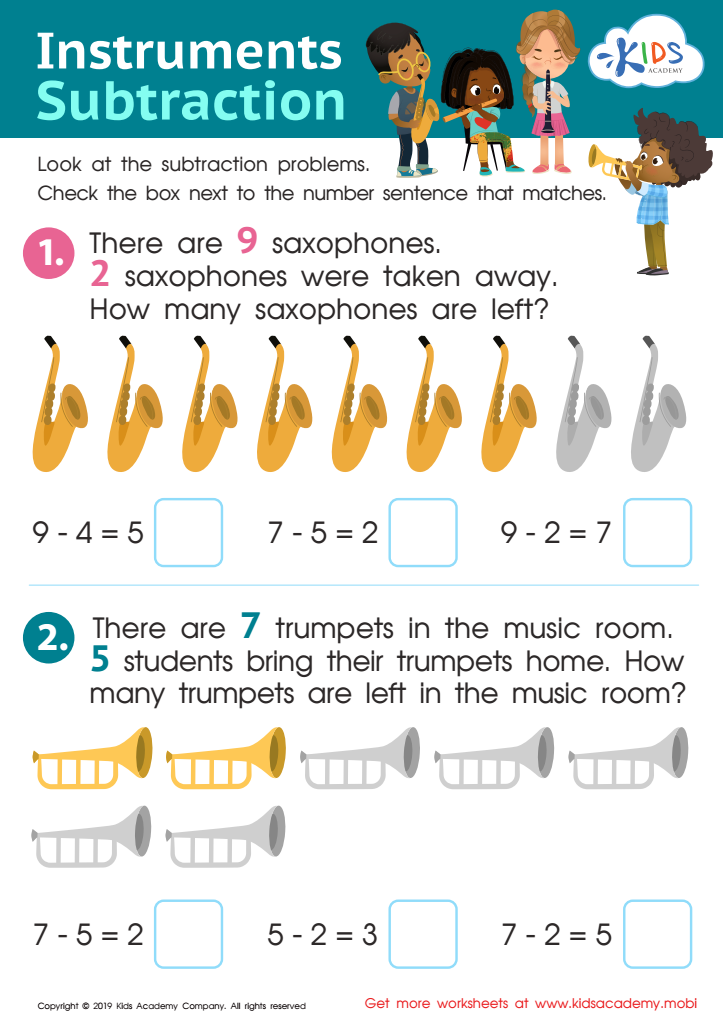
Instrument Subtraction Worksheet
Encourage kids to practice their addition and subtraction by having them identify the musical instruments on the worksheet, then read the subtraction problems and check the box with the matching number sentences.
Instrument Subtraction Worksheet
Worksheet
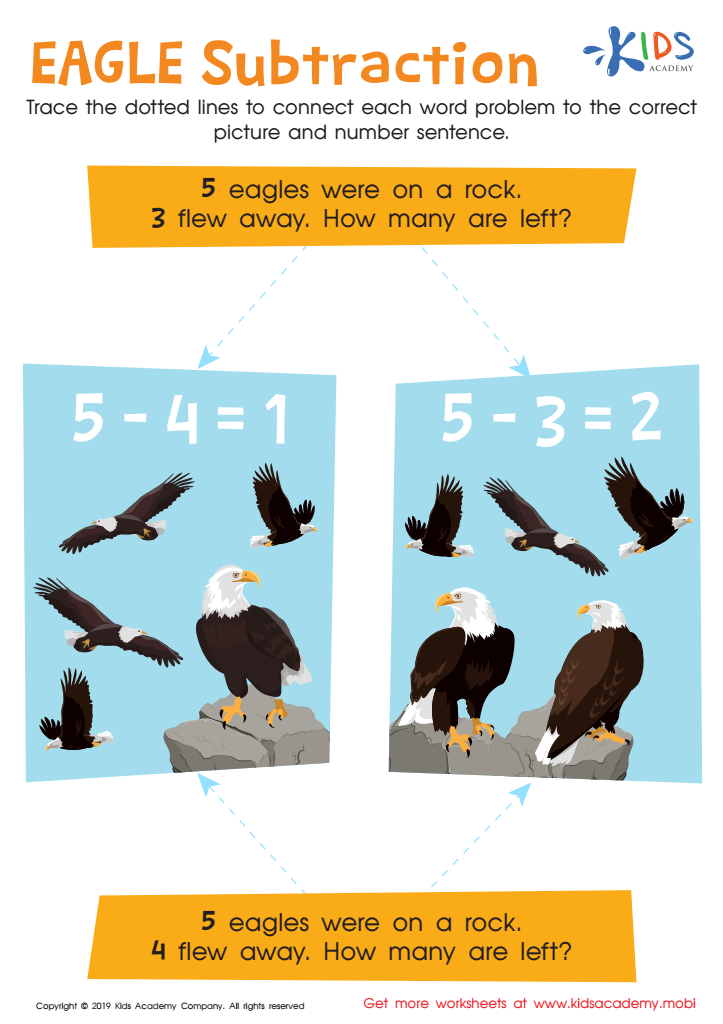
Eagle Subtraction Worksheet
Help your kids become math experts! Through practice and adult guidance, even addition and subtraction can seem simple. Show them how with this worksheet - get them to trace the dotted lines to connect each word problem to the correct picture and solve the number sentence with some eagles!
Eagle Subtraction Worksheet
Worksheet
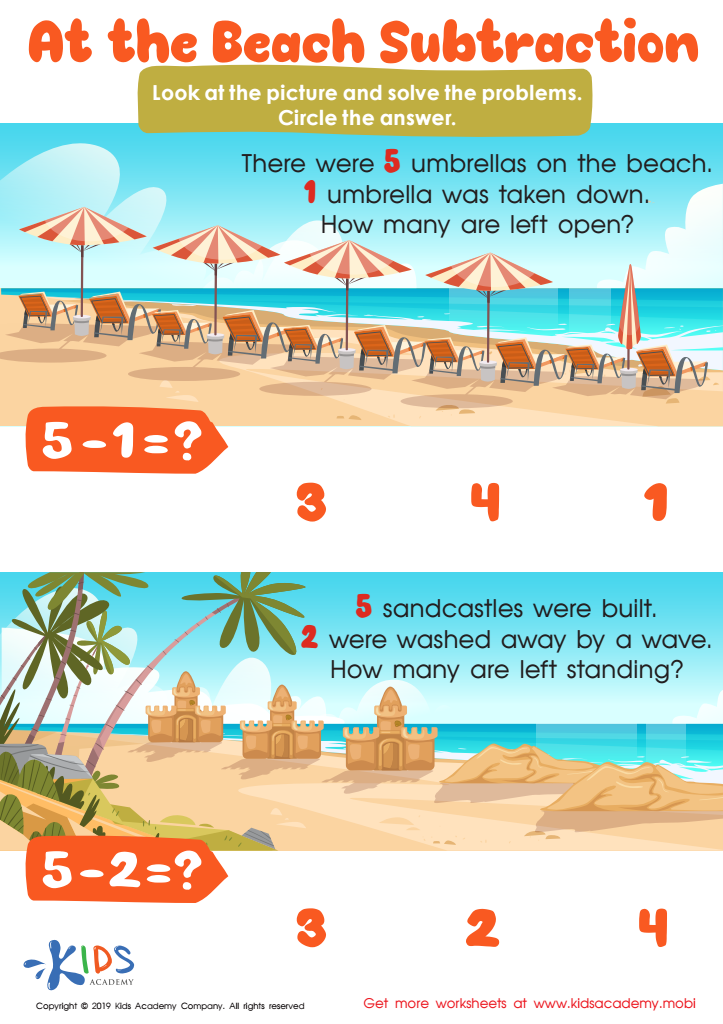
At the Beach Subtraction Worksheet
Take your kids to the beach and show them that math can be fun! Look at the picture on the worksheet, then help them solve the addition and subtraction problems. Check the answers together and enjoy a day of learning and fun!
At the Beach Subtraction Worksheet
Worksheet
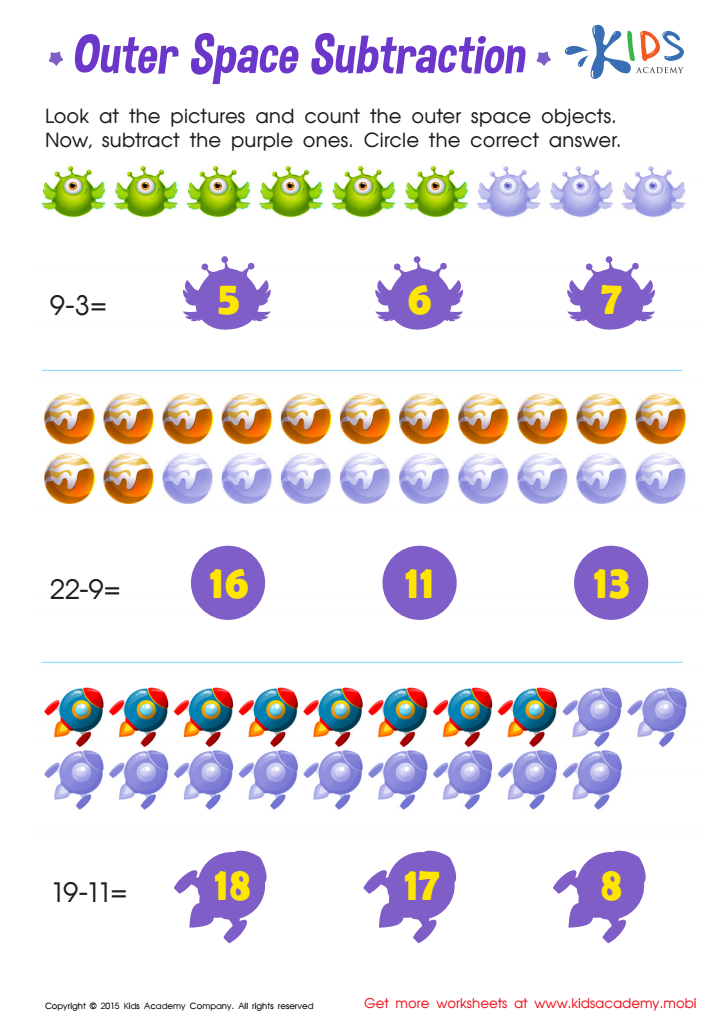
Outer Space Substraction Worksheet
This Singapore Math-inspired worksheet will help kids develop a deeper understanding of math concepts, stop relying on rote memorization, and build mathematical knowledge for future concepts. With a catchy space-theme, your child will have fun honing their skills.
Outer Space Substraction Worksheet
Worksheet
Join Kids Academy for Free
Who is primarily going to use this learning content?








Number comprehension, especially in the context of easy subtraction for children ages 5-7, is vital for several reasons. First, foundational math skills are crucial for children's overall academic growth. Mastering subtraction helps young learners develop a strong number sense, enabling them to understand not just subtraction but also later concepts in addition, multiplication, and division.
Moreover, engaging with easy subtraction allows children to build confidence in their mathematical abilities. As they gain success in solving subtraction problems, their self-esteem grows, promoting a positive attitude toward learning. This is particularly important in the early years when children form their perceptions about math as a subject.
Additionally, number comprehension enhances critical thinking and problem-solving skills. Children learn how to approach challenges methodically and develop strategic thinking, skills that are transferable to other subjects and real-life situations.
Furthermore, involving parents in this learning process can help reinforce concepts at home through fun activities and games, fostering a nurturing environment that values education.
Ultimately, number comprehension in early grades equips children with essential skills that prepare them not only for academic success but also for everyday life. Therefore, it’s essential for parents and teachers to prioritize and actively engage in this learning journey.