Basic Addition Skills Easy Worksheets for Ages 5-8
8 filtered results
-
From - To
Welcome to our "Basic Addition Skills Easy Worksheets for Ages 5-8" page! Designed for young learners, our printable worksheets help kids grasp fundamental addition concepts while keeping learning fun and engaging. With a variety of colorful, interactive exercises, these resources encourage practice at home or in the classroom. Children will strengthen their math skills by working with visual aids and simple problems, making math accessible and enjoyable. Whether your child is practicing one-digit addition or needs assistance counting, our worksheets cater to all levels. Explore our collection and watch your child develop a strong foundation in basic addition!
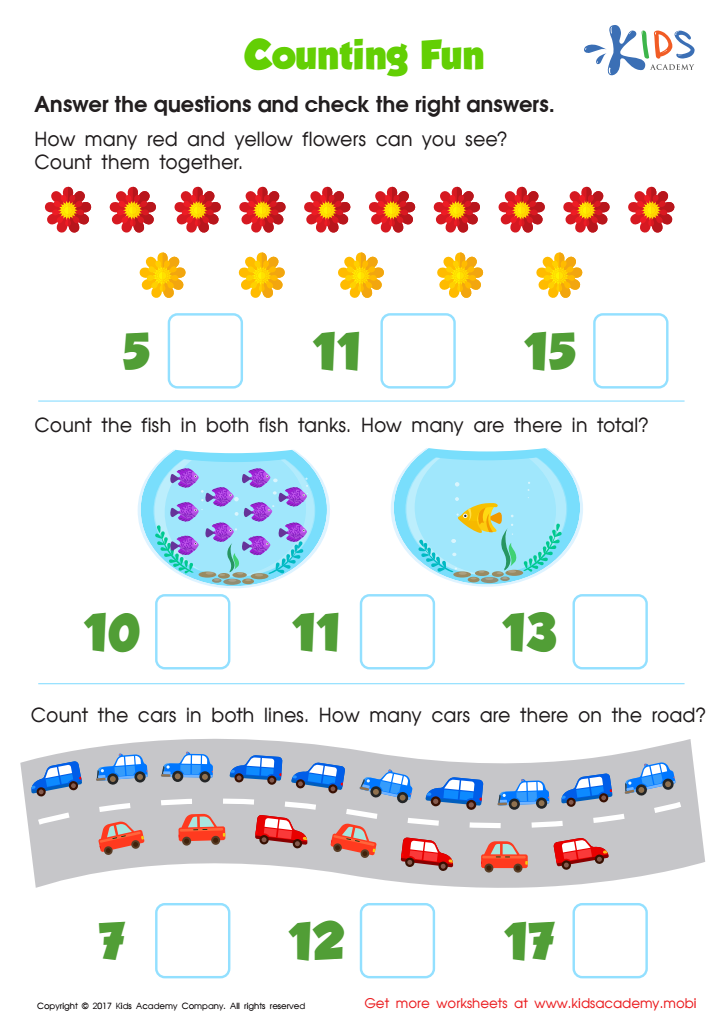
Counting Fun Worksheet
 Assign to My Students
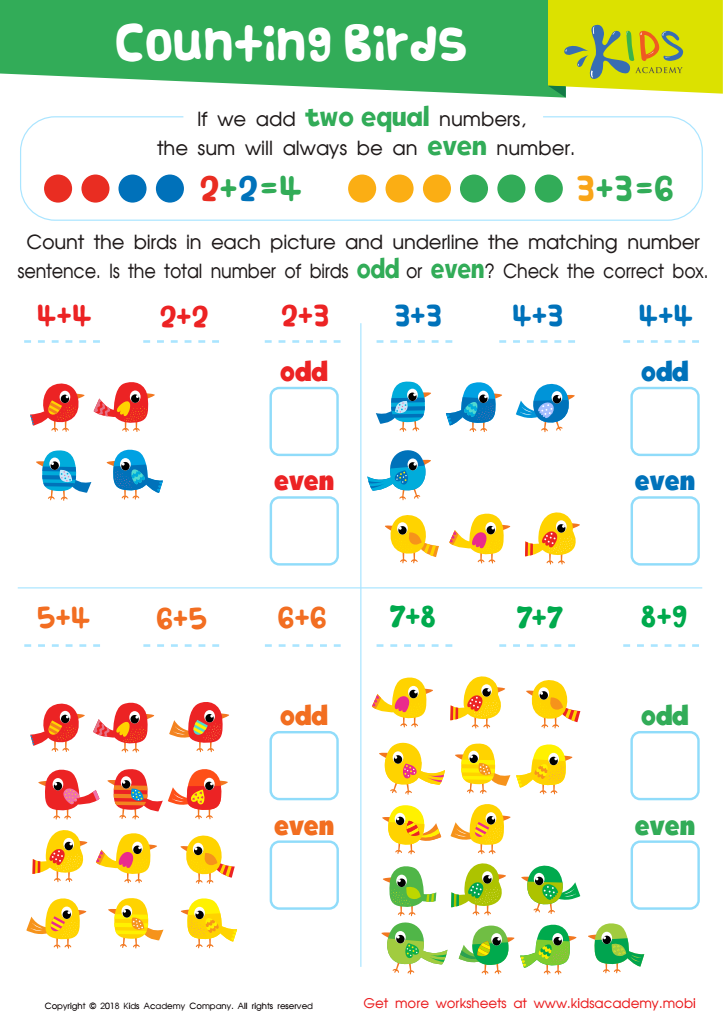
Counting Birds Worksheet
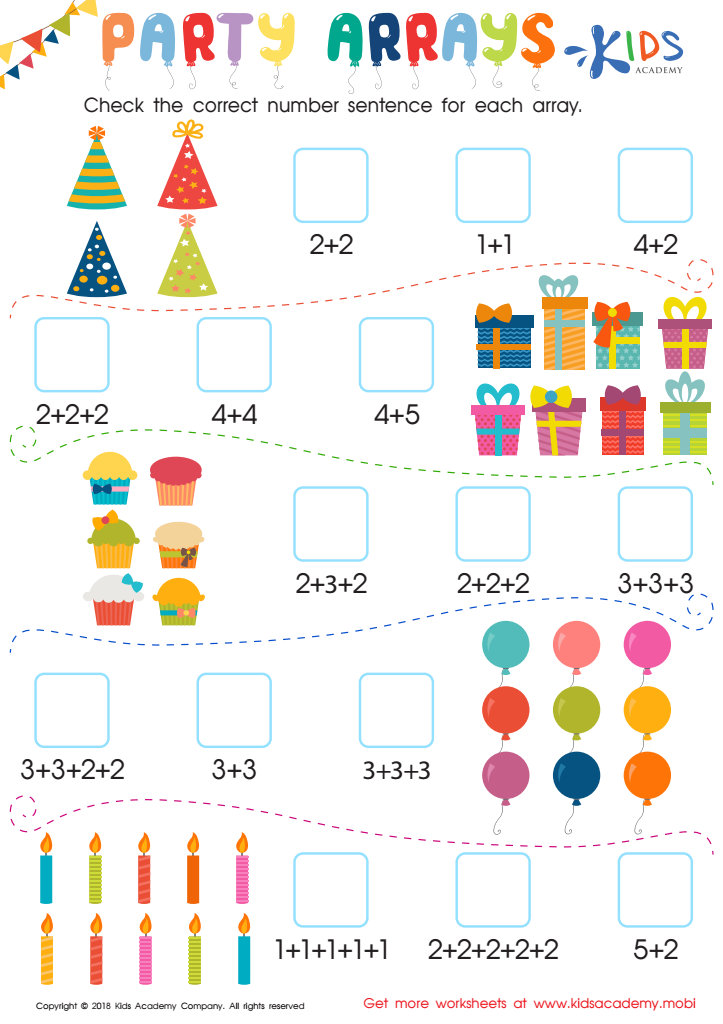
Party Arrays Worksheet
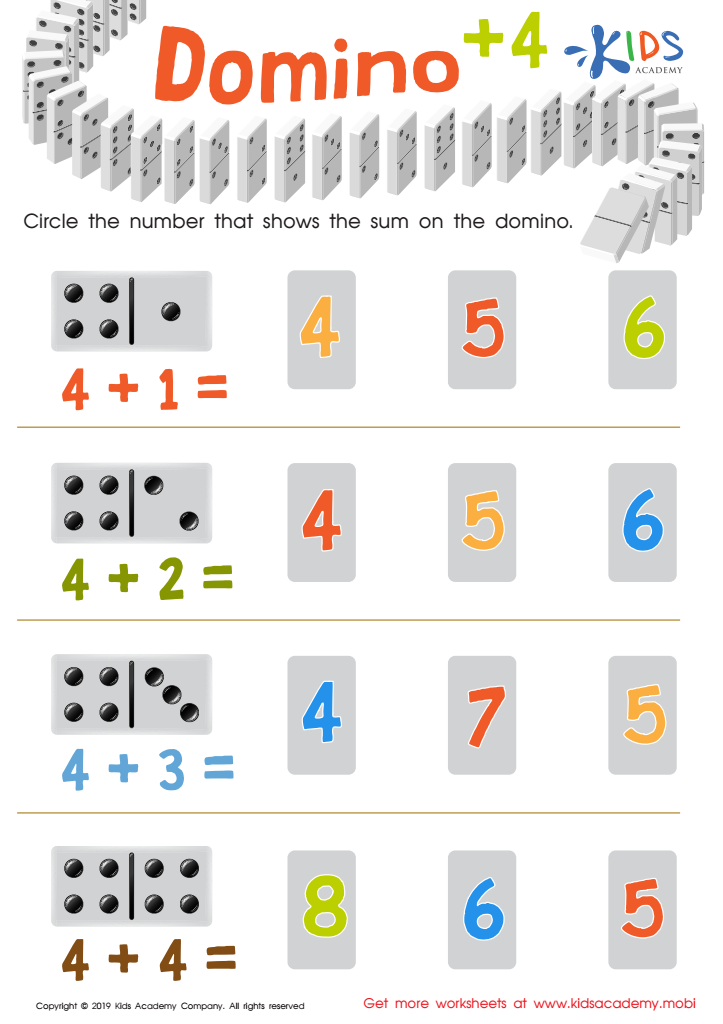
Domino +4 Worksheet
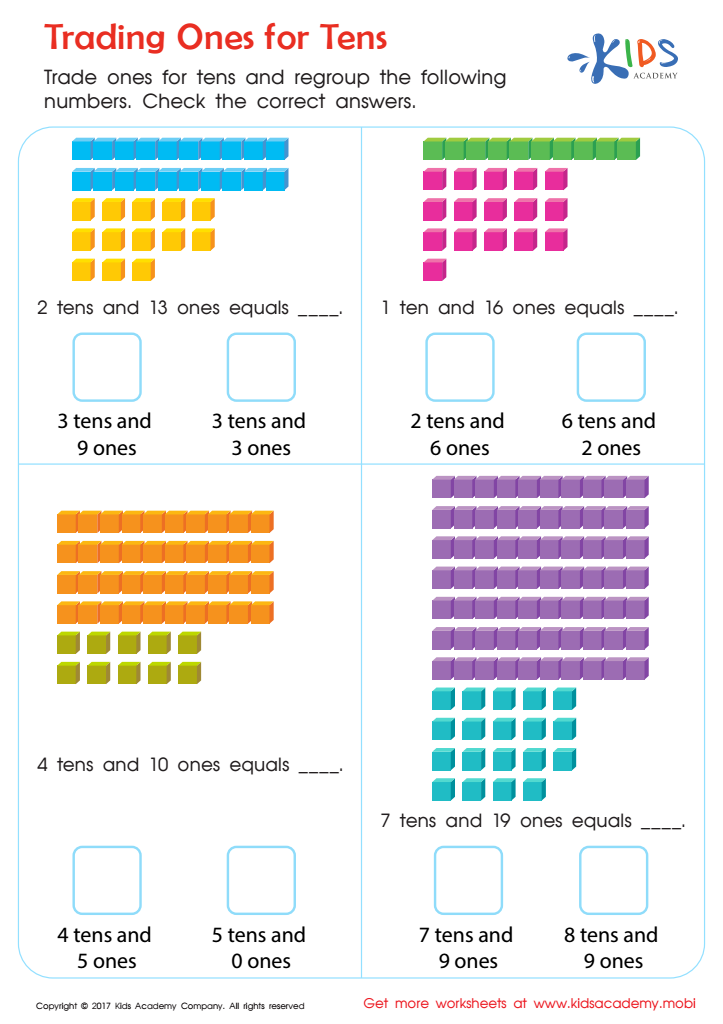
Trading Ones for Tens Worksheet
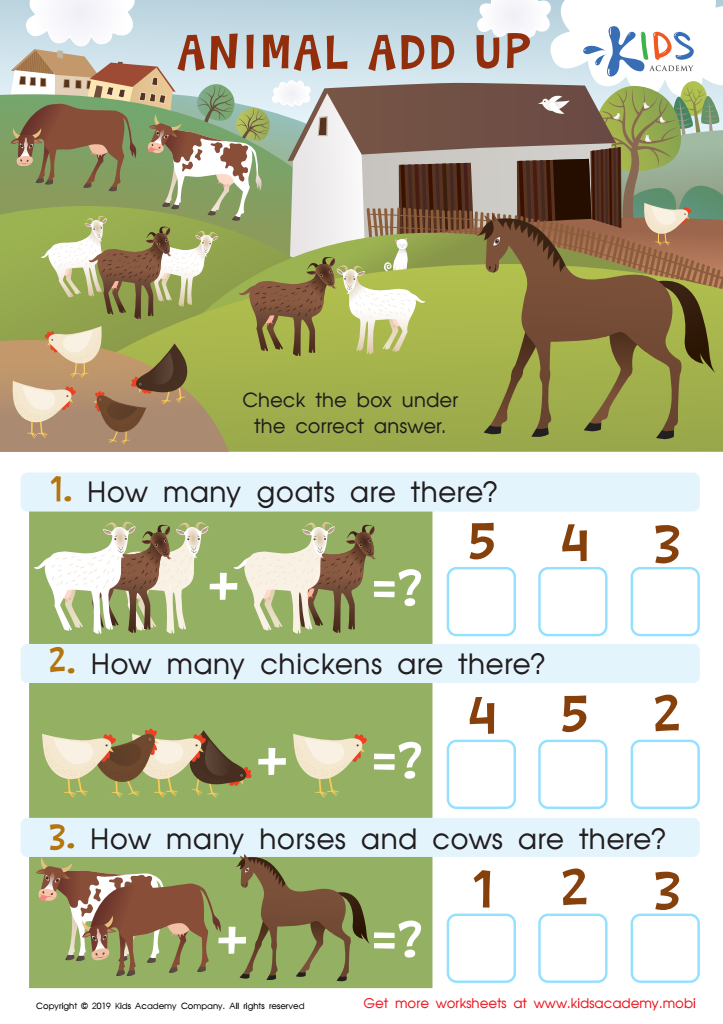
Animal Add Up Worksheet
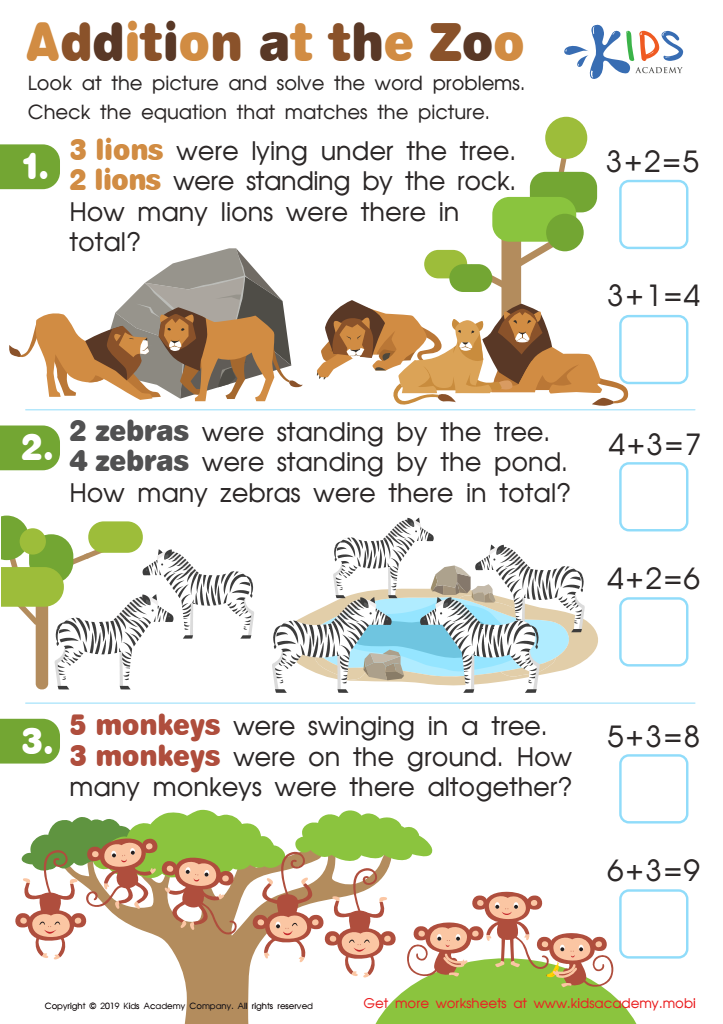
Addition at the Zoo Worksheet
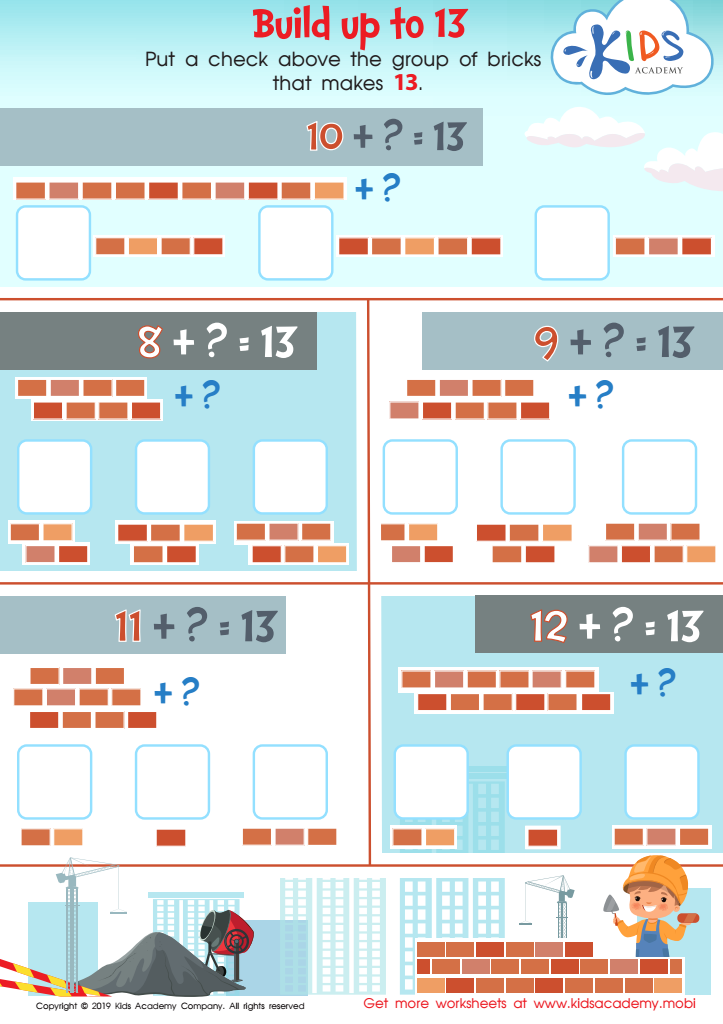
Build up to 13 Worksheet


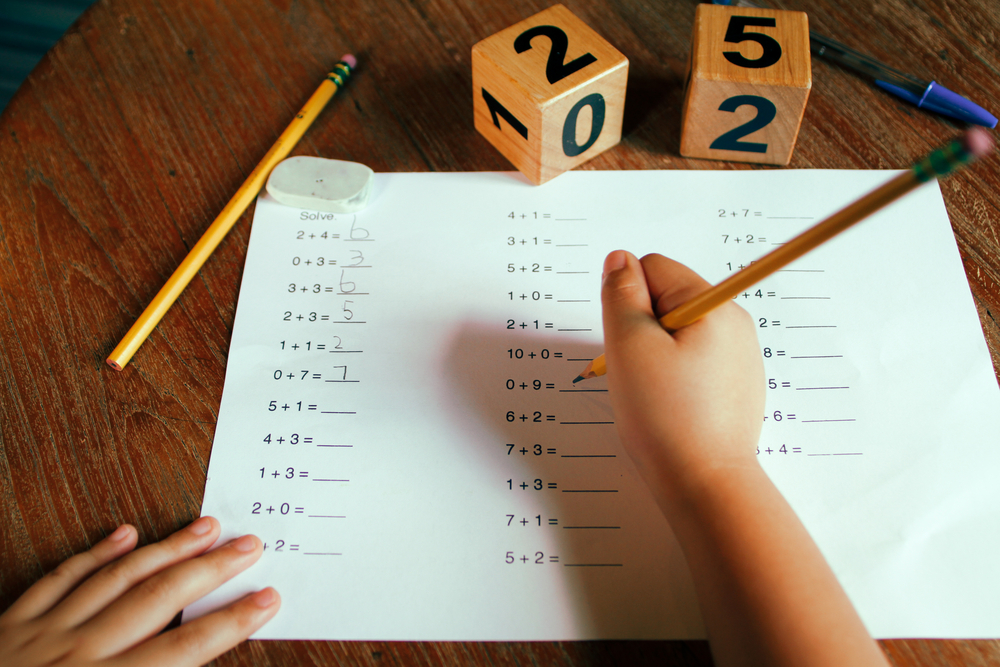





Basic addition skills are foundational for children ages 5-8, laying the groundwork for future mathematical understanding and academic success. Mastering addition not only enhances a child’s numerical fluency but also builds confidence in their problem-solving abilities. At this age, children are developing their cognitive skills, and understanding basic operations helps them make sense of the world around them, paving the way for critical thinking and logical reasoning.
Furthermore, early competence in addition fosters a positive attitude toward mathematics, reducing anxiety associated with more complex math concepts in later years. Parents and teachers should engage children with interactive and fun activities, such as games and storytelling, which make learning addition enjoyable and relevant. This support encourages a love for learning, increases motivation, and retains their interest in schoolwork.
Additionally, basic addition skills are essential for everyday life, aiding in tasks such as handling money, measuring ingredients in cooking, or even calculating time. By focusing on these skills, parents and teachers not only contribute to their child’s academic growth but also equip them with vital life skills, helping them navigate the world effectively. Investing time and resources in developing these basic skills can have long-lasting benefits for children as they progress in their education.








