Identifying objects Easy Worksheets for Ages 5-8
3 filtered results
-
From - To
Welcome to our "Identifying Objects Easy Worksheets" page, designed specifically for children aged 5-8! Our engaging worksheets aim to help young learners enhance their observational skills and boost their vocabulary. Through fun activities, kids will explore different objects, learning to identify and classify them correctly. Each worksheet is crafted to support developmental milestones while making learning enjoyable. Perfect for classroom use or at-home practice, our resources are tailored to capture children's attention and spark their curiosity. Help your child become more confident in recognizing and describing objects with our easy-to-use, colorful worksheets designed for early education success!
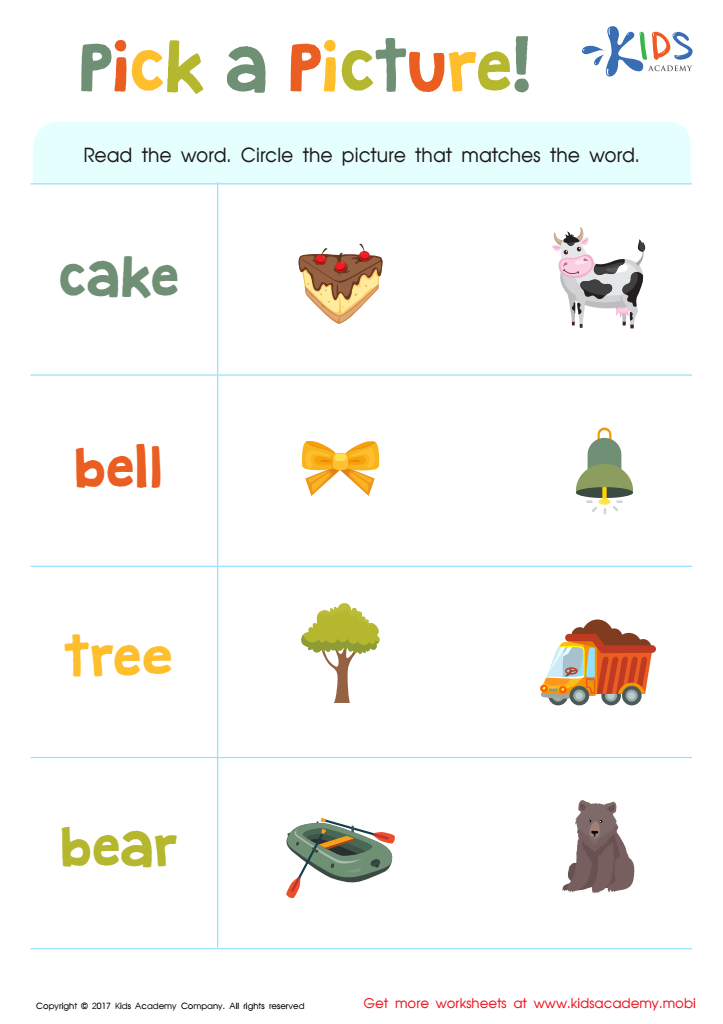
Pick a Picture Word Recognition Worksheet
 Assign to My Students
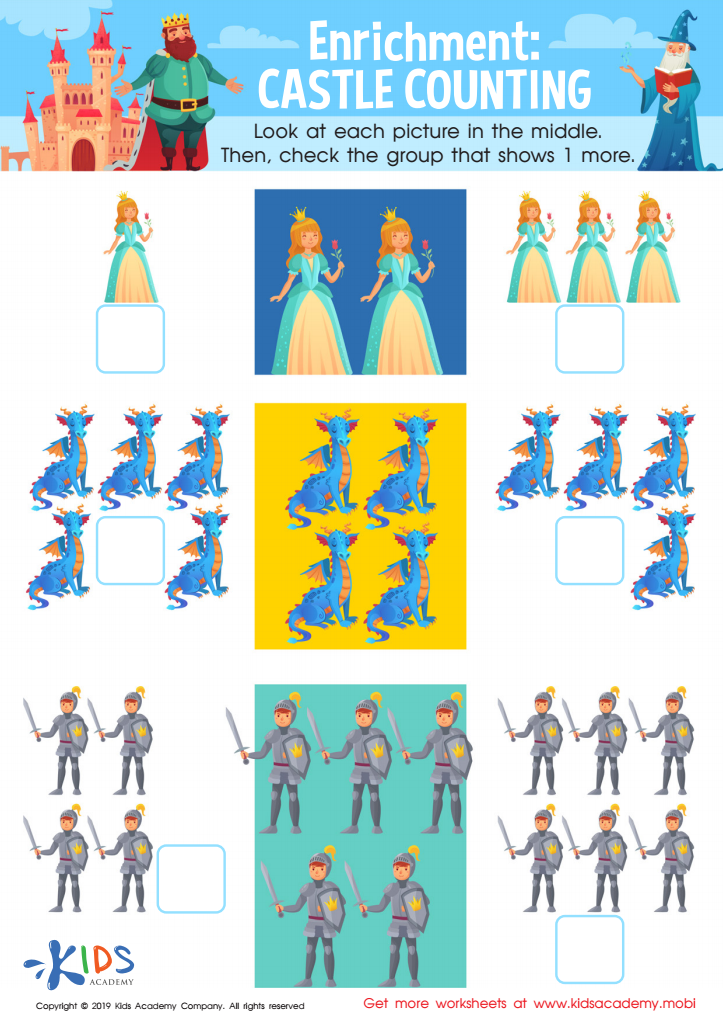
Enrichment: Castle Counting Worksheet
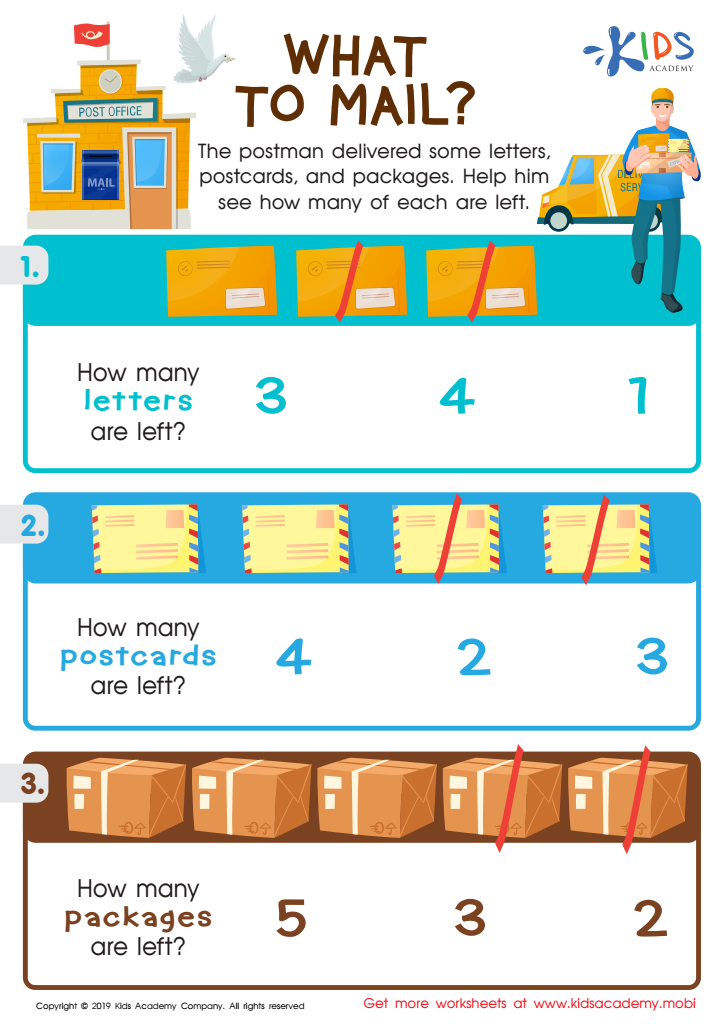
What to Mail? Worksheet







Identifying objects is a crucial skill for children aged 5-8, and both parents and teachers play a vital role in nurturing this ability. First and foremost, recognizing and naming objects helps build vocabulary, a foundational aspect of language development. Children learn to articulate their thoughts and communicate effectively with others.
Moreover, object identification enhances cognitive skills such as observation, classification, and problem-solving. When children learn to differentiate between various items, they improve their critical thinking and decision-making abilities. This skill also lays the groundwork for subjects like science and math, where distinguishing features is key to understanding concepts.
Additionally, engaging in the identification of objects fosters curiosity and exploration, encouraging children to observe their environment more closely. This active engagement can lead to a life-long love of learning.
Parents and teachers should also understand that this activity promotes social interaction. Recognizing and discussing objects together can strengthen parent-child or teacher-student relationships, creating a supportive learning community.
Ultimately, identifying objects is more than just a playful activity; it's a stepping stone to comprehensive development, emotional connections, and a strong foundation for future academic success. Therefore, supporting this learning process is essential for holistic growth during these formative years.








