Time reading skills Easy Worksheets for Ages 5-8
4 filtered results
-
From - To
Unlock your child's potential with our Time Reading Skills Easy Worksheets, tailored for ages 5-8! These engaging and educational printables are designed to make learning to tell time simple and fun. Our expertly crafted worksheets cover key concepts, from recognizing clock faces to reading hours and minutes, ensuring a smooth progression in your child's time-reading abilities. Perfect for parents and educators, our resources provide an interactive way to build confidence and mastery in time-telling skills. Visit Kids Academy to explore our wide range of easy-to-use and kid-friendly time reading worksheets.
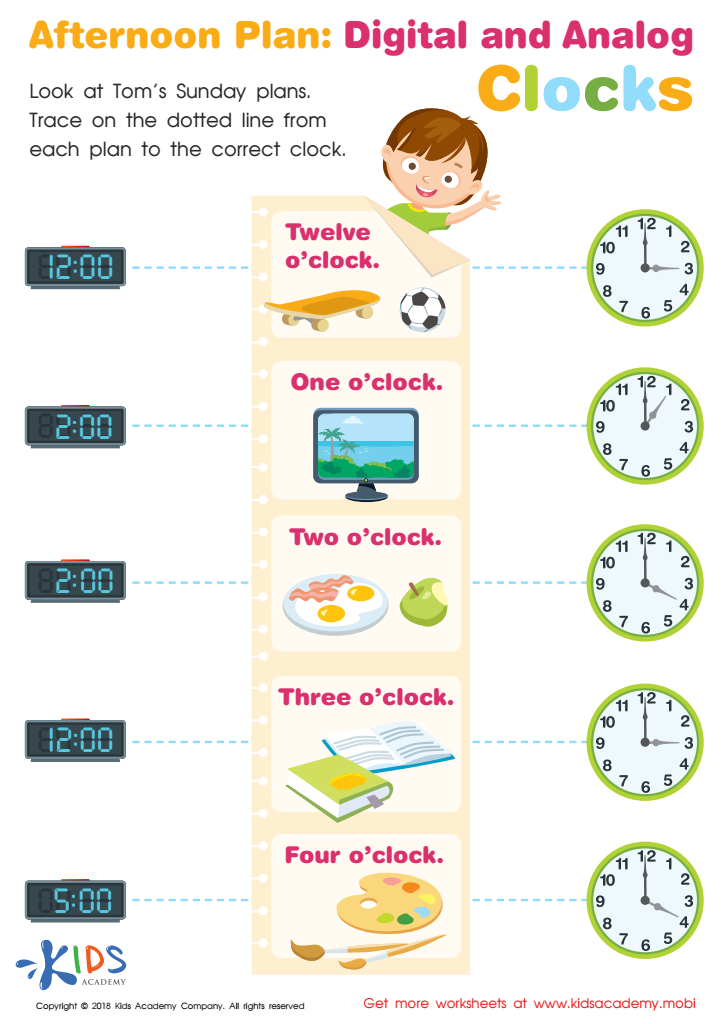
Afternoon Plan: Digital and Analog Clocks Worksheet
 Assign to My Students
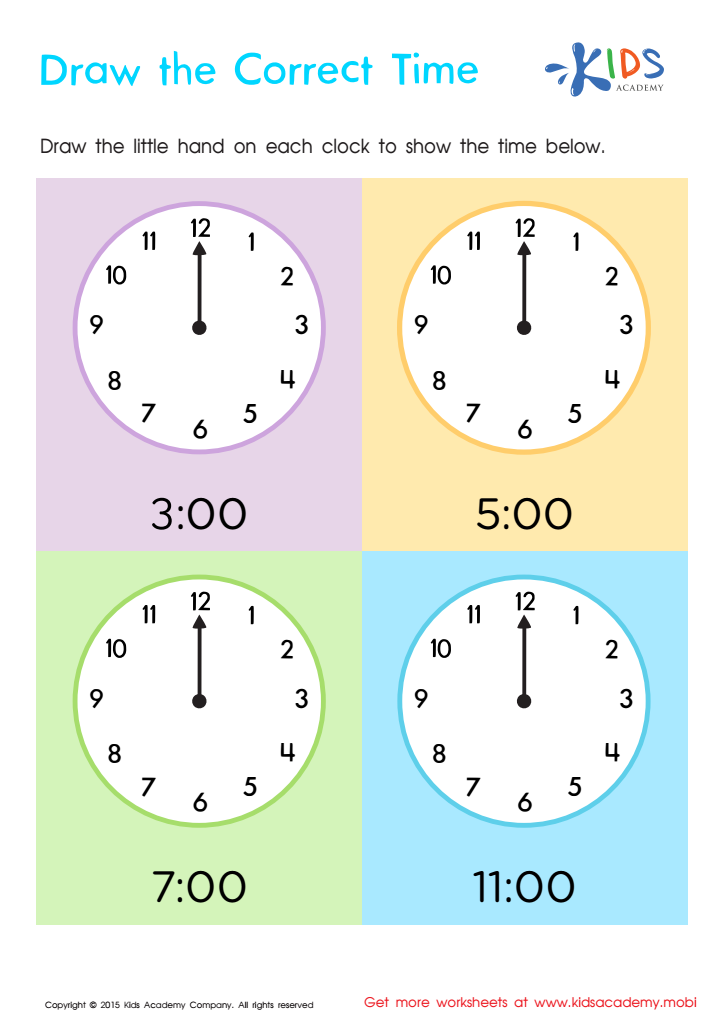
Telling The Time Worksheet: Part 1
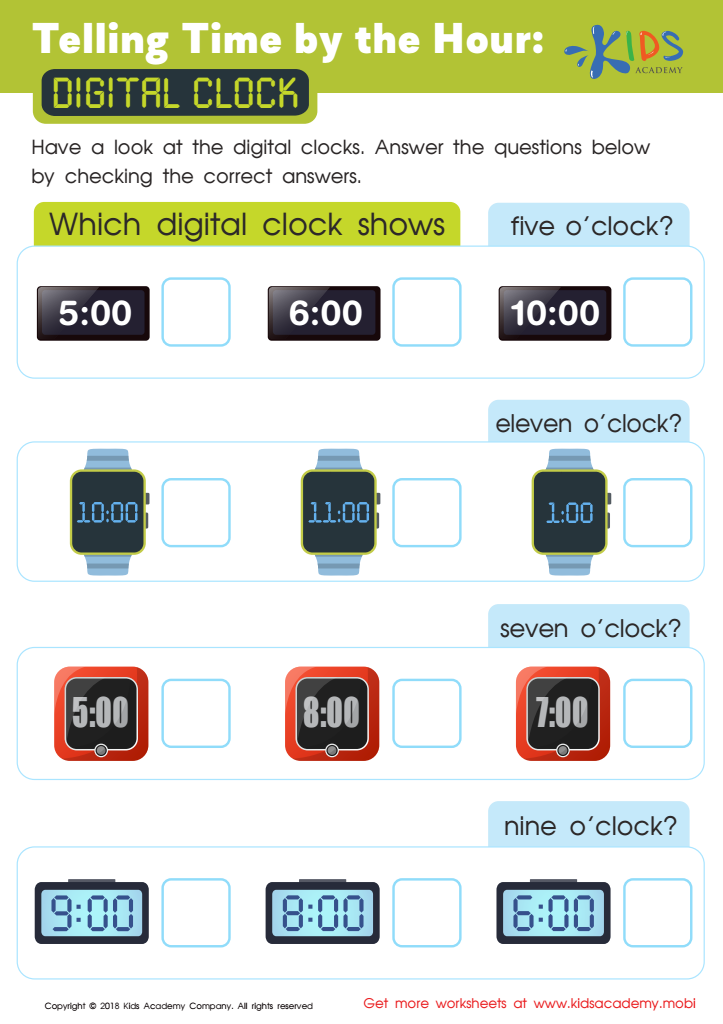
Telling Time by the Hour: Digital Clock Worksheet
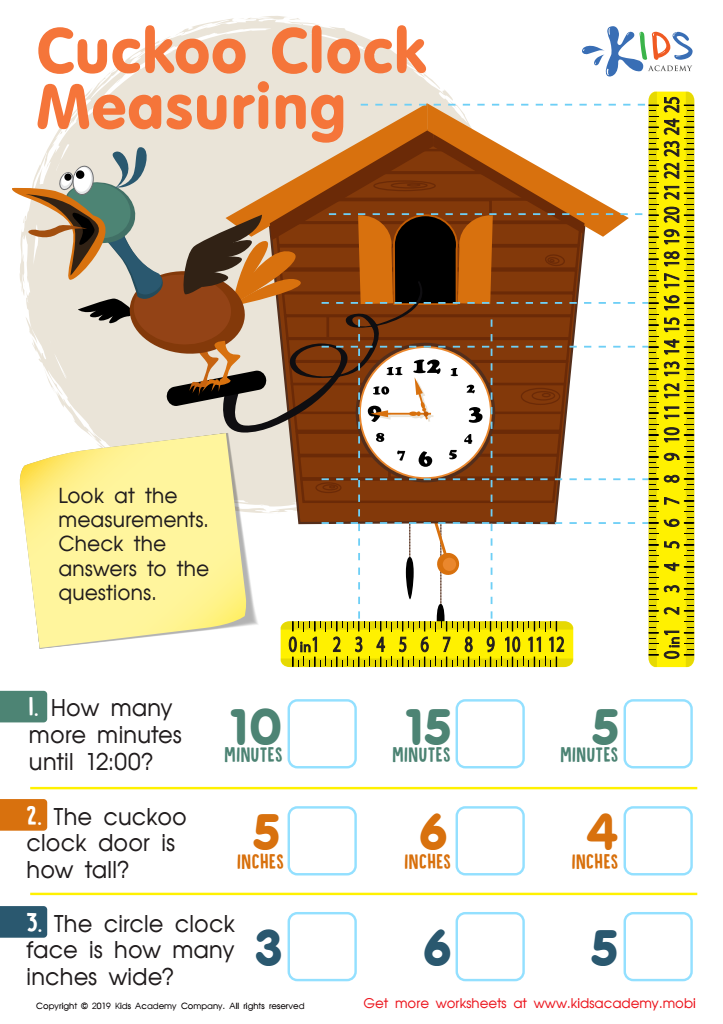
Cuckoo Clock Measuring Worksheet








Parents and teachers should prioritize building strong reading skills for children aged 5-8 because this period is critical for cognitive development, academic success, and lifelong learning. During these formative years, children's brains are particularly receptive to acquiring language and literacy skills. Early reading proficiency sets the foundation for future learning in all subjects, as literacy is integral across the curriculum.
When children develop strong reading skills early, they gain confidence, an important factor in fostering a love for learning and school. It enhances their ability to comprehend instructions, participate in classroom activities, and complete assignments more effectively. Also, early reading skills correlate with better performance on standardized tests and greater overall academic achievement.
Moreover, early literacy skills contribute to social and emotional development. As children engage with stories and texts, they learn to empathize with different characters and situations, which fosters critical social skills and emotional intelligence.
For parents and teachers, focusing on early reading ensures that children develop a robust vocabulary and a better grasp of grammar and sentence structure from an early age. This foundation is essential not just for formal education but for problem-solving and communicating throughout their lives. Therefore, placing emphasis on developing time-efficient reading skills in these formative years is crucial for setting children up for a successful, well-rounded future.








