Understanding number patterns Easy Worksheets for Ages 5-8
3 filtered results
-
From - To
Explore our "Understanding Number Patterns" worksheets, specially designed for children ages 5 to 8. These engaging and easy-to-use resources help young learners recognize, identify, and create number sequences through fun activities. Our worksheets encourage critical thinking and foster a strong foundation in mathematics by simplifying the concept of number patterns. With colorful illustrations and interactive exercises, children will find joy in learning while improving their skills in sequencing, addition, and subtraction. Perfect for classroom use or homeschooling, these worksheets provide an enjoyable way for kids to develop their mathematical understanding and confidence. Enhance your child’s learning journey today!
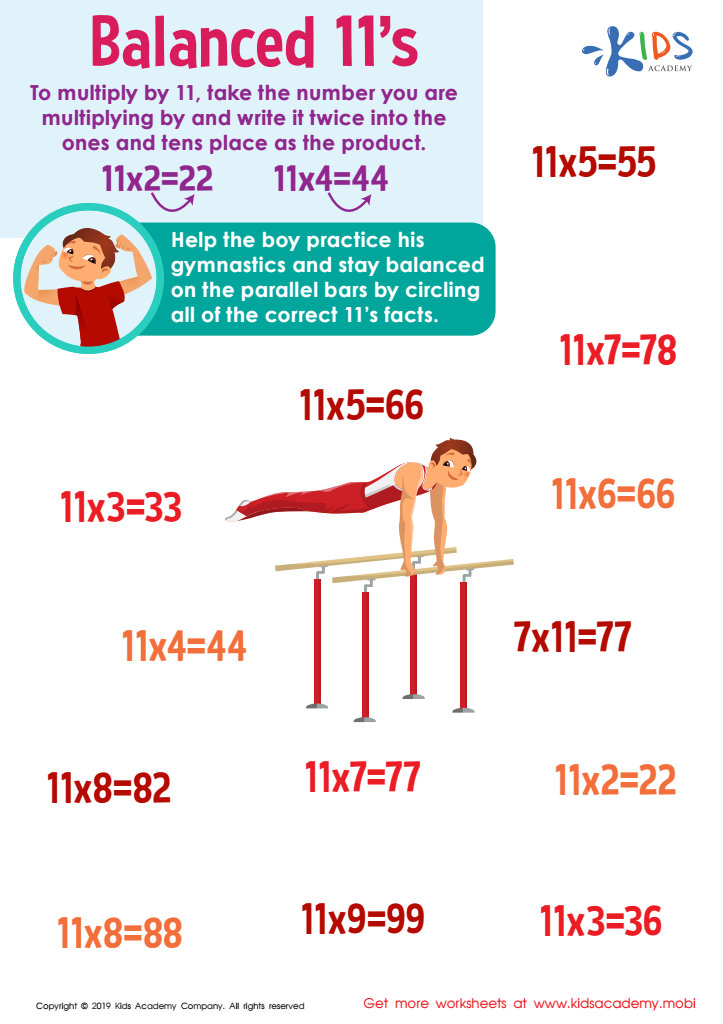
Balanced 11s Worksheet
 Assign to My Students
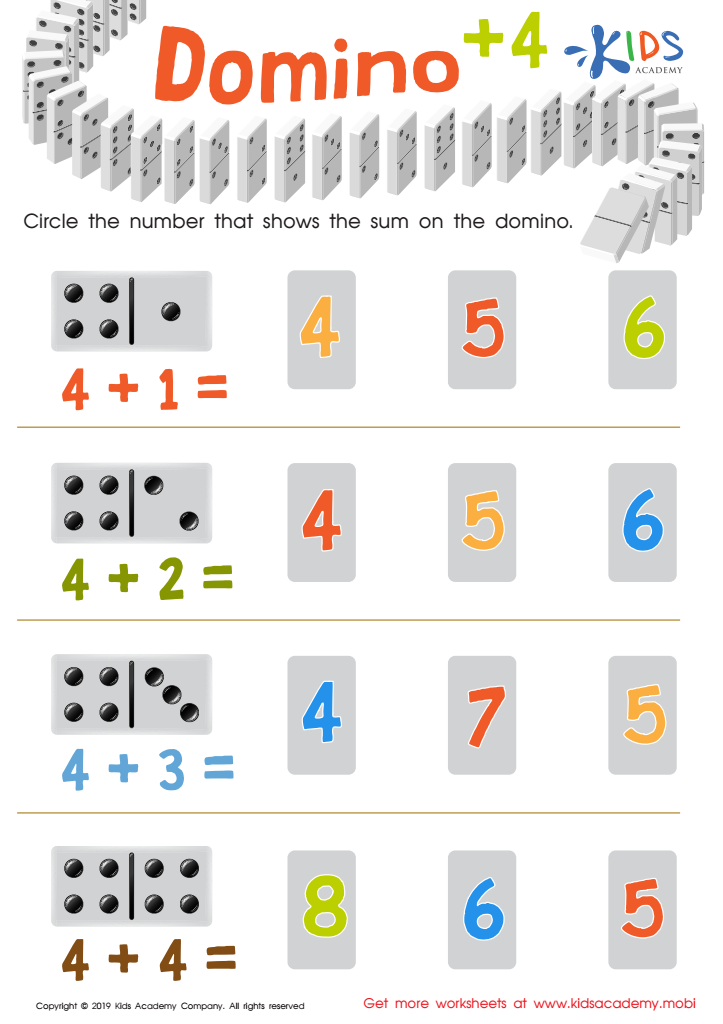
Domino +4 Worksheet
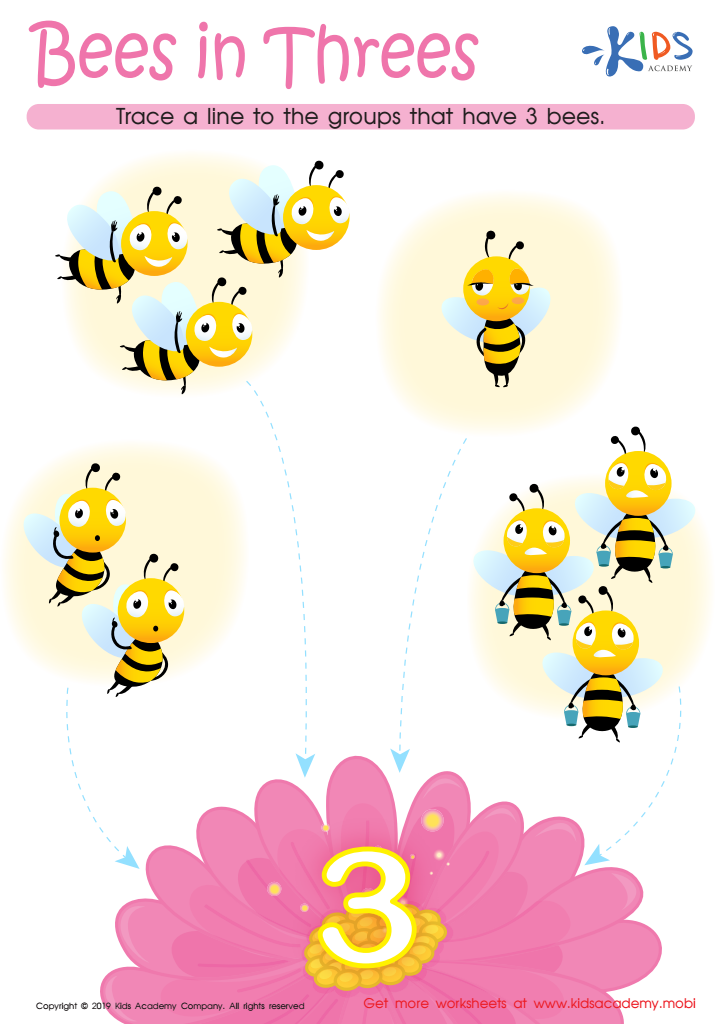
Bees in Threes Worksheet







Understanding number patterns is essential for young learners aged 5-8, as it lays the foundation for their mathematical journey. Recognizing and working with number patterns enhances critical thinking, fosters problem-solving skills, and aids in the development of logical reasoning. These skills are crucial when children encounter more complex mathematical concepts later in their education.
Parents and teachers should prioritize number pattern recognition because it helps children make connections between numbers, allowing them to see the relationships and operations within mathematics more clearly. For instance, recognizing patterns in addition or multiplication helps children predict outcomes and solve problems efficiently. Engaging with number patterns also boosts children's confidence and encourages a growth mindset, as they learn to approach challenges with curiosity and persistence.
Moreover, understanding patterns plays a vital role in real-life situations, such as budgeting or scheduling, reinforcing the importance of mathematics beyond the classroom. As children explore various types of patterns—whether visual, auditory, or numerical—they develop a deeper understanding of the structure of numbers, ultimately leading to greater fluency and competence in math. Thus, nurturing this skill in young learners equates to empowering them for future academic and real-world success.








